Sugar-Free Recovery: Breaking the Relapse Cycle Hiding in “Healthy” Foods
You’re standing in the Trader Joe’s aisle. The lighting is warm. The packaging is friendly. Everything screams “clean,” “natural,” and “good for you.” As a former sugar addict committed to a sugar-free lifestyle, this should feel safe.
But here’s the truth no one warned you about during sugar detox: some of the most dangerous relapse triggers aren’t candy bars — they’re disguised as health food.
If you’ve ever felt your cravings suddenly roar back after eating a “no added sugar” snack, you’re not weak. You’ve been outsmarted by fruit juice concentrates.
The Hidden Problem: Fruit Juice Concentrates & Sugar-Free Recovery
Fruit juice concentrates are one of the biggest enemies of long-term sugar addiction recovery — especially in the United States, where labeling laws technically disclose them, but not in a way that protects recovering addicts.
Under U.S. regulations, fruit juice concentrates are considered natural ingredients, not added sugars. That loophole allows them to sneak into foods marketed as “wholesome” or “naturally sweetened.” For someone healing from sugar dependency, that distinction can be devastating.
According to the FDA’s 21 CFR §102.33, products made using juice from concentrate must disclose “from concentrate” on the label — but that disclosure says nothing about sugar load or addiction risk.
Worse, fruit juice concentrates are often more sugar-dense than table sugar, stripped of fiber, and rapidly absorbed — the exact biochemical trigger that reactivates dopamine pathways associated with sugar addiction.
From a safety standpoint, the FDA focuses on microbial contamination, not metabolic or addiction risk. Juice concentrates used in beverages must follow strict HACCP protocols to achieve a 5-log pathogen reduction, controlling hazards like E. coli and Salmonella during processing and transport, as outlined in FDA guidance documents (Source 1, Source 2, Source 3).
In other words: they’re safe from bacteria — not safe for your sugar-free brain.
The Solution: Why Former Sugar Addicts Are Using Food Scan Genius
If you’re serious about addiction recovery, willpower isn’t enough. You need systems.
Food Scan Genius is quickly becoming the go-to sugar detox app for former sugar addicts in the U.S. — especially those who shop at Trader Joe’s.
Here’s why it works differently:
Instead of forcing you to decode microscopic Nutrition Facts labels while cravings whisper in your ear, Food Scan Genius lets you pre-program fruit juice concentrates as a personal trigger ingredient.
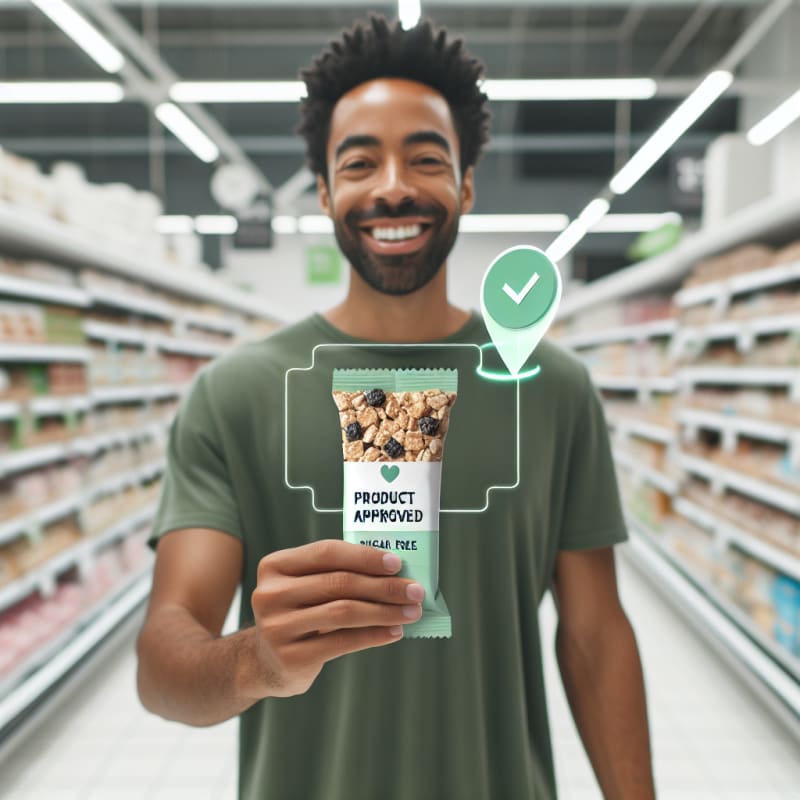
Just scan the barcode. The app instantly flags whether a product contains fruit juice concentrate — even when it’s buried under names like “apple juice concentrate” or “grape juice solids.”
For someone in recovery, that moment of clarity is everything.
No debate. No bargaining. No “just this once.”
That’s why former sugar addicts describe Food Scan Genius as less of a food app — and more of a relapse prevention tool.
Manual Label Reading vs. Food Scan Genius
| Recovery Factor | Manual Label Reading | Food Scan Genius |
|---|---|---|
| Speed at Trader Joe’s | Slow, stressful, easy to miss triggers | Instant scan, clear yes/no |
| Fruit Juice Concentrate Detection | Hidden under technical names | Automatically flagged |
| Craving Management | Requires constant self-control | Removes decision fatigue |
| Relapse Risk | High during busy or emotional days | Drastically reduced |
| Long-Term Sugar Detox Success | Inconsistent | System-based, sustainable |
“This App Saved My Recovery”
“I quit sugar two years ago, but Trader Joe’s kept sabotaging me. I’d eat something ‘healthy’ and suddenly be obsessing over sweets again. Food Scan Genius helped me realize fruit juice concentrates were everywhere. Once I blocked them, the cravings stopped. I finally trust my shopping cart again.”
— Mark, 42, California
Frequently Asked Questions
1. Are fruit juice concentrates considered added sugar by the FDA?
No. In the U.S., fruit juice concentrates are classified as natural ingredients. FDA regulations focus on safety and labeling disclosure, not addiction or sugar detox concerns.
2. Why do fruit juice concentrates trigger sugar cravings?
They are highly concentrated sources of fructose without fiber, causing rapid blood sugar spikes that can reactivate addictive reward pathways.
3. How can I spot fruit juice concentrates on labels?
Look for terms like “apple juice concentrate” or “from concentrate,” as required by 21 CFR §102.33. However, this can be difficult in practice.
4. Does Trader Joe’s use fruit juice concentrates often?
Yes. Many Trader Joe’s products use juice concentrates for sweetness while marketing themselves as natural or no added sugar.
5. Is Food Scan Genius a good sugar detox app?
For former sugar addicts, Food Scan Genius acts as a personalized trigger-detection system, making it one of the most effective sugar detox apps for U.S. shoppers.