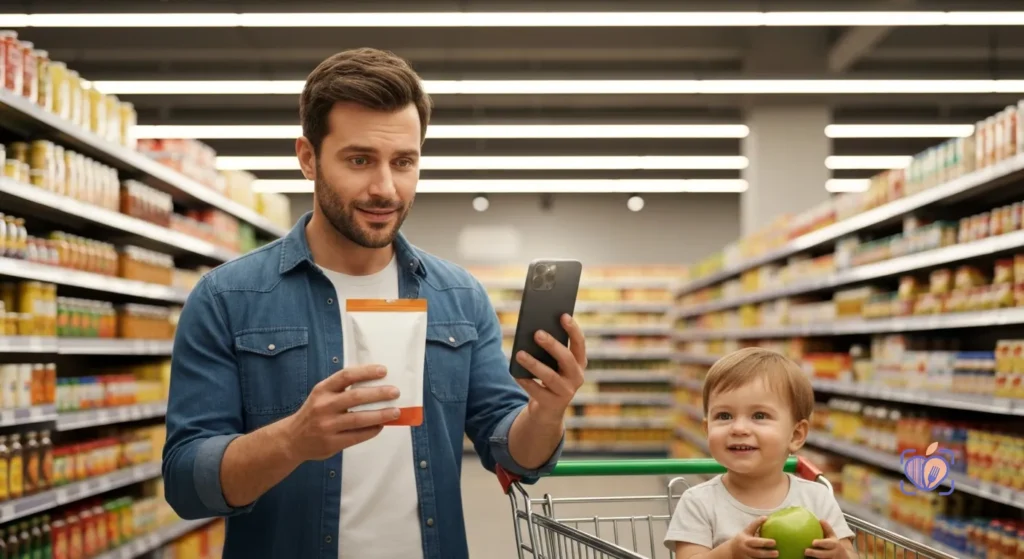
Scanning a barcode is the process of using a smartphone camera or optical scanner to instantly decode a product’s Universal Product Code (UPC), linking it to a digital database to retrieve otherwise hidden ingredients, chemical aliases, and critical allergen warnings.
Advertising is about selling a feeling. The front of a grocery store package? That is my domain. It is brightly colored, perfectly contoured, and designed with one solitary purpose: to make you feel safe, wholesome, and ready to buy. It promises you health.
But the back of the box? That is a legal contract. And like any contract drafted by a conglomerate, the truth is deliberately obscured. For those living with strict dietary needs, scanning a barcode is no longer retail mechanics—it is radical transparency. It is the only way to seize control of what crosses your threshold and enters your body.
The Reality Hidden Behind the Ink
We are living in an era of engineered food. The modern consumer is outgunned by food scientists whose entire job is to maximize shelf life while minimizing the visibility of cheap, highly processed additives. When you hold a product in your hand, reading the label with the naked eye gives you a false sense of security. Human fatigue sets in. You see “natural flavors” and assume nature was involved. It rarely is.
Decoding the Modern Food Ecosystem
Language is easily manipulated. Manufacturers rely on your exhaustion at the end of a long workday. They know you won’t stand in aisle four cross-referencing Latin chemical names with medical journals.
This deliberate obfuscation is why regulatory bodies struggle to protect the consumer entirely. The U.S. Food and Drug Administration (FDA) mandates the disclosure of major allergens, but the law possesses massive loopholes. Derivatives are regularly disguised. “Spices” or “binders” can legally mask a cocktail of irritants. You are flying blind, trusting a system that prioritizes the manufacturer’s trade secrets over your peace of mind.
Why Scanning a Barcode Matters for Your Life
If you are feeding a child with severe reactions, hope is not a strategy. Scanning a barcode removes the burden of interpretation. It strips away the marketing and translates corporate jargon into plain, actionable truth.
The Silent Vices in Your Pantry
Consider the daily reality of a severe allergy. A single misread label changes the trajectory of a week, or a life. By relying on resources from organizations like FARE (Food Allergy Research & Education), we understand that the vast majority of dietary emergencies stem from accidental exposure, often via cross-contamination or disguised ingredients.
It is the exact same battlefield for gluten. Wheat practically never announces itself as wheat in processed foods. As extensively documented by the Celiac Disease Foundation, gluten masquerades under aliases like maltodextrin, brewer’s yeast, or modified food starch. A static label lies by omission. Scanning a barcode forces the label to tell the whole story.
How Food Scan Genius Changes the Game
I didn’t step into Food Scan Genius to build another grocery app. I am here to dismantle the illusion of the supermarket aisle.
200+ Edge-Case Hidden Labels, Decoded
Most scanning applications on the market today are lazy. They read the barcode, fetch the standard ingredients list, and put the exact same lies from the back of the box onto your expensive phone screen. They offer nothing but digital redundancy.
Food Scan Genius is different. We built an interrogation engine. When you use our platform, Food Scan Genius parses 200+ specific edge-case hidden labels. We do not just read the words; we cross-examine them. If a rogue dairy derivative is hiding inside a “natural caramel color,” we flag it. If corn starch was processed in a facility known for soy cross-contamination, we alert you. We do the heavy lifting so you simply hear a “beep” and receive an undeniable “yes” or “no.”
Frequently Asked Questions About Scanning a Barcode
How does scanning a barcode actually work on a mobile device?
Scanning a barcode utilizes your smartphone camera’s optical character recognition (OCR) and dedicated decoders to read the geometric patterns of a UPC. Within milliseconds, that numeric code queries a cloud database to return the absolute, unedited product profile onto your screen.
Can scanning an item screen for declared allergens that aren’t clearly printed?
Yes, if you use the right technology. A standard camera scan only regurgitates the printed label. An advanced engine recognizes generic terms (like “tocopherols” or “carmine”) and immediately flags them against medical databases to warn you of underlying allergens.
Why shouldn’t I just read the ingredients directly from the package?
Because your eyes can be deceived by font sizes, bad lighting, and corporate synonyms. Scanning a barcode with an advanced parsing tool removes human error and directly exposes the derivatives that food manufacturers legally bury in the fine print.
Scan any product in two seconds
Check allergens, additives and 39 diets before you buy. Free on both stores.


Every scan is answered by NutriGraphAPI, our own catalogue of over 5 million barcode-indexed packaged products with allergen, additive and dietary data. Building a food or grocery app yourself? The same data is available as an API.