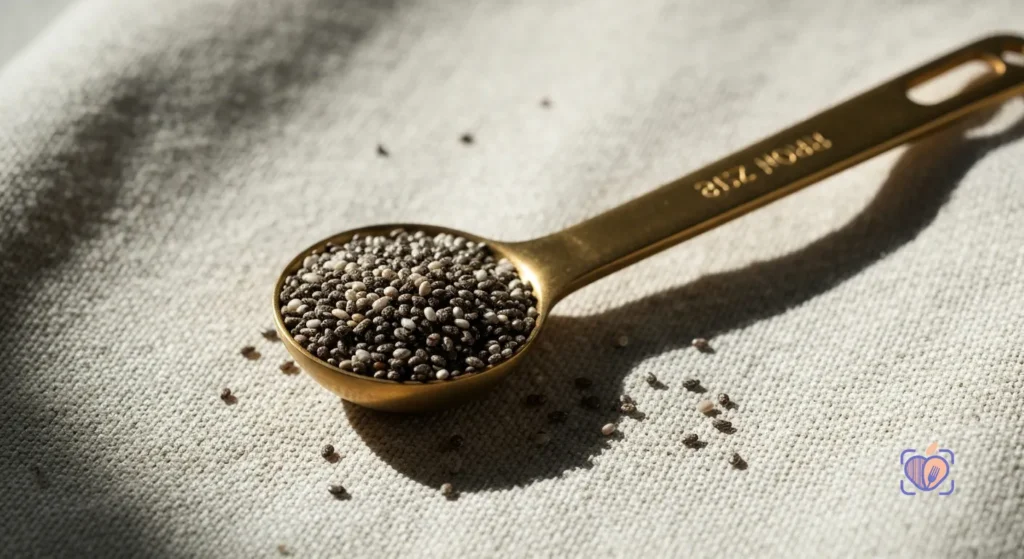
One tablespoon of chia seeds contains approximately 70 calories.
This isn’t just a piece of trivia; it’s a foundational data point for millions of people building healthier lives. At NutriGraph, we believe that access to precise, reliable food data is a right, not a privilege. The simple question of “1 tbsp chia seeds calories” represents a single node in a complex web of nutritional information that consumers demand and developers must provide. Let’s break down why this number matters and what it really represents.
The Anatomy of 70 Calories
Not all calories are created equal. The 70 calories in a tablespoon of chia seeds are a powerhouse of nutrition, a fact that simple calorie-counting often misses. Here’s a look under the hood:
- Fat (≈5 grams): The majority of these calories come from healthy fats. Chia seeds are one of the richest plant-based sources of alpha-linolenic acid (ALA), a vital omega-3 fatty acid. According to the experts at the Mayo Clinic, omega-3s are crucial for heart and brain health.
- Carbohydrates (≈6 grams): Nearly all the carbohydrates in chia seeds are fiber. This dietary fiber doesn’t raise blood sugar and is essential for digestive health, feeding beneficial gut bacteria and promoting satiety.
- Protein (≈2.5 grams): Chia seeds offer a complete protein, containing all nine essential amino acids. This makes them an exceptional protein source, especially for those on plant-based diets.
So, when your app tells a user about these 70 calories, is it also telling them about the anti-inflammatory fats, the gut-friendly fiber, and the muscle-supporting protein? If not, it’s only telling a fraction of the story.
Why Granular Data is the New Standard
In the early days of health tech, calorie counting was the main event. Today, that’s table stakes. Modern users are savvier, looking beyond the calorie count to understand the quality of their food. They want to avoid ultra-processed foods, identify potential inflammatory triggers, and align their diet with specific health goals.
This shift in consumer awareness, driven by a desire for transparency, has given rise to powerful tools that hold brands accountable. As TechCrunch reports, modern apps empower users to make informed choices that are actively reshaping the food industry. They aren’t just logging meals; they’re decoding labels and voting with their wallets for cleaner, healthier products.
Providing this level of insight is no longer optional for a successful health app. Your users need to know if an ingredient list contains hidden sugars, unnecessary additives, or common allergens. This requires a data infrastructure that goes far beyond basic nutritional facts. It requires intelligence.
The NutriGraph API: Allergen & Additive Intelligence
This is where NutriGraph changes the game for developers. We provide the most comprehensive, context-aware food data API on the market. We don’t just give you the calories in a tablespoon of chia seeds; we give you the deep intelligence to power features that users genuinely need.
Our Allergen & Additive Intelligence engine allows your application to:
- Flag Hidden Allergens: Instantly identify and flag the top 9 allergens plus dozens of others, including gluten, dairy, and soy, even when they’re hidden in complex ingredient lists.
- Identify Problematic Additives: Go beyond the nutrition label to analyze and flag artificial colors, preservatives, and other additives linked to health concerns.
- Assess Food Processing Levels: Help users distinguish between whole foods and the kind of ultra-processed products that health experts at institutions like Dana-Farber recommend avoiding. You can learn more about the risks in this insightful article on ultra-processed foods.
Stop settling for basic, outdated data. Build an application that provides real value and earns user trust. The future of health tech is in deep data, and NutriGraph is the platform that gets you there.
Ready to build a smarter, more responsive health app? Integrate the industry’s leading food data engine.
➡️ Get Started for Free: NutriGraph API (Claim Your 10,000 Free Calls)
Frequently Asked Questions
How many calories are in 2 tablespoons of chia seeds?
Two tablespoons of chia seeds contain approximately 140 calories. This serving size would also provide around 10 grams of fiber, 5 grams of protein, and a significant dose of omega-3 fatty acids.
Are the calories in chia seeds good for weight loss?
The calories in chia seeds are highly beneficial for weight management. The high fiber content absorbs water, expanding in your stomach to help you feel full and satisfied for longer. This can reduce overall calorie intake. Additionally, the protein and healthy fats provide sustained energy.
What makes chia seeds a ‘superfood’?
Chia seeds are considered a ‘superfood’ because they deliver an exceptionally high amount of nutrients for very few calories. They are packed with fiber, omega-3s, complete protein, and essential minerals like calcium, magnesium, and phosphorus, all of which contribute to better overall health.
.lwrp.link-whisper-related-posts{
margin-top: 40px;
margin-bottom: 30px;
}
.lwrp .lwrp-title{
}.lwrp .lwrp-description{
}
.lwrp .lwrp-list-container{
}
.lwrp .lwrp-list-multi-container{
display: flex;
}
.lwrp .lwrp-list-double{
width: 48%;
}
.lwrp .lwrp-list-triple{
width: 32%;
}
.lwrp .lwrp-list-row-container{
display: flex;
justify-content: space-between;
}
.lwrp .lwrp-list-row-container .lwrp-list-item{
width: calc(33% – 20px);
}
.lwrp .lwrp-list-item:not(.lwrp-no-posts-message-item){
max-width: 150px;
}
.lwrp .lwrp-list-item img{
max-width: 100%;
height: auto;
object-fit: cover;
aspect-ratio: 1 / 1;
}
.lwrp .lwrp-list-item.lwrp-empty-list-item{
background: initial !important;
}
.lwrp .lwrp-list-item .lwrp-list-link .lwrp-list-link-title-text,
.lwrp .lwrp-list-item .lwrp-list-no-posts-message{
}@media screen and (max-width: 480px) {
.lwrp.link-whisper-related-posts{
}
.lwrp .lwrp-title{
}.lwrp .lwrp-description{
}
.lwrp .lwrp-list-multi-container{
flex-direction: column;
}
.lwrp .lwrp-list-multi-container ul.lwrp-list{
margin-top: 0px;
margin-bottom: 0px;
padding-top: 0px;
padding-bottom: 0px;
}
.lwrp .lwrp-list-double,
.lwrp .lwrp-list-triple{
width: 100%;
}
.lwrp .lwrp-list-row-container{
justify-content: initial;
flex-direction: column;
}
.lwrp .lwrp-list-row-container .lwrp-list-item{
width: 100%;
}
.lwrp .lwrp-list-item:not(.lwrp-no-posts-message-item){
max-width: initial;
}
.lwrp .lwrp-list-item .lwrp-list-link .lwrp-list-link-title-text,
.lwrp .lwrp-list-item .lwrp-list-no-posts-message{
};
}
Scan any product in two seconds
Check allergens, additives and 39 diets before you buy. Free on both stores.