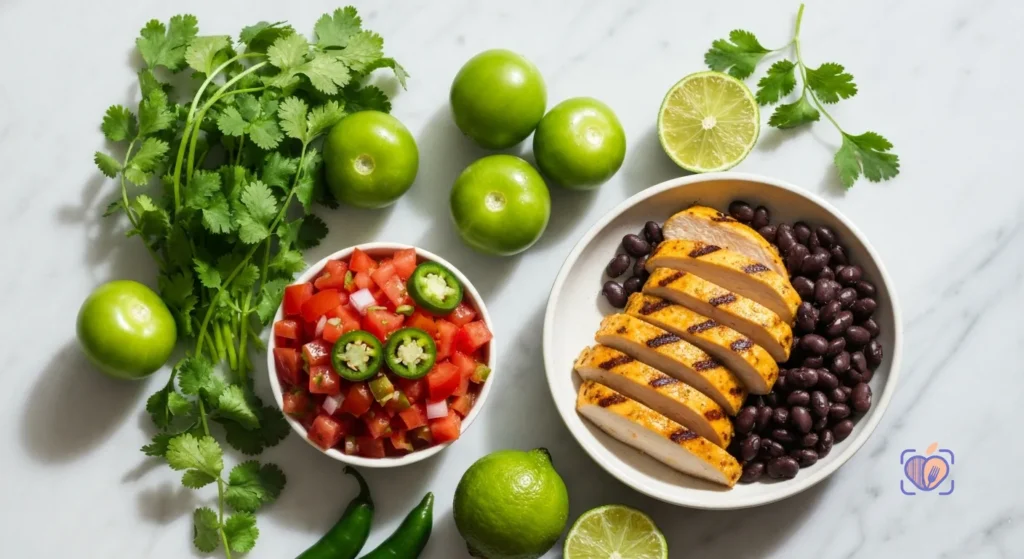
Cafe Rio provides nutrition information for its menu items primarily through an online calculator on its official website, which allows you to see nutritional values based on the specific ingredients you choose for your custom-built meal. The most accurate data is found by selecting each component of your order—from the tortilla to the protein, beans, rice, sauces, and toppings—to get a complete nutritional profile.
As the VP of Product for NutriGraph, I spend my days analyzing food data ecosystems. The challenge with fast-casual dining like Cafe Rio isn’t a lack of food, it’s a lack of truly accessible and granular data. Consumers want fresh, customizable meals, but they’re flying blind when it comes to navigating calories, allergens, and additives. The provided calculators are a step in the right direction, but they’re a 2010 solution for a 2026 problem. Let’s break down the data properly.
Deconstructing the Cafe Rio Menu: A Nutritional Deep Dive
The ‘build-your-own’ model is both a blessing and a curse. You have control, but every choice has a significant nutritional impact. A few small swaps can be the difference between a 600-calorie lunch and a 1,600-calorie feast.
The Foundations: Burritos, Salads, and Tostadas
Your starting choice sets the stage. A flour tortilla for a burrito immediately adds around 300 calories before you’ve even added a single filling. Choosing a salad as your base is often the smartest move, but it’s not foolproof. The fried tortilla shell of a tostada, for instance, can carry as many calories as a burrito wrap.
- Smart Swap: Opt for a bowl instead of a burrito or tostada to eliminate the high-calorie tortilla base.
Proteins & Fillings: The Core Macros
This is where you get your protein, but also a significant amount of fat and sodium. The famous Sweet Pork Barbacoa is delicious, but it’s also high in sugar and sodium. Grilled chicken or steak are typically leaner options.
- Black vs. Pinto Beans: Both are excellent sources of fiber, but pinto beans are often prepared with more fat. Black beans are usually the leaner choice.
- Cilantro Lime Rice: A staple, but it’s a significant source of simple carbohydrates. If you’re managing carb intake, consider going light or skipping it.
Dressings and Toppings: The Hidden Saboteurs
This is where a healthy meal can go completely off the rails. The creamy dressings, cheese, sour cream, and tortilla strips add up incredibly fast. Cafe Rio’s house creamy tomatillo dressing, while iconic, can add over 200 calories and 20g of fat per serving.
- Smart Swap: Ditch the creamy dressing for fresh pico de gallo or the low-fat tomatillo vinaigrette. Ask for cheese and sour cream on the side to control your portions.
The Problem with Standard Nutrition Data
Official calculators provide a baseline, but they fail to serve the modern consumer who has specific and often critical dietary needs. They don’t account for hidden additives, potential cross-contamination, or nuanced dietary protocols. General guidance from trusted health authorities like the Mayo Clinic emphasizes whole foods and understanding ingredients, which is difficult when data is presented in a clunky, incomplete interface.
This gap is where innovation must happen. Consumers today demand more than what the baseline regulations from the FDA require. They want to know not just if a product contains wheat, but the specific derivatives. They want to avoid not just ‘sugar,’ but high-fructose corn syrup and artificial sweeteners. This trend is so powerful that even major grocery chains are integrating advanced dietary apps to stay competitive, a clear signal that shoppers’ needs are evolving beyond simple calorie counting.
The Developer’s Challenge: Building for Modern Health Needs
If you’re a developer building a health, wellness, or diet app, you’ve hit this data wall. You’re forced to rely on scraping outdated PDFs, using crowd-sourced (and often incorrect) data, or attempting to maintain a byzantine database of restaurant menu items yourself. Your users churn because your app can’t give them the reliable, granular intelligence they need to eat out confidently.
This is the exact problem we built the NutriGraph API to solve.
We provide developers with the world’s most advanced Allergen & Additive Intelligence. We’ve done the painstaking work of parsing, verifying, and enriching menu data so you can deliver an experience that truly serves your users. Stop wrestling with data and start building features that matter.
Integrate the modern standard for food data and empower your users. Claim your 10,000 free calls to the NutriGraph API and see the difference precise, reliable data makes.
API Docs & Registration: NutriGraph API
Frequently Asked Questions about Cafe Rio Nutrition
What is the healthiest meal at Cafe Rio?
The healthiest meal is typically a custom-built salad or bowl. Start with greens, add a lean protein like grilled chicken, load up on black beans and fajita vegetables, and use pico de gallo or the light vinaigrette as your dressing. Avoid the tortilla, creamy dressings, cheese, and sour cream to keep calories and fat low.
How many calories are in a Cafe Rio sweet pork burrito?
A standard Cafe Rio sweet pork burrito can range from 1,000 to over 1,500 calories, depending on your choices of rice, beans, sauces, and toppings. The sweet pork itself is higher in calories and sugar than other proteins, and a smothered-style burrito with sauce and cheese will be at the higher end of that range.
Does Cafe Rio have gluten-free options?
Yes, Cafe Rio has many ingredients that are naturally gluten-free, including their proteins, beans, rice, and many toppings. You can build a gluten-free bowl or salad. However, because their kitchens handle flour tortillas, there is always a risk of cross-contamination. If you have celiac disease or a severe gluten sensitivity, exercise caution.
How can I get the most accurate nutrition data for my custom order?
Using the official Cafe Rio online calculator is the best first step. For a more advanced understanding that includes additive and allergen intelligence, you would need an application powered by a deep food data API. The next generation of health apps, built on platforms like NutriGraph, are designed to provide this level of detailed, personalized, and reliable information.
.lwrp.link-whisper-related-posts{
margin-top: 40px;
margin-bottom: 30px;
}
.lwrp .lwrp-title{
}.lwrp .lwrp-description{
}
.lwrp .lwrp-list-container{
}
.lwrp .lwrp-list-multi-container{
display: flex;
}
.lwrp .lwrp-list-double{
width: 48%;
}
.lwrp .lwrp-list-triple{
width: 32%;
}
.lwrp .lwrp-list-row-container{
display: flex;
justify-content: space-between;
}
.lwrp .lwrp-list-row-container .lwrp-list-item{
width: calc(33% – 20px);
}
.lwrp .lwrp-list-item:not(.lwrp-no-posts-message-item){
max-width: 150px;
}
.lwrp .lwrp-list-item img{
max-width: 100%;
height: auto;
object-fit: cover;
aspect-ratio: 1 / 1;
}
.lwrp .lwrp-list-item.lwrp-empty-list-item{
background: initial !important;
}
.lwrp .lwrp-list-item .lwrp-list-link .lwrp-list-link-title-text,
.lwrp .lwrp-list-item .lwrp-list-no-posts-message{
}@media screen and (max-width: 480px) {
.lwrp.link-whisper-related-posts{
}
.lwrp .lwrp-title{
}.lwrp .lwrp-description{
}
.lwrp .lwrp-list-multi-container{
flex-direction: column;
}
.lwrp .lwrp-list-multi-container ul.lwrp-list{
margin-top: 0px;
margin-bottom: 0px;
padding-top: 0px;
padding-bottom: 0px;
}
.lwrp .lwrp-list-double,
.lwrp .lwrp-list-triple{
width: 100%;
}
.lwrp .lwrp-list-row-container{
justify-content: initial;
flex-direction: column;
}
.lwrp .lwrp-list-row-container .lwrp-list-item{
width: 100%;
}
.lwrp .lwrp-list-item:not(.lwrp-no-posts-message-item){
max-width: initial;
}
.lwrp .lwrp-list-item .lwrp-list-link .lwrp-list-link-title-text,
.lwrp .lwrp-list-item .lwrp-list-no-posts-message{
};
}
Scan any product in two seconds
Check allergens, additives and 39 diets before you buy. Free on both stores.