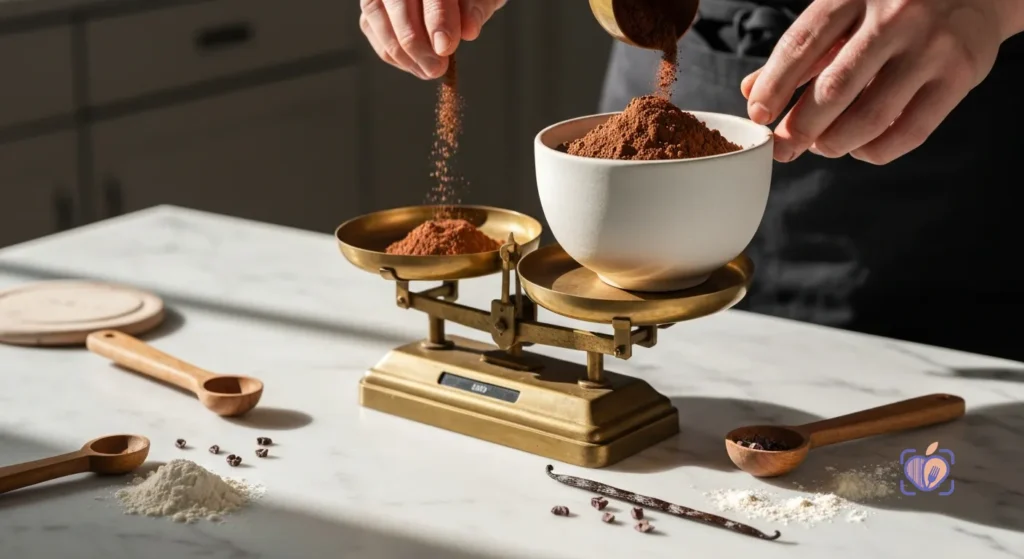
180 grams is equal to 6.34931 ounces. For all practical purposes in recipes and nutrition labeling, you can round this to 6.35 ounces.
As the VP of Product for NutriGraph API, I see this conversion constantly. It’s a fundamental unit of measurement in the global food supply chain, appearing on packaging from Tokyo to Toronto. But getting the number right is just the start. The real challenge—and opportunity—is understanding the full story behind those 180 grams.
Beyond the Simple Math: Precision in a Digital World
Whether you’re following a recipe for French madeleines or logging your daily protein intake, 180 grams is a common measurement. A single serving of Greek yogurt, a small chicken breast, or a generous portion of pasta can all be around 180g. In a home kitchen, a slight miscalculation isn’t a disaster. But for a digital health platform or a nutrition app, that level of imprecision is unacceptable.
Modern consumers expect and deserve accuracy. They rely on applications to manage complex dietary needs, from severe peanut allergies to strict ketogenic diets. As many recipe creators know, a simple nutritional disclaimer isn’t enough to build trust; you need a foundation of verifiable data. The importance of accurate nutritional information has moved from a legal footnote to a core product feature. This is where the simple conversion of 180g to ounces becomes a gateway to a much deeper data problem.
The Developer’s Dilemma: From Unit Conversion to Nutritional Intelligence
If you’re a developer building a food or health-focused application, you quickly realize that unit conversion is trivial. The real work lies in answering the critical follow-up questions:
- What allergens are in these 180g of pasta?
- What food additives does this 180g yogurt contain?
- Does this 180g protein bar fit a low-FODMAP diet?
Answering these questions requires an API that goes far beyond a public database. While there are many public APIs for developers, generic solutions lack the depth, real-time updates, and specialized intelligence required for a best-in-class health application. The market has already shown us what’s possible when a company leverages deep food data; powerful apps like Yuka are empowering consumers and fundamentally shifting brand accountability by making the invisible visible.
This is the new standard. Your users don’t just want to know that 180g is 6.35 oz. They want to know if those 6.35 oz are safe and healthy for them. To deliver that, you need more than data; you need intelligence.
NutriGraph API: The Modern Standard for Food Data
At NutriGraph, we built the API I wish I had when I was developing my first health app. We handle the complexity of global food data so you can focus on building an incredible user experience.
Our platform offers real-time, verified data on millions of products, but our core differentiator is our Allergen & Additive Intelligence. We don’t just list ingredients; we interpret them. We flag cross-contaminants, identify hidden additives, and map products to over 300 dietary profiles.
Stop wrestling with inconsistent data and outdated databases. Build the next generation of health apps with the precision your users demand.
Integrate the NutriGraph API and claim your 10,000 free calls today.
FAQ: Converting 180g in oz
How do I calculate grams to ounces myself?
The precise formula is to multiply the number of grams by 0.03527396. So, for 180 grams, the calculation is: 180 * 0.03527396 = 6.3493128 ounces.
Is 180g of flour the same volume as 180g of sugar in ounces?
This is a crucial distinction. In terms of weight (mass), 180g of flour is identical to 180g of sugar—both are ~6.35 ounces. However, their volume will be different. Flour is less dense than sugar, so 180g of flour will take up more space (more fluid ounces or cups) than 180g of sugar. This is why professional bakers and accurate nutrition apps always rely on weight, not volume.
Why is this conversion so critical for health and diet apps?
Precision is the foundation of trust and safety. For a user with Celiac disease, a miscalculation in the grams of a wheat-based ingredient can have serious health consequences. For an athlete tracking macros, accuracy is the difference between hitting a goal and falling short. It all starts with getting the basics, like grams-to-ounces, perfectly right, and then layering on the deep intelligence that users need to make informed decisions.
Ready to build with the most intelligent food data available? Explore the NutriGraph API documentation and unlock your first 10,000 calls for free.
Scan any product in two seconds
Check allergens, additives and 39 diets before you buy. Free on both stores.