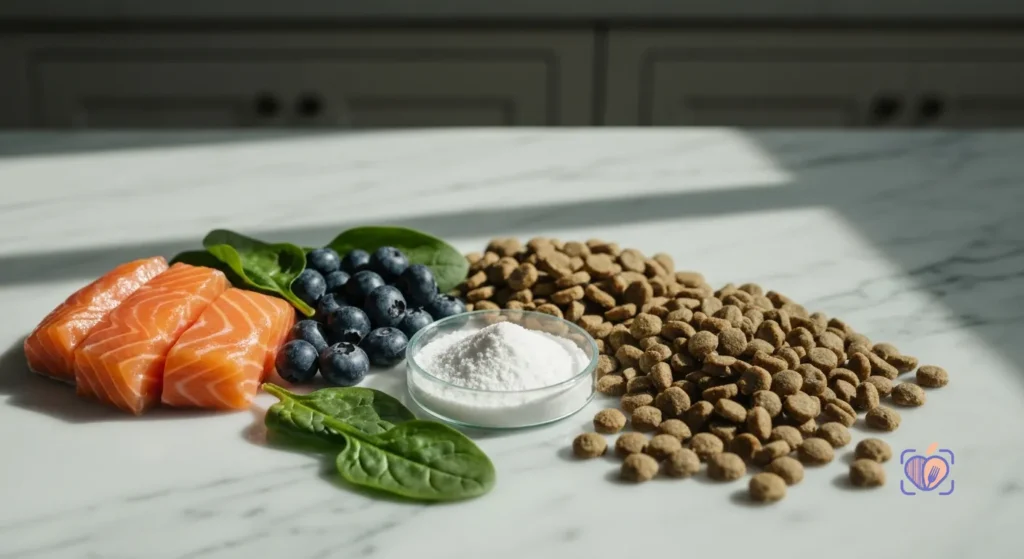
BHA (Butylated Hydroxyanisole) in dog food is a synthetic chemical preservative used to prevent fats and oils from spoiling, but its safety is highly controversial as it is listed as a possible human carcinogen.
It’s a simple ingredient with a simple purpose: to extend shelf life. To make sure the kibble you buy today is still “fresh” six months from now. They call it preservation. I call it a compromise. A compromise made not for your dog, but for the supply chain. It’s a solution born in a boardroom, not a kitchen.
At Pet Scan Genius, we don’t deal in compromises. We deal in clarity.
The Seduction of Shelf Life
Nostalgia is delicate, but potent. We remember the loyalty, the unwavering affection of a dog. What we don’t remember is checking the fine print on their food bag. We trusted the brand, the smiling dog on the package. But advertising is based on one thing: happiness. And the truth is, happiness is a bag of kibble that can sit in a warehouse for a year. That’s where BHA comes in.
It’s a cheap, effective antioxidant. It keeps the fat from going rancid. It does its job. But the question isn’t whether it works. The question is, at what cost?
Manufacturers will tell you it’s necessary. That it prevents waste and keeps costs down. But necessity is just the plea for every infringement of human (and canine) freedom. The real necessity is transparency.
Peeling Back the Label: What They Aren’t Telling You
The label is a battleground of information. It’s designed to be scanned, not studied. But the devil, as they say, is in the details.
The Official Story
The U.S. Food and Drug Administration classifies BHA as “Generally Recognized As Safe” (GRAS) in low doses. This is the green light manufacturers need. You can find their official stance on their website, a monument to regulation and acceptable risk. But what one man calls safety, another man calls the bare minimum. The conversation around food chemicals is far from settled, with many experts questioning the long-term effects of daily, low-dose exposure.
The Unsettling Truth
Here’s the part of the conversation they leave out. The National Toxicology Program lists BHA as “reasonably anticipated to be a human carcinogen.” The state of California lists it as a known carcinogen. It’s banned or heavily restricted for human consumption in Japan and parts of the European Union.
Suddenly, “generally recognized as safe” feels a little less comforting. It’s a calculated risk, and your dog is the one taking it. This isn’t just about food; it’s a systemic issue. Consumers are increasingly wary of the toxic products marketed for their pets, from toys to treats, and for good reason.
The Future Doesn’t Require a Compromise
Change is neither good nor bad, it simply is. The industry is changing because you are demanding it. You’re no longer satisfied with the old answers.
There are better, safer ways to preserve pet food. Natural alternatives like mixed tocopherols (a source of Vitamin E), rosemary extract, and ascorbic acid do the same job without the cloud of suspicion. They might cost a little more. They might reduce the shelf life by a few months. But they remove the question mark from your dog’s food bowl.
This is where we come in. Reading every label is a job in itself. It’s tedious. It’s confusing. That’s by design. Pet Scan Genius gives you the power of a food scientist in your pocket.
Stop guessing. Start knowing. Scan a barcode with the Pet Scan Genius app and we’ll instantly analyze the ingredients for BHA, BHT, and thousands of other toxic additives, dangerous fillers, and hidden allergens. We give you a simple, clear verdict. No jargon. No compromise. Just the truth.
The Conversation Around BHA
Is BHA banned in dog food?
No, BHA is not banned in dog food in the United States. The U.S. Food and Drug Administration (FDA) permits its use as a preservative at low, specified levels. However, its use is far more restricted in other parts of the world due to health concerns.
What are the natural alternatives to BHA in dog food?
Many forward-thinking brands use natural preservatives to ensure freshness. The most common alternatives are mixed tocopherols (Vitamin E), Vitamin C (ascorbic acid), and plant extracts like rosemary, clove, or spearmint extract. These are effective and don’t carry the same health risks associated with synthetic chemicals.
How can I tell if my dog’s food contains BHA?
BHA must be listed on the ingredient panel. Look for the terms “BHA,” “Butylated Hydroxyanisole,” or sometimes as part of a generic “preservatives” listing. The easiest and most reliable way to check is by using an analysis tool like the Pet Scan Genius app, which flags this and other harmful ingredients instantly.
Your dog trusts you completely. It’s time to have a food source that earns that same trust.
The truth is in the palm of your hand. It’s time to use it.
Don’t wonder what’s in their bowl. Know. Visit Pet Scan Genius and download the future of pet wellness.
- Visit Pet Scan Genius: Pet Scan Genius