
You’re standing in the grocery aisle. The party is in two hours. All you want is a simple bowl of chips everyone can enjoy. You pick up a bag of Tantos Chips. The label looks clean. Corn, oil, salt. It should be simple. But it never is.
For millions of us, that simple moment is fraught with anxiety. It’s a rapid-fire calculation of risk, a mental scan of past reactions, a silent prayer that this time—this time—it’s actually safe. It’s the exhaustion of living on high alert, where a single, misplaced crumb can mean a trip to the emergency room. This isn’t just about picky eating; it’s a matter of life and death, a reality underscored by leading medical experts.
As organizations like FARE (Food Allergy Research & Education) consistently report, food allergies are a serious medical condition affecting over 32 million Americans. There is no cure, and the only prevention is strict, absolute avoidance. When we talk about reading a label for Tantos Chips, we aren’t just talking about a snack. We’re talking about managing a persistent, life-altering threat. We understand that. It’s why we exist.
The Anatomy of a Chip: Deconstructing the Real Risks in Tantos
To the average person, a tortilla chip is one of the simplest foods imaginable. To someone managing an allergy or celiac disease, it’s a complex puzzle of agricultural practices, manufacturing processes, and hidden chemical compounds. Let’s pull back the curtain on a bag of Tantos and expose the specific areas where danger truly lies.
The Gluten Question: Is “Corn Masa Flour” Truly Safe?
The bag says “Corn.” Your mind says “Safe.” But the reality is far more complex. While corn is naturally gluten-free, its journey from field to chip is riddled with opportunities for cross-contamination. The primary risk comes from a practice called “crop rotation,” where farmers may grow wheat, barley, or rye in the same fields during alternate seasons. This can lead to stray grains being harvested along with the corn.
Furthermore, the industrial milling process is a significant threat. Many mills that process corn masa flour also process wheat flour on the same equipment. Without a strict, certified gluten-free cleaning protocol—a costly and time-consuming process—airborne wheat flour dust can, and does, settle and mix into the corn flour. For someone with Celiac Disease, even a few parts per million of gluten can trigger a severe autoimmune reaction, damaging the small intestine and causing debilitating symptoms. A simple “Corn” label on Tantos Chips is not a guarantee of safety; it’s merely the beginning of the investigation.
Seasoning & Spice Blends: The Hidden Dairy and Soy Minefield
If you’re looking at a flavored variety of Tantos Chips—like Nacho Cheese or Spicy Ranch—the ingredient list gets longer and far more opaque. The danger here lies in the proprietary “seasoning blends” and nebulous terms like “natural flavors.”
These blends are often formulated by third-party suppliers, and their exact composition is a trade secret. However, they are common hiding places for major allergens:
- Dairy: Whey powder is frequently used to give nacho cheese seasonings their creamy texture and tangy flavor. Casein, another milk protein, is also a common binder.
- Soy: Soy lecithin is a cheap and effective emulsifier used in many powdered coatings to ensure they stick to the chip evenly. Hydrolyzed soy protein is often used as a flavor enhancer.
- Gluten: Maltodextrin, unless specified as being from corn or tapioca, can be derived from wheat. Yeast extract and caramel color can sometimes be derived from barley.
The term “natural flavors” is a catch-all that can legally conceal dozens of ingredients. For anyone with a severe allergy, this ambiguity is unacceptable. It turns every seasoned Tantos Chip into a game of Russian roulette.
The Frying Oil Factor: Shared Fryers and Contamination Cascades
Let’s assume the chips themselves are perfect—pure, uncontaminated corn. They still have to be cooked. Tantos Chips, like most commercial chips, are deep-fried. The question is: what else is being cooked in that oil?
Large food manufacturing plants are models of efficiency. They often run multiple product lines, and it’s common practice to use the same large-scale industrial fryers for different products. The oil that crisps your corn-based Tantos Chips may have been used just minutes before to fry a breaded, gluten-containing onion ring product or a tempura-battered snack mix.
This creates a serious risk of cross-contamination. Allergenic proteins from wheat, nuts, or seafood can leach into the cooking oil and subsequently contaminate a product that is, on paper, completely free of those allergens. The high heat of frying does not reliably destroy these allergenic proteins. This is one of the most insidious forms of contamination because it’s completely invisible on the ingredient label and can only be verified by contacting the manufacturer directly about their specific frying protocols—a step most consumers don’t have the time or access to take.

The ‘May Contain’ Warning: Decoding Facility-Level Threats
That faint warning on the back of the bag, “Processed in a facility that also handles peanuts, tree nuts, and wheat,” is the manufacturer’s legal CYA. But what does it mean for your safety? It means the very air in the facility could be a threat.
Airborne particles of allergens like wheat flour dust or powdered peanut flavorings can travel through ventilation systems and settle on equipment, packaging, and the products themselves. Shared conveyor belts, weighing machines, and packaging lines are all vectors for contamination. While a manufacturer might follow “Good Manufacturing Practices” (GMPs), this doesn’t always guarantee a complete separation of allergens unless they have dedicated, certified allergen-free lines.
For someone with a life-threatening anaphylactic allergy to nuts, this warning means the product is likely an unacceptable risk. The potential for a stray particle to trigger a systemic, life-threatening reaction is real and must be taken with the utmost seriousness.
The Science of Deception: Understanding Cross-Reactivity
Your body’s immune system is a sophisticated pattern-recognition machine. Unfortunately, it can sometimes be fooled. Cross-reactivity occurs when the proteins in one substance are so similar to the proteins in another that your immune system mistakes them and launches an allergic attack.
This is critically important when considering a product like Tantos Chips. For example, if you have Celiac Disease, your body reacts to a protein called gliadin, found in wheat. But the immune system can sometimes mistake other proteins for gliadin. A well-known example is avenin, a protein in oats. This is why many with Celiac Disease must seek out certified gluten-free oats. There is also emerging research into the potential for the corn protein, zein, to cause a reaction in a small subset of highly sensitive individuals with Celiac Disease, though this is less common.
For nut allergies, the phenomenon is even more pronounced. The proteins in tree nuts are often structurally similar. Someone with a severe walnut allergy has a very high probability of also reacting to pecans and cashews. There can even be cross-reactivity between seemingly unrelated foods, like a birch pollen allergy being linked to reactions to apples, celery, and almonds. This biological complexity means that simply avoiding one named allergen isn’t enough; you must understand the entire web of potential reactions to truly be safe.
The Hidden Dangers: Where Allergens Hide in Plain Sight
Your vigilance can’t stop at the Tantos Chips bag. Allergens are masters of disguise, hiding in places you’d never expect. True safety requires a 360-degree awareness.
- The Salsa Bowl at the Party: Someone just dipped a gluten-containing cracker into the communal salsa you’re about to use for your Tantos. The bowl is now contaminated.
- Restaurant Kitchens: The ‘gluten-free’ Tantos nachos you ordered were prepped on a cutting board where a flour tortilla was just cut. The risk is now unacceptably high.
- Bulk Bins at the Store: The scoop for the ‘gluten-free’ granola was just used in the wheat germ bin. This is a recipe for disaster.
- Modified Food Starch: A common thickener that, unless its source is specified (e.g., ‘corn starch’), is often derived from wheat.
- Caramel Color & Maltodextrin: Frequently derived from barley or wheat, introducing hidden gluten into sauces, drinks, and processed foods.
- Pet Food: Many dog and cat foods contain wheat, dairy, and peanuts. Handling their food or getting a ‘kiss’ from your pet after they’ve eaten can transfer allergens and cause a reaction.
- Cosmetics & Lotions: Almond oil in lotions, wheat protein in shampoos, and soy in lip balms can cause contact reactions or be accidentally ingested.
The Complexity is Overwhelming. The Solution is Simple.
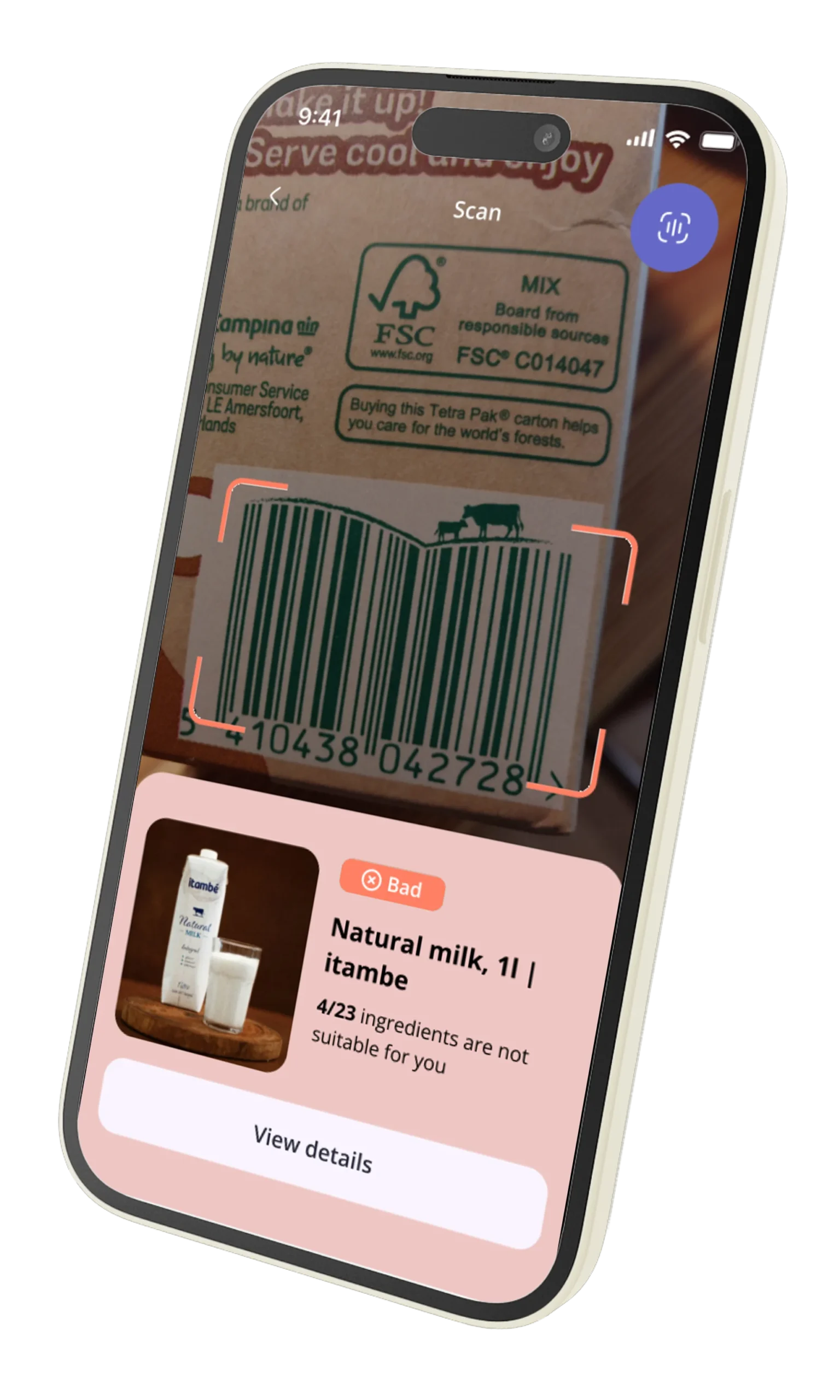
Reading one label for one allergen is hard enough. But what if you’re managing multiple conditions? Celiac Disease and a dairy allergy. A nut allergy and a soy intolerance. A low-FODMAP diet for IBS and avoiding sesame. The matrix of what you need to track becomes exponentially complex. It’s not just about one ingredient; it’s about the intersection of dozens of rules. This is why we built Food Scan Genius. Our mobile app analyzes over 39 distinct dietary labels simultaneously, including complex overlapping combinations. We do the work so you don’t have to live in a state of constant, exhausting vigilance.
Your Safety Is Not a Luxury. It’s Time to Take Control.
Stop guessing. Stop spending hours in the grocery store squinting at microscopic ingredient lists. Stop feeling the anxiety that comes with every meal you don’t prepare yourself. You deserve to eat with confidence and peace of mind. Food Scan Genius puts a powerful food safety expert in your pocket.
Scan any barcode, and instantly see a clear, simple, yes-or-no answer based on your specific dietary profiles. It’s time to reclaim the joy of food.
Download the app that will change the way you eat forever. Your safety is one scan away.
For Android: Download on Google Play
For iOS: Download on the App Store
Frequently Asked Questions
Are the ‘Hint of Lime’ Tantos Chips safe for a corn allergy if the main ingredient is corn?
This is a critical and nuanced question. While the primary ingredient is corn, a ‘Hint of Lime’ flavor often contains citric acid and ‘natural flavors’. Citric acid is commonly derived from corn, which could potentially trigger a reaction in someone with a severe corn allergy. Furthermore, the ‘natural flavors’ could contain a corn-derived carrier like maltodextrin. Therefore, even if the chip itself is corn, the flavorings added can make it unsafe for someone with a corn allergy. You must scrutinize every ingredient, not just the primary one.
Does a ‘gluten-free’ certification on Tantos Chips guarantee no cross-contamination with tree nuts?
No, it absolutely does not. A ‘gluten-free’ certification from an organization like the GFCO only verifies that the product meets the FDA standard of containing less than 20 parts per million of gluten. This certification process is entirely separate from allergen controls for other substances. A facility can have a certified gluten-free line that is right next to a line processing almonds or pecans. The certification provides no information about the risks of other Top 9 allergens, and you must look for separate warnings or certifications regarding nuts.
How can I verify the ‘natural flavors’ in Tantos Spicy Ranch chips for hidden MSG or dairy?
Verifying ‘natural flavors’ is one of the biggest challenges for consumers. The FDA definition is extremely broad. The only way to be 100% certain is to contact the manufacturer, Tantos, directly. Their consumer affairs department should be able to provide a specific allergen statement on whether dairy-derived ingredients (like whey) or MSG are part of their ‘natural flavors’ for that specific product. Without this direct confirmation, it is safest to assume that an allergen you are avoiding could be present.
If my child has a severe peanut allergy, is it safe to have Tantos Chips in the house if the label says ‘processed in a facility with tree nuts’?
This depends on your family’s specific risk tolerance, but extreme caution is advised. While peanuts are legumes and tree nuts are a different category, manufacturing facilities often group them together. The warning ‘processed in a facility with tree nuts’ could imply shared equipment or airborne particles from nuts like almonds or walnuts. However, it often signals a general lack of allergen segregation that could also apply to peanuts, even if they aren’t explicitly mentioned. For a child with a life-threatening peanut allergy, the safest protocol is to avoid all products with such advisory warnings unless you have contacted the manufacturer and received explicit confirmation that peanuts are not present on the same line or in the same facility.
{
“@context”: “https://schema.org”,
“@type”: “FAQPage”,
“mainEntity”: [
{
“@type”: “Question”,
“name”: “Are the ‘Hint of Lime’ Tantos Chips safe for a corn allergy if the main ingredient is corn?”,
“acceptedAnswer”: {
“@type”: “Answer”,
“text”: “This is a critical and nuanced question. While the primary ingredient is corn, a ‘Hint of Lime’ flavor often contains citric acid and ‘natural flavors’. Citric acid is commonly derived from corn, which could potentially trigger a reaction in someone with a severe corn allergy. Furthermore, the ‘natural flavors’ could contain a corn-derived carrier like maltodextrin. Therefore, even if the chip itself is corn, the flavorings added can make it unsafe for someone with a corn allergy. You must scrutinize every ingredient, not just the primary one.”
}
},
{
“@type”: “Question”,
“name”: “Does a ‘gluten-free’ certification on Tantos Chips guarantee no cross-contamination with tree nuts?”,
“acceptedAnswer”: {
“@type”: “Answer”,
“text”: “No, it absolutely does not. A ‘gluten-free’ certification from an organization like the GFCO only verifies that the product meets the FDA standard of containing less than 20 parts per million of gluten. This certification process is entirely separate from allergen controls for other substances. A facility can have a certified gluten-free line that is right next to a line processing almonds or pecans. The certification provides no information about the risks of other Top 9 allergens, and you must look for separate warnings or certifications regarding nuts.”
}
},
{
“@type”: “Question”,
“name”: “How can I verify the ‘natural flavors’ in Tantos Spicy Ranch chips for hidden MSG or dairy?”,
“acceptedAnswer”: {
“@type”: “Answer”,
“text”: “Verifying ‘natural flavors’ is one of the biggest challenges for consumers. The FDA definition is extremely broad. The only way to be 100% certain is to contact the manufacturer, Tantos, directly. Their consumer affairs department should be able to provide a specific allergen statement on whether dairy-derived ingredients (like whey) or MSG are part of their ‘natural flavors’ for that specific product. Without this direct confirmation, it is safest to assume that an allergen you are avoiding could be present.”
}
},
{
“@type”: “Question”,
“name”: “If my child has a severe peanut allergy, is it safe to have Tantos Chips in the house if the label says ‘processed in a facility with tree nuts’?”,
“acceptedAnswer”: {
“@type”: “Answer”,
“text”: “This depends on your family’s specific risk tolerance, but extreme caution is advised. While peanuts are legumes and tree nuts are a different category, manufacturing facilities often group them together. The warning ‘processed in a facility with tree nuts’ could imply shared equipment or airborne particles from nuts like almonds or walnuts. However, it often signals a general lack of allergen segregation that could also apply to peanuts, even if they aren’t explicitly mentioned. For a child with a life-threatening peanut allergy, the safest protocol is to avoid all products with such advisory warnings unless you have contacted the manufacturer and received explicit confirmation that peanuts are not present on the same line or in the same facility.”
}
}
]
}
Every scan is answered by NutriGraphAPI, our own catalogue of over 5 million barcode-indexed packaged products with allergen, additive and dietary data. Building a food or grocery app yourself? The same data is available as an API.