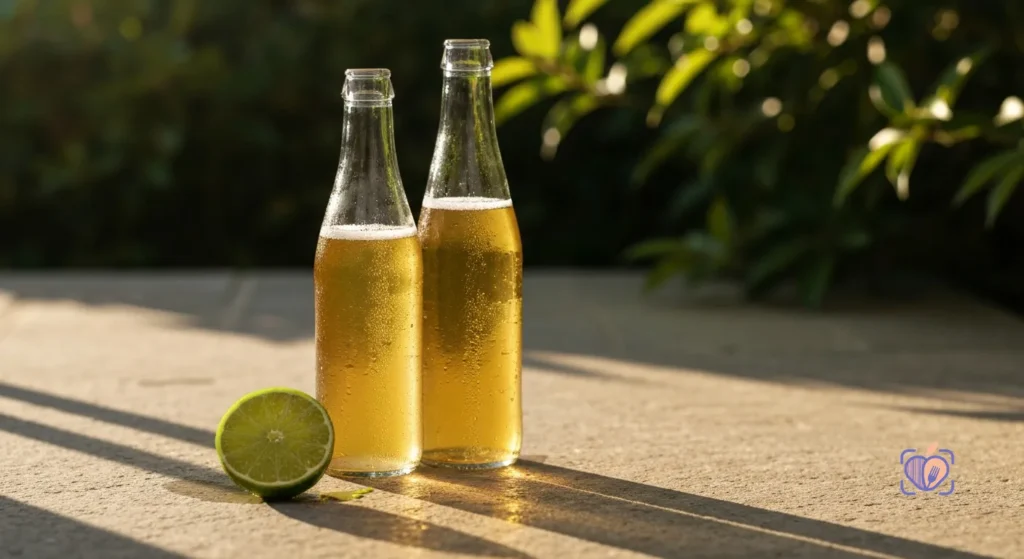
It’s a simple question, but it’s never just about a number. You’re standing there, the iconic clear bottle glistening with condensation, a lime wedge patiently waiting. The sun is warm, the conversation is flowing, and you’re thinking about the next one. But a deeper question surfaces, a flicker of responsibility, of self-awareness. What am I really putting into my body?
This isn’t about judgment. It’s about control. It’s about making an informed choice that aligns with your health, your goals, and your peace of mind. Whether you’re meticulously tracking calories for a fitness regimen, managing a health condition, or simply practicing mindful consumption, knowing the precise alcohol percentage in your beer is the first, most critical step. It’s the line between a relaxing afternoon and a decision you might regret.
We understand this impulse for clarity because it’s at the core of everything we do. The desire for knowledge is a fundamental human need, especially when it concerns our health. The medical community agrees that understanding alcohol content is vital for responsible consumption and managing health outcomes. As stated by medical experts at the Mayo Clinic, alcohol contributes significant calories and can impact a wide range of health conditions, making knowledge of its concentration—the ABV—a non-negotiable piece of data for any health-conscious individual. You deserve a clear answer, and we’re here to provide it.
The Anatomy of a Corona: A Granular Breakdown of ABV
Corona isn’t a single entity; it’s a family of products, each with a distinct profile and, most importantly, a different alcohol by volume (ABV). Assuming they’re all the same is a common mistake that can derail your dietary and health goals. Let’s deconstruct each one so you can make your choice with confidence.
Corona Extra: The Flagship’s Precise ABV
This is the beer that started it all, the one synonymous with beach vacations and summer days. Corona Extra is the global benchmark, and its alcohol content is a finely tuned constant.
The official Alcohol By Volume (ABV) for a standard 12 oz (355 ml) bottle of Corona Extra is 4.6%.
But what does 4.6% ABV truly mean? In the United States, a “standard drink” contains roughly 14 grams of pure alcohol. A 12 oz bottle of Corona Extra, at 4.6% ABV, contains approximately 13.9 grams of alcohol, placing it squarely in the definition of one standard drink.
- The Risk of Miscalculation: The danger here is perception. Because of its light, crisp taste, many perceive Corona Extra as a “lighter” beer in terms of alcohol. It’s easy to consume several in a social setting, thinking they are less potent than they are. Three Corona Extras is metabolically equivalent to three standard drinks, a quantity that can easily exceed daily moderate drinking guidelines and significantly impact your caloric intake and blood alcohol concentration.
- Caloric Impact: The alcohol itself contributes calories, alongside the carbohydrates from the brewing process. A 12 oz Corona Extra contains approximately 148 calories. If you’re on a 2,000-calorie diet, three of these beers represent over 22% of your daily caloric budget, a fact many drinkers overlook.
Corona Light: Unpacking the “Light” Label
The term “light beer” can be misleading. Many assume it refers primarily to a lower alcohol content, but it’s more often about calories and carbohydrates. This is a crucial distinction for anyone managing their diet.
The official ABV for a standard 12 oz (355 ml) bottle of Corona Light is 4.0%.
While this is indeed lower than Corona Extra, the difference is only 0.6%. This is not a dramatic reduction in alcohol. A Corona Light contains about 12.1 grams of pure alcohol, still very close to a U.S. standard drink. The primary difference lies elsewhere.
- The Real “Lightness”: Corona Light shines in its caloric and carbohydrate reduction. It contains approximately 99 calories and 5 grams of carbohydrates, compared to Extra’s 148 calories and 13 grams of carbs. For someone on a low-carb or keto-adjacent diet, or simply watching their weight, this is a significant advantage.
- The Risk of Overcompensation: The psychological trap of a “light” label is powerful. Drinkers may feel justified in consuming more Corona Lights than they would Corona Extras, believing the impact is negligible. However, four Corona Lights (48.4 grams of alcohol) contains more pure alcohol than three Corona Extras (41.7 grams of alcohol). You could easily erase the caloric deficit and consume more alcohol than intended under the illusion of making a “healthier” choice.
Corona Premier & Familiar: The Extended Family of Variations
Corona has expanded its lineup to cater to specific consumer demands, particularly the growing market for low-carbohydrate options and traditional packaging.
Corona Premier has an ABV of 4.0%, identical to Corona Light. Its key differentiator is being even lower in carbs and calories. At just 2.6 grams of carbohydrates and 90 calories, it is Corona’s direct answer to ultra-light beers like Michelob Ultra. The risk here is the same as with Corona Light—the temptation to over-consume based on the attractive nutritional panel, while ignoring that it still contains a full 4.0% alcohol.
Corona Familiar, typically sold in a larger 32 oz brown bottle, has a slightly higher ABV of 4.8%. This variation is marketed as a more traditional, full-bodied version of Corona. The primary risk with Familiar is one of serving size. A consumer might mentally equate “one bottle” of Familiar with “one bottle” of Extra, failing to account for the fact that it contains nearly three times the volume and a higher alcohol concentration. A single bottle of Familiar is not one drink; it’s nearly three standard drinks, a critical fact for anyone monitoring their intake.
Corona Sunbrew & Non-Alcoholic (0.0%): The Sober-Curious Choice
The rise of the sober-curious and wellness movements has led to the introduction of non-alcoholic options. This category requires extreme precision.
Corona Non-Alcoholic boasts a 0.0% ABV. This is achieved through a process of dealcoholization where a fully brewed beer has its alcohol removed. For most people, this is a perfect substitute.
- The Critical Distinction: In the U.S., beverages can be labeled “non-alcoholic” if they contain less than 0.5% ABV. Corona’s commitment to a true 0.0% is significant for certain individuals. For someone in recovery from alcohol use disorder, even trace amounts of alcohol can be a trigger. Likewise, for those with specific health conditions or religious restrictions, the difference between 0.0% and <0.5% is not trivial; it is absolute. Always check the label for that explicit 0.0% if your situation demands zero alcohol.
Corona Sunbrew, another 0.0% ABV product, is unique in that it’s fortified with Vitamin D. This further targets the wellness-oriented consumer, but the same rules of label scrutiny apply.
The Science of Sensitivity: It’s Not Just About the Alcohol
When you’re trying to understand what’s in your beer, the ABV is just the beginning. For many, a reaction to beer isn’t from the ethanol itself, but from its core ingredients. This is a form of “ingredient cross-sensitivity,” where your body’s reaction to one substance is triggered by another related one.
Corona, like most traditional beers, is brewed from barley, water, hops, and corn. This ingredient list presents several potential landmines for individuals with specific dietary restrictions:
- Barley and Gluten: Barley is a primary source of gluten. For individuals with Celiac Disease, consuming Corona will trigger an autoimmune response that damages the small intestine. For those with non-celiac gluten sensitivity (NCGS), it can cause bloating, brain fog, and digestive distress. The crisp, clean taste of a Corona offers no hint of the gluten lurking within, making it a dangerous choice for the gluten-intolerant.
- Corn Sensitivity: While less common than gluten sensitivity, corn allergies or intolerances are a serious concern for many. Corn is often used as an adjunct in brewing to lighten the body and flavor of the beer. If you have a corn allergy, Corona is not a safe choice.
- Yeast Intolerance: Brewer’s yeast (Saccharomyces cerevisiae) is essential for fermentation. Individuals with yeast sensitivities can experience reactions ranging from digestive upset to skin issues.
This is where simply knowing the ABV falls short. You might have chosen a Corona Light for its low calories, but if you have a gluten sensitivity, the resulting inflammation and discomfort will negate any perceived health benefit.
Hidden Dangers: The Traps Beyond the Label
True dietary control means seeing the whole picture. The number on the label is just one data point. The real risks often hide in plain sight, in social situations and common assumptions.
- The “Standard Drink” Fallacy: As we’ve seen, not all drinks are created equal. Your mind might count “beers,” but your body counts grams of alcohol. A high-ABV craft IPA can be equivalent to two Coronas. Without knowing the precise numbers, it’s easy to slide from moderate consumption into binge drinking territory unintentionally.
- Hidden Calories and Carbs: A night of drinking can completely derail a week of disciplined eating. Alcohol contains 7 calories per gram, and the associated carbs add up quickly. This is a critical blind spot for anyone managing their weight or metabolic health like diabetes.
- The Cocktail Contamination: Ordering a “Coronarita” or a beer cocktail? You’ve just entered a minefield. The addition of sugary mixers, tequila, and triple sec can turn a 150-calorie beer into a 600-calorie sugar bomb with an alcohol content that is impossible to guess.
- Cross-Contamination at the Tap: While Corona is almost exclusively served in bottles, this is a crucial point for any beer drinker. Draft lines in bars are often used for multiple beers, and if not cleaned properly, can lead to cross-contamination with allergens from other brews, such as wheat or peanuts (from certain stouts).
Managing this complexity is exhausting. You’re constantly on guard, scrutinizing, questioning, and calculating. It’s a full-time job just to feel safe in your own dietary choices.
This is the very reason we built Food Scan Genius. The world of food and drink is a labyrinth of hidden ingredients, confusing labels, and overlapping dietary needs. Managing diets is incredibly complex, which is why our mobile app analyzes over 39 distinct dietary labels simultaneously, including complex overlapping combinations like ‘gluten-free,’ ‘low-fodmap,’ and ‘keto-friendly.’ You shouldn’t have to be a nutritionist to enjoy a drink with friends. Our app does the work for you, instantly.
Your Pocket Nutritionist Is Waiting
Stop guessing. Stop worrying. Stop spending your precious energy deciphering labels and running mental calculations. The clarity you’re searching for is here. With a simple scan of a barcode, Food Scan Genius gives you an instant, easy-to-read breakdown of any product, tailored to your specific dietary profile.
- Does this beer fit your low-carb lifestyle?
- Does it contain hidden gluten or corn?
- What is the precise calorie and alcohol content?
Get immediate, definitive answers. Take back control of your health and enjoy social occasions with confidence, not anxiety. Download the app that thinks like you do.
For Android: Download on Google Play
For iOS: Download on the App Store
Don’t just wonder what’s in your bottle. Know.
Frequently Asked Questions
Q: Does the alcohol percentage in Corona Extra vary by country?
A: Generally, no, but with a minor caveat. Grupo Modelo, the brewer, maintains a consistent production standard for global brands like Corona Extra, targeting a 4.6% ABV. However, local regulations regarding alcohol labeling and measurement can sometimes lead to slight rounding differences on packaging. For instance, a country might round to the nearest tenth of a percent, while another shows a more precise figure. Furthermore, the definition of a “standard drink” varies significantly from country to country, which can affect government-provided health guidelines, but not the actual composition of the beer itself. For all practical purposes, you can consider Corona Extra to be a consistent 4.6% ABV product globally.
Q: How does the brewing process affect the final ABV of Corona Light vs. Corona Extra?
A: The difference in ABV and caloric content between Corona Light (4.0% ABV, 99 calories) and Corona Extra (4.6% ABV, 148 calories) comes down to the mashing process and the amount of fermentable sugars. To create a “light” beer, brewers use a process that results in a more complete fermentation. They often use specific enzymes to break down more of the complex carbohydrates (dextrins) from the malt and corn into simple, fermentable sugars. The yeast then consumes more of these sugars, producing slightly less alcohol and leaving behind fewer residual carbohydrates. This reduction in leftover carbs is the primary reason for the significant drop in calories, with the modest reduction in alcohol being a secondary effect.
Q: Can someone with celiac disease drink Corona, and what are the risks?
A: No, someone with celiac disease should absolutely not drink Corona. Corona Extra, Light, and its other variations are all brewed with barley, which is a primary source of gluten. For a person with celiac disease, ingesting gluten triggers an autoimmune reaction that causes inflammation and damage to the lining of the small intestine. This can lead to severe digestive issues, malabsorption of nutrients, and long-term health complications. There is no safe amount of gluten for a celiac patient, and despite its light color and body, Corona is not a gluten-free product. Individuals with celiac disease should seek out beers specifically brewed to be gluten-free, typically made from grains like sorghum, rice, or millet.
Q: What is the exact carbohydrate and calorie count in a Corona Premier, and how does it compare to other light beers?
A: Corona Premier is specifically engineered for the low-carb consumer. A standard 12 oz serving contains 90 calories and 2.6 grams of carbohydrates, along with a 4.0% ABV. This positions it directly against the market leader in this category, Michelob Ultra, which has 95 calories and 2.6 grams of carbohydrates. Compared to Corona Light (99 calories, 5g carbs) and Corona Extra (148 calories, 13g carbs), Premier offers a significant reduction in both calories and carbs. It’s a strategic choice for those on strict ketogenic or low-carbohydrate diets who are looking for a beer option that has a minimal impact on their daily macronutrient targets.
Every scan is answered by NutriGraphAPI, our own catalogue of over 5 million barcode-indexed packaged products with allergen, additive and dietary data. Building a food or grocery app yourself? The same data is available as an API.