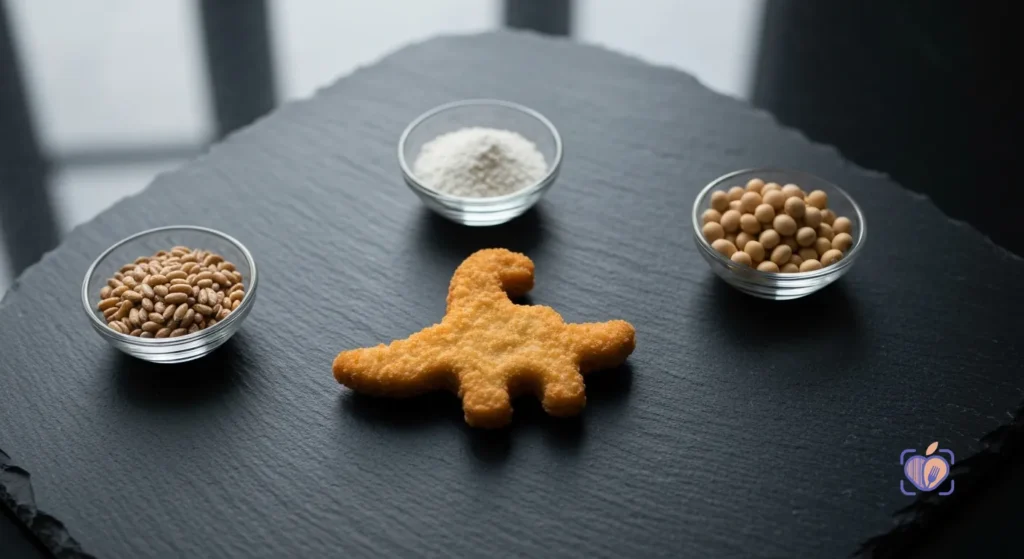
It’s a familiar scene. The fluorescent lights of the grocery store aisle hum above you. In your cart, you have the essentials. In your mind, you have a list of forbidden ingredients longer than your arm. Your child, a beacon of picky-eater defiance, has finally agreed on a food they’ll actually eat: the fun, nostalgic, dinosaur-shaped chicken nugget. The box of Dino Buddies beckons, a promise of a peaceful dinner.
But for you, it’s not a promise. It’s a question. A risk. A moment of intense scrutiny.
You pick up the box. Your eyes scan the ingredient list, a dense block of text that feels more like a legal document than a description of food. You’re not just reading words; you’re hunting for threats. Wheat, soy, milk, eggs, corn… the list goes on. You see “natural flavors” and a cold dread creeps in. What does that even mean? Is it safe? You’ve been burned before. A single oversight, a hidden derivative, a shared production line—it’s all it takes to turn a happy meal into a trip to the emergency room.
This isn’t just about picky eating. This is about safety. It’s about the profound responsibility of protecting someone you love from a world that isn’t designed for them. Food allergies are not a lifestyle choice; they are a serious medical condition. The anxiety is real, and it is relentless. According to leading experts at Food Allergy Research & Education (FARE), researchers estimate that up to 33 million Americans have food allergies, including about 1 in 13 children. That’s roughly two in every classroom. This isn’t a niche problem; it’s a national health issue, and you are on the front lines, every single day, with every single meal.
We understand that feeling. We built Food Scan Genius because we believe you deserve clarity. You deserve confidence. You deserve to turn that moment of fear in the grocery aisle into a moment of certainty. This guide is for you. We’re going to deconstruct the Dino Buddy, piece by piece, and show you exactly what to look for, where the dangers hide, and how you can finally take back control.
The Anatomy of a Nugget: Deconstructing the Dino Buddies Label
Processed foods are complex ecosystems of ingredients, additives, and manufacturing processes. A simple-looking chicken nugget can be a minefield of potential allergens. To truly understand the risk, we can’t just glance at the label; we have to dissect it with the precision of a surgeon. Let’s break down the four key areas where allergens hide in products like Dino Buddies.
The Breading & Coating Conundrum: More Than Just Flour
The crispy, golden-brown exterior is what makes a nugget a nugget. It’s also the first and most obvious source of common allergens. The complexity here goes far beyond a simple “contains wheat” warning.
- The Primary Flour: Traditionally, this is bleached wheat flour, an immediate red flag for anyone with celiac disease or a wheat allergy. But manufacturers are getting clever. They might use a blend of flours. You could see rice flour or tapioca starch, which sounds safe, but they are often blended with corn flour or corn starch. A corn allergy, while less common, is still a serious concern for many families. The label might say “gluten-free,” but that doesn’t automatically mean it’s free from other grains you might be avoiding.
- Leavening Agents & Starches: Look deeper in the breading ingredients for things like “modified food starch.” This is a notorious ghost ingredient. While in the United States it must be declared if it’s from wheat, it can still be derived from corn, potato, or tapioca. If you have multiple sensitivities, this term is a massive question mark. Leavening agents like sodium aluminum phosphate or monocalcium phosphate are generally safe, but they are part of a complex chemical mixture that makes up the final product.
- The Buttermilk Myth: Some coatings get their adhesion and flavor from a wash before breading. This can be a simple water or egg wash, but sometimes it’s buttermilk or a whey protein solution. This introduces a significant dairy allergen that isn’t immediately obvious. You might scan for “milk” and miss “buttermilk powder” or “whey protein concentrate” buried deep in the sub-ingredient list for the coating.
The “Chicken” Itself: Fillers, Binders, and Broths
You assume the inside is just chicken, but in many processed nuggets, it’s rarely that simple. The chicken is often ground and mixed with a variety of other ingredients to improve texture, lower costs, and extend shelf life.
- Binders and Fillers: To hold the ground chicken together in that perfect T-Rex shape, manufacturers use binders. The most common binder is egg, usually listed as “egg whites” or “dried egg.” For those with an egg allergy, this makes the product an absolute non-starter. Another incredibly common filler is soy, in the form of “soy protein concentrate,” “isolated soy protein,” or “textured soy flour.” It adds bulk and protein but is one of the top allergens in the world. It can be devastating for a parent to buy a “chicken” product only to realize it’s a primary trigger for their child’s soy allergy.
- Injected Broths and Solutions: To keep the nuggets juicy, they are often “enhanced” or injected with a solution. This is a major hidden danger zone. This broth can contain a multitude of allergens. It’s often a chicken broth that contains wheat gluten for a richer mouthfeel (umami). It can contain autolyzed yeast extract, which can be a problem for those with yeast sensitivities and sometimes contains hidden gluten from its barley source. It might also contain dairy derivatives for creaminess. The label might just say “natural flavors,” a catch-all term that gives you zero clarity.
The Seasoning & Flavoring Minefield
This is where ingredient labels become truly opaque. The proprietary blend of spices and flavorings is a black box of risk for the allergy-conscious consumer. Manufacturers guard these recipes closely, and the FDA’s labeling laws give them significant leeway.
- “Natural Flavors” and “Spices”: These two terms are the bane of every allergy parent’s existence. Under FDA regulations, “natural flavors” can be derived from meat, seafood, poultry, eggs, and dairy. A “natural chicken flavor” in your Dino Buddies could, theoretically, contain dairy derivatives to give it a richer, roasted flavor. The term “spices” cannot include allergens like mustard, sesame, or celery in some regions without declaration, but the risk of cross-contamination in the spice blending facility is enormous. A facility that processes paprika might also process mustard powder on the same equipment.
- Hidden MSG & Dairy: Monosodium Glutamate (MSG) is a common flavor enhancer. While not a true allergen, many people have severe sensitivities to it. It can be hidden under names like “hydrolyzed vegetable protein,” “autolyzed yeast extract,” or “glutamic acid.” Additionally, dairy derivatives are often used as flavor carriers. Ingredients like “lactose,” “caseinates,” or “whey powder” can be added to seasoning blends to provide a savory, creamy flavor profile that you would never expect in a chicken nugget.
The Frying Oil & Cross-Contamination Factor
Even if the nugget itself is free from your specific allergen, the story isn’t over. How it’s cooked, both in the factory and potentially at home, is the final, critical piece of the puzzle.
- The Oil Itself: Most frozen nuggets are par-fried before being packaged. The oil used is a critical ingredient. The most common are soybean oil, canola oil, or corn oil. Highly refined soybean oil is exempted from being labeled as an allergen by the FDA, as the refining process removes the allergenic proteins. However, for a small number of exquisitely sensitive individuals, it can still pose a risk. And many consumers simply wish to avoid soy altogether. Less refined or “expeller pressed” soybean oil is a much greater risk.
- The Shared Fryer Risk: This is the ultimate hidden danger. The factory that produces your child’s “safe” Dino Buddies might run a different product on the same line just an hour earlier—a breaded fish stick (fish/shellfish allergen), a cheese-stuffed jalapeño popper (dairy allergen), or a nugget with a whole wheat breading (wheat allergen). While facilities are supposed to have cleaning protocols (Allergen Control Plans), are you willing to bet your child’s health on their diligence? The risk of microscopic particles causing a major reaction is very real.
The Science of Deception: Understanding Cross-Reactivity
Your body’s immune system is a powerful, complex defense network. But sometimes, it gets confused. This is the basis of cross-reactivity, a phenomenon where the proteins in one substance are so similar to the proteins in another that your immune system can’t tell the difference and launches an attack on both.
For the parent navigating the world of Dino Buddies, this adds another layer of terrifying complexity. For example, a child with a known allergy to cow’s milk may also react to goat’s milk or sheep’s milk because the primary proteins (casein and whey) are structurally very similar across species. You might think you’re making a safe choice by opting for a non-cow’s milk cheese, only to trigger the same allergic reaction.
In the context of processed foods, this is critical. Someone with a severe latex allergy might experience a reaction to foods like bananas, avocados, or kiwis—this is known as latex-fruit syndrome. More relevant to our nuggets, a person with a birch pollen allergy might experience Oral Allergy Syndrome (OAS) when eating soy. The body mistakes the soy protein for the birch pollen protein, leading to itching and swelling in the mouth and throat. Given that soy is a pervasive hidden ingredient in chicken nuggets, this is a significant and often misunderstood risk.
Understanding these connections is vital. It’s not enough to just avoid the one thing you know is a problem. You have to understand the entire network of related proteins and potential triggers. It’s a full-time job for a biochemist, yet it’s a burden placed squarely on the shoulders of parents.
The Danger Dossier: Where Allergens Hide
The ingredient list is just the beginning. The world is a minefield of hidden sources and cross-contamination risks. Here are some of the most overlooked traps that can turn a safe meal into a disaster:
- Condiment Crossfire: You’ve confirmed the Dino Buddies are safe. But what about the dipping sauce? Ketchup can contain hidden spices. BBQ sauce is often a hotbed of soy (soy sauce, tamari), wheat (thickeners), and mustard. Honey mustard contains egg. Ranch dressing is almost entirely dairy and egg. The safety of the main course is instantly negated by a contaminated condiment.
- The Shared Air Fryer: At home, you maintain a pristine, allergen-free kitchen. But at a friend’s house or a family gathering, their air fryer or toaster oven could be a major source of cross-contamination. If they toasted a regular wheat-based breadstick yesterday, microscopic gluten particles can easily become airborne and contaminate your child’s “safe” nuggets today.
- Restaurant Fryer Roulette: Never, ever trust a shared restaurant fryer if your child has a severe allergy. The chicken nuggets might be gluten-free, but they are almost certainly being fried in the same oil as the breaded calamari (shellfish, wheat), mozzarella sticks (dairy, wheat), and onion rings (wheat).
- The Pet Food Peril: This is a danger that is almost never considered. Many dry pet foods and dog biscuits are made with wheat flour, soy, and dairy products. A child with a severe wheat allergy can have a contact reaction simply by touching the dog’s food bowl and then touching their mouth or eyes. If the dog eats and then licks the child’s face, it can be enough to transfer the allergen protein and trigger a reaction.
- The Broth Betrayal: Canned chicken noodle soup, bouillon cubes, and powdered soup bases are notorious for containing hidden wheat and dairy. If you’re using a chicken broth to make a gravy or sauce for your Dino Buddies, you must verify its ingredients with the same rigor as the nuggets themselves.
Managing this level of detail is exhausting. The mental load is immense. You’re not just a parent; you’re a detective, a scientist, and a full-time risk assessor. The simple act of feeding your family becomes a high-stakes intelligence operation. It’s no wonder you feel overwhelmed. It’s an impossible task.
That’s why we exist. Trying to mentally cross-reference every ingredient, every hidden name, every potential cross-reactivity, and every environmental contaminant is not a sustainable way to live. This is why we built our mobile app to do the heavy lifting. Food Scan Genius analyzes over 39 distinct dietary labels simultaneously, including complex overlapping combinations like gluten-free AND dairy-free AND low-FODMAP. It sees the connections you don’t have time to research, flagging hidden soy in a chicken broth or a potential for cross-contamination that isn’t on the label. We handle the complexity so you can focus on the meal.
Your Moment of Clarity: Stop Guessing. Start Knowing.
You don’t have to live in a state of constant vigilance and fear. You don’t have to spend 20 minutes in the frozen food aisle, wrestling with a decision that could impact your child’s health. The power to be certain is already in your pocket.
Food Scan Genius turns your phone’s camera into an instant answer. Scan the barcode on that box of Dino Buddies, and get a clear, simple, color-coded response tailored to YOUR specific dietary profiles. No more doubt. No more anxiety. Just a simple, confident “Yes” or “No.”
Take back dinner time. Take back the grocery store. Download Food Scan Genius now and transform your relationship with food from fear to freedom.
For Android: Download on Google Play
For iOS: Download on the App Store
Frequently Asked Questions
Are Yummy Dino Buddies gluten-free and safe for celiacs?
The most popular brand, Yummy Dino Buddies, now offers a specific gluten-free version made with rice flour and corn flour. These are produced in a certified gluten-free facility, making them a generally safe option for individuals with celiac disease. However, it is absolutely critical to distinguish the packaging. Their original Dino Buddies are NOT gluten-free and contain wheat flour. Always double-check the box for the prominent “Gluten-Free” certification. Never assume the product is safe based on the brand name alone, as formulations can change and different product lines have vastly different ingredients.
Do Dino Buddies contain hidden dairy or soy allergens?
This depends entirely on the specific product line. The original Yummy Dino Buddies do not list dairy as a primary ingredient, but they are cooked in soybean oil. While highly refined soybean oil is not considered a major allergen by the FDA, some highly sensitive individuals may still react. Furthermore, other brands of dino-shaped nuggets frequently use whey or buttermilk powder in the breading and soy protein concentrate as a filler in the chicken meat. The only way to be certain is to meticulously read the label or use an app like Food Scan Genius to scan the barcode, which can cross-reference the ingredients against your specific soy and dairy allergy profile, catching derivatives you might overlook.
What is the risk of cross-contamination with frozen chicken nuggets like Dino Buddies?
The risk exists in two main areas: manufacturing and preparation. At the manufacturing level, the greatest risk comes from shared production lines. If a facility also produces products containing dairy, fish, or different grains, there is a non-zero chance of contamination. Look for certifications or on-package statements about being produced in a dedicated allergen-free facility. At home or in restaurants, the risk is much higher. Shared fryers, air fryers, baking sheets, and even tongs can easily transfer allergens from one food to another. For a severe allergy, it’s always safest to use dedicated cooking equipment.
Can an app really identify all potential allergens in processed foods like Dino Buddies?
Yes, a dedicated food allergy app can be significantly more effective than human label reading alone. The reason is twofold. First, an app like Food Scan Genius has a massive, constantly updated database of ingredients and their many alternative names. You might not know that “caseinate” is a milk protein, but the app does. Second, it automates the process, eliminating human error. When you’re tired and stressed in a grocery store, it’s easy to miss one word in a long list. The app scans and cross-references against your personalized list of dozens of allergens and dietary restrictions in a fraction of a second, providing a level of accuracy and speed that is difficult to achieve manually, especially for complex processed foods with layered ingredient lists.
Every scan is answered by NutriGraphAPI, our own catalogue of over 5 million barcode-indexed packaged products with allergen, additive and dietary data. Building a food or grocery app yourself? The same data is available as an API.