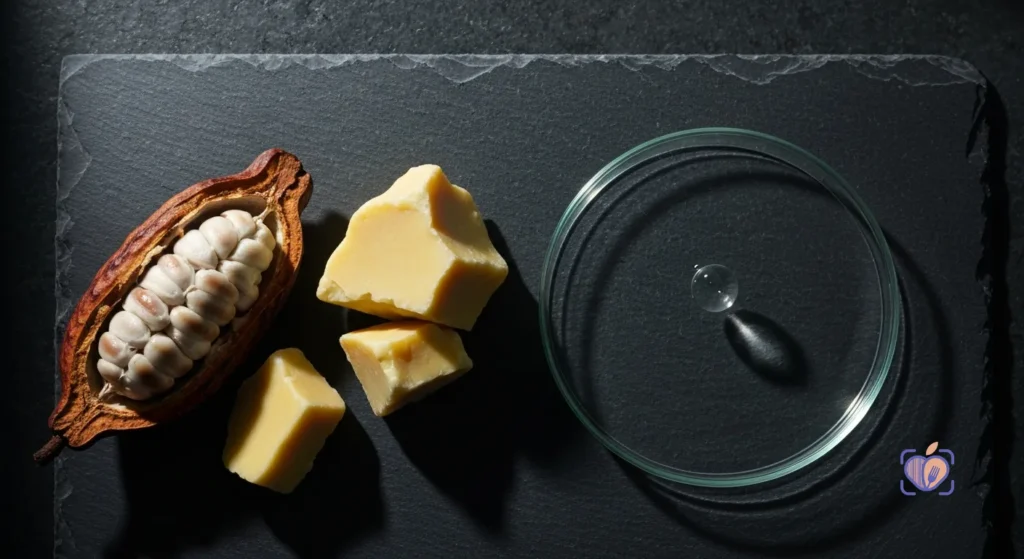
It’s a scent that takes you back. The rich, unmistakable aroma of Palmer’s Cocoa Butter Formula Lotion. It’s the smell of your mother’s vanity, of summer after a day at the pool, of a promise of soft, supple skin. It’s a feeling of comfort, of trust. A staple passed down through generations, sitting on millions of bathroom counters like a silent, dependable friend.
But in advertising, we have a saying: nostalgia is the most powerful, and deceptive, emotion. We sell the memory of a feeling, and we hope you don’t look too closely at the product.
What if that feeling of trust is misplaced? What if the very lotion you’re slathering on to heal your skin is contributing to the mysterious rash that won’t go away? The hormonal acne that flares up along your jawline with painful predictability? The nagging feeling that something in your routine just isn’t right?
You’re not imagining it. You’re not alone in this frustrating cycle. You buy a product to solve a problem, only to find yourself with a new one. This is the exhausting reality for millions dealing with contact dermatitis, chemical sensitivities, and skin that refuses to cooperate.
The truth is, the label on that familiar yellow bottle tells a story, but you need to know the language. Take the ingredient listed as ‘Fragrance’ or ‘Parfum.’ It seems innocent enough. But this single word is a Trojan horse. According to the Environmental Working Group’s (EWG) Skin Deep® database, the generic term ‘fragrance’ can hide a cocktail of potentially hundreds of unlisted chemical ingredients. These mixtures are associated with a range of health issues, including allergies, dermatitis, and respiratory distress. The industry calls it a ‘trade secret.’ We call it a betrayal of your trust.
This isn’t just about one ingredient. It’s about a fundamental disconnect between what a product promises and what it delivers. It’s time to turn the bottle around, look past the comforting marketing, and understand what you’re really putting on your body’s largest organ. It’s time for the truth.
The Formula Unraveled: What’s Really Inside That Bottle?
We’re told to trust the ‘formula.’ It sounds scientific, proprietary, special. But ‘formula’ is just a word for a recipe. And like any recipe, the quality is determined by the ingredients. When we deconstruct the iconic Palmer’s Cocoa Butter Formula Lotion, we find a blend of comforting, natural-sounding ingredients alongside a cast of controversial, lab-synthesized chemicals that deserve a closer look. Let’s pull back the curtain.
The Pore-Clogging Problem: Mineral Oil and the Illusion of Moisture
Right after water, one of the most prominent ingredients in the classic Palmer’s formula is Mineral Oil (Paraffinum Liquidum). This is a highly refined byproduct of petroleum. Its primary function in skincare is to be an ‘occlusive.’ It forms a thin, invisible film over your skin.
The marketing story is that this film ‘locks in moisture.’ And to a degree, it does. But it’s a gilded cage for your skin. This same barrier that locks moisture in also blocks anything from getting out. It can trap sweat, dead skin cells, and bacteria. For anyone prone to acne, this is a recipe for disaster.
The dermatological world uses a ‘comedogenic rating’ to score ingredients on how likely they are to clog pores. Mineral oil typically receives a rating that can range from 0 to 2, which seems low. However, its occlusive nature is the real issue. It doesn’t just clog pores on its own; it creates the perfect anaerobic environment for the P. acnes bacteria to thrive, leading to painful cysts and inflamed breakouts. It’s the difference between giving your skin a glass of water and wrapping it in plastic wrap. One provides hydration; the other creates a swamp.
This is the illusion of moisture. Your skin feels smooth to the touch immediately after application, but it’s a temporary, surface-level effect. True, deep hydration comes from ‘humectants’ that draw water into the skin and ’emollients’ that genuinely repair the skin barrier. An occlusive like mineral oil simply sits on top, potentially suffocating your skin’s natural processes and preventing it from breathing.
The Endocrine Question: The Paraben & Fragrance Controversy
Look further down the ingredient list and you might find a word that has become infamous in the clean beauty community: Propylparaben. Parabens are a class of preservatives used to prevent the growth of mold and bacteria in cosmetic products, extending their shelf life. Their effectiveness is why they became so popular. It’s also why they’re so concerning.
Parabens are known endocrine disruptors. In simple terms, this means they can mimic the hormone estrogen in the body. When absorbed through the skin, these chemicals can potentially interfere with the delicate balance of your endocrine system, which regulates everything from your metabolism and mood to your reproductive health. While the industry debates the concentration levels and ‘safe’ limits, the fundamental question remains: why are we putting hormone-mimicking chemicals in a daily-use body lotion?
This brings us back to the most mysterious ingredient of all: ‘Fragrance (Parfum).’ As mentioned, this isn’t one ingredient. It’s a black box. Inside this box, companies can legally hide dozens, even hundreds, of chemicals without disclosing them. Among the most notorious of these hidden chemicals are phthalates, another class of potent endocrine disruptors often used to make scents last longer.
You could be diligently avoiding parabens, only to be unknowingly exposing yourself to phthalates hidden under the guise of ‘fragrance.’ It’s a loophole big enough to drive a truck through, and your long-term health is what’s at stake. The nostalgic scent you love could be a delivery system for chemicals that your body doesn’t know how to process.
The Allergy Trigger: Penetration Enhancers and Skin Barrier Degradation
For those with sensitive skin, the battle against redness, itching, and painful rashes is constant. You become a detective, scrutinizing every label. An ingredient like Propylene Glycol, often found in Palmer’s formulations, should be on your watchlist. It serves two purposes: as a humectant (to attract water) and, more critically, as a ‘penetration enhancer.’
This means it helps other ingredients in the formula absorb deeper and more quickly into your skin. While that sounds good in theory, it’s a double-edged sword. If the formula contains allergens or irritants, propylene glycol is essentially opening the door and ushering them into the deeper layers of your skin, where they can cause the most damage.
The American Academy of Dermatology (AAD) identifies propylene glycol as a common allergen responsible for causing contact dermatitis. For someone with an already compromised skin barrier (a common issue for those with eczema or chronic dryness), this ingredient can be the spark that lights the fire of inflammation. It can degrade your skin’s natural defenses over time, making you more susceptible to other environmental triggers and allergens. Your skin becomes perpetually reactive, and the product you thought was helping is actually weakening its defenses.
The Marketing Deception: Deconstructing the ‘Cocoa Butter Formula’
Let’s talk about the name itself. Palmer’s Cocoa Butter Formula. The words are chosen with care. ‘Cocoa Butter’ evokes images of natural, wholesome, nourishing goodness. ‘Formula’ adds a touch of scientific authority. The combination is brilliant marketing.
But what does it actually mean? The primary ingredient is not Theobroma Cacao (Cocoa) Seed Butter. In most versions, the first or second ingredient after water is Mineral Oil. The ‘formula’ is, in fact, a petroleum-based lotion that contains some cocoa butter. The marketing leads with the hero ingredient, the one that makes you feel good, while burying the cheap, synthetic filler in the fine print.
This isn’t an accident. It’s a strategy. It’s designed to make you feel safe and natural, to make you choose their bottle over another. It preys on your desire for simple, effective solutions. But the simplicity is an illusion. The ingredient list reveals a complex chemical reality that is far from the pure, natural image the branding projects. This is the fundamental problem with modern skincare: the story on the front of the bottle is often at war with the science on the back.
The Hidden Dangers in Your Bathroom Cabinet
This issue is bigger than a single bottle of lotion. The tactics used by Palmer’s are standard practice in the beauty industry. Your entire bathroom is likely a minefield of hidden irritants, misleading claims, and potentially harmful chemicals. Here are just a few of the traps you need to be aware of:
- The ‘Fragrance/Parfum’ Loophole: As we’ve covered, this is the number one place for brands to hide controversial ingredients like phthalates. If you see this on a label and you care about your health, consider it a red flag.
- Preservatives in ‘Clean-Washing’ Brands: Many brands now boast ‘Paraben-Free’ on their labels. But what did they replace them with? Often, it’s preservatives like Phenoxyethanol or Methylisothiazolinone, which are also known contact allergens for a significant portion of the population.
- ‘Dermatologist-Tested’ Means Almost Nothing: This is a marketing term with no regulated definition. It could mean a single dermatologist was given the product. It does not mean it’s safe, non-allergenic, or effective. It’s a rubber stamp used to create a false sense of security.
- The ‘Natural’ & ‘Organic’ Mirage: The terms ‘natural’ and ‘organic’ are poorly regulated in the cosmetics world. A product can contain a single drop of organic lavender oil alongside a host of synthetic chemicals and still plaster ‘organic’ on its label. You must read the full ingredient list.
- Sulfates in Unexpected Places: You might be avoiding Sodium Lauryl Sulfate (SLS) in your shampoo, but harsh detergents and surfactants can hide in body washes, face cleansers, and even some lotions under different names.
You Deserve the Truth. Not a Marketing Story.
Navigating this landscape feels impossible. It’s confusing. It’s overwhelming. And it’s designed to be that way. The cosmetic industry in the United States uses over 10,000 chemicals in its products, with little to no regulation from the FDA. Brands are not required to prove their products are safe before they land on the shelf and, ultimately, on your skin. They rely on your trust, your nostalgia, and your confusion to make a profit. It’s a system that puts the burden of safety entirely on you, the consumer, without giving you the tools to make an informed choice.
That’s why we built Skin Scan Genius. We believe the truth shouldn’t be a trade secret. Our mobile app was created to be your tool, your translator, and your advocate in this fight. It uses your phone’s camera to scan any product barcode, instantly cross-referencing its ingredient list against a massive, evidence-based database. We don’t give you a simple, subjective ‘good’ or ‘bad’ score. We give you the facts. We flag known endocrine disruptors, carcinogens, allergens, and pore-clogging ingredients, explaining why they are a concern. We empower you with objective information so you can make the choice that is right for your body and your health.
Stop Guessing. Start Scanning.
Your skin is telling you a story. It’s time to listen. The power to understand what you’re putting on your body is no longer hidden in the fine print of a label. It’s in your pocket.
Your bathroom cabinet is a crime scene. It’s time to investigate. Find out which of your trusted products might be betraying you.
Download the Skin Scan Genius app from the App Store or Google Play right now.
Walk into your bathroom, pick up that bottle of Palmer’s Cocoa Butter Formula Lotion, and scan it. Then scan your face wash. Your shampoo. Your deodorant. The truth is right there. Stop being a victim of marketing and become the genius of your own skin.
Frequently Asked Questions
1. Is mineral oil in Palmer’s Cocoa Butter Formula Lotion bad for facial acne?
While mineral oil is not always considered highly comedogenic on its own, its occlusive nature is a major concern for acne-prone skin. It forms a barrier that can trap dead skin cells, oil, and bacteria, creating the perfect environment for breakouts, especially painful cystic acne. If you have acne-prone or oily skin, particularly on your face, chest, or back, using a heavy, mineral oil-based lotion is a significant risk.
2. What specific allergens in Palmer’s lotion could cause contact dermatitis?
Several ingredients in a typical Palmer’s formula can be potential triggers for contact dermatitis. ‘Fragrance (Parfum)’ is a leading cause, as it’s a complex mix of unknown chemicals. Additionally, preservatives like Propylparaben and other chemicals like Propylene Glycol are well-documented allergens recognized by dermatological associations for causing allergic reactions, redness, itching, and rashes in sensitive individuals.
3. Does the ‘fragrance’ in Palmer’s Cocoa Butter Formula contain phthalates or other endocrine disruptors?
It’s impossible for a consumer to know for sure, and that’s the core of the problem. Due to the ‘trade secret’ loophole in labeling laws, companies are not required to disclose the individual chemicals that make up their ‘fragrance.’ Phthalates, which are potent endocrine disruptors, are very commonly used in fragrance mixtures to make the scent last longer. Therefore, there is a significant risk that any product listing ‘fragrance’ or ‘parfum’ could contain them.
4. How can an app like Skin Scan Genius identify harmful ingredients better than just reading the label?
Reading a label is difficult because it requires you to be a cosmetic chemist. You need to memorize thousands of chemical names, understand their functions, and stay updated on the latest scientific research regarding their safety. Skin Scan Genius does that work for you in an instant. Our app scans the barcode, identifies every single ingredient, and cross-references it against a constantly updated scientific database for toxicity, allergenicity, and comedogenicity. It translates the complex chemistry into a simple, understandable report, highlighting specific ingredients of concern so you can make an informed decision without needing a PhD.