There’s a feeling that comes with the first bite of a warm apple crisp. It’s more than just cinnamon and baked fruit; it’s nostalgia. It’s the memory of a grandmother’s kitchen, of autumn evenings, of comfort. It’s a simple, perfect moment.
But for millions, that simple moment is preceded by a complex, anxious calculation.
If you’re a parent of a child with food allergies, you’re not just looking at a dessert; you’re assessing a threat. If you’re managing diabetes, you’re calculating the hidden sugars that could derail your health. If you live with Celiac disease or a gut-health condition like IBS, you’re scanning for hidden triggers that could mean days of pain and discomfort.
That perfect, simple moment is stolen by a storm of “what ifs.” What if this apple is too high in sugar? What if the topping has hidden gluten? What if this triggers my Oral Allergy Syndrome?
This isn’t just about baking. It’s about safety. It’s about reclaiming a simple joy without fear. The medical community recognizes the profound impact of these conditions. According to Food Allergy Research & Education (FARE), managing food allergies is a critical, 24/7 job that affects every aspect of life. Your concern is not an overreaction; it is a necessary vigilance.
We’re going to deconstruct the seemingly simple choice of apple crisp apples and reveal why it’s one of the most important decisions you’ll make for your recipe. We’ll give you the clarity you need to bake with confidence, so you can get back to the moment, not the worry.
The Anatomy of the Perfect (and Safest) Apple
Choosing an apple isn’t about red versus green. It’s a science. The right apple can be a nutritional powerhouse that holds its shape and delivers incredible flavor. The wrong apple can be a mushy, flavorless disaster at best, or a trigger for a serious health issue at worst. We’ve broken down the four critical factors you must consider.
The Sugar Trap: Best Low-Sugar Apples for a Healthy Apple Crisp Recipe
For anyone managing diabetes, following a ketogenic diet, or simply trying to reduce sugar intake, the natural sugar in fruit—fructose—is a primary concern. A cup of one apple variety can have dramatically more sugar than another. This isn’t just about sweetness; it’s about the glycemic impact and your metabolic health.
- The Risk: Choosing a high-sugar apple like a Gala, Fuji, or Red Delicious can spike blood sugar levels, which is particularly dangerous for individuals with type 1 or type 2 diabetes. This can lead to short-term symptoms like fatigue and thirst, and long-term complications. For those on a low-carb diet, it can kick them out of ketosis and stall progress.
- The Science: Apples contain fructose and sucrose. Their impact on blood sugar is measured by the Glycemic Index (GI) and Glycemic Load (GL). Lower GI/GL apples are digested more slowly, leading to a more gradual rise in blood sugar. Fiber content also plays a crucial role; higher fiber helps slow sugar absorption.
- Your Best Choices (Low Sugar, High Fiber):
- Granny Smith: The undisputed champion. It’s tart, tangy, and exceptionally low in sugar. Its high acidity and firm flesh also mean it holds up beautifully to baking. This is the top choice for a diabetic-friendly apple crisp.
- Braeburn: Offers a wonderful balance of sweet and tart with a crisp texture and relatively low sugar content compared to sweeter varieties.
- McIntosh: While softer, it has a lower sugar content and a classic, tangy flavor. Best for those who prefer a softer, more applesauce-like filling.
- Apples to Use with Caution (High Sugar):
- Fuji: Incredibly sweet and juicy, but also very high in sugar.
- Gala: A popular choice for snacking, but one of the sweeter apples you can buy.
- Honeycrisp: While its explosive crispness is famous, so is its high sugar content. Use sparingly if sugar is a concern.
The Texture Tightrope: Gluten-Free Apple Crisp Best Apples to Hold Their Shape
For a gluten-free apple crisp, the structure of the dish relies almost entirely on two things: the gluten-free topping (using almond flour, oats, etc.) and the integrity of the apples themselves. If you choose an apple that turns to mush, you don’t have a crisp; you have a bowl of hot, sweet applesauce with a crumbly lid.
- The Risk: Using a soft, mealy apple variety results in a watery, structurally unsound filling. The crisp topping can sink into the mush, becoming soggy and losing its delightful textural contrast.
- The Science: An apple’s ability to hold its shape when cooked is determined by its cellular structure and pectin content. Pectin is a natural fiber that acts as a gelling agent. Apples with a denser cell structure and higher pectin content, like Granny Smith and Braeburn, remain firm. Apples with a looser cell structure, like McIntosh or Red Delicious, break down quickly.
- Your Best Choices (Firm & Flavorful):
- Granny Smith: Again, a winner. Its low moisture content and dense flesh are perfect for baking.
- Honeycrisp: Despite its higher sugar, it is exceptionally firm and will hold its shape perfectly. A great choice if sugar is not the primary concern.
- Braeburn: A fantastic all-rounder that maintains its texture and offers a complex, spicy-sweet flavor.
- Golden Delicious: When baked, it becomes sweet and tender but still holds its shape well, unlike its red counterpart.
- Jonagold: A large, crisp apple that is a cross between a Jonathan and a Golden Delicious. It holds its shape well and has a honey-like sweetness.
- Apples to Avoid (The Mushy List):
- McIntosh: Breaks down very easily. Great for applesauce, terrible for crisp.
- Red Delicious: Notoriously mealy and flavorless when baked.
- Gala: Tends to become grainy and soft once heated.
The Gut Reaction: Low FODMAP Friendly Apples for a Gut-Healthy Apple Crisp
For those with Irritable Bowel Syndrome (IBS) or following a low FODMAP diet, apples can be a significant trigger. They are high in fructose and polyols (specifically sorbitol), which are fermentable carbohydrates that can cause gas, bloating, pain, and digestive distress.
- The Risk: Consuming a standard portion of a high-FODMAP apple can lead to a painful flare-up of IBS symptoms, ruining not just the enjoyment of the dessert but potentially the next 24-48 hours.
- The Science: FODMAPs are short-chain carbohydrates that are poorly absorbed in the small intestine. For sensitive individuals, they travel to the large intestine where they are fermented by gut bacteria, producing gas and drawing in water. According to Monash University, the authority on the low FODMAP diet, even small servings of most apples are considered high FODMAP.
- Your Best Choices (The Exception):
- Lady Williams: This is one of the very few apple varieties that has been lab-tested by Monash University and found to be low FODMAP in a small serving (20g, or about 2 tablespoons, sliced). While a full crisp might be difficult, using a small amount in a single-serving ramekin could be a safe way to reintroduce the flavor.
- Pink Lady® (Cripps Pink): While not officially rated as low, some anecdotal evidence suggests they are better tolerated by some individuals in very small quantities due to their balanced sugar profile. Extreme caution is advised. Always test your own tolerance.
- The Strategy: The key for a gut-healthy apple crisp is portion control. A standard recipe is likely off-limits. However, a mini-crisp made in a ramekin with a carefully measured 20g of a tolerated apple, combined with a low-FODMAP topping (e.g., gluten-free oats, macadamia nuts, maple syrup) can allow you to enjoy the dessert without the painful consequences.
The Purity Problem: What Organic Apples Are Best for Baking a No-Sugar-Added Apple Crisp
When you’re creating a “no-sugar-added” recipe, you are relying entirely on the natural sweetness and flavor of the fruit. This is where the quality and purity of the apple become paramount. You want a pure, unadulterated apple flavor, not the ghost of pesticides.
- The Risk: Apples are consistently on the Environmental Working Group’s “Dirty Dozen” list, meaning they are among the produce with the highest levels of pesticide residue. When you’re concentrating flavors by baking, you don’t want to concentrate these residues as well.
- The Science: The skin of the apple contains much of its fiber and nutrients, but it’s also where pesticide residues accumulate. Choosing organic means you can confidently leave the skin on, adding color, texture, and nutritional value to your crisp without the added chemical load.
- Your Best Choices (Organic & Flavor-Forward):
- Any organic variety you enjoy! The key here is the ‘organic’ certification. However, for a no-sugar-added crisp, you want apples with a complex flavor profile that can stand on their own.
- Organic Honeycrisp or Jonagold: Their natural, honey-like sweetness means you won’t miss the added sugar.
- Organic Braeburn: Its spicy, complex notes add depth that sugar often masks.
- A Mix: The best no-sugar-added crisps often use a mix of organic apples—one for sweetness (like a Jonagold) and one for tartness and structure (like a Granny Smith).
The Cross-Reactivity Deception: When an Apple Isn’t Just an Apple
For a subset of allergy sufferers, the danger isn’t a true apple allergy; it’s a condition called Oral Allergy Syndrome (OAS), or Pollen-Food Allergy Syndrome (PFAS). This is a critical piece of the puzzle that most recipe blogs will never mention.
OAS occurs in people with pollen allergies, particularly to birch trees. The immune system, primed to fight birch pollen, sees a protein in certain raw fruits and vegetables that looks strikingly similar. In apples, this protein is called Mal d 1. The body mistakes this apple protein for the birch pollen protein (Bet v 1) and launches a localized allergic reaction, usually confined to the mouth and throat. Symptoms include itching, tingling, or swelling of the lips, tongue, and throat.
Here’s the crucial part for your apple crisp: the Mal d 1 protein is extremely heat-sensitive.
When you bake, roast, or cook apples, the heat denatures this protein, changing its shape. The immune system no longer recognizes it as a threat. This is why someone with OAS can often eat a baked apple crisp or applesauce with zero symptoms, but would react immediately to biting into a raw apple.
Choosing the right apple crisp apples is therefore not just a culinary choice, but a potential safety mechanism for those with birch pollen allergies. It transforms a trigger food into a safe, comforting dessert.
The Dangers Hiding in Plain Sight
You’ve chosen the perfect apple. You’re safe, right? Not yet. A recipe is a minefield of hidden ingredients and cross-contamination risks. The apple is just the beginning.
Here is where danger hides in a standard apple crisp recipe:
- The Topping: Standard recipes use all-purpose flour (gluten) and rolled oats. Oats are frequently cross-contaminated with wheat in processing facilities unless they are explicitly certified gluten-free.
- The Binder: Butter is usually safe, but some margarines or butter-like spreads can contain hidden dairy, soy, or nut-based flavorings.
- The Spices: Ground cinnamon or nutmeg bought from bulk bins can be a major source of cross-contamination with tree nuts, peanuts, and other allergens.
- The Sweetener: Brown sugar is common, but some people use honey (not vegan) or other syrups that may have been processed on shared equipment.
- The Pan: A baking dish that was previously used for a wheat-based casserole and not scrubbed meticulously can harbor enough gluten residue to trigger a reaction in a Celiac individual.
- The Cutting Board: A wooden cutting board used to slice bread and then apples is a classic cross-contamination trap.
Reading a label is hard enough. But you also have to read the room, the kitchen, the entire history of every utensil. It’s an exhausting, impossible level of vigilance.
The Overwhelm is Real. The Solution is Simple.
It’s a full-time job. You’re expected to be a nutritionist, a food scientist, and a detective just to make a simple dessert. You have to cross-reference lists, memorize ingredients, and interrogate restaurant staff. You’re managing dozens, if not hundreds, of variables for every single meal. This is why we built Food Scan Genius. We believe that technology should handle the complexity so you can handle the living.
Managing a single diet is complex. Managing overlapping conditions—like being gluten-free with a nut allergy, or low-FODMAP and diabetic—is a monumental task. That’s why our mobile app analyzes over 200+ distinct dietary and allergen labels simultaneously. From Alpha-Gal and Nightshades to Celiac and specific seed allergies, our app sees the connections and conflicts that the human eye can miss. You scan a barcode, and we do the rest. We untangle the web of ingredients so you don’t have to.
Stop Guessing. Start Knowing.
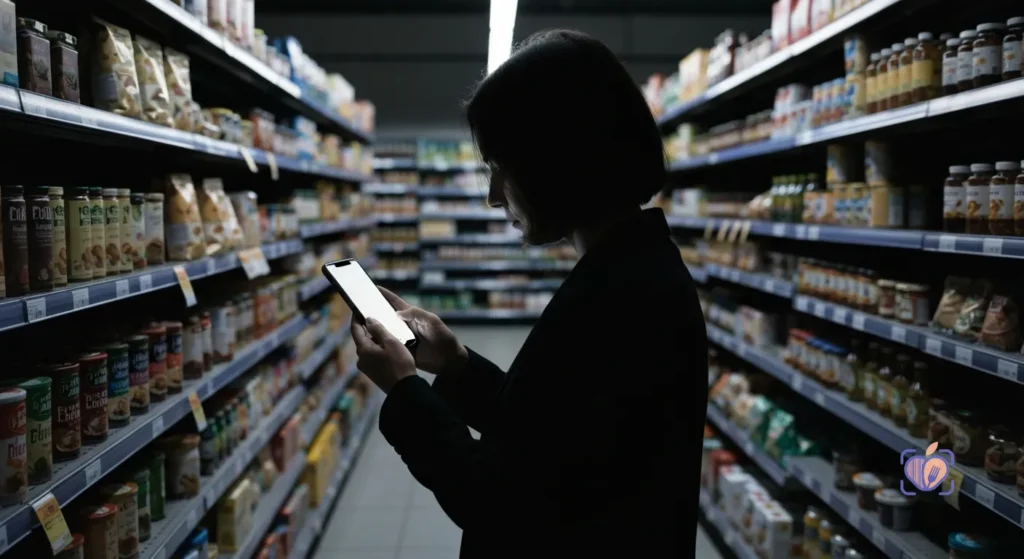
That feeling of anxiety standing in the grocery aisle? The dread of trying a new recipe? Let it go. You can have confidence and clarity in the palm of your hand. You can have a genius in your pocket that has already done the homework for you.
Don’t spend another minute agonizing over a label. Reclaim the joy of food, the comfort of a warm apple crisp, and the peace of mind that comes from knowing, with certainty, that what you’re eating is safe for you and your family.
Download Food Scan Genius now. Your first bite of worry-free apple crisp is waiting.
For Android: Download on Google Play – $4.99/mo or $49.99/yr
For iOS: Download on the App Store – $4.99/mo or $49.99/yr
Frequently Asked Questions
What are the absolute best low sugar apples for a healthy apple crisp recipe for a diabetic?
The best and most recommended apple for a diabetic-friendly or low-sugar apple crisp is the Granny Smith. It has one of the lowest natural sugar contents and a high fiber count, which helps to slow sugar absorption and prevent sharp spikes in blood glucose. Its tart flavor profile also means you won’t feel the need to add much, if any, extra sweetener. Furthermore, its firm texture holds up exceptionally well during baking, ensuring your crisp doesn’t become watery. For a close second, consider Braeburn apples, which also offer a good balance of tartness and a lower sugar profile compared to sweeter varieties like Fuji or Gala.
I need to make a gluten-free apple crisp. Which apples are best to hold their shape and not turn to mush?
For a gluten-free apple crisp where structural integrity is key, you need apples with dense flesh and high pectin content. The top choices are Granny Smith, Honeycrisp, Braeburn, and Jonagold. These varieties will soften when cooked but will not disintegrate into applesauce. This ensures your gluten-free topping stays crisp and doesn’t sink into a watery filling. A great pro-tip is to use a mix of two firm apples, like Granny Smith for tart structure and Honeycrisp for a sweeter, crisp bite. Avoid apples like McIntosh and Red Delicious at all costs, as they are notorious for breaking down into a mushy texture.
Are there any low FODMAP friendly apples I can use for a gut-healthy apple crisp?
This is a tricky area, as most apples are high in FODMAPs (fructose and sorbitol) and can trigger IBS symptoms. However, according to Monash University, the leading authority on FODMAPs, a very small serving of 20 grams (about 2 tablespoons) of the Lady Williams apple is considered low FODMAP. You cannot make a full-sized crisp, but you could create a delicious, gut-friendly single-serving crisp in a ramekin using this precise portion. It’s crucial to adhere to the serving size to avoid a FODMAP reaction. Always test your own tolerance levels, as individual sensitivities can vary.
When making a no-sugar-added apple crisp, are organic apples really that important?
Yes, choosing organic apples is highly important for a no-sugar-added crisp, for two main reasons. First, apples are consistently on the EWG’s “Dirty Dozen” list for high pesticide residue. Since the apple skin contains valuable fiber and nutrients, you’ll want to leave it on, and using organic apples minimizes your exposure to these chemicals. Second, when you aren’t adding sugar, the entire flavor profile depends on the pure, unadulterated taste of the apple itself. Organic apples often have a more complex and robust flavor, which becomes the star of the show. Using a mix of sweet organic apples (like Jonagold) and tart ones (like Granny Smith) can create a delicious, naturally sweet dessert without any added sugar.
Every scan is answered by NutriGraphAPI, our own catalogue of over 5 million barcode-indexed packaged products with allergen, additive and dietary data. Building a food or grocery app yourself? The same data is available as an API.