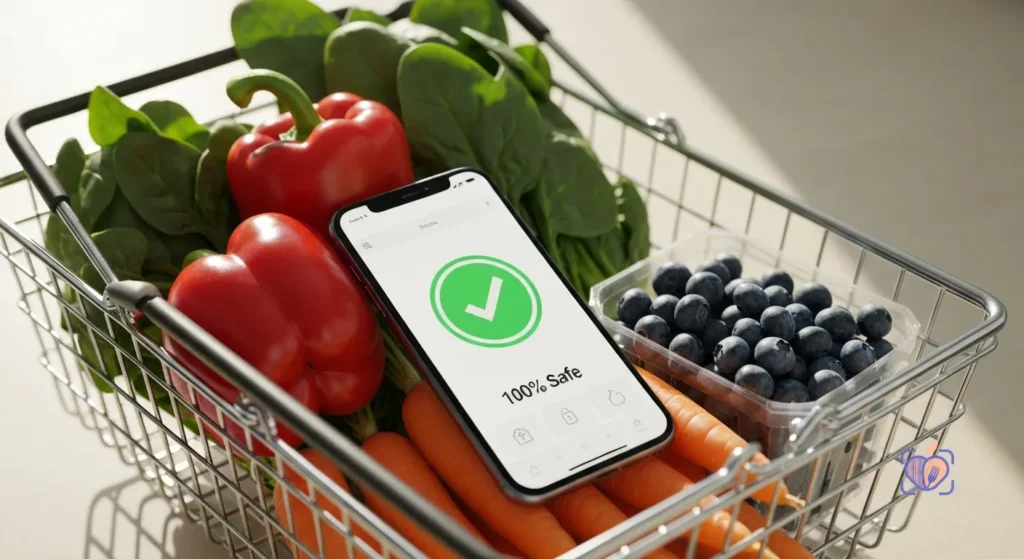
The constant, nagging uncertainty. The bloating that ruins your day. The fear of eating anything outside your own kitchen. Living with Irritable Bowel Syndrome (IBS) and other digestive sensitivities isn’t just a physical burden; it’s a thief of joy, spontaneity, and peace of mind. You deserve clarity. You deserve control. According to Johns Hopkins Medicine, a low FODMAP diet is a scientifically recognized and effective approach for managing these debilitating symptoms for a significant percentage of sufferers. But navigating it feels like walking through a minefield. That ends today. Stop guessing and start knowing with Food Scan Genius, the essential tool for reclaiming your life from digestive distress. Download it now and take the first step towards a calmer gut.
The Low FODMAP Labyrinth: Why Is This So Hard?
FODMAP. It’s an acronym that represents a collection of short-chain carbohydrates that are poorly absorbed in the small intestine. For some, they ferment and cause gas, bloating, pain, and other life-disrupting symptoms. The acronym stands for Fermentable Oligosaccharides, Disaccharides, Monosaccharides, and Polyols.
Unlike a simple allergy to peanuts or shellfish, FODMAPs aren’t a single villain. They are a scattered network of compounds hiding in plain sight, often in foods we consider healthy—fruits, vegetables, grains, and dairy. The diet isn’t about what you eat, but about the cumulative load of these specific carbohydrates. This complexity is why a simple ‘avoid’ list is never enough. You need a dynamic, intelligent guide in your pocket. This is that guide.
Deconstructing the Diet: A Granular Breakdown of FODMAPs
To truly conquer the low FODMAP diet, you can’t just look at a list of ‘good’ and ‘bad’ foods. You must understand the enemy. Each category of FODMAPs presents its own unique challenges and hides in different places. Let’s break them down with the precision you deserve.
Oligosaccharides (Fructans & GOS): The Wheat, Onion, and Garlic Problem
Oligosaccharides, specifically Fructans and Galacto-oligosaccharides (GOS), are perhaps the most pervasive and frustrating FODMAPs. They are the reason a ‘gluten-free’ label doesn’t automatically mean ‘low FODMAP,’ a distinction that trips up countless people.
- The Science: Humans lack the enzyme to break down the bonds in fructans and GOS. When they reach the large intestine, they become a feast for gut bacteria, leading to rapid fermentation. The result? Significant gas production, painful bloating, and cramping.
- Where They Hide: This is the heart of the problem. Fructans are in wheat, rye, and barley, which is why many people with IBS feel better on a gluten-free diet, mistakenly attributing it to gluten. But the real culprits are also in some of the most fundamental ingredients of global cuisine: onion and garlic. They are in shallots, the white parts of leeks, and artichokes. GOS is prevalent in legumes like beans, chickpeas, and lentils.
- The Specific Risk: The biggest danger here is the ‘hidden ingredient’ factor. A simple can of soup, a jar of pasta sauce, a pre-made spice blend, or a restaurant marinade is almost guaranteed to contain onion powder or garlic powder. These are concentrated sources of fructans. You can’t see them, you often can’t pick them out, and they can trigger a reaction with just a small amount. This makes eating out or buying processed foods an exercise in extreme vigilance.
Disaccharides (Lactose): Beyond Just Milk and Cheese
Lactose is the most well-known of the FODMAPs, commonly associated with ‘lactose intolerance.’ It’s the ‘D’ in the acronym and represents the sugar found in mammalian milk.
- The Science: Lactose is a disaccharide, meaning it’s a sugar molecule composed of two smaller sugars (glucose and galactose). To be absorbed, it must be broken down by an enzyme called lactase. A significant portion of the world’s population has reduced lactase activity, meaning undigested lactose travels to the large intestine where it ferments and draws in water, causing bloating and diarrhea.
- Where It Hides: The obvious sources are milk, ice cream, and soft cheeses like ricotta and cottage cheese. But lactose is a surprisingly common additive in processed foods. It’s used to improve texture and flavor in everything from bread and baked goods to processed meats like sausages and deli slices. It’s also a key component of whey protein concentrates and milk powders, which are found in countless protein bars, meal replacement shakes, and ‘healthy’ snacks.
- The Specific Risk: The risk with lactose is complacency. You might diligently avoid a glass of milk but get completely derailed by the whey powder in your protein bar or the milk solids in a creamy salad dressing. Hard, aged cheeses like cheddar and parmesan are generally low in lactose and well-tolerated, creating a confusing landscape for those new to the diet. It’s not about avoiding ‘dairy’; it’s about understanding the specific lactose content of each product, which requires more than a casual glance at the label.
Monosaccharides (Fructose): The Hidden Sugar Trap
Fructose is the ‘M’ in FODMAP. It’s a simple sugar found in many fruits and sweeteners. The issue isn’t fructose itself, but rather excess fructose—when there is more fructose than glucose in a food.
- The Science: Fructose is absorbed in the small intestine through a specific transport system. However, this system works much more efficiently when glucose is present in equal or greater amounts. When fructose is in excess, the unabsorbed portion travels to the large intestine, where it is rapidly fermented, leading to the same painful symptoms as other FODMAPs.
- Where It Hides: High-fructose corn syrup (HFCS) is a major offender, found in sodas, candies, and many processed foods. But the real trap for health-conscious individuals is in natural foods. Honey and agave nectar are extremely high in excess fructose. Many fruits are also major sources, including apples, mangoes, pears, and watermelon. Even certain vegetables like asparagus and sugar snap peas contain excess fructose.
- The Specific Risk: The danger of fructose is the ‘health halo’ effect. You might be trying to do the right thing by eating a large fruit salad, but if you choose apples, mangoes, and pears drizzled with honey, you’re consuming a massive fructose bomb that can leave you in agony for hours. This is incredibly disheartening for people trying to eat a healthy diet. It requires a complete re-evaluation of which fruits and vegetables are ‘safe,’ often in specific portion sizes.
Polyols (Sorbitol & Mannitol): The “Sugar-Free” Deception
Polyols are sugar alcohols, the ‘P’ in FODMAP. They are often used as low-calorie sweeteners in ‘sugar-free,’ ‘diet,’ and ‘low-carb’ products because they are poorly absorbed by the body.
- The Science: Their poor absorption is precisely what makes them a FODMAP. Like the others, they pass through to the large intestine, where they are fermented by bacteria. They also have a strong osmotic effect, meaning they draw a significant amount of water into the bowel, which can lead to severe diarrhea.
- Where They Hide: The most common polyols are sorbitol, mannitol, xylitol, and maltitol. They are ubiquitous in sugar-free gum, mints, cough drops, and certain medications. They are also naturally present in some fruits and vegetables, such as apples, pears, blackberries (sorbitol), and cauliflower, mushrooms, and sweet potatoes (mannitol).
- The Specific Risk: The risk is twofold. First, consumers are actively marketed these ‘sugar-free’ products as a healthier alternative, having no idea they could be the source of their digestive misery. Second, the labeling can be deceptive. A product might be labeled ‘no sugar added’ but be loaded with sugar alcohols. Chewing a few sticks of sugar-free gum throughout the day can be enough to trigger significant symptoms, leaving the person completely baffled as to the cause.
The Science of Stacking: Why a “Safe” Food Can Still Hurt You
This is one of the most advanced and frustrating concepts of the low FODMAP diet, and where most people fail when trying to manage it alone. It’s not like a traditional allergy where a single exposure causes a reaction. The low FODMAP diet is a diet of thresholds. Think of your tolerance as a bucket. A small, ‘safe’ serving of a food containing a particular FODMAP might only add a few drops of water to the bucket. But if you have multiple ‘safe’ servings of different foods throughout the day, the drops add up. A handful of almonds (GOS), a ‘safe’ serving of sweet potato (mannitol), and a slice of sourdough bread (fructans) at dinner might be fine individually, but together, they can cause the bucket to overflow, triggering a full-blown symptomatic reaction. This phenomenon, known as FODMAP stacking, is why a food that felt fine on Monday can make you sick on Tuesday. It all depends on what else you ate. Manually tracking this cumulative load is nearly impossible. It requires a level of constant mental calculation that is exhausting and unsustainable.
The Minefield: Where FODMAPs Secretly Hide
Beyond the main categories, FODMAPs are masters of disguise, hiding in places you would never expect. This is where even the most diligent dieter can get caught. Your vigilance must be absolute.
- Broths and Stocks: Canned, boxed, or powdered broths and stocks—even organic ones—almost universally contain onion and garlic powder as primary flavor agents.
- “Natural Flavors” and “Spices”: These innocent-sounding terms on an ingredient label are Trojan horses. In the United States, ‘natural flavors’ or ‘spices’ can legally include onion powder, garlic powder, and other high-FODMAP ingredients without being specified. It’s a complete black box.
- Sauces, Dressings, and Marinades: From ketchup (HFCS) and BBQ sauce (HFCS, onion, garlic) to salad dressings and steak marinades, these are concentrated sources of multiple FODMAPs.
- Processed Meats: Sausages, hot dogs, deli meats, and even pre-marinated chicken breasts often contain high-FODMAP fillers like wheat (fructans), lactose, or high-fructose corn syrup.
- Specific Asian Condiments: Many soy sauces contain wheat. Fish sauce can have added HFCS. Hoisin and oyster sauces are often loaded with garlic and other high-FODMAP ingredients.
- “Healthy” Snacks: Protein bars, granola bars, and dried fruit mixes are notorious for hidden FODMAPs like chicory root (a high-fructan fiber), whey protein concentrate (lactose), honey/agave (fructose), and dried apples/pears (fructose/sorbitol).
- Plant-Based Milks: While dairy-free, many almond or oat milks are fortified with inulin or chicory root for fiber, or contain high-FODMAP gums and fillers. Soy milk made from whole soybeans is high in GOS.
- Sugar-Free Mints & Gum: As mentioned, these are packed with polyols like sorbitol and mannitol, and are a very common, overlooked trigger.
The Overwhelm is Real. The Solution is Simple.
Reading this, you might feel overwhelmed. You should. This is not a simple diet. Manually cross-referencing every ingredient against constantly updated lists of FODMAP content, calculating portion sizes, and worrying about FODMAP stacking is a full-time job. It’s why so many people give up, resigning themselves to a life of pain and uncertainty. It’s not your fault it’s this complex. But you don’t have to do it alone. We believe technology should serve people, simplifying the complex and providing clarity in the chaos. That’s why we built Food Scan Genius. Managing this diet is incredibly complex, which is why our mobile app analyzes over 200+ distinct dietary and allergen labels simultaneously, including complex overlapping combinations like ‘Low FODMAP + Vegan’ or ‘Lactose-Free + Soy-Free.’ We handle the complexity so you can focus on living.
Stop Guessing. Start Living. Your Guide is Here.
The uncertainty ends now. No more standing in the grocery aisle for 20 minutes, squinting at labels and Googling obscure ingredients. No more anxiety before a meal. No more pain and regret after. Food Scan Genius puts a registered dietitian and a food scientist in your pocket. With a simple scan of a barcode, you get an instant, clear ‘Yes’ or ‘No.’ You get the confidence to eat freely and the power to feel good again.
This isn’t just an app. It’s your ticket back to a normal life. It’s control. It’s freedom. It’s peace of mind for just $4.99/month or $49.99/year. Your health and happiness are worth it.
Download Food Scan Genius now and take back your life.
For Android: Download on Google Play
For iOS: Download on the App Store
Frequently Asked Questions
How can a scanner app accurately identify high FODMAP ingredients like onion and garlic powder listed under ‘spices’ or ‘natural flavors’?
This is one of the biggest challenges of the low FODMAP diet and where Food Scan Genius truly excels. While the FDA allows manufacturers to group ingredients like onion and garlic powder under generic terms, we don’t rely solely on the public ingredient list. Our system combines a proprietary database, direct manufacturer data, and sophisticated machine-learning algorithms that analyze product categories and ingredient patterns. If a product is in a category (e.g., savory crackers, canned soup) where ‘natural flavors’ almost always implies onion or garlic, we flag it as high-risk. We are constantly updating our database to provide the most conservative and safest recommendation, taking the dangerous guesswork out of these vague ingredients for you.
Does the low FODMAP diet mean I have to avoid all fruits and vegetables, and how can an app help me find safe ones?
Absolutely not! This is a common and dangerous misconception. Fruits and vegetables are vital for gut health. The low FODMAP diet is about avoiding high FODMAP produce and controlling the portion sizes of moderate FODMAP ones. This is incredibly difficult to memorize. Food Scan Genius helps in two ways: First, when you scan a product like a fruit smoothie or a canned vegetable, it will instantly tell you if the ingredients are low FODMAP. Second, our app includes a comprehensive food library where you can look up whole foods like ‘avocado’ or ‘banana’ and get precise, color-coded portion size guidance (e.g., 1/8 of an avocado is green/safe, 1/4 is yellow/moderate). This empowers you to eat a varied, nutrient-dense diet without fear.
What is ‘FODMAP stacking’ and how can a scanning app help prevent it when I’m eating multiple different foods in a day?
‘FODMAP stacking’ is the cumulative effect of eating multiple ‘safe’ or ‘green light’ portions of different FODMAP-containing foods in a short period. Each food on its own is fine, but together they exceed your personal threshold and cause symptoms. Manually tracking this is a nightmare. A future version of Food Scan Genius is being developed with a meal logging feature specifically designed to combat this. It will allow you to log scanned items and whole foods throughout the day, and the app will provide a visual ‘FODMAP load’ indicator, warning you if your current meal, combined with what you’ve already eaten, is likely to push you over your threshold. It turns an impossible mental calculation into a simple, actionable insight.
If a product is labeled ‘gluten-free,’ does that automatically mean it’s safe for a low FODMAP diet?
No, and this is a critical point of confusion that causes many people to fail the diet. While wheat, barley, and rye are high in the FODMAP ‘fructan,’ many gluten-free products are not low FODMAP. Manufacturers often replace gluten with high-FODMAP ingredients to improve taste and texture. These can include soy flour (fructans/GOS), inulin or chicory root (fructans), honey or fruit juice concentrates (fructose), or almond flour in large quantities (GOS). A product must be both gluten-free AND low FODMAP to be safe. Food Scan Genius eliminates this confusion instantly. By scanning a gluten-free product, you’ll get a clear answer on its FODMAP status, protecting you from these hidden traps.
Every scan is answered by NutriGraphAPI, our own catalogue of over 5 million barcode-indexed packaged products with allergen, additive and dietary data. Building a food or grocery app yourself? The same data is available as an API.