1. Navigating a Gluten Free Diet for Coeliac Disease: The Daily Reality
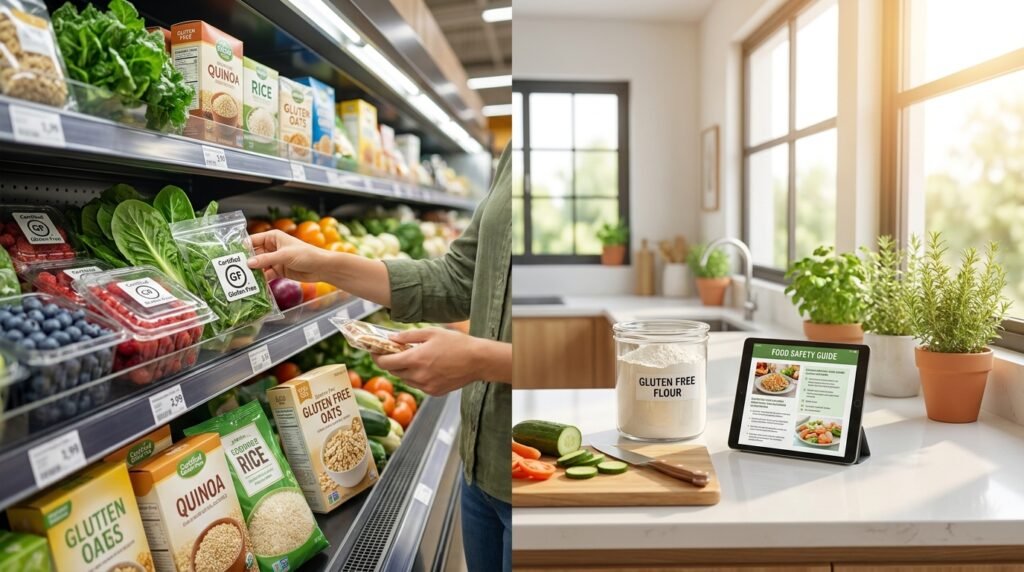
Receiving a celiac disease diagnosis transforms grocery shopping from a mundane chore into an exhausting exercise in vigilance. Adopting a strict gluten free diet for coeliac disease is not a lifestyle preference or casual wellness trend; it is a life-saving medical intervention. For someone with celiac disease, microscopic ingestions of gluten—a protein complex found in wheat, barley, rye, and triticale—trigger an autoimmune cascade that blunts intestinal villi, blocks nutrient absorption, and increases the long-term risk of systemic complications. According to established Celiac Disease Foundation Threshold Requirements, foods containing less than 20 parts per million (ppm) of gluten are generally considered safe for most patients, yet maintaining this standard in a world dominated by industrial food processing presents relentless challenges.
The frustration is compounded by cross-contact risks that occur long before a product ever reaches your kitchen pantry. Shared harvesting machinery, communal processing lines, and airborne grain dust mean that inherently gluten-free grains such as oats, millet, and buckwheat can easily become contaminated. When standing in supermarket aisles squinting at tiny ingredient fonts, shoppers often experience decision fatigue and legitimate health anxiety. The emotional weight of worrying whether a simple dinner will trigger debilitating gastrointestinal distress, brain fog, or chronic joint pain can turn routine meals into sources of severe stress.
Furthermore, relying entirely on packaged certified gluten-free foods introduces another metabolic dilemma. Many commercial gluten-free alternatives replace wheat with refined starches, emulsifiers, and industrial binders to replicate familiar textures. As highlighted in PubMed Research on Ultra-Processed Foods & Gut Microbiome Disruption, excessive reliance on heavily modified packaged substitutes can further compromise a gut that is already actively healing from autoimmune damage. Navigating this fine line requires clear clinical knowledge, safe domestic protocols, and reliable labeling transparency.
Scan Any Label for Hidden Additives and Allergens — Free
Never second-guess confusing grocery labels again. Download Food Scan Genius to uncover hidden additives, toxic dyes, and allergens for the whole household before you buy.


2. Hidden Sources, Labeling Loopholes, and Deceptive Ingredients
Following a strict gluten free diet for coeliac disease demands far more than avoiding conventional bread and pasta. International food labeling mandates vary significantly, leaving critical ambiguities in sub-ingredient breakdowns. Manufacturers frequently alter formulation recipes, meaning a trusted household staple can suddenly introduce cross-contact risks without prominent packaging warnings. To protect intestinal integrity, you must watch for sneaky sources of gluten and additive categories regulated under broad umbrellas like the European Food Safety Authority (EFSA) Additive Safety Regulations:
- Yeast Extract & Autolyzed Yeast: Frequently derived from spent brewer’s yeast—a byproduct of beer brewing—this common savory flavor enhancer often carries residual barley gluten unless explicitly labeled as gluten-free or baker’s yeast-derived.
- Modified Food Starch: In North America, modified starch derived from wheat must state ‘wheat’ by law, but imported products, specialty items, and international imports may obscure whether the underlying botanical source is corn, potato, tapioca, or wheat.
- Malt Flavoring, Malt Extract, & Malt Vinegar: Sourced almost exclusively from barley, malt is frequently hidden within puffed cereals, confectioneries, salad dressings, and barbecue sauces, remaining highly toxic to individuals with celiac disease.
- Hydrolyzed Vegetable Protein (HVP) & Textured Vegetable Protein (TVP): These concentrated flavor builders often utilize hydrolyzed wheat protein. If the manufacturer does not specify the grain origin on the sub-ingredient tree, it presents an unacceptable risk.
- Smoke Flavoring & Natural Caramel Color: Occasionally formulated with barley malt as a stabilizing carrier base during manufacturing. Without secondary AST-level verification of carrier ingredients, these generic terms pose hidden hazards.
- Dextrin and Industrial Thickeners: While frequently corn or tapioca-based, dextrins can originate from wheat starch processing, creating trace contamination when purification controls fail.
Compounding these label ambiguities is overall nutritional quality. The World Health Organization Guidelines on Healthy Diets & Saturated Fats emphasize the importance of whole, minimally processed ingredients. Achieving digestive recovery means looking beyond the single ‘Gluten-Free’ claim and verifying the comprehensive safety of every single composite additive.
3. Modern Grocery Defense: Automated AST Parsing vs. Manual Inspection
| Feature / Capability | Food Scan Genius | Spoonful | Fig | Manual Label Reading |
|---|---|---|---|---|
| Core Scanning Price | 100% Free (Zero Paywalls) | Limited Free / Monthly Fee | $59/year Paywall | Free (Time-Intensive) |
| Database Architecture | NutriGraph (5M+ UPC/EANs with Recursive AST Parsing) | Proprietary Dietitian Curation | Proprietary Crowdsourced | None (Human Eye Scan) |
| Family & Multi-Diet Audit | Multi-Household Screening with Named Fail Attribution | Single Active Profile | Single Active Profile | Manual Mental Juggling |
| Holistic Food Quality | ScanGenius AI + NOVA 1-4 + Nutri-Score Context | Dietary Check Only | Dietary Check Only | Unstandardized |
| Language Support | 11 Languages with Real-Time Translation | English Only | English Only | Requires Native Fluency |
Managing a gluten free diet for coeliac disease across an entire family cannot rely on guesswork or paywalled barcode apps. Unlike apps such as Fig (which locks unlimited scans behind a $59/year paywall) or Spoonful (which throttles monthly scans), Food Scan Genius delivers 100% free core barcode auditing powered by the enterprise-grade NutriGraph Database of over 5,000,000 verified UPC/EAN barcodes. The underlying technology employs deep sub-ingredient recursive Abstract Syntax Tree (AST) parsing. Instead of simply checking the surface label for the word ‘wheat’, our system dismantles complex nested ingredients—uncovering barley derivatives in yeast blends, modified starches, and trace cross-reactive emulsifiers.
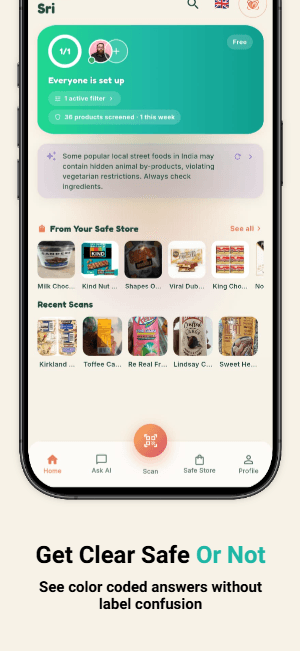
Moreover, the app pairs safety checks with objective nutritional insights. Rather than relying on simplistic, punitive 0-100 scores, the ScanGenius AI Insight delivers objective context alongside verified NOVA 1-4 ultra-processing metrics and transparent Nutri-Score data. Families managing overlapping conditions can configure up to 39 pre-set dietary profiles or define custom sensitivities (such as seed oils or specific food dyes). A single scan audits the item for every member of the house simultaneously, immediately generating clear attributions like ‘Fails for Sri (Gluten)’ or ‘Passes for Everyone.’ When traveling abroad, real-time translation across 11 languages ensures imported packaged goods never threaten gut recovery.
4. Related Food Safety & Dietary Guides
- Best Food Allergy Scanner App – Scan Food Labels Instantly — Food Allergy & Sensitivity Scanner Hub
- The 7 Best Free Food Scanner Apps of 2026 — best free food scanner apps
- Choosing the Best Barcode Scan App for Your Health — guide to choosing a barcode scanner app
- Food Scan Genius: World’s #1 Food Ingredient Scanner App — Food Scan Genius scanner app
5. Scientific & Health Authority References
- Celiac Disease Foundation Threshold Requirements
- European Food Safety Authority (EFSA) Additive Safety Regulations
- PubMed Research on Ultra-Processed Foods & Gut Microbiome Disruption
- World Health Organization Guidelines on Healthy Diets & Saturated Fats
6. How to Scan in 3 Simple Steps
- Step 1: Download Food Scan Genius for free on iOS or Android—unlocking enterprise-grade scanning with zero paywalls.
- Step 2: Set up your household profile by selecting ‘Celiac Disease / Strict Gluten-Free’, adding custom sensitivities like seed oils or specific additives, and assigning distinct dietary tags for family members.
- Step 3: Scan any packaged barcode in under 2 seconds to view recursive AST sub-ingredient parsing, instant household safety attribution, and detailed ScanGenius AI nutritional context.
Instant Gluten-Free Audit Trail
7. Frequently Asked Questions (FAQ)
Can I trust ‘may contain wheat’ statements when following a gluten free diet for coeliac disease?
No. Precautionary allergen labeling (such as ‘may contain wheat’ or ‘made in a shared facility’) is completely voluntary under US FDA and international standards. A product lacking this statement is not guaranteed free from cross-contact. Food Scan Genius utilizes the NutriGraph Database and deep sub-ingredient AST parsing to evaluate manufacturing history, shared facilities, and hidden binders to help safeguard your diet.
How does Food Scan Genius catch hidden gluten better than manual label reading?
Human eyes often miss hidden derivatives like autolyzed brewer’s yeast, maltodextrins from unlisted grains, or wheat-derived carrier agents in complex flavorings. Food Scan Genius uses recursive Abstract Syntax Tree (AST) parsing to break compound ingredients into granular sub-components, flagging hidden gluten and cross-contact risks in under two seconds.
Are all gluten-free packaged products automatically healthy for gut healing?
Not necessarily. Many commercial gluten-free packaged products compensate for texture loss by incorporating refined starches, saturated vegetable fats, and industrial emulsifiers. Food Scan Genius integrates NOVA 1-4 classification and Nutri-Score analysis alongside ScanGenius AI Insights to show whether a certified gluten-free item is ultra-processed, helping you select foods that genuinely support gut microbiome repair.
How do Multi-Household Family Profiles work when shopping for both celiac and non-celiac members?
Food Scan Genius allows you to assign unique dietary restrictions to distinct family members within a single dashboard. When you scan a product, the app audits the ingredient list against all household profiles at once, providing clear, personalized results such as ‘Fails for Sri (Gluten)’ or ‘Safe for All’ without requiring multiple scans.
Know What’s In Your Food Before You Buy — Scan Free Today
Never second-guess confusing grocery labels again. Download Food Scan Genius to uncover hidden additives, toxic dyes, and allergens for the whole household before you buy.