1. The Morning Lunchbox Scramble: Why Finding Safe Gluten-Free Snacks Is Harder Than Ever
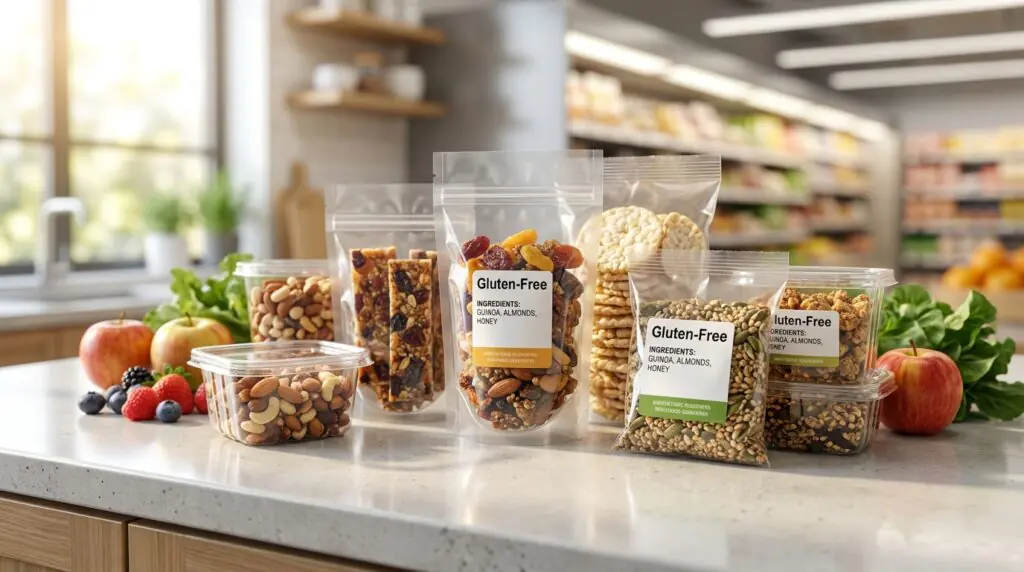
Standing in the grocery aisle at 7:30 on a Tuesday evening while scanning rows of snack bars is an exhausting ritual familiar to millions of parents and busy professionals. When your household lives with celiac disease, non-celiac gluten sensitivity (NCGS), or autoimmune gut conditions, the simple quest for snacks gluten free transforms into a high-stakes investigation. One overlooked derivative can trigger days of debilitating abdominal cramping, pediatric behavioral swings, systemic inflammation, or severe intestinal villous blunting. You want convenience, great flavor, and food that your children will actually eat without feeling singled out at the lunch table, but the burden of proof rests squarely on your tired eyes.
The grocery shelf is increasingly saturated with slick packaging screaming claims like “Wheat-Free,” “Kids Love It,” or “Naturally Wholesome.” However, clinical safety standards demand a far higher threshold than front-of-package marketing hype. According to strict Celiac Disease Foundation Threshold Requirements, foods must contain fewer than 20 parts per million (ppm) of gluten to be classified as legally gluten-free, yet voluntary advisory statements like “made in a facility that also processes wheat” remain completely unregulated by the FDA. A pretzel or oat bar might technically possess no gluten-containing grains on paper, but if processed on shared equipment, it poses severe risks for sensitive children and adults alike.
Compounding this daily stress is the nutritional quality of commercial gluten substitutes. When food scientists strip out gluten proteins, they frequently replace structural elasticity with hyper-refined tapioca starches, inflammatory seed oils, industrial emulsifiers, and excessive sucrose. Independent PubMed Research on Ultra-Processed Foods & Gut Microbiome Disruption demonstrates that the synthetic thickeners and emulsifiers commonly utilized to mimic gluten’s chewiness can erode mucosal barriers and induce low-grade gastrointestinal inflammation. Parents are caught in an exhausting compromise: safeguarding against gluten while inadvertently serving ultra-processed foods that deplete energy levels and trigger digestive sluggishness midway through the school day.
Parents and individuals navigating this dietary landscape deserve transparency without paying an emotional or financial toll. Navigating lunchboxes and travel snacks should not require a biochemistry degree, nor should it force you to spend 20 minutes cross-referencing conflicting forum threads while your child waits. Reclaiming confidence in your family’s food choices begins with peeling back the regulatory curtain to uncover how gluten and harmful additives routinely hide in plain sight.
Scan Any Label for Hidden Additives and Allergens — Free
Never second-guess confusing grocery labels again. Download Food Scan Genius to uncover hidden additives, toxic dyes, and allergens for the whole household before you buy.


2. Deceptive Labeling and Sneaky Cross-Contaminants: The Hidden Anatomy of Gluten-Free Snack Aisles
The processed food manufacturing ecosystem relies on complex global supply chains. A single pre-packaged snack puff or fruit leather often contains ingredients sourced from dozens of distinct sub-suppliers. Consequently, wheat derivatives and hidden sources of gluten routinely slip into snack formulas under innocuous technical aliases. Understanding where the legal definitions fail is critical when sourcing genuinely safe snacks gluten free for your family.
Food manufacturers are legally required to disclose direct wheat ingredients under the Food Allergen Labeling and Consumer Protection Act (FALCPA), but barley, rye, and malted derivatives bypass FALCPA allergen warnings entirely. Below are the most insidious culprits hiding in kid-friendly snack foods:
- Barley Malt Extract and Malt Flavoring: Frequently added as an inexpensive sweetener to corn crisps, rice puffs, and energy bites. Because barley is exempt from major US allergen labeling laws, it often hides inside non-descript terms like “natural flavoring,” posing an immediate hazard for celiac households.
- Unspecified Modified Food Starch and Dextrins: While domestic modified food starches are primarily derived from corn, potato, or waxy maize, imported snacks may derive them from wheat without clear upfront notification, unless processed to explicitly remove gluten protein down to regulatory thresholds.
- Industrial Emulsifiers and Thickeners: Substances such as carboxymethylcellulose, polysorbate 80, and carrageenan are heavily deployed in gluten-free baked goods to prevent crumbling. As established by the European Food Safety Authority (EFSA) Additive Safety Regulations, acceptable daily intakes must account for cumulative additive loads. These thickeners disrupt tight junction barriers in pediatric digestive systems, exacerbating symptoms commonly mistaken for accidental gluten exposure.
- Oat Cross-Contact Without Purity Protocols: Oats are inherently gluten-free, yet standard agricultural oats are grown in crop rotation with wheat and processed on shared harvesters. Unless certified purity-protocol oats are specified, standard “oat flour” in children’s snack bars routinely tests well beyond the 20 ppm ceiling.
- Caramel Color (Class III and IV): Caramel coloring derived from barley-based glucose syrups can contain residual gluten fragments that escape basic visual label checks, particularly in savory seasoning blends and barbecue-flavored chips.
- Excessive Saturated Fat and Sugar Loading: To restore palatability to gluten-free formulations, brands often overcompensate with processed palm oils and high-glycemic syrups, running counter to the World Health Organization Guidelines on Healthy Diets & Saturated Fats designed to preserve lifelong cardiovascular and metabolic health in growing children.
Reading the primary ingredient deck is no longer sufficient. Modern parent-safe shopping requires understanding nested sub-ingredients—the fine-print bracketed compounds inside compounds that traditional visual inspection almost always misses.
3. Why Food Scan Genius Outperforms Legacy Scanners and Manual Reading
| Feature / Capability | Food Scan Genius | Fig App | Spoonful | Manual Label Reading |
|---|---|---|---|---|
| Pricing Model | 100% Free Core (No Paywalls) | $59.99/year subscription | Strict scan caps / Freemium | Free (High Time Cost) |
| Database Breadth & Parsing | 5,000,000+ UPC/EAN (NutriGraph AST) | Proprietary (~1M-2M items) | Moderate (~800K items) | Zero automation |
| Multi-Household Screening | Yes (“Fails for Sri (Gluten)”) | Single primary user only | Single primary user only | Manual multi-person mental math |
| Holistic Nutritional Intelligence | NOVA 1-4 + Nutri-Score + ScanGenius AI | Binary allergen flags only | Stoplight rating without UPF | None (Subject to buyer bias) |
| Global Language Translation | 11 Languages (Real-time in-app) | English-focused | English-focused | Requires external translation app |
While legacy scanning apps gatekeep life-saving dietary information behind $59-per-year paywalls or restrictive monthly scan quotas, Food Scan Genius believes that food safety is a fundamental right. At the heart of our platform is the enterprise NutriGraph Database, mapping more than 5,000,000 verified UPC and EAN barcodes globally. What makes NutriGraph transformative is its deep sub-ingredient recursive Abstract Syntax Tree (AST) parsing engine. Instead of merely checking for primary keywords like ‘wheat,’ our engine unpacks nested chemical and botanical parentage, tracing hidden barley proteins, cross-contact processing agents, and masked derivatives deep inside multi-tiered ingredient structures.
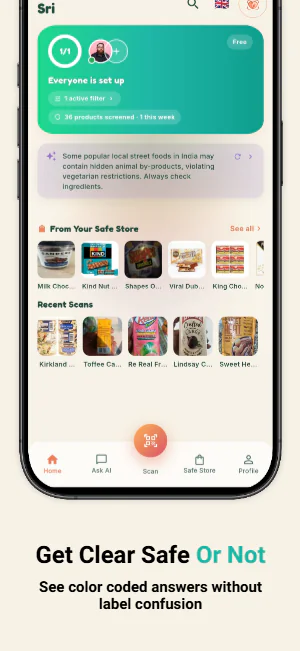
Furthermore, real family grocery shopping is rarely one-dimensional. If you are shopping for a household where one child requires celiac-safe meals, another has a sensitivity to Red 40, and a parent avoids seed oils, single-profile apps fail completely. Food Scan Genius features Multi-Household Family Profiles that audit foods against up to 39 dietary standards alongside custom sensitivities in a single 2-second scan. The app provides crystal-clear named attribution—such as “Safe for Maya; Fails for Sri (Gluten)”—paired with ScanGenius AI Insights. By delivering objective NOVA 1-4 ultra-processing metrics and Nutri-Score evaluations instead of arbitrary moralizing scores, we empower parents to build lunchboxes that are not only strictly gluten-free, but functionally nourishing.
4. Related Food Safety & Dietary Guides
- Best Food Allergy Scanner App – Scan Food Labels Instantly — Food Allergy & Sensitivity Scanner Hub
- The 7 Best Free Food Scanner Apps of 2026 — best free food scanner apps
- Choosing the Best Barcode Scan App for Your Health — guide to choosing a barcode scanner app
- Food Scan Genius: World’s #1 Food Ingredient Scanner App — Food Scan Genius scanner app
5. Scientific & Health Authority References
- Celiac Disease Foundation Threshold Requirements
- European Food Safety Authority (EFSA) Additive Safety Regulations
- PubMed Research on Ultra-Processed Foods & Gut Microbiome Disruption
- World Health Organization Guidelines on Healthy Diets & Saturated Fats
6. How to Scan in 3 Simple Steps
- Download Food Scan Genius completely free on iOS or Android with zero hidden fees or scanning caps.
- Configure your Multi-Household Profiles by choosing Gluten-Free/Celiac protocols and tailoring custom sensitivities like artificial dyes or seed oils for each family member.
- Scan any snack barcode in the grocery aisle or pantry for an instant, sub-ingredient AST audit trail with named pass/fail alerts in under two seconds.
Instant Gluten-Free Audit Trail
7. Frequently Asked Questions (FAQ)
Can snacks gluten free legally contain traces of wheat starch?
Yes. Under FDA regulations, foods labeled ‘gluten-free’ can contain wheat starch if the ingredient has been processed to remove gluten protein to less than 20 parts per million (ppm). However, for individuals with true wheat allergies (IgE-mediated) rather than celiac disease, wheat starch remains unsafe. Food Scan Genius distinguishes between gluten-free processing thresholds and actual wheat biological origin, allowing users with concurrent wheat allergies to flag these products automatically.
How does Food Scan Genius handle shared facility warnings for gluten?
Food Scan Genius checks recursive manufacturer disclosures within the NutriGraph Database. While advisory warnings like ‘processed in a facility that also handles wheat’ are not mandated by the FDA, our deep-learning parsing engine flags known shared-line declarations and informs you via ScanGenius AI Insights, allowing you to choose whether your child’s sensitivity level tolerates shared facility items.
Why are many certified gluten-free lunchbox snacks rated high on the NOVA scale?
Gluten provides structure, stretch, and chewiness to baked goods. When wheat flour is removed, industrial food processors often replace it with isolated starches (tapioca, corn, potato), gums (xanthan, guar), emulsifiers, and excessive vegetable oils to mimic traditional textures. These complex chemical alterations classify many commercial gluten-free cookies, crackers, and snack bars as NOVA 4 (ultra-processed foods). Food Scan Genius pairs its allergen screening with NOVA classifications so parents can balance gluten safety with metabolic wellness.
How does the app’s multi-profile scanning save time when packing school lunches?
Rather than rescanning a snack multiple times or mentally calculating whether a cracker fits your daughter’s celiac protocol and your son’s tree nut allergy, Food Scan Genius processes all family dietary parameters simultaneously. A single barcode scan generates unambiguous visual results with specific named attribution (e.g., ‘Safe for Liam, Fails for Chloe [Gluten]’), streamlining pantry audits and shopping trips.
Know What’s In Your Food Before You Buy — Scan Free Today
Never second-guess confusing grocery labels again. Download Food Scan Genius to uncover hidden additives, toxic dyes, and allergens for the whole household before you buy.