A standard 2-tablespoon (30g) serving of original Philadelphia Cream Cheese contains approximately 99 calories, 10 grams of total fat (of which 6 grams are saturated), under 2 grams of carbohydrates, and 2 grams of protein.
It’s a simple image, isn’t it? Sunday morning. The weight of a fresh bagel in your hand. The glint of that iconic silver foil as you peel it back. Philadelphia isn’t just a spread; it’s a memory. It’s the taste of comfort, of tradition. But in 2026, we look at things differently. We want more than a memory; we demand clarity. We want to know what we’re really inviting to the table. The truth is, the story doesn’t end with the big numbers on the label. It begins there.
The Classic Block: A Nutritional Deep Dive
That silver brick is the standard by which all others are judged. It’s the original, the one that built an empire of schmear. But nostalgia doesn’t have a calorie count. Let’s break it down with the precision it deserves.
The Caloric Cost of Creaminess
At roughly 99 calories per 30-gram serving, Philadelphia Cream Cheese is an energy-dense food. The richness, that satisfying mouthfeel, comes from a concentration of fat. It’s not a sin; it’s a feature. But it’s a feature you should be aware of, especially when you’re not just having one serving. Be honest, who ever stops at just two tablespoons?
Fat Content: The Source of its Soul
Fat is flavor. With 10 grams of fat, 6 of which are saturated, this is the core of the product’s identity. This isn’t inherently a villain. Our bodies need fat. The conversation, however, is about balance. Understanding this number allows you to place it within the context of your day, your week, your life. It’s about making a deliberate choice, not a blind one.
Carbohydrates and Protein: The Supporting Cast
With less than 2 grams of carbs and 2 grams of protein, these macronutrients play a minor role. This makes it an attractive option for those monitoring their carbohydrate intake, but it also means it’s not a significant source of protein. It’s a condiment, an addition that enhances, not a foundational nutritional pillar.
Navigating The Variations: Whipped, Low-Fat, and Flavored
The aisle has expanded. The simple silver block now has neighbors, each promising something a little different. A little lighter, a little tastier. But every promise comes with a price.
Whipped vs. Block: Is It Just Air?
Whipped cream cheese feels lighter, and by volume, it is. A serving of whipped often has fewer calories and fat, but that’s because you’re getting less product and more air. The ingredient list, however, remains largely the same. You’re changing the experience, not necessarily the core nutritional reality. It’s a matter of perception.
The “1/3 Less Fat” Promise: What’s the Trade-Off?
When you remove fat, you have to replace it with something to maintain texture. In the case of lower-fat cream cheese, this often means more gums, stabilizers, and sometimes even skim milk powder. While the fat content decreases, the list of processed ingredients can grow. Understanding the full story of your food is a global conversation, demanding we look past the bold print on the front. This is where the real decisions are made—not in the marketing, but in the fine print.
Flavored Spreads: The Hidden Sugars & Additives
Chive & Onion. Strawberry. Honey Pecan. These sound delightful, but they introduce new variables. The most significant is often sugar. That sweet strawberry swirl isn’t magic; it’s added sugar, which also means more carbohydrates. Furthermore, you’ll find an expanded list of flavorings, colorings, and preservatives. These are what turn a simple product into a complex, ultra-processed food, a category that warrants careful consideration. As the experts at the Dana-Farber Cancer Institute note, the impact of these foods is a critical area of health research.
The Ingredient List: Beyond The Numbers
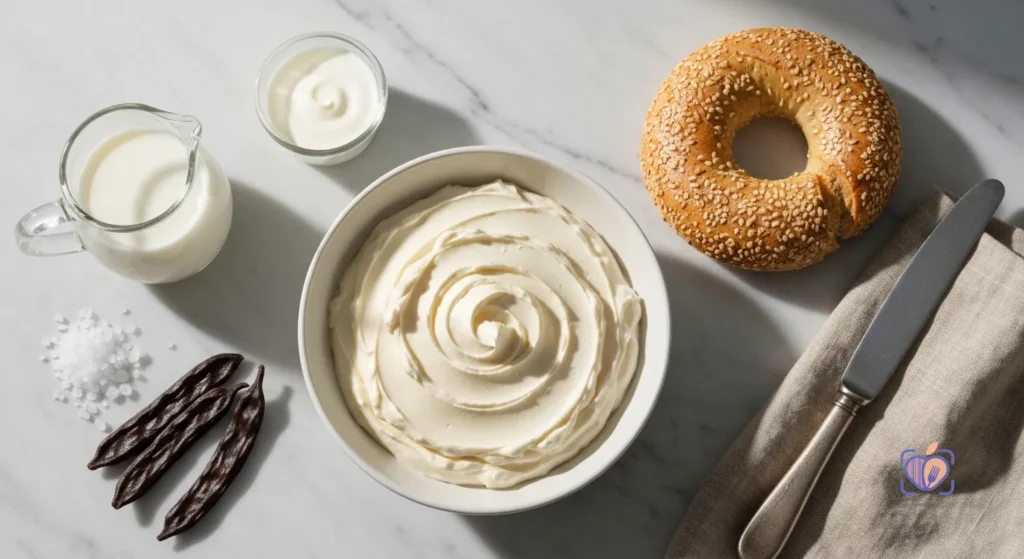
Here’s what the label says for the original: Pasteurized Milk and Cream, Salt, Carob Bean Gum, Cheese Culture. Simple, right? But what is Carob Bean Gum? Is it gluten-free? Is it low-FODMAP? What about the cheese culture—is it dairy-free? (Hint: it’s not).
This is where simple nutrition facts fall short. They don’t account for your unique dietary needs, your allergies, your lifestyle choices. In a world of over 200 specific, edge-case, and often hidden labels—from Nightshades to Alpha-Gal Syndrome—you need more than a calculator. You need a genius.
Food Scan Genius was built for this reality. We believe clarity is a right, not a privilege. Scan any barcode, and our app instantly cross-references its ingredients against your personal dietary profile. It’s the difference between guessing and knowing. It’s the power to shop with absolute confidence.
The entire grocery industry is being reshaped by this demand for transparency, with apps influencing consumer behavior in ways we couldn’t have imagined a decade ago. We are at the forefront of that change.
Stop guessing. Start scanning. Download Food Scan Genius for free and take control of your cart.
For Android: Download on Google Play
For iOS: Download on the App Store
Frequently Asked Questions
Is Philadelphia Cream Cheese healthy?
“Healthy” is subjective. Philadelphia Cream Cheese is high in fat and calories and low in micronutrients. It can be part of a balanced diet when consumed in moderation, but it’s best viewed as an indulgence or flavor enhancer rather than a health food. The original version has a simple ingredient list, which is a positive attribute.
How many carbs are in Philadelphia Cream Cheese?
Original Philadelphia Cream Cheese is very low in carbohydrates, containing less than 2 grams per 2-tablespoon (30g) serving. This makes it suitable for many low-carb and ketogenic diets. However, always check the label on flavored varieties, as they often contain added sugars that increase the carb count.
Can you eat cream cheese on a keto diet?
Yes, plain, full-fat cream cheese is an excellent food for a ketogenic diet. Its high fat content and minimal carbohydrate count align perfectly with the macronutrient goals of keto. Stick to the original block or full-fat whipped versions and avoid low-fat or flavored options that may contain added sugars and fillers.
What is Philadelphia Cream Cheese made of?
The original Philadelphia Cream Cheese is made from a short list of ingredients: pasteurized milk and cream, salt, carob bean gum (a natural thickener), and cheese culture. The variations, such as low-fat or flavored spreads, will contain additional ingredients like stabilizers, sugars, and natural flavors.