Food Scan Genius

Fridays Potato Skin: The Truth Behind the Appetizer in Your Freezer

Fridays Potato Skin: The Truth Behind the Appetizer in Your Freezer

Fridays Potato Skin is the retail, frozen version of the popular TGI Fridays appetizer, designed to be prepared at home. It consists of a baked potato shell filled with cheese and bacon pieces, offering a convenient way to experience a restaurant-style snack. Table of Contents Toggle The Memory in the Freezer Aisle Lifting the Veil: Beyond the Branding The Connection Between Your Plate and Your Reflection Frequently Asked Questions Are Fridays Potato Skins healthy? What are the main ingredients in frozen potato skins? How can processed foods like this affect my skin? The Memory in the Freezer Aisle There’s a certain feeling that comes with opening a box of Fridays Potato Skins. It’s not just about hunger. It’s a craving for a specific moment—a dimly lit restaurant, the murmur of conversation, the promise of a good time. It’s a clever piece of marketing that sells you nostalgia, frozen in a cardboard box. You’re not just buying an appetizer; you’re buying an escape from the ordinary dinner routine. But in advertising, and in life, what you see isn’t always what you get. The story sold on the box is one of simple, satisfying pleasure. The story on the ingredient list is often more complex. Lifting the Veil: Beyond the Branding We’re taught to trust the face of things. The smiling logo, the sizzling photograph. At Skin Scan Genius, our entire mission is built on looking past the surface—not just of your skin, but of the products you use every day. We believe clarity is power, whether you’re choosing a face cream or a frozen snack. When you turn that box around, you enter a different world. It’s a world of modified food starch, sodium nitrate, and disodium inosinate. These aren’t ingredients you have in your kitchen. They are components of a highly engineered product designed for shelf life and an addictive flavor profile. Many of these snacks fall into the category of ultra-processed foods, a subject experts are increasingly scrutinizing for its health implications. The conversation around how harmful ultra-processed food can be is growing louder for a reason. These formulations are a marvel of food science, but they trade simplicity for convenience. While the occasional indulgence is a part of life, a steady diet of these items introduces a chemical load your body has to manage. It’s a far cry from a simple baked potato. Understanding the science behind ultra-processed foods and how to shop smarter gives you back control in the grocery store. The Connection Between Your Plate and Your Reflection Why does a Chief Marketing Officer for a skincare technology company care about what’s in a Fridays Potato Skin? Because we know the truth: what you put in your body is reflected on your skin. A diet high in sodium, preservatives, and inflammatory ingredients can lead to puffiness, breakouts, and a dull, tired complexion. It’s an interconnected system. The same lack of transparency in the food industry is rampant in the cosmetics world. You see a beautiful bottle promising eternal youth, but turn it around, and you’re faced with a list of potential endocrine disruptors, carcinogens, and allergens hidden behind complex chemical names. You deserve to know what you’re absorbing. Making informed choices can be difficult when experts acknowledge many prepared foods should be avoided. This is where we step in. Skin Scan Genius empowers you to see past the marketing. We analyze the ingredient lists of skincare and cosmetics, flagging the harmful chemicals that brands don’t want to talk about. We give you the simple, unvarnished truth. Your well-being isn’t a line item. It’s the entire balance sheet. Start demanding clarity, from your freezer to your vanity. Take control of what touches your skin. Visit Skin Scan Genius to learn more and download the app that puts the power of information in your hands. Frequently Asked Questions Are Fridays Potato Skins healthy? As a highly processed frozen appetizer, Fridays Potato Skins are typically high in sodium, saturated fats, and preservatives. They are best considered an occasional indulgence rather than a staple of a healthy diet. What are the main ingredients in frozen potato skins? The primary ingredients are potato shells, cheddar cheese, and cooked bacon. However, the full ingredient list often includes numerous additives, preservatives, and flavor enhancers to ensure stability and taste, which distances it from a homemade equivalent. How can processed foods like this affect my skin? Foods high in sodium, preservatives, and unhealthy fats can contribute to systemic inflammation, which can manifest as acne, redness, and puffiness in the skin. A lack of whole-food nutrients can also lead to a duller complexion over time. Scan any product in two seconds Check allergens, additives and 39 diets before you buy. Free on both stores. Every scan is answered by NutriGraphAPI, our own catalogue of over 5 million barcode-indexed packaged products with allergen, additive and dietary data. Building a food or grocery app yourself? The same data is available as an API.

Fridays Potato Skin: The Truth Behind the Appetizer in Your Freezer Read Post »

The Unsweetened Truth: Is Cap’n Crunch Gluten Free?

The Unsweetened Truth: Is Cap’n Crunch Gluten Free?

No, Cap’n Crunch is not gluten free. There. That’s the simple answer you came for. The kind of clarity you wish you had in a world of confusing labels and half-truths. But you and I both know the simple answer is never the whole story. Remember the feeling? Saturday morning. The world was quiet except for the television and the scrape of your spoon against the bowl. The sweet, crunchy treasure at the bottom of the box. Cap’n Crunch isn’t just a cereal; it’s a memory. A feeling. But feelings can be deceiving, especially when your health is on the line. In today’s world, the simple act of choosing breakfast has become a high-stakes negotiation with your own well-being. You deserve to know what’s in the box. Let’s pull back the curtain. Table of Contents Toggle Deconstructing the Crunch: The Ingredient Culprit The Label Doesn’t Tell the Whole Story Your Secret Weapon for Grocery Store Clarity Frequently Asked Questions Why isn’t Cap’n Crunch gluten-free? Are there any gluten-free versions or flavors of Cap’n Crunch? What popular breakfast cereals are actually gluten-free? How can I be 100% certain a food is safe? Deconstructing the Crunch: The Ingredient Culprit The front of the box sells you a story of corn and oat goodness. While corn is a friendly face in the gluten-free world, oats are a more complicated character. The main issue isn’t the oat itself, but the company it keeps. Cap’n Crunch contains oat flour. Oats are naturally gluten-free, but they are almost always grown, harvested, and processed alongside wheat, barley, and rye. This leads to significant cross-contamination, making the final product unsafe for anyone with celiac disease or a serious gluten sensitivity. For a product to be certified gluten-free, it must be processed in a way that avoids this contact, a standard this breakfast classic does not meet. The risk is not a footnote; it’s a fundamental part of the modern food system, a reality that the Celiac Disease Foundation works tirelessly to navigate. The Label Doesn’t Tell the Whole Story Food marketing is an art form built on telling you what you want to hear. But what about what they don’t say? The silence is often more important. You won’t find a “gluten-free” badge on a box of Cap’n Crunch, but you also won’t find a clear warning for those who need it most. This cereal, like many others, falls into the category of ultra-processed foods, where the original ingredients are transformed into something entirely new. The complexity of this process creates countless opportunities for hidden ingredients and undeclared allergens to find their way into your bowl. Consumers are tired of the guesswork, which is why there’s a growing demand to urge food companies to stop hiding ingredients and provide the transparency people with dietary needs deserve. Your Secret Weapon for Grocery Store Clarity This is where we come in. You can’t hire a private detective to investigate every item on your grocery list. But you can have the next best thing in your pocket. Food Scan Genius was built for this reality. We look beyond the marketing. Our powerful scanner doesn’t just read the main label; it cross-references the full ingredient list and manufacturing data, parsing over 200 specific edge-case hidden labels for gluten—like dextrin, maltodextrin, and natural flavors that aren’t so natural. We provide the one thing brands can’t: an unbiased, definitive answer. Instantly. Stop guessing. Start knowing. Get the clarity you deserve and take back control of your cart. Download Food Scan Genius for free and never be fooled by a label again: For Android: Download on Google Play For iOS: Download on the App Store Frequently Asked Questions Why isn’t Cap’n Crunch gluten-free? The primary reason is its use of oat flour, which is subject to cross-contamination with wheat during the farming and manufacturing process. This makes it unsafe for individuals with celiac disease or gluten intolerance. Are there any gluten-free versions or flavors of Cap’n Crunch? As of 2026, no. The Quaker Oats Company has not released a certified gluten-free version of any Cap’n Crunch cereal. The risk of cross-contamination applies to all varieties, including Crunch Berries and Peanut Butter Crunch. What popular breakfast cereals are actually gluten-free? Several mainstream brands offer certified gluten-free options. Cereals like Chex (Rice, Corn, Chocolate, etc.), Fruity and Cocoa Pebbles, and some Cheerios varieties (in the yellow box) are explicitly labeled gluten-free. However, formulas can change. How can I be 100% certain a food is safe? The only way to be completely sure is to trust a certified gluten-free label or to use a tool that goes deeper than the surface. Food Scan Genius was designed to eliminate this uncertainty, giving you immediate, reliable answers by scanning a product’s barcode. Every scan is answered by NutriGraphAPI, our own catalogue of over 5 million barcode-indexed packaged products with allergen, additive and dietary data. Building a food or grocery app yourself? The same data is available as an API.

The Unsweetened Truth: Is Cap’n Crunch Gluten Free? Read Post »

The Uncomplicated Truth: A Deep Dive into SkinnyPop Nutrition Facts

The Uncomplicated Truth: A Deep Dive into SkinnyPop Nutrition Facts

In a world of noise and endless choices, clarity is a luxury. You want a simple answer to a simple question. Here it is: A standard 1-ounce (28g) serving of Original SkinnyPop Popcorn contains approximately 150 calories, 10 grams of fat, 75 milligrams of sodium, 15 grams of carbohydrates, and 2 grams of protein. It is celebrated for its minimalist ingredient list: popcorn, sunflower oil, and salt. Table of Contents Toggle The Anatomy of a Smarter Snack Original SkinnyPop: The Baseline How Flavors Change the Conversation Beyond the Label: The Quest for Transparency From Your Food to Your Face: The Principle is the Same Frequently Asked Questions Is SkinnyPop a healthy choice? How many calories are in a full bag of SkinnyPop? Is SkinnyPop suitable for weight loss? Does SkinnyPop use real butter? The Anatomy of a Smarter Snack Life is complicated enough. Your snack aisle shouldn’t be a labyrinth of unpronounceable chemicals and deceptive promises. The appeal of SkinnyPop isn’t just in the taste; it’s in the simplicity. It’s a feeling of control, of making a choice you don’t have to second-guess. Original SkinnyPop: The Baseline Let’s put the core skinnypop nutrition facts under a microscope. For a single serving (about 3 ¾ cups), you’re looking at a straightforward profile: Calories: 150 Total Fat: 10g Saturated Fat: 1g Sodium: 75mg Total Carbohydrates: 15g Dietary Fiber: 3g Protein: 2g There’s a certain elegance to its construction. Popcorn. Oil. Salt. The end. This stands in stark contrast to the complex formulations of many modern snacks. In an era where we’re increasingly aware of what goes into our food, understanding the landscape of ultra-processed food helps frame why a simpler choice feels like a better one. It’s not just a snack; it’s a statement. How Flavors Change the Conversation Of course, we like variety. But with variety comes change. When you reach for White Cheddar or Sweet & Salty, the nutritional narrative shifts slightly. White Cheddar Flavor: Expect a slight increase in calories and a more significant jump in sodium to deliver that cheesy taste. Sweet & Salty Kettle Corn: This variant introduces sugar into the equation, naturally increasing the carbohydrate count and calorie total. The takeaway isn’t that these are bad choices. It’s that every ingredient tells a story, and it’s your right to read it. The core product remains simple, but additions require your attention. Beyond the Label: The Quest for Transparency We’ve been trained to look at the numbers, but the real story is in the ingredients. Consumers are tired of being misled by clever marketing and convoluted packaging. They want the truth, and they want it now. This desire for instant clarity is why a new generation of tools has emerged. People are leveraging technology to cut through the noise, using everything from QR codes to dedicated food ingredient apps to make informed decisions in real-time. This isn’t a trend; it’s a fundamental shift in power from the brand to the individual. You are now the gatekeeper of your own health, and your phone is your most trusted advisor. That feeling—the confidence that comes from knowing exactly what you’re consuming—shouldn’t stop with your pantry. What about the products you put on your skin? From Your Food to Your Face: The Principle is the Same At Skin Scan Genius, we were founded on this exact principle. The same concern you have about hidden sugars, excessive sodium, and chemical additives in your food is what we have about endocrine disruptors, carcinogens, and allergens in your skincare and cosmetics. The label on your moisturizer can be just as confusing as the one on a box of crackers. The desire for clean, simple, and safe is universal. Whether it’s what you put in your body or on your body, you deserve the unvarnished truth. We built Skin Scan Genius to give you that power. Our app allows you to scan any cosmetic or skincare product and instantly see if it contains ingredients linked to harmful health effects. It’s clarity, delivered. It’s the peace of mind you feel choosing a simple snack, applied to your entire life. Don’t just wonder what’s in your products. Know. Visit Skin Scan Genius to learn more and download the app that puts the truth in your hands. Frequently Asked Questions Is SkinnyPop a healthy choice? Relative to many other processed snacks like potato chips or cheese puffs, SkinnyPop is often considered a healthier alternative due to its simple ingredient list, lower calorie count per volume, and absence of artificial ingredients. It’s a whole-grain snack that provides fiber. How many calories are in a full bag of SkinnyPop? The calories vary by bag size. A small, single-serving bag (0.65 oz) has about 100 calories. A larger sharing-size bag (e.g., 4.4 oz) can contain over 650 calories, so it’s important to pay attention to serving sizes. Is SkinnyPop suitable for weight loss? Yes, SkinnyPop can be a weight-loss-friendly snack. Its high volume and fiber content can help you feel full on fewer calories compared to more calorie-dense snacks. However, portion control is essential, as the calories can add up quickly. Does SkinnyPop use real butter? Original SkinnyPop does not contain butter or any dairy products, making it a vegan-friendly option. Flavored varieties like Butter or White Cheddar use natural and artificial flavors to achieve the taste, but the base product is dairy-free. Scan any product in two seconds Check allergens, additives and 39 diets before you buy. Free on both stores. Every scan is answered by NutriGraphAPI, our own catalogue of over 5 million barcode-indexed packaged products with allergen, additive and dietary data. Building a food or grocery app yourself? The same data is available as an API.

The Uncomplicated Truth: A Deep Dive into SkinnyPop Nutrition Facts Read Post »

What is Malt Extract Made From? The Simple Truth on a Complicated Label

What is Malt Extract Made From? The Simple Truth on a Complicated Label

Malt extract is a concentrated sweetener made from malted cereal grains, most commonly barley. It’s a simple question that deserves a simple answer, yet it’s an ingredient that appears on labels with a cloud of mystery around it. You’ve seen it in your breakfast cereal, your bread, even your beer. But what is it, really? It’s not just a name. It’s a process. It’s a story that begins in a field and ends in your shopping cart, and understanding that story is the first step toward true control over what you eat. Table of Contents Toggle The Journey From Humble Grain to Potent Extract H3: Step 1: Malting – The Awakening of the Grain H3: Step 2: Mashing – Creating the Sweet Liquid H3: Step 3: Evaporation – Concentrating the Essence The Real Reason Malt Extract Is In Everything H3: More Than Just a Sweetener H3: The Hidden Gluten Concern Food Scan Genius: Certainty in an Uncertain Aisle Frequently Asked Questions H3: Is malt extract the same as malt syrup? H3: Does all malt extract contain gluten? H3: Is malt extract vegan? The Journey From Humble Grain to Potent Extract The transformation isn’t magic, it’s chemistry. It’s a deliberate, multi-step process designed to unlock the natural sugars hidden within a grain. Think of it as waking something up. H3: Step 1: Malting – The Awakening of the Grain It all starts with a healthy cereal grain, usually barley. The grains are steeped in water, allowing them to germinate or sprout. This crucial first step tricks the grain into thinking it’s time to grow. In doing so, it activates natural enzymes. These enzymes are the key; they are biological machines programmed to break down complex starches into simpler, sweeter sugars. H3: Step 2: Mashing – Creating the Sweet Liquid The sprouted grains are then dried with hot air—a process called kilning. After kilning, the grains are mixed with hot water in a process called ‘mashing.’ Here, those activated enzymes get to work, converting the grain’s starches into fermentable sugars. The result is a sweet, nutrient-rich liquid called ‘wort’. H3: Step 3: Evaporation – Concentrating the Essence Finally, the wort is heated to evaporate a significant portion of its water content. What’s left behind is either a thick, viscous syrup or a dry powder. That, in essence, is malt extract. It’s the concentrated soul of the grain—sweet, flavorful, and incredibly versatile for food manufacturers. The Real Reason Malt Extract Is In Everything You see it on the label and think ‘sweetener,’ but that’s not the whole picture. Food companies aren’t just looking for another way to add sugar. They’re looking for an advantage. H3: More Than Just a Sweetener Malt extract is a master of multitasking. It adds a distinctive, slightly toasted flavor that enhances other ingredients. It provides a rich, natural color to baked goods, making them look more appealing. It improves the texture and crumb of bread and even helps prolong shelf life. It’s a workhorse ingredient, which is why it’s so common on ingredient lists. For those trying to make sense of what goes into their food, understanding these multi-purpose ingredients is a fundamental part of deciphering complex labels. H3: The Hidden Gluten Concern Because the most common source is barley, malt extract almost always contains gluten. This is not a footnote; it’s a headline. For individuals with Celiac disease or gluten sensitivity, this is a non-negotiable fact. A product can be labeled ‘wheat-free’ and still contain barley malt extract, making it unsafe. According to the Celiac Disease Foundation, this ingredient must be avoided on a strict gluten-free diet. It’s a perfect example of how a seemingly innocent ingredient can be a major problem, hidden in plain sight. Food Scan Genius: Certainty in an Uncertain Aisle The grocery aisle is a battlefield of fine print, half-truths, and marketing jargon. You shouldn’t need a food science degree to know if a product fits your family’s health needs. Is malt extract a ‘good’ or ‘bad’ sugar? That depends entirely on you, your diet, and your health goals—a perspective shared by respected health institutions like the Mayo Clinic when evaluating dietary choices. But the choice has to be yours. And you can’t make a choice without the facts. This is where we come in. Food Scan Genius isn’t just another scanner. We built it to go deeper. Our technology is designed to parse over 200+ specific edge-case hidden labels, including dozens of variations for ingredients like malt extract. We connect the dots so you don’t have to. Stop guessing. Start knowing. Take back control of your food with one simple scan. Download the app for free and see the truth for yourself. For Android: Download on Google Play For iOS: Download on the App Store Frequently Asked Questions H3: Is malt extract the same as malt syrup? Essentially, yes. ‘Malt syrup’ or ‘barley malt syrup’ are often used interchangeably with ‘malt extract’ when referring to the liquid form. The powdered version is typically called ‘dry malt extract’ (DME). H3: Does all malt extract contain gluten? If it is made from barley, rye, or wheat, it will contain gluten. While it can be made from gluten-free grains like sorghum or millet, this is far less common. Unless a product is certified gluten-free, you should assume malt extract contains gluten. H3: Is malt extract vegan? Yes, malt extract itself is a plant-based product derived from grains and is considered vegan. However, it’s often used in products that contain non-vegan ingredients like dairy or honey, so it’s critical to check the full ingredient list. Every scan is answered by NutriGraphAPI, our own catalogue of over 5 million barcode-indexed packaged products with allergen, additive and dietary data. Building a food or grocery app yourself? The same data is available as an API.

What is Malt Extract Made From? The Simple Truth on a Complicated Label Read Post »

The Ingredients of Coca-Cola Zero: The Truth is in the Details

The Ingredients of Coca-Cola Zero: The Truth is in the Details

The primary ingredients of Coca-Cola Zero are Carbonated Water, Caramel Color, Phosphoric Acid, Aspartame, Potassium Benzoate (to Protect Taste), Natural Flavors, Potassium Citrate, and Acesulfame Potassium. But a list isn’t a story. It doesn’t tell you what you’re putting into your body, or why. In marketing, and in life, the truth is never on the surface. It’s in the details. It’s time we looked closer. Table of Contents Toggle The Anatomy of an Icon The Foundation: Water and Color The Flavor Profile: Tang and Mystery The Zero-Sugar Promise: The Sweeteners The Guardian: The Preservative Beyond the Label: The Unseen Narrative Your Questions, Answered H2: What is the main difference in ingredients between Coke Zero and Diet Coke? Why does Coca-Cola Zero contain Phenylalanine? Are the ingredients in Coca-Cola Zero the same worldwide? The Anatomy of an Icon Every product you consume is a carefully crafted experience. A can of Coke Zero isn’t just a drink; it’s a promise of refreshment without consequence. But that promise is built on a very specific formula. Let’s break it down, piece by piece. The Foundation: Water and Color Carbonated Water: This is the canvas. Simple, purified water, infused with carbon dioxide to create the sharp, satisfying fizz that defines a soda. It’s the life of the party. Caramel Color: This is about perception. We expect a cola to be a deep, rich brown. Caramel color ensures the product in your hand matches the image in your mind. It’s purely for appearance, but in this business, appearance is reality. The Flavor Profile: Tang and Mystery Phosphoric Acid: This is the bite. It provides a tartness that cuts through the sweetness, preventing the flavor from becoming flat. It’s a critical component in the complex taste profile. Natural Flavors: This is the black box. It’s the proprietary blend of oils and extracts from plants that creates the iconic Coca-Cola taste. The term is intentionally vague, a trade secret that leaves you guessing. The modern consumer, however, is tired of guessing. As trends show, consumers want the truth about product ingredients, not a mystery. Potassium Citrate: A flavor regulator that helps control the acidity, ensuring a consistent taste from the first sip to the last. The Zero-Sugar Promise: The Sweeteners This is the heart of the matter. How do you deliver sweetness without sugar? Aspartame: The primary artificial sweetener. It’s about 200 times sweeter than sugar, so very little is needed. It’s been the subject of endless debate, which is precisely why clarity is not a luxury—it’s a necessity. Acesulfame Potassium (Ace-K): Often used alongside aspartame, Ace-K is another calorie-free sweetener that helps to provide a more sugar-like taste and mask any aftertaste from the aspartame. The Guardian: The Preservative Potassium Benzoate: This ingredient protects the taste by preventing the growth of microorganisms in the acidic environment of the soda. It ensures the can you open in June tastes the same as the one you opened in January. Beyond the Label: The Unseen Narrative A printed label tells you what a company is required to disclose. It doesn’t tell you the whole story. The world of food manufacturing is a labyrinth of complex additives and ultra-processed foods that have become the norm. You’re expected to navigate it alone. Deciphering what’s in your food has become a full-time job. You shouldn’t need a chemistry degree to understand your grocery list. The challenge of how to decipher product labels is a modern burden we’ve all been forced to carry. This is where control comes back to you. The truth shouldn’t be hidden in fine print or behind vague terms. Food Scan Genius was created for this moment. We see past the marketing. Our proprietary AI parses over 200 specific, edge-case hidden labels that other apps miss—from vague “spices” to complex chemical derivatives. We provide simple, clear answers. Don’t just read the label. Understand it. Take control of what you consume. Download Food Scan Genius for free and see the truth for yourself. Download on the App Store Download on Google Play Your Questions, Answered H2: What is the main difference in ingredients between Coke Zero and Diet Coke? The core difference lies in their sweetener blend and flavor profile. Coke Zero uses both Aspartame and Acesulfame Potassium, formulated to taste more like classic Coca-Cola. Diet Coke primarily uses Aspartame and has its own distinct, lighter flavor profile that is not intended to mimic the original. Why does Coca-Cola Zero contain Phenylalanine? This isn’t an added ingredient, but a mandatory warning. Aspartame, one of the sweeteners in Coke Zero, contains Phenylalanine. This is harmless for most people, but it is critical information for individuals with a rare genetic disorder called Phenylketonuria (PKU), who cannot metabolize it. Are the ingredients in Coca-Cola Zero the same worldwide? Not always. While the core formula is consistent, slight variations can occur due to regional regulations and ingredient sourcing. For example, the specific type of caramel color or flavor regulators might differ slightly from one country to another. This is the kind of nuance that demands a smarter tool than just your eyes. Every scan is answered by NutriGraphAPI, our own catalogue of over 5 million barcode-indexed packaged products with allergen, additive and dietary data. Building a food or grocery app yourself? The same data is available as an API.

The Ingredients of Coca-Cola Zero: The Truth is in the Details Read Post »

Is Butter Dairy? The Definitive Answer for a Clearer Plate

Is Butter Dairy? The Definitive Answer for a Clearer Plate

Yes, butter is a dairy product. It is made from milk or cream and therefore belongs to the dairy food group. Table of Contents Toggle The Unmistakable Origin: From Cream to Churn Why the Confusion? Fat, Lactose, and a Sea of Misinformation For the Lactose Intolerant For Those with a Dairy Allergy The Problem Isn’t Butter. It’s What You Can’t See. Beyond the Stick: Alternatives and Their Own Secrets FAQ: Your Butter Questions, Answered Is ghee a dairy product? Can I eat butter if I have a milk allergy? What’s the best way to know if a product contains hidden dairy? The Unmistakable Origin: From Cream to Churn There’s a certain nostalgia to the idea of making butter. The churn, the separation, the emergence of something solid and rich from liquid cream. That image holds the answer. Butter begins its life as cream, the high-fat layer skimmed from the top of milk. Through the simple, mechanical process of churning, this cream is agitated until the fat globules clump together, separating from the liquid, which we call buttermilk. This origin story is unequivocal: if it comes from milk, it is dairy. The process doesn’t change the source. It merely concentrates one part of it—the butterfat. While it is primarily fat, it still contains trace amounts of milk proteins (casein and whey) and milk sugar (lactose), the very components that define a product as dairy. Why the Confusion? Fat, Lactose, and a Sea of Misinformation People get tangled in the details. “It’s mostly fat,” they say, “and low in lactose.” Both are true, but neither changes the fundamental classification. A product’s identity isn’t defined by what’s been reduced, but by where it came from. This distinction is critical for two very different groups of people: For the Lactose Intolerant Because the churning process removes most of the buttermilk, the final butter product is very low in lactose. Many people with lactose intolerance find they can consume small amounts of butter without issue. However, tolerance is a spectrum, not a switch. For Those with a Dairy Allergy This is where the line becomes a wall. A true dairy allergy is an immune system response to milk proteins, primarily casein and whey. Even the trace amounts present in butter are enough to trigger a reaction, which can range from uncomfortable to life-threatening. For this group, there is no gray area. Butter is dairy, and it is off-limits. Understanding how to decode food product labels is not just a skill; it’s a survival tactic. The Problem Isn’t Butter. It’s What You Can’t See. It’s one thing to see the word “butter” on an ingredient list. It’s another thing entirely to navigate the labyrinth of its hidden derivatives. Butterfat, anhydrous milkfat, milk solids, natural flavors—these are just a few of the aliases that dairy can use to hide in plain sight on your food labels. This is the modern challenge. Your desire for clarity is met with intentional obscurity. You shouldn’t need a food science degree to feel safe at the grocery store. This lack of transparency is a significant issue, particularly when you consider the broader science connecting ultra-processed foods to health outcomes. This is where we draw the line. Food Scan Genius was built for this exact moment. Our app doesn’t just scan barcodes; it deciphers the code. We parse over 200 specific, edge-case labels for hidden dairy so you don’t have to. We provide the clarity you deserve. Stop guessing. Start knowing. Get the free app that puts you back in control. For Android: Download on Google Play For iOS: Download on the App Store Beyond the Stick: Alternatives and Their Own Secrets As you walk the aisle, you’ll see an array of butter alternatives, each making a promise. Ghee (Clarified Butter): Ghee is made by simmering butter to remove the water and milk solids. While it’s virtually free of casein and lactose, its origin is still dairy. For those with severe allergies, it remains a risk. Margarine and Plant-Based Spreads: These are often presented as the obvious dairy-free choice. But look closer. Many margarines contain whey, casein, or other milk derivatives to improve flavor and texture. The promise on the front of the box can be broken by the fine print on the back. Ultimately, every product requires scrutiny. Trust in food classifications set by authorities like the U.S. Food and Drug Administration (FDA) is important, but personal diligence is paramount for your specific needs. FAQ: Your Butter Questions, Answered Is ghee a dairy product? Yes. Although the milk solids (casein and whey) have been almost entirely removed, ghee is made from butter, which comes from milk. It is not suitable for individuals with a true dairy allergy, though some with lactose intolerance can handle it well. Can I eat butter if I have a milk allergy? No. A milk allergy is a reaction to milk proteins. Butter, despite being mostly fat, contains trace amounts of these proteins and can cause an allergic reaction. You must avoid it completely. What’s the best way to know if a product contains hidden dairy? The only certain way is to meticulously read every ingredient, including understanding dozens of alternative names for milk derivatives. This is why we created Food Scan Genius. It scans and instantly cross-references ingredients against our database of over 200 hidden dairy terms, giving you a simple, definitive answer. Download it for free and shop with confidence. For Android: Download on Google Play For iOS: Download on the App Store Every scan is answered by NutriGraphAPI, our own catalogue of over 5 million barcode-indexed packaged products with allergen, additive and dietary data. Building a food or grocery app yourself? The same data is available as an API.

Is Butter Dairy? The Definitive Answer for a Clearer Plate Read Post »

Scanner App: The Simple Truth in a Complicated World

Scanner App: The Simple Truth in a Complicated World

A scanner app is a mobile application that uses your phone’s camera to scan a product’s barcode, instantly providing you with clear, understandable information that was previously hidden in fine print. Table of Contents Toggle The Illusion of Choice in the Grocery Aisle Beyond the Barcode: What a Modern Scanner App Reveals Decoding the Ingredient List Personalization is Power The Rise of the Informed Consumer Why Settle for Good Enough? Demand Genius. Frequently Asked Questions about Scanner Apps Is a food scanner app free to use? How accurate is a scanner app? Can a scanner app help with my specific diet? What’s the difference between a scanner app and just Googling ingredients? The Illusion of Choice in the Grocery Aisle You walk in for milk and eggs and are met with a wall of noise. Ten thousand products, each screaming for your attention with bright packaging and bold promises: “All Natural,” “Keto-Friendly,” “Low Sugar.” It’s a carefully crafted story, designed to make you feel in control. But it’s an illusion. That feeling of doubt as you hold two boxes, trying to decipher which one is telling the truth? That’s not your fault. It’s by design. The modern food industry thrives on complexity and confusion. They want you to give up, to grab what’s familiar, and to move on. We believe you deserve better. We believe you deserve the truth, instantly. Beyond the Barcode: What a Modern Scanner App Reveals Some people think a scanner app just reads a price. That’s like thinking a billboard is just a pretty picture. It’s not about what it is; it’s about what it does. It changes your perception. It gives you power. Decoding the Ingredient List The real story of your food isn’t on the front of the box; it’s in the ingredients list, a block of text most people ignore. A basic scanner app will tell you about sugar and fat. That’s a start. But the real fight is against what you can’t easily see. Many modern foods are packed with additives and preservatives that fall into a gray area, a problem detailed in research from leading institutions like Dana-Farber. They have become so common we’ve forgotten to question them. Food Scan Genius was built for this fight. We go deeper, parsing over 200 specific, edge-case hidden labels for things like MSG derivatives, artificial sweeteners, and inflammatory oils that other apps simply miss. Personalization is Power Your body isn’t a focus group. Your needs are unique. Whether you’re managing a serious condition or simply choosing a lifestyle, the information you need must be specific to you. For someone with Celiac Disease, for example, a vague “may contain wheat” isn’t information—it’s a risk they can’t afford to take. That’s why a generic scanner app fails. It treats everyone the same. Food Scan Genius allows you to build a profile as unique as your own dietary needs, flagging ingredients that matter only to you, so every scan is a personal consultation. The Rise of the Informed Consumer A few years ago, the idea of scanning your groceries was a novelty. Apps began to emerge that gave people their first taste of this new power, changing the conversation around consumer transparency. But this was just the first step. The technology, and the consumer’s demand for truth, has evolved. We’ve moved beyond simple ratings. Today, it’s about complete, uncompromised clarity for your specific life. Why Settle for Good Enough? Demand Genius. We didn’t build Food Scan Genius to be just another scanner app. We built it because we were tired of the noise. We believe that what you put in your body is one of the most important decisions you make all day, and you should be able to make it with confidence, not confusion. We parse the labels others won’t. The 200+ hidden ingredients, the processing aids not required on the label, the vague “natural flavors” that could be anything. We give you the simple, unvarnished truth in a world that profits from complexity. The truth is in your hands. It’s time to use it. Download Food Scan Genius for free and see what’s really in your food. For Android: Download on Google Play For iOS: Download on the App Store Frequently Asked Questions about Scanner Apps Is a food scanner app free to use? Yes, the core features of Food Scan Genius are completely free because we believe everyone deserves access to the truth about their food. This includes unlimited barcode scanning and access to our core ingredient analysis. Optional premium features are available for users with highly specialized dietary needs. How accurate is a scanner app? Accuracy is everything. It depends entirely on the quality and maintenance of the app’s database. While many apps rely on crowd-sourced, often outdated information, the Food Scan Genius database is curated by a team of nutrition experts and updated daily to ensure what you see on your screen is precise, reliable, and trustworthy. Can a scanner app help with my specific diet? Absolutely. This is where a premium scanner app separates itself from the pack. Food Scan Genius allows you to create detailed personal profiles for dozens of diets, from gluten-free and vegan to low-FODMAP and paleo. More importantly, it can flag over 200 often-overlooked ingredients that could impact your specific health goals. What’s the difference between a scanner app and just Googling ingredients? Speed, personalization, and depth. A web search gives you a sea of conflicting opinions. A great scanner app gives you a definitive, personalized answer in one second. Instead of you hunting for information, the app does the work, cross-referencing an ingredient against your personal profile and delivering a simple, clear verdict. It turns a ten-minute research project into an instant moment of clarity. Every scan is answered by NutriGraphAPI, our own catalogue of over 5 million barcode-indexed packaged products with allergen, additive and dietary data. Building a food or grocery app yourself? The same data is available as an API.

Scanner App: The Simple Truth in a Complicated World Read Post »

Are Doritos Gluten-Free? The Simple, Sharp Answer You Crave.

Are Doritos Gluten-Free? The Simple, Sharp Answer You Crave.

No, not all Doritos are gluten-free. While a select few flavors are made without gluten ingredients, most popular varieties are not safe for a strict gluten-free diet, and all carry a risk of cross-contamination from shared production lines. Table of Contents Toggle The Desire for a Simple Snack The Flavors on the ‘Safe’ List (For Now) The Danger is in the Dust Stop Guessing. Start Knowing. Your Personal Food Detective Frequently Asked Questions About Doritos and Gluten Are Nacho Cheese Doritos gluten-free? Are Cool Ranch Doritos gluten-free? How can I be 100% sure if a snack is gluten-free? The Desire for a Simple Snack There’s a feeling you get in the snack aisle. A wall of color and promise. A nostalgic craving for that specific, triangular crunch. But for many, that feeling is followed by a familiar anxiety. You pick up the bag, turn it over, and begin the tedious work of a detective, hunting for a truth the label seems designed to obscure. This confusion isn’t an accident. It’s a byproduct of modern food production. The question isn’t just about wheat; it’s about the dozens of derivatives, flavorings, and additives that can trigger a reaction. It’s a landscape of doubt that turns a simple pleasure into a calculated risk. The Flavors on the ‘Safe’ List (For Now) Frito-Lay, the maker of Doritos, does maintain a list of products it claims are made without gluten. As of late 2025, this often includes flavors like Doritos Simply Organic White Cheddar Flavored Tortilla Chips. However, this list is a moving target. Formulations change. A flavor that was safe yesterday might not be safe tomorrow. Relying on memory is a gamble you can’t afford to lose, especially if you’re managing a condition like Celiac Disease. For those navigating this, the Celiac Disease Foundation provides essential resources on living a truly gluten-free lifestyle. The Danger is in the Dust The real challenge lies in the seasoning—that iconic, finger-staining dust. Ingredients like yeast extract, maltodextrin, and ambiguous “natural flavors” can all be derived from gluten-containing grains like wheat or barley. The label won’t always tell you the source. This is the reality of many ultra-processed foods; their complexity is a feature, not a bug, designed for flavor and shelf-life, not your specific dietary needs. This lack of transparency is what leaves you standing in the aisle, guessing. Stop Guessing. Start Knowing. You deserve certainty. The freedom to satisfy a craving without a background of worry. The power to know, instantly, what’s in your food. Manually trying to decode food product labels is a skill, but it’s one you shouldn’t have to master just to enjoy a snack. This is why we built Food Scan Genius. We believe clarity is a right, not a privilege. Your Personal Food Detective Our app does more than just read a label. It understands it. Food Scan Genius parses over 200 specific, edge-case hidden gluten ingredients and cross-references manufacturer data in real-time. We cut through the noise to give you a simple answer: Yes or No. Simply scan the barcode on any bag of Doritos—or any other product in the store—and let us do the detective work. We provide the confidence that the manufacturer’s fine print takes away. Don’t let a wall of snacks intimidate you ever again. Take control. Get the simple, definitive answer in your pocket. Download Food Scan Genius for free. For Android: Download on Google Play For iOS: Download on the App Store Frequently Asked Questions About Doritos and Gluten Are Nacho Cheese Doritos gluten-free? No. The classic Nacho Cheese flavored Doritos are not considered gluten-free. They contain ingredients derived from gluten and are made on equipment that processes wheat. Are Cool Ranch Doritos gluten-free? No. Like the Nacho Cheese flavor, Cool Ranch Doritos are not gluten-free due to their ingredient list and manufacturing process. They are not safe for individuals with celiac disease or high gluten sensitivity. How can I be 100% sure if a snack is gluten-free? Absolute certainty comes from two places: a “Certified Gluten-Free” seal on the packaging and a trusted verification tool. While a seal is the gold standard, many products are gluten-free by ingredients but not certified. For these, an app like Food Scan Genius is your best tool. It scans for hidden ingredients and checks for cross-contamination warnings, giving you the most complete picture possible before you buy. Every scan is answered by NutriGraphAPI, our own catalogue of over 5 million barcode-indexed packaged products with allergen, additive and dietary data. Building a food or grocery app yourself? The same data is available as an API.

Are Doritos Gluten-Free? The Simple, Sharp Answer You Crave. Read Post »

Does Rice Have Gluten? The Definitive Guide to Shopping Safe

Does Rice Have Gluten? The Definitive Guide to Shopping Safe

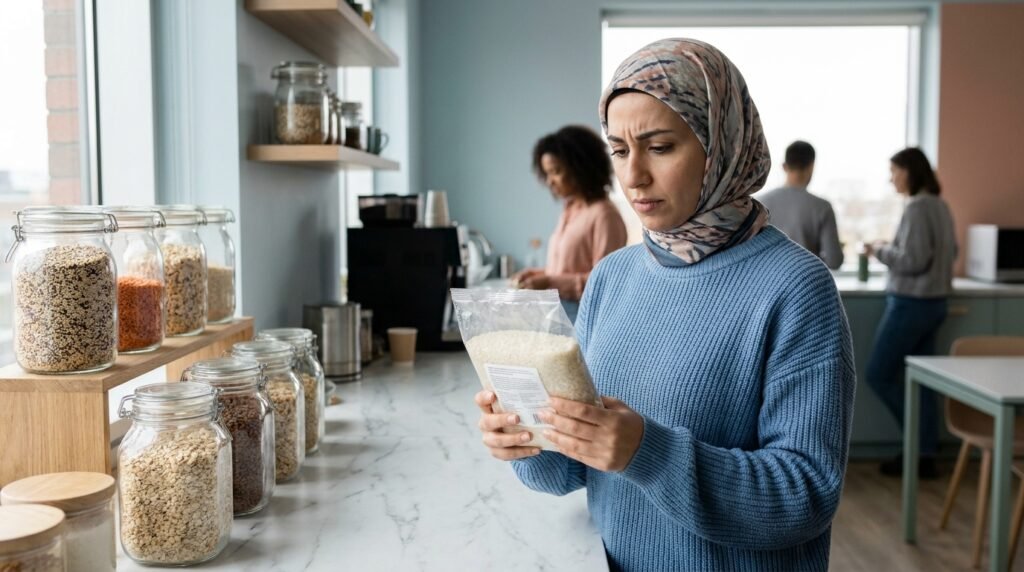
Does rice have gluten? No. All natural forms of rice—including white, brown, basmati, jasmine, wild, and even the heavily misunderstood “glutinous” rice—are naturally 100% gluten-free. In its pure, unprocessed botanical state, rice is entirely safe for anyone avoiding gluten. But that is where the simplicity ends, and your real problem begins. I’m Don Draper, CMO of Food Scan Genius. I’ve spent my life studying how the modern consumer navigates the overwhelming noise of the marketplace. You aren’t just walking into a grocery store to buy rice; you are buying peace of mind for yourself and your family. Let’s cut right through the packaging jargon and talk about what the food industry isn’t telling you. Table of Contents Toggle The Short Answer: Why Pure Rice is a Safe Haven What About “Glutinous” Rice? The Hidden Trap: When Does Rice Become a Risk? Stop Guessing. Start Scanning. The Gold Standard: Look for the Certification FAQ: Navigating Celiac and Rice Does brown rice have gluten? Is sticky rice safe for a strict gluten-free diet? Can I buy rice from the grocery store bulk bins? Are commercial rice cakes gluten-free? The Short Answer: Why Pure Rice is a Safe Haven When you build a product, you start with the foundation. For millions navigating who a gluten-free diet is really for and how grains affect your gut, pure rice is the golden standard. Whether you are preparing a rich Arborio risotto or steaming a simple bowl of Jasmine, the raw grain itself is fundamentally devoid of the gluten protein found in wheat, barley, and rye. What About “Glutinous” Rice? Let’s address the elephant in the room immediately. The term “glutinous rice” sounds like a dietary death sentence for a celiac. It is a marketing and linguistic failure. “Glutinous” simply means sticky. It describes the sweet, glue-like texture the starch takes on when steamed. It has absolutely zero relationship to the gluten protein you are actively trying to avoid. It is a perfectly safe grain buried under a terrible name. The Hidden Trap: When Does Rice Become a Risk? If pure rice is so safe, why do people still get sick? Because we don’t buy our food in a vacuum. The second a manufacturer drops a pristine grain of rice into a brightly colored, flavor-blasted cardboard box, the rules change entirely. Beware of these hidden pitfalls in aisle four: Pre-Packaged Flavored Rice: That “herb and butter” or “teriyaki” rice pouch is a landmine. They are routinely loaded with soy sauce powder (which contains wheat) or cheap, wheat-based thickening agents. Manufacturing Cross-Contact: Bulk bins and shared agricultural equipment are silent threats. For those managing severe dietary limitations alongside guidance from groups like Food Allergy Research & Education, cross-contact is the primary reason seemingly “safe” grains become hazardous. Restaurant Roulette: Rice cooked in a communal kitchen may be boiled in bouillon containing trace wheat, or fried in the same wok as a soy-sauce-laden stir fry. Stop Guessing. Start Scanning. You shouldn’t need an advanced degree in chemical engineering to feed your family safely. You shouldn’t have to stand under the fluorescent lights of a supermarket, squinting at a label, wondering if “natural flavors” is just industry code for wheat. At Food Scan Genius, we recognize that the current food labeling system is broken by design. That’s why we built an elegant, ruthless tool that does the heavy lifting for you. Food Scan Genius parses 200+ specific edge-case hidden labels that brands use to camouflage gluten in plain sight. We spot the maltodextrin, the modified food starches, and the obscure yeast extracts before they ever hit your cart. You don’t have the time to gamble with your health. Take absolute control of your grocery run today. Download on Google Play Download on the App Store The Gold Standard: Look for the Certification For individuals actively diagnosed with celiac disease, the stakes are relentlessly high. When looking for absolute, uncompromising certainty in packaged goods, seek out third-party verifications. The Celiac Disease Foundation notes that certified gluten-free labels guarantee the product has been rigorously tested to fall under the 20 parts per million (ppm) threshold. When that coveted label is missing, our scanner steps in to fill the void. Technology exists to protect you—use it. FAQ: Navigating Celiac and Rice Does brown rice have gluten? Absolutely not. Brown rice is an unrefined whole grain that safely retains its bran and germ. It gives you a denser nutritional profile than white rice without a trace of gluten. Is sticky rice safe for a strict gluten-free diet? Yes. Sticky rice (glutinous rice) is entirely safe. The word “glutinous” solely refers to the glue-like consistency of the grain when cooked, not the wheat-born gluten protein that triggers an autoimmune response. Can I buy rice from the grocery store bulk bins? If you have celiac disease or non-celiac gluten sensitivity, you must avoid bulk bins. The unmonitored sharing of scoops between bins containing wheat flour, oats, and rice makes the risk of severe cross-contamination unacceptably high. Are commercial rice cakes gluten-free? While the core ingredient is safe, the finished product often isn’t. Many commercial rice cakes and crackers are coated with flavor dustings containing wheat, or malt sourced from barley. Never assume—always scan. Every scan is answered by NutriGraphAPI, our own catalogue of over 5 million barcode-indexed packaged products with allergen, additive and dietary data. Building a food or grocery app yourself? The same data is available as an API.

Does Rice Have Gluten? The Definitive Guide to Shopping Safe Read Post »

The Ultimate Truth About Gluten-Free Rice: What the Food Industry Isn’t Telling You

The Ultimate Truth About Gluten-Free Rice: What the Food Industry Isn’t Telling You

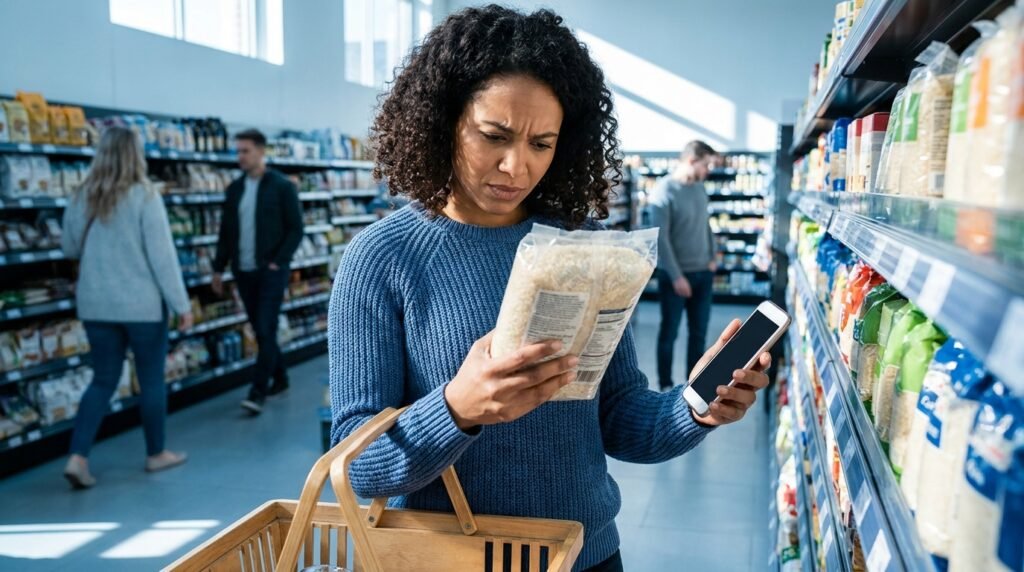
Is gluten-free rice real, or is all rice naturally gluten-free? Yes, all natural forms of plain rice—including white, brown, basmati, jasmine, and wild rice—are 100% gluten-free by nature. However, flavored rice mixes, sushi rice prepared with certain vinegars, and plain rice processed in shared agricultural facilities carry a highly elevated risk of hidden gluten cross-contamination. You’re standing in aisle four, holding a plastic-wrapped package of basmati. You’re tired from a long day. You just want to cook a simple, safe dinner for your family. You tell yourself, “It’s just rice. It has to be safe.” That is exactly the illusion the modern food industry relies on. They sell you simplicity, but they deliver an invisible minefield. I’m Don Draper, CMO of Food Scan Genius, and I’m going to tell you the truth about the food you bring into your home. The peace of mind you are desperately searching for doesn’t come from a beautifully designed label. It comes from knowing exactly what is inside the box. Let’s dissect the reality of gluten-free rice. Table of Contents Toggle Why “Naturally Safe” Is a Modern Myth The Hidden Trapdoors in Gluten-Free Rice Products Flavored Rice Packets Sushi and Restaurant Rice The Microscopic Threat How Food Scan Genius Protects You Where Labels Fail Frequently Asked Questions About Gluten-Free Rice Is “glutinous rice” or “sticky rice” actually gluten-free? Does washing my rice thoroughly remove gluten cross-contamination? What hidden labels should I look out for on rice packages? Why “Naturally Safe” Is a Modern Myth In an ideal world, food goes from a pristine paddy straight to your plate. In the real 2026 supply chain, it travels through a labyrinth of silos, massive transportation bins, and industrial milling facilities. A pure grain of rice is perfectly innocuous. The heavy machinery it touches? Not so much. The Celiac Disease Foundation frequently warns about the severe, hidden dangers of agricultural cross-contact. When oats, barley, or wheat are processed on the exact same conveyor belts as your dinner, “naturally gluten-free” becomes a meaningless, dangerous marketing phrase. The Hidden Trapdoors in Gluten-Free Rice Products You don’t just need to worry about the raw, harvested grain. You need to worry about what happens in the factory kitchen before it ever reaches your grocery store. Flavored Rice Packets Those quick-prep Spanish, pilaf, or Teriyaki rice pouches are ground zero for hidden gluten. Manufacturers use yeast extract, modified food starch, and obscure soy sauces as dirt-cheap flavor enhancers. Under the FDA’s strict gluten-free labeling requirements, a product must physically contain less than 20 parts per million (ppm) of gluten to bear the badge. But ambiguous, uncertified ingredients easily slip past the casual shopper’s eye. Sushi and Restaurant Rice Sushi rice is bound together and flavored using vinegar. Traditional pure rice vinegar is safe, but many modern restaurants and pre-packaged sushi brands cut costs by using grain vinegars derived from wheat. Suddenly, your seemingly safe salmon roll is an invisible biological trigger. The Microscopic Threat It doesn’t take a massive mouthful of wheat to cause a life-altering reaction. As the Mayo Clinic details regarding celiac disease, even a microscopic crumb of a cross-contaminated grain can trigger severe autoimmune responses, causing cascading inflammation and long-term intestinal damage. How Food Scan Genius Protects You Where Labels Fail You shouldn’t need a PhD in biochemistry to buy groceries. You shouldn’t have to desperately search the internet hoping to find out if a specific brand of gluten-free rice is safe while you’re blocking the supermarket aisle. At Food Scan Genius, we built a solution that cuts through the industry deception. Our technology doesn’t just read the bold print on the front of the box; it ruthlessly interrogates the fine print on the back. The Food Scan Genius engine rigorously parses over 200+ specific edge-case hidden labels—from obscure maltodextrins to deeply buried cross-contamination warnings that the panicked human eye glosses over. We catch the hundreds of hidden industry synonyms for gluten that marketers pray you won’t notice. We give you back your confidence. Stop gambling with your health and the health of the people you love. Download the app for free today and take back total control of your pantry: * For Android: Download on Google Play * For iOS: Download on the App Store Frequently Asked Questions About Gluten-Free Rice Is “glutinous rice” or “sticky rice” actually gluten-free? Yes. It is perhaps one of the most terrifying names in the culinary world for someone with a gluten allergy, but “glutinous” simply describes the sticky, glue-like texture of the short-grain rice when cooked. It contains absolutely zero wheat gluten. Does washing my rice thoroughly remove gluten cross-contamination? Washing rice removes surface starches, field dust, and talc, but it is unequivocally not a reliable method for removing gluten cross-contamination. Gluten is a highly cohesive, sticky protein; cold water alone will not magically sanitize a heavily cross-contacted batch of grains. What hidden labels should I look out for on rice packages? Beware of innocent-sounding ingredients like “natural flavors,” “yeast extract,” “hydrolyzed wheat protein,” and generic “modified food starch.” If you see a tiny warning that says “processed in a facility that also processes wheat,” leave it on the shelf. Or better yet, simply use Food Scan Genius to automatically parse the 200+ edge-case hidden labels for you in a fraction of a second. Every scan is answered by NutriGraphAPI, our own catalogue of over 5 million barcode-indexed packaged products with allergen, additive and dietary data. Building a food or grocery app yourself? The same data is available as an API.

The Ultimate Truth About Gluten-Free Rice: What the Food Industry Isn’t Telling You Read Post »

About us

Food Scan Genius is an offering from ScanGeni Ventures Pvt Ltd, an ‘AI first’ company driving value for the next generation of consumers. Get in touch with us to learn more:

© 2025 All rights reserved by ScanGeni Ventures Private Limited

Scroll to Top