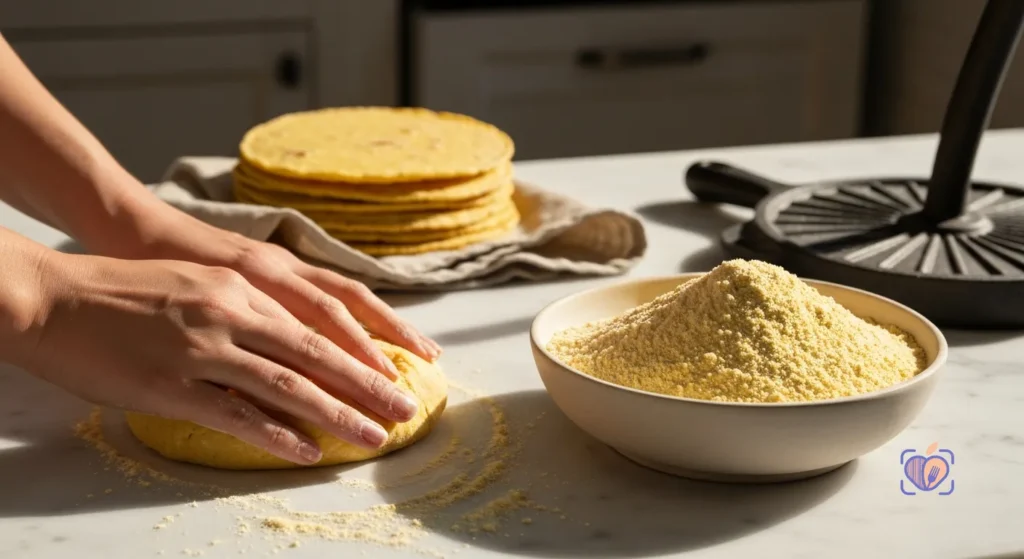
Yes, authentic corn masa flour is inherently gluten-free. It is made from corn—a naturally gluten-free grain—that has been soaked in an alkaline solution in a process called nixtamalization. This process creates the unique flavor and texture essential for tortillas and tamales.
However, the simple answer isn’t the whole story. The danger lies not in the corn, but in the modern processing.
The Simple Grain and the Complicated Reality
Nostalgia tells us that food should be simple. Corn, water, lime. That’s masa. It’s the foundation of incredible culinary traditions. It connects us to something real. But in 2026, the journey from the cornfield to your kitchen is rarely that simple.
The real question isn’t whether the corn itself contains gluten. The real question is: what else has touched it?
The Purity of Nixtamalization
Nixtamalization is an ancient, elegant process. Soaking dried corn kernels in a solution of water and calcium hydroxide (limewater) softens the hulls and chemically alters the corn. This unlocks nutrients like niacin and gives masa its signature elasticity and aroma. At its heart, it is a pure, naturally gluten-free food.
But purity is a fragile thing.
The Hidden Danger: Cross-Contamination
The modern food system values efficiency over everything. This means the same facility that mills corn masa flour might also process wheat, barley, or rye. Shared equipment, airborne flour dust, and common packaging lines create a significant risk of cross-contamination.
For those with celiac disease, even trace amounts of gluten can trigger a serious autoimmune response. This is a critical concern, as outlined by leading authorities like the Celiac Disease Foundation. The promise of a gluten-free product can be broken by something as small as a speck of wheat dust.
This level of diligence is essential for anyone navigating dietary restrictions. The challenge of avoiding hidden allergens is a daily reality, a topic that organizations like Food Allergy Research & Education are dedicated to addressing. It’s not paranoia; it’s necessary vigilance.
How to Choose a Truly Safe Corn Masa Flour
You deserve confidence, not anxiety, when you step into your kitchen. You want to make tortillas, not a calculated risk. Here’s how to secure that peace of mind.
Look for the Certification
Your first line of defense is a “Certified Gluten-Free” seal on the packaging. This indicates the product has been tested to contain less than 20 parts per million (ppm) of gluten. It’s a good start, but it’s not the end of the story. Formulations and facilities can change.
Stop Guessing. Start Knowing with Food Scan Genius.
Labels are designed to sell, not always to inform. “May contain” warnings are often vague, and ingredient lists can be intentionally confusing. You need a better tool.
This is why we built Food Scan Genius. Our app doesn’t just read the label; it deciphers it. With a simple scan of the barcode, our AI instantly analyzes the product against a database of over 200 specific, hidden, and edge-case terms for gluten. We see what the human eye can miss, giving you a clear, definitive yes or no in seconds. Understanding the nuances of who a gluten-free diet is truly for means understanding that there is no room for error.
Don’t leave your health to chance. Take control. Download Food Scan Genius for free and eat with absolute certainty.
Frequently Asked Questions About Corn Masa Flour
Is Maseca brand corn masa flour gluten-free?
Yes, Maseca brand corn masa flour is labeled as gluten-free. It is made in a dedicated gluten-free facility, making it a widely trusted option for those avoiding gluten. However, always scan the specific package you buy, as manufacturing practices can always change.
What is the difference between corn masa flour and regular cornmeal?
Corn masa flour is made from nixtamalized corn, giving it a finer texture and the ability to form a dough when mixed with water. Regular cornmeal is simply ground, dried corn. You cannot make tortillas or tamales from cornmeal, as it will not form a pliable dough.
Can I use corn masa flour as a 1:1 substitute for wheat flour in baking?
No, corn masa flour cannot be substituted 1:1 for wheat flour in most traditional baking recipes like bread or cakes. It lacks gluten, the protein that provides structure and elasticity. It is best used for its intended purpose in recipes like tortillas, tamales, sopes, and pupusas.