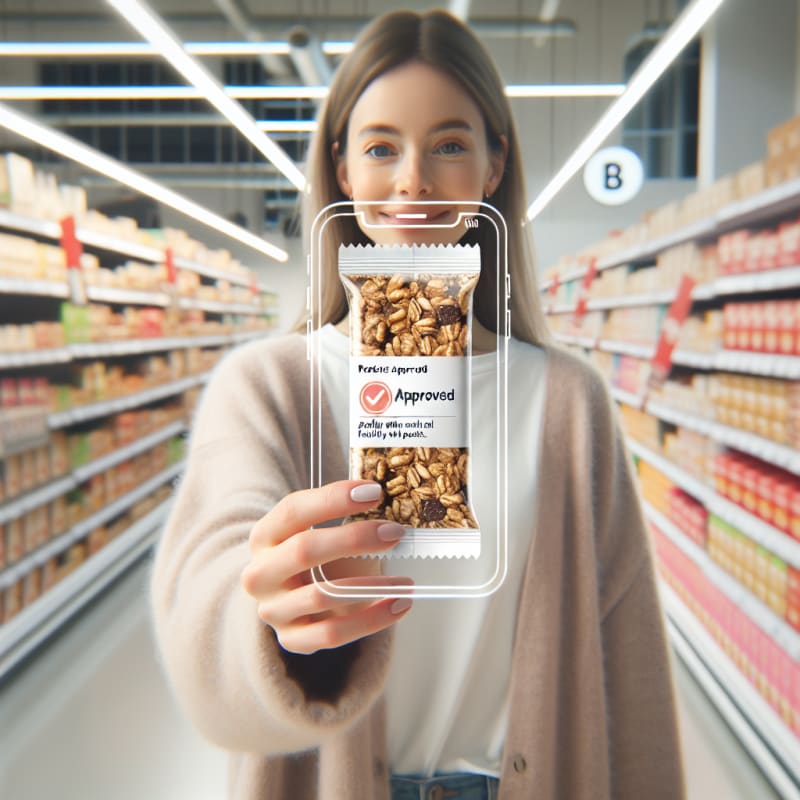
Allergies and Cross-Contamination: A School Nurse’s Guide to Safer Classroom Snacks
You’re stocking up on classroom snacks—granola bars for rewards, crackers for after-school programs, and treats for birthday celebrations. As a school nurse in the United States, you know the routine: quick decisions, tight budgets, and zero room for error. One label keeps slowing you down: “Manufactured in a facility with peanuts.”
Is it safe? Is it risky? And how do you make the right call—every single time—when student health is on the line?
This is where understanding cross-contamination and using a reliable allergen checker app becomes essential to your daily workflow.
The Hidden Problem: “Manufactured in a Facility with Peanuts”
Peanuts are recognized in the U.S. as one of the major food allergens. Under the Food Allergen Labeling and Consumer Protection Act (FALCPA), foods containing peanuts as an ingredient must clearly disclose that fact on the Nutrition Facts label. That part is straightforward.
The challenge for school nurses lies in what FALCPA doesn’t require.
The phrase “manufactured in a facility with peanuts” is a voluntary precautionary label. It is not mandated by the FDA, and it does not follow a standardized risk threshold. Yet, the FDA’s Current Good Manufacturing Practice regulations (21 CFR Part 117) explicitly acknowledge that allergen cross-contact can occur during manufacturing and packaging and require manufacturers to implement preventive controls.
In plain terms: the FDA recognizes the risk of cross-contamination—even when peanuts are not an ingredient.
For students with peanut allergies, even trace exposure can trigger reactions. As the health professional responsible for student safety, you’re left interpreting vague language with real-world consequences.
- Is this snack safe enough for a peanut-free classroom?
- Does this label indicate meaningful risk or legal caution?
- Can you confidently approve this product for group consumption?
When you’re buying classroom snacks quickly—often from big-box stores or local suppliers—manual label reading becomes a bottleneck and a liability.
The Solution: Food Scan Genius for School Nurses
Food Scan Genius was designed for professionals like you—school nurses who need clarity, speed, and consistency.
Instead of relying on memory or second-guessing precautionary labels, Food Scan Genius lets you create a personal dietary profile specifically tailored to your school’s allergy policies. By adding “Manufactured in facility with peanuts” as a flagged risk in the app, you instantly transform how you evaluate snacks.
Why school nurses are switching to this allergen checker app:
- Scan a barcode and instantly identify peanut-related risk indicators
- Standardize decisions across classrooms and events
- Reduce decision fatigue during bulk snack purchases
- Create documentation-friendly consistency for audits and parent communication
Food Scan Genius doesn’t replace FDA guidance—it operationalizes it for real-life school environments.
Manual Label Reading vs. Food Scan Genius
| Decision Factor | Manual Label Reading | Food Scan Genius |
|---|---|---|
| Time per product | 2–3 minutes of careful reading | 5 seconds per barcode scan |
| Consistency | Varies by fatigue and experience | Standardized across all purchases |
| Cross-contamination awareness | Easy to overlook precautionary language | Automatically flagged in your profile |
| Documentation confidence | Manual notes and memory-based | Clear decision trail for administrators |
What a Fellow School Nurse Says
“I used to stand in the snack aisle re-reading labels, worrying I’d miss something. With Food Scan Genius, I scan, see the peanut facility warning immediately, and move on. It’s given me peace of mind—especially when parents trust me with their child’s safety.”
— Linda R., School Nurse, Ohio
Frequently Asked Questions
1. Is “manufactured in a facility with peanuts” required by U.S. law?
No. This statement is voluntary. The FDA requires disclosure when peanuts are an ingredient, but facility warnings are added at the manufacturer’s discretion.
2. Why do school nurses avoid foods with facility peanut warnings?
Because cross-contamination is recognized by FDA manufacturing regulations, and even trace exposure may be unsafe for students with severe peanut allergies.
3. Does the FDA consider cross-contamination a real risk?
Yes. FDA Current Good Manufacturing Practice rules require allergen preventive controls to reduce cross-contact during production.
4. Can an allergen checker app replace label reading?
It doesn’t replace labels—but it dramatically speeds up interpretation and reduces human error, especially during bulk snack purchasing.
5. Is Food Scan Genius suitable for school environments?
Yes. It’s designed to support consistent, policy-driven decisions for classrooms, events, and shared food settings.