Exploring France on a Halal Diet: How Tourist Families Can Avoid Lard in Pastries While Traveling
Picture this: You’re on vacation in France with your family. The kids are excited, the itinerary is packed with museums and landmarks, and the smell of freshly baked croissants drifts out from a Monoprix bakery on the corner. You want to enjoy the moment — not stand squinting at French ingredient lists, wondering if that golden pastry contains lard.
For a tourist family following a halal diet, food decisions while traveling aren’t just about taste. They’re about trust, faith, and peace of mind. And in France, where traditional baking often relies on animal fats, the risk of accidentally consuming non-halal ingredients like lard in pastries is very real.
This is where smart travel habits — and the right technology — make all the difference.
The Hidden Problem: Lard in French Pastries and Why It Matters for Halal Travelers
France is world-famous for its baked goods. From flaky viennoiseries to rustic tarts, pastries are everywhere — especially in supermarkets like Monoprix and neighborhood bakeries. But here’s the issue many tourist families don’t realize:
Lard (porcine fat) is still legally permitted and traditionally used in certain French baked products.
Under EU and French regulations, there is no requirement for bakeries or supermarkets to flag whether animal fats are pork-derived unless it’s explicitly listed in the ingredients. According to EFSA, bakery items such as “fine bakery wares” are broadly categorized in compositional databases, but there are no ingredient-specific warnings or halal indicators.
EU Regulation (EC) No 1333/2008 also confirms that animal fats — including lard — are allowed in pastries without special labeling requirements, as outlined in official EU guidance.
From a health regulation standpoint, French authorities have focused more on limiting trans fatty acids in ultra-processed foods. French MPs, referencing ANSES guidelines, have proposed capping trans fats at 2% of products — which may affect processed fats used in pastries — as reported by FoodNavigator. However, this is about cardiovascular risk, not religious compliance.
For halal families, the issue isn’t nutrition — it’s that lard is pork-derived and therefore strictly non-halal, regardless of how small the quantity may be.
Unlike the US, where the FDA lists lard as GRAS (Generally Recognized as Safe), France and the EU do not regulate food through a religious lens. There is no government halal designation unless a product is voluntarily certified.
So when you’re standing in a Monoprix bakery with impatient kids and a line behind you, asking staff detailed questions in French isn’t always realistic.
The Solution: How Food Scan Genius Becomes Your Halal Travel Companion in France
This is exactly why so many tourist families are turning to Food Scan Genius while traveling in France.
Food Scan Genius is designed for real-life situations — like vacation shopping — where time, language, and ingredient transparency are limited.
Here’s why it works so well for halal travelers:
- You create a personal dietary profile and select Halal.
- You add lard as a specific ingredient to avoid.
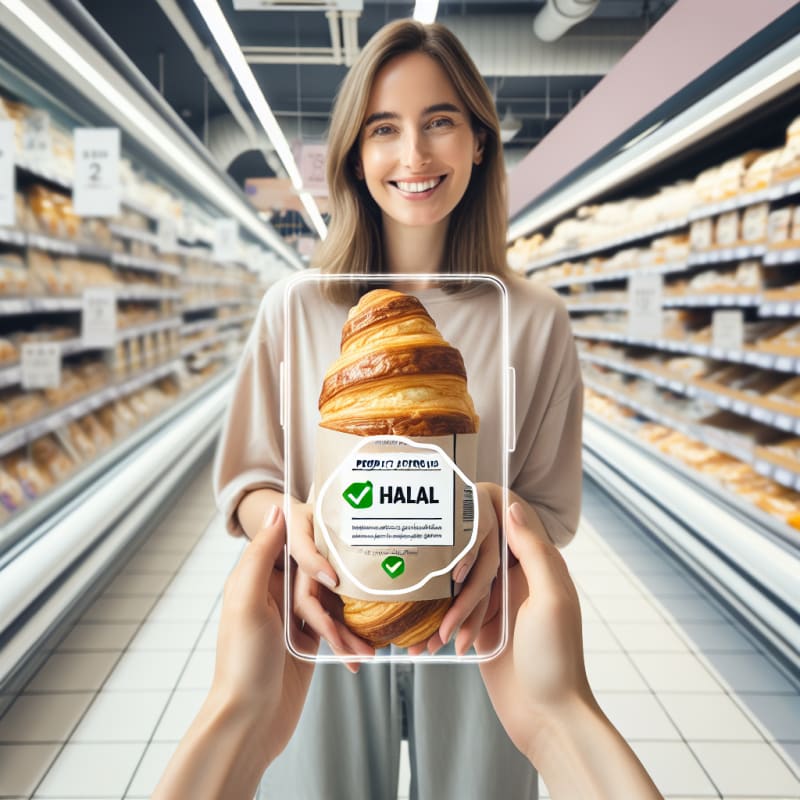
- You scan packaged pastries or bakery items at Monoprix.
- The app instantly flags whether the product aligns with your halal needs.
No guessing. No awkward conversations. No ruining a family outing because of food anxiety.
For families navigating France’s fast-paced urban life — grabbing breakfast before sightseeing or snacks between train connections — this kind of clarity is priceless.
Why Tourist Families Love Using Food Scan Genius in France
✅ Speed: Perfect for quick stops at Monoprix or bakery counters.
✅ Confidence: Avoids accidental pork consumption without relying on assumptions.
✅ Kid-Friendly: Less stress means happier kids and smoother travel days.
✅ France-Specific: Designed to work with EU ingredient labeling and food categories.
Manual Label Reading vs. Food Scan Genius (For Traveling Families)
| Travel Scenario | Manual Label Reading | Food Scan Genius |
|---|---|---|
| Busy Monoprix Bakery | Slow, confusing French terms | Instant halal-friendly result |
| Language Barriers | Requires fluent French | Clear yes/no guidance |
| Hidden Animal Fats | Easy to miss lard | Flags pork-derived ingredients |
| Family Stress Level | High | Low |
| Time Saved While Traveling | Minimal | Significant |
A Realistic Tourist Family Story from France
“We were visiting Paris with our two kids and staying near a Monoprix. Every morning, the bakery smelled incredible — but I was constantly worried about hidden pork fat. Food Scan Genius became our go-to halal scanner in France. I could scan pastries in seconds and know exactly what was safe. It gave us peace of mind and let us actually enjoy our trip.”
— Amina, tourist mom traveling in France
Frequently Asked Questions About Halal Scanner France
1. Is lard commonly used in French pastries?
Yes, lard is legally permitted in France and the EU and may be used in certain traditional or mass-produced pastries, especially when not labeled as halal-certified.
2. Does France require halal labeling on bakery products?
No. France does not regulate halal status unless a product is voluntarily certified. Standard EU ingredient labeling applies.
3. Can I rely on Monoprix bakery staff to confirm halal ingredients?
Staff may not always know the exact fat sources used, especially for centrally produced items. Language barriers can also make this difficult for tourists.
4. How does Food Scan Genius help halal travelers in France?
The app scans product information and checks it against your halal dietary profile, alerting you if ingredients like lard are present.
5. Is Food Scan Genius useful for short trips or only long stays?
It’s ideal for both. Even on short trips, it saves time, reduces stress, and helps families enjoy French food safely.