The Accidental Vegan at Trader Joe’s: How One App Helps You Dodge L-Cysteine Without Trying
You’re strolling the aisles of Trader Joe’s. Maybe you came in for frozen gnocchi and a bottle of Two-Buck Chuck. You’re not vegan. You like options. But you are curious. You’ve heard friends talk about “accidental vegan” choices—foods that just happen to be plant-based without the preachy labels.
Then you flip over a package of bread. The ingredient list looks harmless… until you see something unfamiliar: L-Cysteine.
You pause. Is that vegan? Is it safe? And more importantly—do you really want to stand in Trader Joe’s Googling this?
This is where most curious omnivores get stuck. And this is exactly why more shoppers are quietly asking one question on their phones: is it vegan app?
The Hidden Problem: L-Cysteine and the “Accidental Vegan” Trap
L-Cysteine sounds like a lab-made amino acid. And chemically, it is. But here’s the part most U.S. shoppers don’t realize.
In the United States, L-Cysteine is legally approved by the FDA as a food ingredient. According to the FDA under 21 CFR 184.1271, L-Cysteine is classified as GRAS (Generally Recognized As Safe). It’s commonly used as:
- A dough strengthener in bread
- A flavor enhancer
- A nutrient supplement
The FDA also confirms in its Food Substances Database that L-Cysteine is approved without health risk warnings or source-specific bans.
So what’s the issue?
Source transparency.
L-Cysteine is often derived from:
- Duck or chicken feathers
- Human hair (collected from salons)
Yes—hair.
While the official eCFR confirms L-Cysteine meets strict purity standards (≥98.5% pure, low heavy metals, no identified health risks), the FDA does not require labels to disclose whether it comes from feathers, hair, or synthetic sources.
From a health perspective, the FDA’s GRAS database (SCOGS Report 5) supports its safety. From a vegan perspective?
That’s where things get messy.
For a curious omnivore who just wants to make more mindful choices—or experiment with accidental vegan eating—this ingredient becomes a silent deal-breaker.
The Solution: Food Scan Genius for Curious Omnivores
You’re not trying to overhaul your diet. You’re not labeling yourself. You just want clarity.
Food Scan Genius was built exactly for shoppers like you.
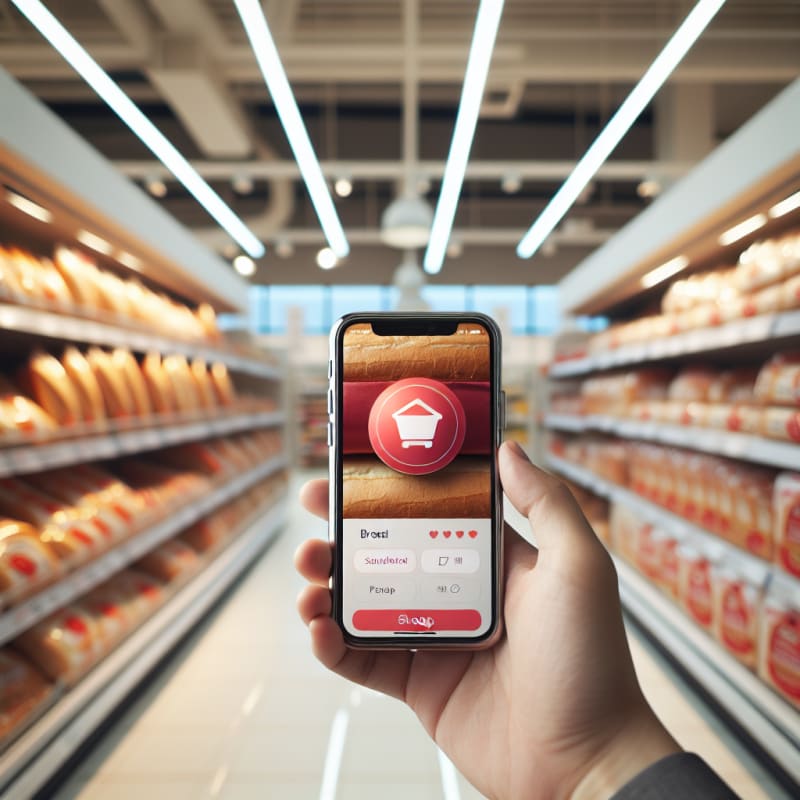
Instead of memorizing ingredient names or decoding FDA regulations in aisle five, the app lets you:
- Scan a product barcode at Trader Joe’s
- Add L-Cysteine to your personal dietary profile
- Instantly see whether a product aligns with vegan standards
This is why Curious Omnivore users are switching to Food Scan Genius—not because they’re committing to veganism, but because they want informed freedom.
No guilt. No labels. Just better information.
When an ingredient like L-Cysteine appears, Food Scan Genius flags it—not as “dangerous,” but as non-vegan due to typical animal or human-derived sourcing, even though it’s FDA-approved and safe.
That’s the nuance most apps miss.
Why This Matters at Trader Joe’s
Trader Joe’s is famous for private-label products. That’s great for price and quality—but it often means:
- Limited ingredient sourcing transparency
- No “vegan certified” seal on many items
- Short ingredient lists that hide big questions
Food Scan Genius bridges that gap in seconds.
Manual Label Reading vs. Food Scan Genius
| Factor | Manual Label Reading | Food Scan Genius |
|---|---|---|
| Time Spent in Store | 2–5 minutes per product | 5 seconds per scan |
| L-Cysteine Detection | Easy to miss or misunderstand | Automatically flagged |
| Vegan Clarity | Requires Googling FDA rules | Clear vegan/non-vegan status |
| Stress Level | High in a busy Trader Joe’s aisle | Low and confident |
| Accidental Vegan Success | Inconsistent | Reliable |
What a Curious Omnivore in the USA Is Saying
“I’m not vegan, but I like knowing when I’m accidentally choosing vegan food. I had no idea L-Cysteine could come from feathers until Food Scan Genius flagged it at Trader Joe’s. Now I just scan and move on—no overthinking.”
— Alex, 34, California
Frequently Asked Questions
Is L-Cysteine safe to eat?
Yes. According to the FDA, L-Cysteine is classified as GRAS (Generally Recognized As Safe) when it meets purity standards. There are no general health risk warnings associated with its approved use.
Why isn’t L-Cysteine considered vegan?
While safe, L-Cysteine is often derived from animal feathers or human hair. The FDA does not require source disclosure, which makes it non-vegan by standard definitions.
Does Trader Joe’s label L-Cysteine sources?
No. Like most U.S. retailers, Trader Joe’s follows FDA labeling laws, which do not require disclosure of whether L-Cysteine is animal-, human-, or synthetic-derived.
Can L-Cysteine be synthetic?
Yes. Some manufacturers use synthetic fermentation-based L-Cysteine. However, unless specified, consumers cannot tell the source from the label alone.
Is there an easy way to check if something is vegan?
Yes. Apps like Food Scan Genius allow you to scan products and instantly see whether ingredients like L-Cysteine align with vegan preferences—answering the common question: is it vegan app?