The Miso Paradox: A Moment of Hope, A Risk of Pain
You’re standing in the grocery aisle, or maybe you’re scanning a restaurant menu. You see it: a warm, comforting bowl of miso soup. A savory miso-glazed salmon. It’s fermented, it’s healthy, it’s made from soybeans. It should be safe.
But you hesitate. Your hand hovers. A familiar knot of anxiety tightens in your stomach. Because for you, a simple meal is never simple. It’s a high-stakes investigation. A single mistake—a trace of gluten from a hidden ingredient, a shared cutting board—can mean days of debilitating pain, brain fog, and intestinal distress. It means missing work, canceling plans, and feeling betrayed by your own body.
This isn’t just an inconvenience; it’s a serious medical reality. For individuals with celiac disease, the ingestion of gluten triggers an autoimmune response that damages the small intestine. According to the Celiac Disease Foundation, this can lead to over 200 different symptoms and, if left unmanaged, serious long-term health complications. The medical consensus is clear and unforgiving: the only treatment is a strict, lifelong gluten-free diet. As the world-renowned Mayo Clinic states, strict avoidance is not a suggestion, but a medical necessity.
This guide is for you. It’s for the parent triple-checking every label for their child. It’s for the individual who is tired of playing Russian roulette with their health every time they eat out. We’re going to dissect the question, “Is miso gluten-free?” with the precision it deserves. We’re not just going to give you a simple yes or no. We’re going to arm you with the knowledge to navigate the world of miso with confidence, so you can finally enjoy its rich, umami flavor without fear.
The Anatomy of Miso: Why a Simple Bean Paste is So Deceptively Complex
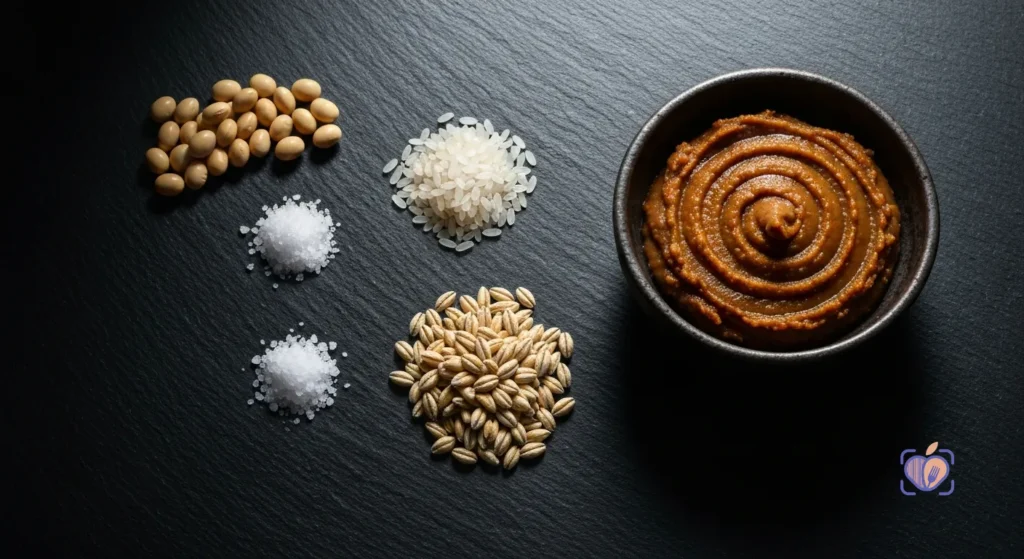
Miso, at its core, is a traditional Japanese seasoning produced by fermenting soybeans with salt and kōji (the fungus Aspergillus oryzae). But the devil, as always, is in the details. The specific grain used to cultivate the kōji and other potential additives are what turn this seemingly safe food into a potential minefield for anyone on a gluten-free diet.
Let’s break down the primary types of miso and the specific risks they carry.
The Definite Danger: Barley Miso (Mugi Miso)
This is the most clear-cut case. Mugi Miso, as the name suggests, is made by fermenting soybeans with barley (mugi in Japanese). Barley is one of the three primary gluten-containing grains, alongside wheat and rye. There is no ambiguity here.
The Risk: Mugi Miso is never gluten-free. The barley is a fundamental ingredient, not a trace contaminant. Consuming it will trigger a full-blown reaction in anyone with celiac disease or severe gluten sensitivity. It’s often favored for its strong, earthy flavor and is commonly used in hearty winter soups and stews. Unfortunately, its rich taste is a siren song for the gluten-intolerant. Many traditional or artisanal miso brands pride themselves on their mugi varieties, and it can easily be mistaken for other types if you’re not carefully reading the ingredient list. The packaging may be in Japanese, or the English translation might simply say “miso paste,” leaving you to decipher the fine print. This is not a product where you can afford to make an assumption.
The Potential Peril: Rice Miso (Kome Miso) & Soybean Miso (Hatcho Miso)
This is where things get treacherous. On paper, these varieties should be your safe haven. Kome Miso is made with rice kōji, and Hatcho Miso is made with soybean kōji (or is sometimes purely soybeans). Rice and soybeans are naturally gluten-free. So, what’s the problem?
The Risk: The danger lies in the manufacturing process and the potential for hidden, undeclared ingredients.
- Cross-Contamination in Production: Many facilities that produce “safe” rice or soybean miso also produce barley miso on the same equipment. Kōji spores are microscopic and can travel. Fermentation tanks, drying racks, and packaging lines can all harbor trace amounts of barley gluten, more than enough to cause a severe reaction. A manufacturer might not consider this level of contamination significant enough to declare, but for a sensitive individual, it’s a disaster waiting to happen.
- The Kōji Starter Culture: The kōji fungus itself needs a medium to grow on before it’s introduced to the soybeans. While this medium is supposed to be gluten-free rice for Kome Miso, some producers may use a barley-based starter culture (a practice known as tane-koji) for all their miso types because it’s cheaper or traditional for their specific methods. This introduces gluten at the very first stage of the process.
- “Trace of Wheat” Warnings: You might see a label that says “May contain traces of wheat.” This is not a suggestion. It’s a legal disclaimer from the manufacturer acknowledging that their facility handles gluten and they cannot guarantee the product is 100% free from cross-contamination. For a celiac, this label should be treated as a definitive “No.”
The Sneaky Additives: Tamari, Shoyu, and Other Flavor Enhancers
Even if the base miso is made with gluten-free ingredients in a dedicated facility, the final product you buy in the tub might not be pure. Manufacturers often add other ingredients to adjust flavor, color, or consistency.
The Risk: A common additive is soy sauce. But not all soy sauce is created equal. Traditional soy sauce, known as shoyu, is brewed with a significant amount of roasted wheat. It is a major source of gluten. A manufacturer might add shoyu to their miso paste to deepen the umami flavor. A safer, gluten-free alternative is tamari, which is traditionally made with little to no wheat. However, unless the product is explicitly certified gluten-free, you cannot assume the soy sauce used is tamari. The ingredient list might just say “soy sauce,” a dangerously ambiguous term. Other additives like flavor enhancers or broths can also contain hydrolyzed wheat protein or other gluten-based derivatives.
Restaurant Roulette: The Miso Soup & Marinade Gamble
Dining out is the final frontier of risk. You are placing your trust entirely in the hands of the kitchen staff.
The Risk: When you order miso soup, you’re not just getting miso paste and water. You’re getting a broth, typically dashi. While traditional dashi is gluten-free (made from kombu seaweed and bonito flakes), many restaurants use instant dashi powders or bases for consistency and cost-savings. These instant products frequently contain wheat as a filler or flavor enhancer. Furthermore, the miso paste they use is often bought in bulk from commercial suppliers, and they may not be aware of its specific ingredients or cross-contamination risks. They might be using a brand that contains barley or shoyu. When miso is used as a marinade for fish or meat, it’s often thinned out with mirin, sake, and, you guessed it, regular soy sauce (shoyu), making an otherwise safe piece of protein a gluten-laden trap.
The Science of Sensitivity: Understanding Gluten Cross-Reactivity
For some, the gluten-free journey is even more complex. You may have eliminated all gluten, yet you still experience symptoms. This can sometimes be due to a phenomenon known as cross-reactivity.
In simple terms, cross-reactivity occurs when the immune system gets confused. The primary culprit in gluten that causes the autoimmune reaction in celiacs is a protein called gliadin. Your body produces antibodies to attack this specific protein. However, the proteins in some other foods can have a similar structure (amino acid sequence) to gliadin. Your immune system, on high alert, can mistake these similar-looking proteins for gliadin and launch an attack, causing the same inflammatory symptoms you’d get from eating wheat.
While the science is still evolving and it doesn’t affect everyone with gluten sensitivity, some studies have suggested potential cross-reactivity with proteins found in dairy (casein), corn, oats (even gluten-free oats, for some), rice, and yeast. This is why some individuals feel better on a grain-free diet, not just a gluten-free one.
This adds another layer of terrifying complexity. You could be diligently avoiding barley miso and choosing a certified gluten-free rice miso, but if your body happens to cross-react with rice proteins, you could still feel unwell. It highlights the deeply personal and biological nature of food sensitivity and why a one-size-fits-all approach is often insufficient. Managing this level of nuance requires a vigilance that is, frankly, exhausting.
The Danger Lurks Everywhere: A Field Guide to Hidden Gluten
Gluten is a master of disguise. It hides in places you’d never expect. When you’re managing a strict diet, your awareness needs to extend far beyond the obvious bread and pasta. Here are some of the most insidious hiding spots related to miso and Asian cuisine:
- Restaurant Cross-Contamination: The tempura batter flies everywhere. The same water used to boil udon noodles is used to blanch vegetables. The chef handles a gyoza wrapper then prepares your sashimi. The risk is constant and invisible.
- Hidden Broths & Soup Bases: As mentioned, instant dashi is a major risk. But so are many bouillon cubes, soup stocks, and powdered bases used in restaurants and packaged foods, which often use wheat flour or hydrolyzed wheat protein as a thickener or flavor base.
- Deceptive Condiments: That delicious, spicy gochujang? It’s a fermented chili paste, but it’s traditionally made with barley malt. Hoisin sauce? Often contains wheat flour. Oyster sauce? Frequently thickened with wheat starch. That “special sauce” on your sushi roll? It could be a mix of mayonnaise and regular, gluten-filled soy sauce.
- Vegetarian & Vegan Traps: Be wary of imitation meats like seitan, which is literally made of pure wheat gluten. A restaurant might use the same miso marinade for their seitan and their tofu, leading to severe cross-contamination.
- Salad Dressings & Sauces: Miso is a popular base for salad dressings. These dressings are often made in-house at restaurants with non-GF soy sauce or other gluten-containing ingredients. Always ask for oil and vinegar.
- Cosmetics & Personal Care: While less common, some lipsticks, lotions, and shampoos contain hydrolyzed wheat protein. For highly sensitive individuals, this can cause skin reactions or be accidentally ingested.
- Pet Food: If you have a pet that eats food containing wheat, and they lick your face or hands, or you handle their food without washing your hands immediately, that’s a potential vector for cross-contamination.
The Overwhelm is Real. The Solution is Simple.
Reading this, you might feel a sense of dread. The world is a minefield. Every meal is a risk. Keeping track of barley miso vs. rice miso, shoyu vs. tamari, cross-reactivity, and a hundred hidden ingredients is more than a full-time job; it’s a crushing mental burden. This is precisely why we built Food Scan Genius. We believe that managing your health shouldn’t be this hard. We believe you deserve to eat with confidence and peace of mind. Managing a single allergy is complex enough, but what if you’re also dairy-free? Or following a low-FODMAP diet? Or avoiding nightshades? The complexity multiplies exponentially. That’s why our mobile app analyzes over 200+ distinct dietary and allergen labels simultaneously, including complex overlapping combinations that no human could possibly track on their own.
Stop Guessing. Start Knowing.
Imagine walking into any grocery store, picking up any product, and knowing in less than a second if it’s safe for you. Not just “gluten-free,” but safe for your unique, specific, and complex dietary needs.
That’s not a fantasy. That’s Food Scan Genius.
Our powerful app turns your phone’s camera into a world-class food detective. Simply scan any barcode, and we’ll instantly cross-reference its ingredients against your personalized profile. We’ll flag the barley, the hidden wheat in the soy sauce, the potential for cross-contamination. We cut through the marketing jargon and the confusing labels to give you a simple, definitive answer: Yes or No.
Stop living in fear. Stop spending hours in the grocery store deciphering labels. Stop the painful trial-and-error. Take back control of your food and your life. For the price of a single fancy coffee a month, you can have total certainty in your pocket.
Download Food Scan Genius today for $4.99/month or save with our annual plan for $49.99/year. Your health, your sanity, and your peace of mind are worth it.
For Android: Download on Google Play
For iOS: Download on the App Store
Frequently Asked Questions
Is white miso (shiro miso) always gluten-free?
No, white miso is not inherently or always gluten-free. “White miso,” or shiro miso, is a category defined by its short fermentation time and mild, slightly sweet flavor. While it is most commonly a type of rice miso (kome miso), which should be gluten-free, it can also be made with a small percentage of barley. Furthermore, even a white miso made only with rice and soybeans is still subject to all the risks of cross-contamination during production and the potential for gluten-containing additives like regular soy sauce (shoyu). The color and name are not reliable indicators of its gluten-free status. You must always verify the ingredients and look for a “Certified Gluten-Free” label.
Can the fermentation process in miso break down gluten?
This is a dangerous misconception. While the fermentation process involves enzymes that break down proteins and starches in soybeans and grains, it does not completely destroy the gluten protein (gliadin) to a level that is safe for people with celiac disease. Some studies on sourdough fermentation have shown a reduction in gluten content, but not elimination. For miso that uses barley as a core ingredient, the amount of gluten is substantial, and the fermentation will not render it safe. The Celiac Disease Foundation and other medical authorities are clear: fermented products made from gluten-containing grains, like barley miso or traditional soy sauce, are not safe for consumption on a gluten-free diet.
How can I be sure a restaurant’s miso soup is safe for my celiac child?
Ensuring safety in a restaurant environment for a celiac child requires diligent communication and a degree of trust. You must speak directly to the manager or chef, not just the server. Ask specific, pointed questions: “What brand of miso paste do you use? Can I see the ingredient list?” and “Is your dashi broth made from scratch or from a powdered base? If it’s a base, can I see the ingredients for that as well?” You also need to inquire about their cross-contamination protocols: “Do you use separate utensils and pots for gluten-free preparations?” If they seem unsure, hesitant, or annoyed by your questions, that is a major red flag. It is safest to assume a restaurant’s miso soup is not gluten-free unless they can prove it to you with ingredient labels and a clear understanding of celiac safety protocols.
What’s the difference between gluten-free tamari and regular soy sauce in miso production?
The difference is critical and comes down to one ingredient: wheat. Regular soy sauce, or shoyu, is traditionally brewed by fermenting a mash of soybeans and a roughly equal amount of roasted, crushed wheat. The wheat adds a distinct sweetness and aroma, but it also makes the final product laden with gluten. Tamari, on the other hand, originated as the liquid byproduct that pools on top of fermenting miso. Traditionally, it is made with only soybeans (or a very small amount of wheat), making it naturally gluten-free or very low in gluten. When a miso manufacturer adds a flavor enhancer, using certified gluten-free tamari preserves the product’s safety for celiacs, while adding shoyu introduces a significant amount of gluten. This is one of the most common ways a seemingly safe rice or soybean miso becomes unsafe.