The Cosmetic Calculator: Your Antidote to the 10,000 Hidden Chemicals in Your Skincare
It starts with a promise. In a beautiful bottle, on a pristine shelf, it promises clear skin, timeless beauty, a feeling of control. You buy into it. You perform the ritual morning and night. You trust the label that says ‘clean,’ ‘natural,’ ‘dermatologist-tested.’
So why are you staring at your reflection, tracing the outline of a new breakout along your jawline? Why does that familiar, angry red rash—the one your doctor calls ‘contact dermatitis’—keep returning, no matter how carefully you choose your products?
The feeling is universal. It’s the quiet frustration of doing everything right and still seeing things go wrong. It’s the betrayal of a product that was supposed to solve a problem but instead created a new one. For those with sensitive skin, hormonal acne, or allergies, the bathroom cabinet isn’t a sanctuary; it’s a minefield.
This isn’t just bad luck. It’s a systemic problem. The truth is, the beauty industry has a dirty secret, and it’s hiding in plain sight on your ingredient labels. These aren’t just words; they’re code for a chemical reality that directly impacts your skin and, in some cases, your health. For example, chemicals like parabens, commonly used as preservatives, have been a source of significant concern. Experts from the American Academy of Dermatology (AAD) have noted the prevalence of paraben allergies, while health advocates at the EWG Skin Deep® database flag them for potential endocrine-disrupting activity and immunotoxicity. You deserve to know what you’re putting on your skin. You deserve a tool that translates the fine print into plain truth. You need a cosmetic calculator.
Why Your ‘Clean’ Moisturizer Might Be Lying to You
The idea of a ‘cosmetic calculator’ isn’t about numbers and equations. It’s about clarity. It’s a lie detector for your lotion, a truth serum for your shampoo. It’s the simple, powerful ability to look past the marketing promises and see the chemical facts.
Brands spend billions to make you feel a certain way. They use words like ‘botanical,’ ‘pure,’ and ‘gentle’ to create an illusion of safety. But without a regulatory body enforcing these terms, they are often meaningless. A product can contain a single drop of rosewater and be marketed as ‘natural,’ while the rest of the formula is a cocktail of synthetic preservatives, harsh surfactants, and potential allergens.
This is where we peel back the curtain. We’re going to deconstruct the ingredient list, not as chemists, but as consumers who have been let down one too many times. We’ll look at the specific ways these hidden chemicals operate, why they’re used, and the damage they can do.
Endocrine Disruptors: The Hormonal Sabotage Hiding in Your Moisturizer
This is perhaps the most insidious category of all. Endocrine-Disrupting Chemicals (EDCs) are substances that can interfere with your body’s hormonal system. Think of them as imposters that mimic, block, or otherwise disrupt the delicate dance of hormones that regulate everything from your metabolism and mood to your reproductive system and, yes, your skin. Hormonal acne, for instance, is a direct result of this system being out of balance.
When you slather on a lotion containing certain phthalates or parabens, these EDCs can be absorbed into your bloodstream. They’re not just sitting on the surface; they’re potentially interacting with your body on a systemic level.
- Key Culprits:
- Parabens (Methylparaben, Propylparaben, etc.): Used as preservatives to prevent the growth of bacteria and mold. They are notorious for their ability to mimic estrogen, and their presence in cosmetic products has raised alarms among toxicologists and endocrinologists for years.
- Phthalates (DBP, DEHP): Often hidden under the generic term ‘fragrance,’ these chemicals are used to make scents last longer. They have been linked in numerous studies to reproductive and developmental harm.
- Chemical Sunscreens (Oxybenzone, Avobenzone): While effective at blocking UV rays, some of these chemicals are absorbed into the body at high rates and have been shown to be potential endocrine disruptors.
Using a cosmetic calculator allows you to instantly flag these ingredients. It’s your first line of defense against the chemicals that wage a silent war on your hormonal health.
The Comedogenic Code: Unmasking the Pore-Clogging Imposters
‘Non-comedogenic’ is one of the most sought-after phrases on a skincare label, especially for anyone prone to acne. It means the product is formulated to avoid clogging pores. The problem? The term is completely unregulated. A brand can slap it on a bottle of thick, pore-clogging cream with zero repercussions.
The comedogenic scale is a rating system from 0 to 5 that indicates how likely an ingredient is to clog pores. A ‘0’ means it’s highly unlikely, while a ‘5’ (like Coconut Oil for many people) is almost a guarantee of congestion for acne-prone skin types. Understanding this is critical, but who has time to cross-reference every ingredient in their foundation with a scientific chart?
This is the power of an ingredient-list cosmetic calculator. It does the work for you, instantly identifying the red flags hiding in your products.
- Common Pore-Cloggers:
- Isopropyl Myristate: An emollient that gives products a silky feel but scores high on the comedogenic scale.
- Lanolin: A deeply moisturizing ingredient derived from sheep’s wool that can be a major trigger for breakouts.
- Certain Algae Extracts: While they sound natural and beneficial, some types of algae are highly comedogenic.
- Silicones (like Dimethicone): While often rated low on the comedogenic scale, heavy silicones can form an occlusive barrier that traps oil, sweat, and dead skin cells, leading to congestion for some individuals.
A smart cosmetic calculator doesn’t just read the label; it interprets it, giving you the power to finally understand why that ‘oil-free’ moisturizer is still making you break out.
Skin Barrier Breakdown: How “Cleansers” Can Strip Your Defenses
Your skin has a natural, protective shield called the moisture barrier (or acid mantle). It’s a delicate, slightly acidic film that keeps moisture in and keeps bacteria, pollutants, and irritants out. When it’s healthy, your skin looks plump, calm, and hydrated. When it’s damaged, it becomes red, flaky, sensitive, and prone to everything from acne to eczema.
Ironically, the very products we use to ‘clean’ our skin are often the worst offenders in destroying this barrier. The culprit? Harsh surfactants, or ‘sulfates.’
- The Primary Offender: Sodium Lauryl Sulfate (SLS) & Sodium Laureth Sulfate (SLES)
- These are inexpensive, powerful detergents responsible for the rich, satisfying lather we’ve been conditioned to associate with being clean.
- The problem is, they are too effective. They don’t just wash away dirt and oil; they strip away your skin’s natural lipids, compromising its barrier function and leaving it vulnerable and irritated.
That ‘squeaky clean’ feeling isn’t clean. It’s a cry for help from a compromised skin barrier. A cosmetic calculator app can instantly spot these harsh sulfates, allowing you to choose genuinely gentle cleansers that respect your skin’s natural defenses, rather than obliterating them.

The Allergen Minefield: Navigating Fragrance, Dyes, and Hidden Irritants
For those with allergies or sensitive skin, the ingredient list is a constant source of anxiety. An allergic reaction, known as contact dermatitis, can be triggered by thousands of different chemicals, many of which are common in everyday cosmetics. The challenge is identifying your specific triggers and then successfully avoiding them.
This is where the industry’s lack of transparency becomes a real health hazard.
- The ‘Fragrance’ Loophole: This is the single biggest offender. Due to trade secret laws, companies are not required to disclose the individual chemical components that make up their ‘fragrance’ or ‘parfum.’ A single scent can be a cocktail of dozens, or even hundreds, of unlisted chemicals, including common allergens, phthalates, and sensitizers.
- Essential Oils: Often touted as ‘natural’ and ‘pure,’ many essential oils (like lavender, peppermint, and citrus oils) are potent allergens that can cause significant skin reactions in sensitive individuals. ‘Natural’ does not automatically mean ‘safe.’
- Dyes & Colorants: Artificial colors, often listed as ‘CI’ followed by a number, are another common source of irritation and allergic reactions.
- Chemical Preservatives: Beyond parabens, preservatives like Methylisothiazolinone have become notorious for causing widespread allergic contact dermatitis.
A cosmetic calculator designed for sensitive skin is an indispensable tool. It can be programmed to flag your personal allergens, cutting through the marketing noise and the legal loopholes to give you a simple yes/no answer on a product’s safety for you.
The Hidden Dangers: Where The Toxins Are Hiding
Even if you’re a diligent label-reader, companies have become masters of disguise. The problematic ingredients are often not where you’d expect them. Here are some of the most common traps:
- The ‘Fragrance/Parfum’ Black Box: As mentioned, this is the number one loophole. If you see this on a label, assume it contains unlisted chemicals you might be sensitive to, including phthalates. There is no way to know what’s inside.
- Preservatives in “Clean-Washing” Brands: A brand might advertise itself as ‘paraben-free’ but use other synthetic preservatives like phenoxyethanol or formaldehyde-releasers (e.g., DMDM hydantoin) that can be just as irritating or problematic.
- Sulfates in ‘Organic’ Shampoos: A shampoo can be full of beautiful organic botanical extracts but still use Sodium Laureth Sulfate as its primary cleansing agent. The ‘organic’ label doesn’t guarantee a gentle formula.
- Hidden Alcohols in Toners and Serums: ‘Alcohol-free’ usually means a product is free of harsh, drying alcohols like SD Alcohol or Denatured Alcohol. However, it can still contain fatty alcohols (like Cetyl Alcohol), which are generally non-irritating but can be an issue for some very sensitive skin types.
- Formaldehyde-Releasers in Baby Products: Shockingly, preservatives that slowly release formaldehyde—a known carcinogen—are still found in some products marketed for babies, like shampoos and lotions. Scanning a barcode is a non-negotiable for any parent.
Your Shortcut Through the Chemical Minefield
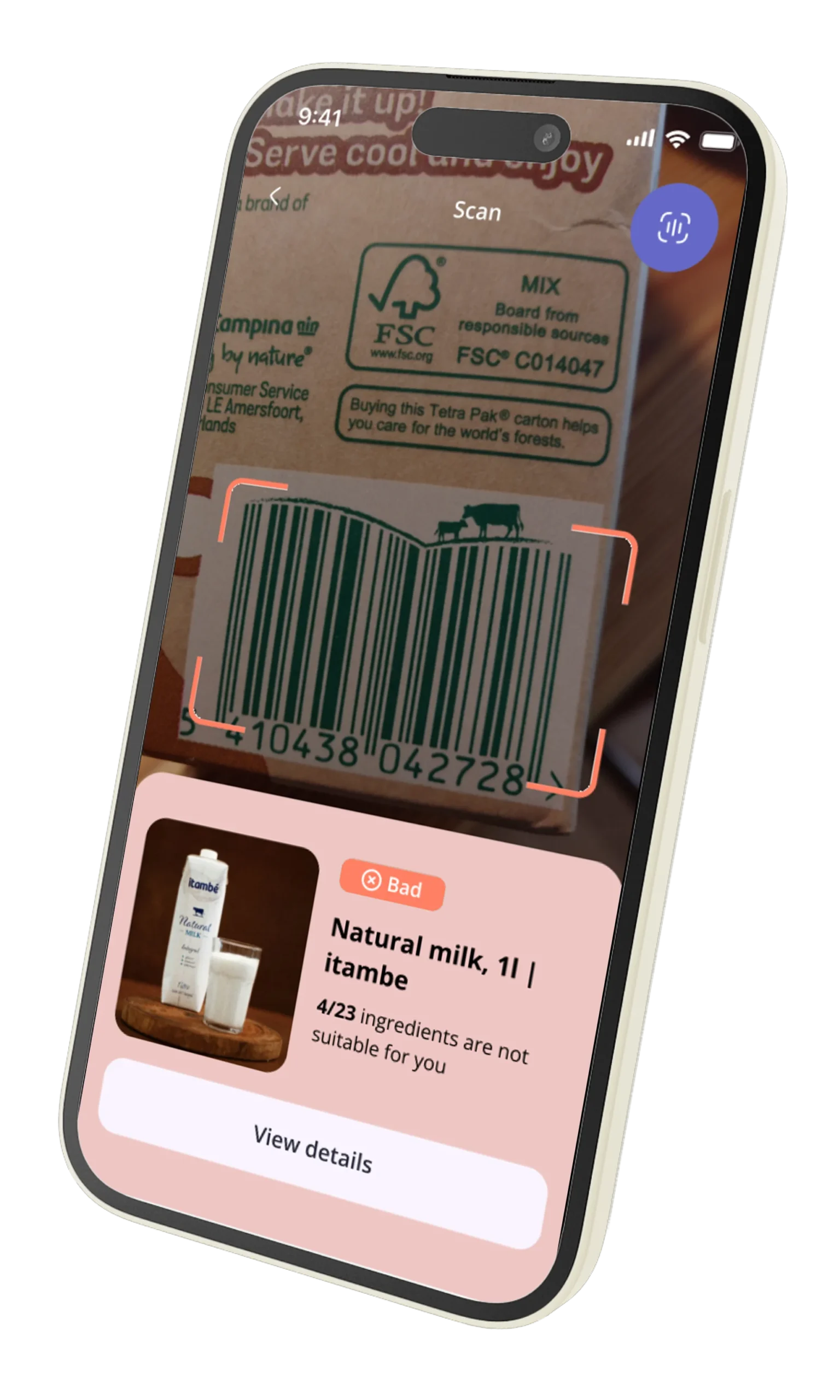
The complexity is overwhelming, and it’s intentional. The cosmetic industry in the United States uses over 10,000 chemicals in its products, with little to no FDA pre-market regulation or approval. This leaves the burden of safety entirely on you, the consumer. Expecting you to memorize thousands of chemical names, their comedogenic ratings, and their potential for endocrine disruption is not just unrealistic; it’s absurd. That’s precisely why we built Skin Scan Genius. Our mobile app is the cosmetic calculator you’ve been searching for. It uses your phone’s camera to scan any product barcode and instantly analyzes the full ingredient list for endocrine disruptors, carcinogens, allergens, and thousands of other harmful chemicals. We cross-reference every ingredient with scientific databases and toxicologist reports to give you a simple, easy-to-understand safety rating.
The Guessing Game Is Over. The Power Is In Your Hand.
Stop letting marketing copy dictate your health. Stop wasting money on products that betray your skin. It’s time to take back control. It’s time to know, for certain, what you are putting on your body.
Right now, go to your bathroom cabinet. Pick up that serum that costs a fortune but you suspect is causing breakouts. Grab that ‘gentle’ cleanser that leaves your skin feeling tight. Pick up your child’s lotion.
Now, take out your phone.
Download the Skin Scan Genius app from the App Store or Google Play. The power to decode every label, to uncover every hidden chemical, and to finally build a routine that is truly safe and effective for you is just one scan away.
Stop guessing. Start scanning. Download Skin Scan Genius right now.
Frequently Asked Questions
How can a cosmetic calculator identify ingredients my dermatologist flagged for my contact dermatitis?
A sophisticated cosmetic calculator app like Skin Scan Genius allows for personalization. Once your dermatologist provides you with a list of specific allergens (e.g., Linalool, Methylisothiazolinone, Balsam of Peru), you can input these into the app to create a personal ‘avoid’ list. Then, every time you scan a product barcode, the app will instantly cross-reference the ingredient list against your specific allergens and immediately flag any product that is unsafe for you. It transforms a difficult, manual checking process into an effortless, instantaneous one.
What’s the difference between a cosmetic calculator app and just reading the label myself?
The difference is speed, depth, and context. Reading a label yourself requires you to recognize and understand dozens of complex chemical names. A cosmetic calculator app does this in a fraction of a second. More importantly, the app provides crucial context that a label can’t. It can tell you why an ingredient is problematic—is it a potential endocrine disruptor, a known carcinogen, or simply a pore-clogging agent? It can also identify chemicals hidden behind loopholes like ‘fragrance/parfum,’ giving you a level of insight that is impossible to achieve by just reading the label.
Are ‘clean’ and ‘hypoallergenic’ labels regulated, or just marketing terms a cosmetic calculator can see through?
These terms are almost entirely unregulated marketing language. The FDA has no official definition for ‘clean,’ ‘natural,’ or ‘hypoallergenic.’ A brand can label a product ‘hypoallergenic’ even if it contains known, potent allergens like fragrance or certain preservatives. A cosmetic calculator completely ignores these meaningless marketing claims. It analyzes the actual INCI (International Nomenclature of Cosmetic Ingredients) list, which is legally required to be accurate. This allows it to see through the marketing fluff and give you an objective assessment of the formula’s real potential for irritation and harm.
Can a cosmetic calculator help me find products that won’t trigger my hormonal acne?
Absolutely. Hormonal acne is complex, but a cosmetic calculator can be a powerful tool in managing it. First, it can help you avoid products with pore-clogging (comedogenic) ingredients that can physically block pores and worsen breakouts. Second, and more critically, it can help you identify and avoid potential endocrine-disrupting chemicals (EDCs) like certain parabens and phthalates. By helping you eliminate these hormonal imposters from your routine, you reduce the external chemical load that may be interfering with your body’s natural hormonal balance, which is a key strategy in managing hormonal acne long-term.