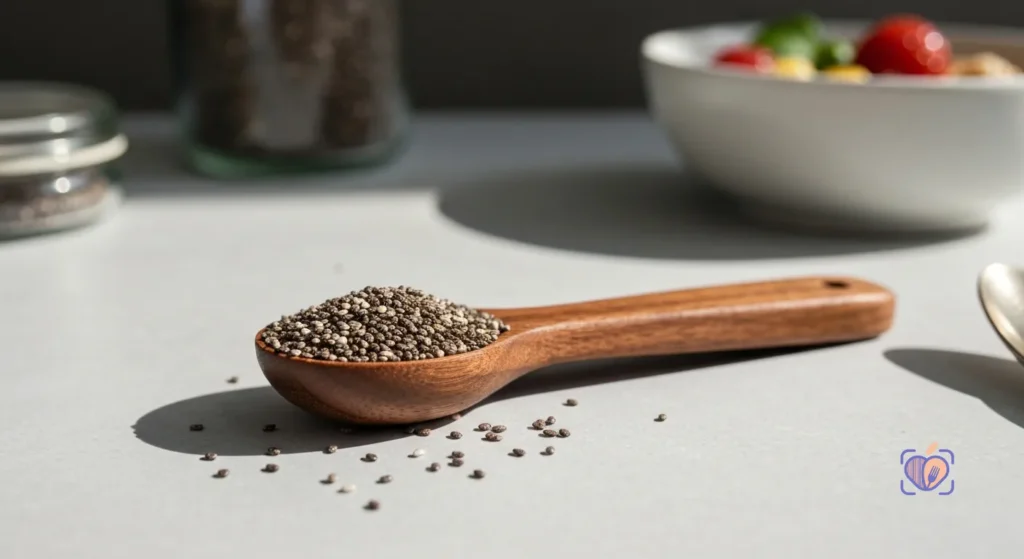
One tablespoon (approximately 12 grams) of chia seeds contains about 69 calories, 4.7 grams of healthy fats (primarily omega-3s), 5 grams of dietary fiber, and 2 grams of plant-based protein.
At NutriGraph, we build products for builders. We know that in the competitive landscape of health and wellness apps, precision isn’t a feature—it’s the foundation. Your users don’t think in vague “serving sizes”; they think in tablespoons, grams, and cups. Getting this wrong erodes trust. Getting it right, down to the last gram of fiber, is how you win.
This is the level of granularity our API provides. Let’s break down the data for one tablespoon of chia seeds, the way your application should.
The Macronutrient Breakdown: Beyond the Calories
A single tablespoon of chia seeds offers a surprisingly dense macronutrient profile. It’s not just about the 69 calories; it’s about where they come from and the quality of that energy.
Healthy Fats: The Omega-3 Powerhouse
Roughly 4.7 grams of fat are packed into this small serving. The critical detail is that the majority is alpha-linolenic acid (ALA), a plant-based omega-3 fatty acid essential for heart and brain health. For developers building meal planners or diet-specific apps, flagging this specific fatty acid type is a huge value-add for users.
Plant-Based Protein & Net Carbs
With 2 grams of protein, chia seeds are a solid contributor to a plant-based diet. Furthermore, of the 5 grams of carbohydrates, nearly all of it is dietary fiber. This means the net carbohydrate impact is incredibly low, making it a perfect ingredient for users tracking keto or low-carb diets.
The Fiber Factor: Why This Tablespoon Matters
The 5 grams of fiber in one tablespoon of chia seeds represents nearly 20% of the recommended daily intake. This isn’t just any fiber; it’s a powerful mix of soluble and insoluble fiber that aids in digestion, promotes satiety, and helps stabilize blood sugar. The importance of adequate fiber is well-documented by leading health institutions like the Mayo Clinic. When your app can surface these specific health benefits tied to verified data, you move from a simple calorie counter to a true wellness partner.
Why Granularity is Non-Negotiable for Health Tech
For years, nutrition apps got away with generic data. Today, that’s a liability. Consumers are more educated than ever, and they question the data they’re given. As a product leader, you must ask: is your app’s database a source of strength or a point of failure? The debate over the utility of nutrition apps often centers on the accuracy of their underlying data. Vague entries like “chia seed pudding” are useless. A user who logs “1 tablespoon of chia seeds” expects you to know exactly what that means.
This is the problem NutriGraph solves. We provide the canonical, verified, and deeply structured data that allows you to build products with unshakeable user trust.
Allergen Intelligence: A Critical Layer
Is it enough to just provide macros and micros? No. Modern users have complex dietary needs. A common query is whether chia seeds are gluten-free. The answer is yes, naturally they are. For individuals with celiac disease or gluten sensitivity, this is not a trivial detail; it’s a critical safety concern. Reputable organizations like the Celiac Disease Foundation provide guidance on naturally gluten-free foods, but your app should have this intelligence built-in.
Our NutriGraph API includes Allergen & Additive Intelligence, allowing you to automatically flag ingredients for the top 9 allergens, gluten, specific additives, and dozens of other dietary protocols. This is the modern standard.
Build with the Gold Standard: The NutriGraph API
If you’re a developer, product manager, or founder building in the health and wellness space, you cannot afford to build on a weak data foundation. The data presented here on chia seeds is just one example of the millions of verified data points in our system.
Stop wrestling with inaccurate, unstructured, and outdated food databases. Integrate the API that powers the next generation of intelligent diet and health applications.
Claim your 10,000 free API calls and access the gold standard in nutritional data today.
Get Started Now: NutriGraph API
Frequently Asked Questions
How many grams are in one tablespoon of chia seeds?
One tablespoon of chia seeds is approximately 12 grams. However, this can vary slightly based on the specific product and how it’s measured. For precise tracking, using a food scale is always recommended.
Do I need to soak chia seeds to get the nutritional benefits?
No, you don’t need to soak them. Your body can digest whole, dry chia seeds. However, soaking them (creating a gel) can make them easier to digest for some people and is a popular way to use them in puddings, oatmeal, and smoothies.
Can one tablespoon of chia seeds help with weight loss?
The high fiber and protein content in chia seeds can increase feelings of fullness and satiety, which may help reduce overall calorie intake. When incorporated into a balanced diet, they can be a useful tool for weight management.