You see it in the cooler case. The can is a masterpiece of minimalist design—clean, promising, sophisticated. Bonsai Sparkling Water. It whispers of wellness, of a simple, pure refreshment. You pick it up, turning it over in your hands. The label reads like a poem: “A delicate infusion of yuzu and elderflower, with a hint of natural sweetness.”
For a moment, you let yourself imagine enjoying it. The crisp carbonation, the bright, floral notes. A simple pleasure.
But for you, nothing is ever simple.
That moment of desire is immediately replaced by a familiar, cold wave of anxiety. Your mind isn’t tasting the flavor; it’s racing, scanning, interrogating. “Natural sweetness”—from what? “Natural flavors”—what does that even mean? Is the citric acid from corn? Could the botanical extracts trigger your Oral Allergy Syndrome? The simple act of trying a new drink becomes a high-stakes negotiation with your own health.
This isn’t just about inconvenience. It’s about safety. It’s about the constant, exhausting vigilance required to navigate a world of opaque ingredient labels and hidden threats. The fear of a reaction—the hives, the swelling, the terrifying shortness of breath—is always there, a shadow that follows you down every grocery aisle. You are not alone in this; this is a serious, medically recognized reality. According to FARE (Food Allergy Research & Education), anaphylaxis is a severe, potentially life-threatening allergic reaction that can occur within seconds or minutes of exposure to an allergen. This isn’t about being a “picky eater”; it’s about life and death.
We understand this reality because we live it, too. We believe you deserve clarity. You deserve to enjoy simple pleasures without fear. This is why we’ve created the definitive, exhaustive breakdown of Bonsai Sparkling Water. We’re going to put that beautiful can under a microscope and expose every potential risk, so you can make a truly informed decision.
Unpacking the Label: A Microscopic Ingredient Analysis
That short, seemingly innocent ingredient list on a can of Bonsai Sparkling Water is a minefield of ambiguity. Brands use broad, legally-permissible terms that tell you nothing about the true origin of their components. Let’s deconstruct the four most critical areas of concern.
Deconstructing “Natural Flavors”: The Great Unknown
Of all the phrases on an ingredient label, “Natural Flavors” is perhaps the most frustrating and dangerous for anyone with a food allergy or sensitivity. The FDA’s definition is incredibly broad, allowing a single “natural flavor” to be a complex proprietary mixture containing dozens of components, including common allergens.
What could be hiding in the “natural flavors” of Bonsai Sparkling Water?
- Hidden Carriers: Flavor compounds are often unstable and need a carrier or solvent to remain mixed in the beverage. These carriers can include soy lecithin, corn-derived maltodextrin, or even dairy derivatives like casein. While the amounts may be small, they can be sufficient to trigger a reaction in a highly sensitive individual.
- Allergen-Derived Sources: The term “natural” simply means the flavor was derived from a natural source, not that it’s inherently safe. A “nutty” flavor note could be derived from actual nut extracts. A “creamy” mouthfeel could come from dairy. Without explicit clarification from the manufacturer (which is rarely offered), you are flying blind.
- The MSG Connection: While not a classic allergen, many people have severe sensitivities to monosodium glutamate (MSG) and its chemical cousins. Flavor enhancers like these can legally be hidden under the “natural flavors” umbrella, leading to migraines, flushing, and other adverse reactions.
The risk here is the complete lack of transparency. When you see “Natural Flavors,” you must assume it could contain your specific trigger until proven otherwise. It’s a gamble, and the stakes are too high.
Botanical Extracts: Yuzu, Elderflower, and Potential Sensitivities
The allure of Bonsai Sparkling Water is its sophisticated botanical profile. Yuzu and elderflower sound pure and delightful. However, for those with pollen allergies, particularly Oral Allergy Syndrome (OAS), these ingredients are a significant red flag.
- Yuzu (Citrus junos): Yuzu is a citrus fruit. While citrus is not one of the Top 9 allergens, true citrus allergies exist and can be severe. More commonly, individuals with grass pollen allergies may experience OAS symptoms from citrus fruits. This can manifest as an itchy mouth, throat, or lips, and in some cases, more severe reactions. The question is not just whether you’re allergic to yuzu, but what you might be cross-reactive with.
- Elderflower (Sambucus nigra): Elderflower is a beautiful, fragrant blossom from the elder tree. It is closely related to plants in the birch family. For the millions who suffer from birch pollen allergies (hay fever), elderflower can be a potent trigger for OAS. The proteins in elderflower are so similar to those in birch pollen that the body’s immune system can’t tell the difference, launching an allergic attack against the perceived threat.
These botanical extracts are the very essence of the product, but they are also its most complex and nuanced risk for a huge portion of the allergy community.
The Sweetener Question: Monk Fruit & Sugar Alcohols
To achieve its “hint of natural sweetness” without sugar, Bonsai Sparkling Water likely uses a modern alternative sweetener like monk fruit extract, often blended with a sugar alcohol like erythritol to provide bulk and a clean taste.
- Monk Fruit (Luo Han Guo): Monk fruit belongs to the gourd family (Cucurbitaceae), which also includes pumpkins, squash, and melons. While monk fruit allergies are considered rare, they are possible, especially for individuals with known allergies to other gourds. If you’ve ever had a reaction to watermelon or cucumber, this is a point of concern.
- Erythritol and GI Distress: Erythritol is a sugar alcohol that is generally well-tolerated. However, for individuals with sensitive digestive systems, IBS, or SIBO, sugar alcohols can cause significant gastrointestinal distress, including bloating, gas, and diarrhea. What is marketed as a “healthy” choice can lead to a miserable afternoon if you have these underlying conditions.
The pursuit of “zero-calorie” sweetness introduces a new set of variables that your body may not be prepared to handle.

Acidity Regulators & Preservatives: Citric Acid and Potassium Sorbate
These are the functional ingredients, the ones that keep the sparkling water stable and tasting fresh. They seem harmless, but their origins matter immensely.
- Citric Acid: You see it everywhere. But where does it come from? While it can be derived from citrus fruits, the vast majority of citric acid used in the food industry today is manufactured through a process involving the fermentation of a mold (Aspergillus niger) that is fed a substrate. That substrate is very often a corn-based syrup. For individuals with a severe corn allergy, this can be a hidden source of exposure. The final product is highly purified, but trace protein fragments could theoretically remain, posing a risk.
- Potassium Sorbate: This preservative is a potassium salt of sorbic acid. While it is not a common allergen, it can cause contact dermatitis-like reactions around the mouth in sensitive individuals. It is a synthetic ingredient that, for those committed to a strictly whole-food or preservative-free diet, is an immediate disqualifier.
The Science of Deception: Understanding Cross-Reactivity
Your immune system is a powerful, sophisticated defense network. But sometimes, it makes mistakes. Cross-reactivity is a case of mistaken identity, and it’s a critical concept to grasp when looking at a product like Bonsai Sparkling Water.
This phenomenon occurs when the proteins in one substance are so similar in structure to the proteins in an allergen that your immune system can’t tell them apart. It sees the harmless protein from the food (or botanical extract) and mistakenly identifies it as the enemy pollen it’s been trained to fight. This is the root cause of Oral Allergy Syndrome (OAS), also known as Pollen-Food Allergy Syndrome (PFAS).
Let’s consider the specific case of the elderflower in Bonsai. If you have a birch pollen allergy, your body has created specific antibodies (IgE) that are shaped to recognize and bind to the primary allergen in birch pollen, a protein called Bet v 1. The protein found in elderflower (and also in apples, cherries, celery, and carrots) has a very similar shape. When you drink the sparkling water, the elderflower proteins come into contact with the IgE antibodies in your mouth and throat. The antibodies lock on, thinking it’s birch pollen, and trigger the release of histamine and other inflammatory chemicals from your mast cells. This causes the immediate, localized reaction of itching and swelling in your mouth and throat. It’s a biological false alarm, but the symptoms are very real.
The same principle applies to yuzu. If you have a grass pollen allergy, certain proteins in citrus fruits can be mistaken for grass pollen proteins, leading to an OAS reaction. Understanding these connections is vital. It means you have to think beyond a simple list of your known allergens and consider entire families of plants and the web of potential cross-reactivities they represent.
Where Danger Hides: Beyond the Ingredient List
Even if the ingredient list itself were perfectly safe for you, the journey that can of Bonsai Sparkling Water took before it reached your hand is filled with invisible risks. True safety means considering the entire production and consumption environment.
Here are the hidden traps you must be aware of:
- Manufacturing Cross-Contamination: This is the most significant hidden danger. Does the bottling facility that produces Bonsai Sparkling Water also produce milk-based coffee drinks? Almond milk lattes? Soy-based protein shakes? If so, are the lines subject to a rigorous, certified allergen cleaning protocol between runs? Without a clear statement from the company, you have to assume they are not. A shared production line is one of the most common ways allergens find their way into a supposedly “safe” product.
- The Cocktail Hour Trap: Sparkling water is a popular cocktail mixer. You might be safe with the water itself, but what about the other ingredients? Many artisanal bitters use tree nuts as a bittering agent or have alcohol bases derived from wheat. Cocktail syrups can contain hidden preservatives or coloring agents. Orgeat syrup is almond-based. That “safe” drink can become a serious threat the moment it’s mixed with something else.
- Cosmetic Contamination: This may sound far-fetched, but it’s a real concern for the highly sensitive. If you have a severe citrus sensitivity, using a lip balm made with lemon or orange essential oils and then drinking from a can could be enough to cause a reaction around your mouth. Always consider what other products you’re using that may come into contact with your food and drink.
- Handling Risks in Food Service: When you order a Bonsai Sparkling Water at a café, the person handling your can might have just finished preparing a sandwich on wheat bread or handled pet treats for a customer’s dog. Microscopic allergen particles can be transferred from their hands to the can, and from the can to your hands and mouth.
Living with a dietary restriction is a 360-degree challenge. The product itself is only one piece of a much larger, more complex puzzle.
That’s the frustrating truth. One ingredient can be connected to dozens of potential reactions. One product can be part of an infinite number of combinations. Trying to keep track of it all—the allergens, the sensitivities, the cross-reactivities, the brand-specific formulations, the manufacturing processes—is more than a full-time job. It’s an impossible burden. We believe technology should carry that burden, not you. Manually checking every label and cross-referencing every potential risk is an exhausting, analog solution to a complex, digital-age problem. The complexity of managing just a few dietary restrictions is immense; managing multiple is nearly impossible without help. The reality of modern food is that managing diets is incredibly complex, which is why our mobile app analyzes over 39 distinct dietary labels simultaneously, including complex overlapping combinations like gluten-free and low-FODMAP, or nut-free and corn-free.
Stop Guessing. Start Knowing.
You don’t have to live in a state of constant anxiety. You don’t have to spend 20 minutes in the grocery aisle, Googling obscure ingredients on your phone. You deserve to have confidence and clarity in your choices.
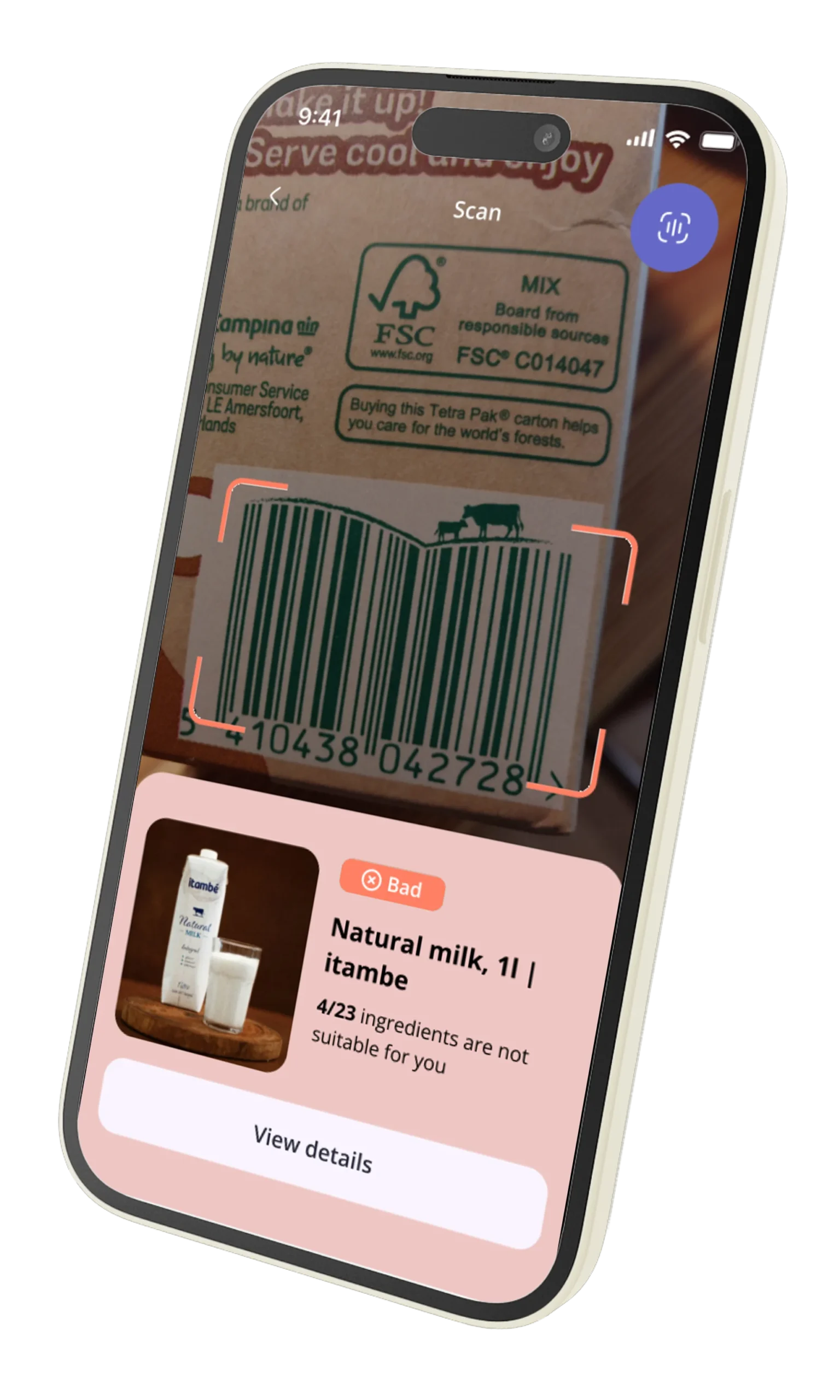
Food Scan Genius was built for this exact moment. It was designed to cut through the marketing noise and the opaque labels to give you a simple, instant, and personalized answer: “Yes” or “No.”
Scan the barcode on that can of Bonsai Sparkling Water, and our app instantly analyzes its complete ingredient and allergen profile against your unique dietary needs. We do the work for you. We check for hidden corn derivatives, flag the botanical extracts for potential cross-reactivity with your specific pollen allergies, and cross-reference the manufacturer’s data for potential cross-contamination risks.
Stop the guesswork. Stop the fear. Take back control of your food and your life. It’s time for a new way of living—one where you have a genius in your pocket, protecting you with every scan.
Download Food Scan Genius now and experience what it feels like to be certain.
For Android: Download on Google Play
For iOS: Download on the App Store
Frequently Asked Questions
Is Bonsai Sparkling Water’s ‘natural yuzu flavor’ safe for someone with a severe citrus allergy?
For someone with a diagnosed, severe citrus allergy, it is highly inadvisable to consume any product with yuzu flavor, even if it is labeled “natural.” Yuzu is a citrus fruit (Citrus junos), and its natural flavor is derived directly from the fruit or its components. The proteins that trigger a citrus allergy would be present in this flavoring. There is no guarantee that the processing removes these allergenic proteins, and the risk of a serious reaction, including anaphylaxis, is significant. You should strictly avoid this product and any others containing citrus-derived flavors unless you have explicit clearance from your allergist.
Can the citric acid in Bonsai Sparkling Water trigger a corn allergy reaction?
This is a complex but important question. While citric acid can be derived from citrus, the vast majority of it used as a food additive is produced via microbial fermentation of a substrate, which is often a corn-based sugar like dextrose. The final product is highly purified, and theoretically, all corn proteins are removed. Many people with corn allergies can tolerate it without issue. However, for individuals who are extraordinarily sensitive, there is a small but non-zero risk that trace amounts of corn protein could remain, potentially triggering a reaction. If you have a severe corn allergy, the safest approach is to contact the manufacturer directly to confirm the source of their citric acid or to avoid the product if that information is unavailable.
I have Oral Allergy Syndrome related to birch pollen. Could the elderflower in Bonsai Sparkling Water be a problem?
Yes, this is a very strong possibility and a significant risk. Elderflower is known to be cross-reactive with birch pollen. This is due to the structural similarity between the primary allergenic protein in birch pollen (Bet v 1) and proteins present in elderflower. For individuals with Oral Allergy Syndrome (OAS) triggered by birch pollen, consuming elderflower can lead to symptoms like itching of the mouth, throat, and lips, and sometimes swelling. We would strongly recommend that anyone with a known birch pollen allergy exercise extreme caution and likely avoid products containing elderflower, including Bonsai Sparkling Water.
Does Bonsai Sparkling Water share manufacturing lines with any Top 9 allergens like milk or tree nuts?
This is a critical question that can often only be answered by the manufacturer. Many beverage facilities produce a wide variety of products. It is common for a plant that bottles sparkling water to also bottle dairy-based coffee drinks, almond milk, or soy-based beverages. Without a specific “allergen-free facility” claim, there is always a risk of cross-contamination from shared equipment. Companies are only required to list allergens that are intentional ingredients. Advisory statements like “May contain milk” are voluntary. The only way to be certain is to contact the company behind Bonsai Sparkling Water and inquire directly about their allergen control protocols and whether the product is produced on dedicated lines free from the Top 9 allergens.