The Last Wing Recipe You’ll Ever Need for a Life with Food Allergies
It starts with a simple craving. A game day, a family gathering, a casual Friday night. You want something simple, something satisfying. You want chicken wings. You search for “wing recipes oven,” and a thousand options appear, all promising crispy skin and bold flavor.
But for you, it’s not that simple. For you, a recipe isn’t just a list of ingredients; it’s a minefield. That bottle of hot sauce—does it have hidden gluten? That spice blend—is it processed in a facility with tree nuts? That chicken broth—could it contain soy or dairy?
The joy of a simple meal is stolen by a storm of anxiety. The fear of a reaction—the hives, the swelling, the terrifying race for an EpiPen—hovers over every choice. You’re not just a cook; you’re a detective, a scientist, and a protector. It’s an exhausting, relentless job.
You are not alone in this. The burden of managing food allergies and dietary restrictions is immense and medically significant. According to FARE (Food Allergy Research & Education), over 33 million Americans live with life-threatening food allergies, and a food allergy reaction sends someone to the emergency room every three minutes. This isn’t about being a picky eater; it’s a serious medical condition that demands vigilance.
This guide isn’t just another collection of recipes. This is your fortress. We’re going to deconstruct the process of making perfect, oven-baked wings, but we’re going to do it through the lens of safety. We’ll give you delicious, reliable recipes, but more importantly, we’ll arm you with the knowledge to navigate this treacherous landscape with confidence. Because you deserve to enjoy food, not fear it.
The Anatomy of a ‘Safe’ Wing: Deconstructing the Dangers
Making truly safe wings in the oven goes far beyond the chicken itself. The danger lies in the additions—the marinades, the rubs, the sauces, and even the cooking process. A simple list of ‘approved’ ingredients isn’t enough, because the food industry is a complex web of shared equipment and vague labeling. Let’s break down the four primary danger zones.
The Treacherous Terrain of Marinades and Dry Rubs
A great wing starts with a great foundation. But that pre-packaged “Cajun Spice” or “Lemon Pepper” blend could be your worst enemy. Commercial spice blends are notorious for hidden allergens used as anti-caking agents, fillers, or flavor enhancers.
- The Gluten Filler: Wheat flour or wheat starch is often used as a cheap filler or anti-caking agent in spice rubs. It provides no flavor, but it can trigger a severe reaction in someone with Celiac disease or a wheat allergy. The label might not even say “wheat,” hiding behind terms like “modified food starch.”
- The Dairy Binder: Some rubs use milk powder to help the spices adhere to the chicken or to add a subtle, creamy undertone. For those with a dairy allergy, this is a significant and often unexpected risk.
- The Soy Sneak: Hydrolyzed soy protein is a common flavor enhancer found in everything from bouillon cubes to seasoning packets. It adds an umami depth but is a direct threat to anyone with a soy allergy.
- Nut Cross-Contamination: The most insidious danger is cross-contamination. A facility that packages both almond flour and paprika can easily contaminate the entire supply. The label may say “May contain traces of tree nuts,” a vague warning that forces you to gamble with your family’s health.
The Sauce Deception: Unmasking Hidden Allergens
The sauce is the star of the show, but its ingredient list often reads like a chemistry textbook. Bottled sauces, from BBQ to Buffalo, are complex concoctions where allergens hide in plain sight.
- Worcestershire’s Secret: A key ingredient in many Buffalo and BBQ sauces is Worcestershire sauce. Its signature flavor comes from fermented anchovies, making it a hidden danger for those with a fish allergy.
- The Dairy in ‘Creamy’ Sauces: Many brands of ranch, blue cheese, or even creamy buffalo sauces use milk, cheese, or buttermilk as a base. Even some non-creamy sauces use butter for flavor and mouthfeel.
- Soy in Disguise: Soy lecithin is an emulsifier used to keep oils and vinegars from separating in sauces and dressings. Tamari and soy sauce are obvious sources, but soy can also be hidden under “vegetable protein” or “natural flavors.”
- Corn and Nightshade Sensitivities: For those with corn allergies or autoimmune protocols avoiding nightshades, sauces are a nightmare. High-fructose corn syrup is a primary sweetener, and the base of most hot sauces is a variety of peppers (a nightshade), like cayenne or habanero.
The Cross-Contamination Battlefield: Your Kitchen
Even if you’ve sourced every ingredient with perfect diligence, your own kitchen can betray you. Cross-contamination is a silent and potent threat, especially in a busy household.
- The Porous Cutting Board: Wooden cutting boards can harbor microscopic food particles from previous meals. If you chopped walnuts on that board last week, or sliced a loaf of bread, those proteins can transfer to your ‘safe’ chicken.
- The Shared Utensil: Tossing your wings in a bowl that was recently used for a wheat-based breading, or using the same tongs to handle a gluten-full dish, is a classic route for contamination.
- The Deceptive Oven Rack: Did your last oven meal involve a cheese-topped casserole that bubbled over? Those baked-on particles can flake off or aerosolize in the hot oven, potentially contaminating your food.
- The Air Itself: For those with severe airborne allergies (like fish or shellfish), simply cooking the allergen in the same kitchen can trigger a reaction. Baking wings on one rack while a fish dish cooks on another is a high-risk scenario.
‘Gluten-Free’ Isn’t Enough: The Pitfalls of Breading and Coatings
To achieve that perfect crispy skin in the oven, many recipes call for a light coating of flour or starch. Navigating the ‘gluten-free’ alternatives opens up a new set of challenges.
- Cornstarch Concerns: While gluten-free, corn is a common allergen itself. Furthermore, some individuals with Celiac disease report sensitivity to corn due to proteins that can mimic gluten’s effects.
- The Rise of Nut Flours: Almond flour is a popular low-carb and gluten-free coating. This is an obvious and severe danger for anyone with a tree nut allergy, turning a ‘safe’ recipe into a life-threatening one.
- Oat Flour Ambiguity: Oats are naturally gluten-free but are one of the most cross-contaminated crops, often grown and processed alongside wheat. Only certified gluten-free oat flour is safe for Celiacs, a distinction many recipes fail to make.
- The Shared Fryer Mentality: Even if you bake your wings, the ‘crispy’ texture might remind you of restaurant wings. It’s a stark reminder that in a commercial kitchen, the fryer used for your ‘gluten-free’ wings was likely the same one used for breaded onion rings just moments before.
The Science of Betrayal: Understanding Cross-Reactivity
Why does a ‘safe’ food sometimes still cause a reaction? The answer can often be found in a complex immunological phenomenon called cross-reactivity. This occurs when the proteins in one substance are so similar to the proteins in another that your body’s immune system can’t tell the difference.
For someone with a food allergy, the immune system creates specific antibodies (IgE) to fight off the ‘invader’ protein. When these antibodies encounter a structurally similar protein from a different food, they can launch the same allergic attack.
Let’s consider a common scenario relevant to our wing recipes: Latex-Fruit Syndrome. A person with a latex allergy might experience a reaction after eating certain foods, including avocado, banana, kiwi, and bell peppers. The proteins in the rubber tree latex are structurally similar to proteins in these fruits and vegetables. If you’re preparing a mango-habanero sauce for your wings and have a latex allergy, you could be at risk for an allergic reaction, even though you’ve never reacted to mango before. Your body mistakes the mango protein for the latex protein it’s been trained to attack.
Another example is Oral Allergy Syndrome (OAS), or Pollen-Food Allergy Syndrome. This is common in people with pollen allergies, like birch or ragweed. They might find their mouth gets itchy after eating raw apples, celery, or carrots. The proteins in the pollen are similar to the proteins in these foods. While cooking often breaks down these specific proteins, they can be a major issue in raw components of your meal, like the celery and carrots served alongside your wings with blue cheese dip.
Understanding cross-reactivity reveals a terrifying truth: avoiding your primary allergen is only half the battle. You have to understand a whole network of related risks. This is a level of complexity that a simple checklist or a basic ‘approved’ list from a competitor like Bob’s can’t possibly manage.
Where the Danger Hides: A Field Guide to Hidden Allergens
They’re in the fine print, the ‘natural flavors,’ and the manufacturing processes. Here are some of the most common and unexpected places allergens hide when you’re making wings.
- ‘Plumped’ Chicken: Some brands inject their raw chicken with a solution to enhance flavor and moisture. This ‘broth’ can contain soy, wheat, or dairy derivatives.
- Non-Stick Sprays: The cooking spray you use to grease your baking sheet can contain soy lecithin as an emulsifier or even dairy.
- Bouillon and Broth Concentrates: These flavor boosters, often used in marinades, are notorious for hiding MSG, hydrolyzed soy protein, and wheat.
- Asian Condiments: Sriracha can contain sulfites. Hoisin and oyster sauces often contain wheat and soy. Fish sauce is an obvious fish allergen.
- ‘Natural Flavors’: This vague term is a black box. Under FDA regulations, it can contain derivatives of almost any food source, including milk, soy, and gluten, without being explicitly listed.
- Vinegar Varieties: While most distilled vinegars are safe, malt vinegar is derived from barley and contains gluten. It’s sometimes used in BBQ sauces and marinades.
- Cross-Contamination from Pet Food: If you handle pet food containing wheat, soy, or other allergens and don’t wash your hands thoroughly, you can easily transfer those allergens to your own meal preparation.
- Cosmetics and Lotions: Believe it or not, many lotions and cosmetics use wheat germ oil, oat, or almond oil. Applying lotion and then preparing food can be a source of contamination.
The Complexity is Overwhelming. The Solution is Simple.
Reading this, you might feel a pit in your stomach. The world of food is more complex and dangerous than you thought. It’s not just about avoiding gluten. It’s about avoiding gluten AND soy AND nightshades for your autoimmune condition. It’s about managing your son’s peanut allergy while also navigating your partner’s dairy intolerance. It’s a dizzying matrix of risk. Managing these diets is incredibly complex, which is why our mobile app analyzes over 39 distinct dietary labels simultaneously, including complex overlapping combinations. A simple ‘approved’ list is a candle in a hurricane; you need a lighthouse.
Stop Guessing. Start Living.
You cannot be expected to be a biochemist, a food scientist, and a private investigator every time you want to make dinner. The mental load is unsustainable. It’s time to put a genius in your pocket.
Food Scan Genius is the only tool that understands the complexity you face. Scan any barcode in the grocery store and get an instant, clear, and reliable answer based on your specific, unique dietary profiles. Is this hot sauce safe for your gluten-free, soy-free, nightshade-free diet? FSG knows. Does this spice rub have hidden dairy? FSG sees it. Can you manage profiles for your entire family, each with different needs, all at once? FSG was built for it.
Stop living in fear. Stop spending hours deciphering labels. Reclaim the joy of cooking and eating. For just $4.99 a month or $49.99 a year, you can have absolute peace of mind. It’s less than the cost of one meal ruined by anxiety or one trip to the emergency room.
Your safety is not a luxury. It’s a necessity. Download Food Scan Genius now.
For Android: Download on Google Play
For iOS: Download on the App Store
Your Safe & Delicious Oven-Baked Wing Recipe
This recipe is designed as a foundational, allergen-free-as-possible starting point. ALWAYS verify your specific ingredients with the Food Scan Genius app.
Yields: 4 servings
Prep time: 10 minutes
Cook time: 45-50 minutes
Ingredients:
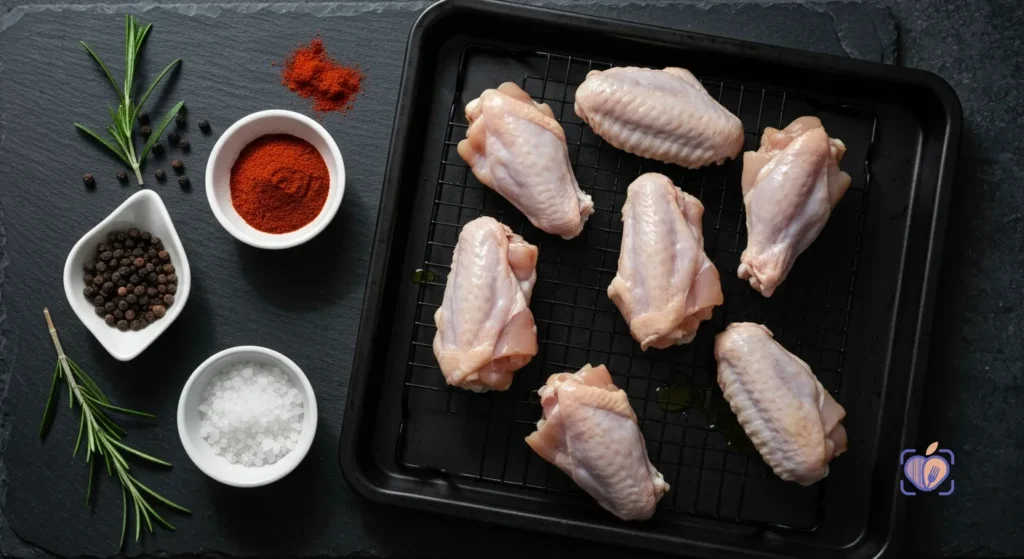
* 3 lbs chicken wings, split into drumettes and flats
* 2 tbsp avocado oil or other high-heat safe oil
* 1 tsp salt
* 1 tsp black pepper
* 1 tsp garlic powder (ensure it’s 100% garlic, no anti-caking agents)
* 1 tsp onion powder (same as above)
* 1 tsp smoked paprika
* Optional Coating: 2 tbsp arrowroot starch or certified gluten-free oat flour for extra crispiness
Instructions:
1. Preheat & Prep: Preheat your oven to 425°F (220°C). Line a large baking sheet with parchment paper for easy cleanup. Do not use non-stick spray unless you have verified its ingredients.
2. Dry the Wings: This is the most important step for crispy skin. Pat the chicken wings thoroughly dry with paper towels. The drier the skin, the crispier it will get.
3. Season the Wings: In a large bowl, combine the salt, pepper, garlic powder, onion powder, and smoked paprika. If using the optional coating, add it here. Add the dry wings to the bowl.
4. Coat the Wings: Drizzle the avocado oil over the wings. Use your hands (wear gloves if you prefer) or tongs to toss the wings until they are evenly and completely coated in the oil and spices.
5. Arrange on Pan: Place the wings on the prepared baking sheet in a single layer. Do not let them touch. Overcrowding the pan will cause the wings to steam instead of roast, resulting in soggy skin.
6. Bake: Bake for 25 minutes. Remove from the oven, and using tongs, flip each wing over.
7. Finish Baking: Return the pan to the oven and bake for another 20-25 minutes, or until the skin is golden brown, crispy, and the internal temperature reaches 165°F (74°C).
8. Sauce (Optional): Let the wings rest for 5 minutes. You can serve them as-is (they are delicious!) or toss them in a verified-safe sauce of your choice in a clean bowl.
Frequently Asked Questions
1. Can I trust ‘gluten-free’ labels on wing sauces in the store?
That’s a critical question. While a ‘Certified Gluten-Free’ label (from organizations like the GFCO) is highly reliable as it requires testing below 20 parts per million (ppm) of gluten, a simple ‘gluten-free’ claim made by the manufacturer is less regulated. The biggest risk is cross-contamination in the manufacturing facility. A sauce might have no gluten ingredients but be produced on the same equipment as a wheat-containing marinade. This is where Food Scan Genius becomes essential. Our app not only reads the ingredients but also aggregates user feedback and brand manufacturing data to provide a more holistic risk assessment than a simple label can offer.
2. My child has a soy allergy. What are the biggest hidden soy risks in oven-baked wing recipes?
For a soy allergy, the risks are widespread and often subtle. Beyond the obvious like soy sauce, look out for: 1) Vegetable Broth/Stock: Often used in marinades and sometimes even injected into raw chicken, it frequently contains soy. 2) ‘Natural Flavors’ or ‘Spices’: This vague term can legally hide soy derivatives. 3) Soybean Oil: While highly refined soybean oil is considered safe for most soy-allergic individuals by some allergists because the protein is removed, the risk tolerance is a personal decision and unrefined or expeller-pressed versions can be dangerous. 4) Soy Lecithin: A common emulsifier in cooking sprays and bottled sauces. Food Scan Genius allows you to set a strict ‘soy-free’ profile that will flag all of these potential sources, even the hidden ones, instantly.
3. How does Food Scan Genius handle multiple, complex allergies for one family?
This is precisely the problem we designed FSG to solve. Within the app, you can create multiple, distinct profiles. For example, you can have a profile for ‘Sarah’ that is gluten-free and dairy-free, and another for ‘Tom’ that is tree nut-free and soy-free. When you go shopping, you can scan a single product and toggle between these profiles to see if it’s safe for each person. Even better, you can create a ‘Family’ profile that combines all restrictions. When you scan a product with the ‘Family’ profile active, it will only give you a ‘safe’ checkmark if it meets every single one of your family’s needs simultaneously. It takes the complex mental math of managing 39+ dietary combinations and simplifies it to a single, trustworthy scan.
4. Are air fryers safer than ovens for preventing cross-contamination with wings?
Both cooking methods have pros and cons regarding cross-contamination. An air fryer is a smaller, self-contained unit, which can be easier to deep clean thoroughly between uses than a large oven cavity. This can be an advantage if you’re, for example, making gluten-free wings after a family member cooked breaded chicken nuggets. However, the powerful fan in an air fryer can also aerosolize small particles, which could be a risk for highly sensitive individuals. An oven is larger and harder to scrub, but its static heat doesn’t circulate particles as aggressively. Ultimately, the safety of either appliance comes down to your cleaning protocol. The most critical step is ensuring the ingredients you put in the appliance are safe, which is the primary job of Food Scan Genius, regardless of your cooking method.