It starts with a simple question, a flicker of curiosity in the back of your mind as you stand at the counter or sit in the drive-thru. “How many calories are in a McDonald’s cheeseburger?” But for you, it’s never just a number. It’s a calculation. It’s a piece of a much larger puzzle you solve every single day.
That number represents a decision that affects your energy, your health goals, your peace of mind. For those of us managing a diet, tracking macros, or navigating a health condition, every calorie counts. It’s not about restriction; it’s about control. It’s about having the clarity and confidence to make choices that align with your body’s needs. The constant mental arithmetic, the uncertainty about hidden ingredients, the fear of derailing your progress—it’s a heavy burden to carry for something as seemingly simple as a meal.
We see you. We understand that this isn’t just about weight loss or a fleeting diet. For many, meticulous calorie and nutrient tracking is a critical component of managing chronic health conditions. According to the Centers for Disease Control and Prevention (CDC), understanding and managing calorie balance is a fundamental principle for achieving and maintaining a healthy weight, which in turn can significantly impact conditions like heart disease and type 2 diabetes. Your diligence isn’t obsessive; it’s essential. This guide is for you. We’re going to deconstruct the McDonald’s Cheeseburger, not with judgment, but with facts, so you can have the one thing you deserve: certainty.
The Official Count: What McDonald’s Says
Let’s establish a baseline. According to McDonald’s official nutritional information, a standard Cheeseburger contains:
- Calories: 300 kcal
- Fat: 13g (20% Daily Value)
- Saturated Fat: 6g (30% Daily Value)
- Carbohydrates: 33g (11% Daily Value)
- Protein: 15g (30% Daily Value)
- Sodium: 750mg (31% Daily Value)
At a glance, 300 calories might seem manageable. It’s a neat, tidy number. But as you know, the truth is never that simple. The real story lies in the components, the macronutrient quality, and how this single item interacts with your entire day’s intake. OpenFoodFacts will give you the number, but we’re going to give you the meaning behind it.
The Granular Breakdown: Deconstructing the 300 Calories
That 300-calorie figure is a composite. To truly understand its impact, we must break it down into its constituent parts. Think of it as an audit of every single ingredient layered between those two buns. Here’s where the hidden calories and nutritional liabilities begin to reveal themselves.
### The Anatomy of a Cheeseburger: A Calorie-by-Calorie Dissection
Each component contributes a specific caloric and nutritional load. While McDonald’s doesn’t provide an official breakdown by ingredient, we can use industry data to create a highly accurate estimate.
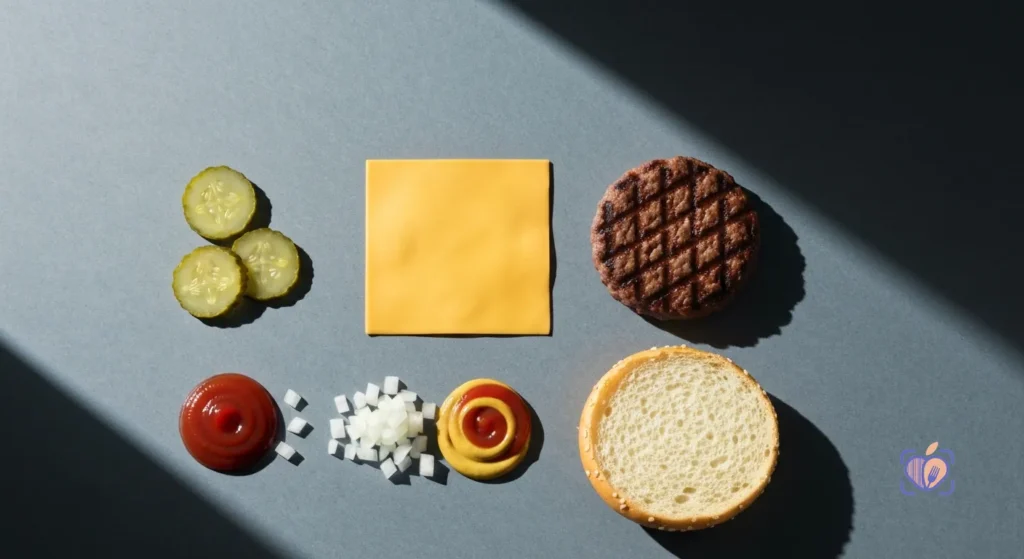
- The Regular Bun (~150 calories): The bun is the single largest contributor to the calorie count. Comprised primarily of enriched flour, water, sugar (or high-fructose corn syrup), and yeast, it delivers a significant dose of simple carbohydrates. The risk here is twofold: these refined carbs can cause a rapid spike in blood sugar, and they offer very little in terms of fiber or micronutrients, leading to what are often called “empty calories.”
- The 100% Beef Patty (~90 calories): The standard beef patty is a major source of protein, which is crucial for satiety and muscle maintenance. However, it’s also a significant source of saturated fat. The risk lies in the quality of the fat and its impact on cardiovascular health when consumed in excess. For a 2,000-calorie diet, the American Heart Association recommends limiting saturated fat to about 13 grams per day. One cheeseburger delivers nearly half of that allowance.
- The American Cheese Slice (~50 calories): This slice of processed cheese adds creaminess and flavor, but also contributes calories, sodium, and saturated fat. The primary risk of processed cheese is its high sodium content and the presence of emulsifiers and preservatives not found in natural cheese.
- The Condiments & Toppings (~10 calories): This is the combination of ketchup, mustard, a single pickle slice, and reconstituted dehydrated onions. Individually, their caloric impact is minimal. The ketchup adds a small amount of sugar, and the pickle adds a surprising amount of sodium. The risk here isn’t the calories, but the cumulative effect of the sodium when combined with the patty and cheese.
### Macronutrient Profile: It’s More Than Just Calories
Focusing solely on the 300-calorie number is like reading a book’s cover and thinking you know the plot. The story of the cheeseburger is told through its macronutrients, and the balance is revealing.
- Protein (15g): This is a respectable amount of protein for a 300-calorie item, making up 20% of the total calories. It’s the most satiating macronutrient, which can help you feel fuller for longer. However, the source is tied to significant saturated fat.
- Fat (13g): Fat accounts for 39% of the total calories. With 6g of that being saturated fat, it’s a calorically dense and potentially inflammatory profile. The risk is that high-fat meals can slow digestion but don’t always provide long-term satiety, especially when paired with simple carbs.
- Carbohydrates (33g): Carbs make up the largest portion of the calories, at 44%. The vast majority of these are from the refined flour bun. The risk of a high simple-carb intake is the potential for an energy crash after the initial blood sugar spike, which can lead to cravings for more high-carb, high-sugar foods later.
- Sodium (750mg): This is perhaps the most significant hidden danger. At 31% of the recommended daily value, this single, small sandwich packs a massive sodium punch. The risk of consistently high sodium intake is well-documented, contributing to high blood pressure, water retention, and increased risk of heart disease and stroke.

### How Customization Changes Everything: Taking Control of Your Order
You are not a passive consumer; you have the power to modify your order to better fit your nutritional goals. Each change, no matter how small, has a ripple effect on the final calorie and macronutrient count.
- Order a Hamburger: Removing the cheese slice saves you approximately 50 calories and 4g of fat. Total: ~250 calories.
- No Bun (The “Flying Dutchman” Hack): Requesting the cheeseburger without a bun drastically changes the profile. You eliminate ~150 calories and the majority of the carbohydrates. This transforms it into a low-carb, high-protein snack. Total: ~150 calories.
- No Ketchup: Removing the ketchup saves you only a handful of calories (~5) but it does reduce the sugar content slightly. A small but meaningful optimization.
- Double Cheeseburger vs. Two Cheeseburgers: A Double Cheeseburger contains 450 calories. Two regular Cheeseburgers contain 600 calories. The difference is the extra bun and condiments. The risk is the mental math error—assuming two is simply double. The lesson is to always check the specific item, not just multiply.
### The Cheeseburger in Context: A Menu-Wide Calorie Comparison
To understand the value of 300 calories, you must compare it to the alternatives. Where does the humble cheeseburger sit in the McDonald’s hierarchy?
- Hamburger: 250 calories
- Cheeseburger: 300 calories
- McDouble: 400 calories
- Quarter Pounder with Cheese: 520 calories
- Big Mac: 590 calories
- McChicken: 400 calories
- 6-Piece McNuggets: 250 calories
In this context, the Cheeseburger is a relatively low-calorie choice among the burgers. The risk, however, is one of perception. It can be seen as a “safe” or “light” option, leading to the justification of adding fries and a soda, which can easily triple the calorie count of the meal.
The Caloric Ripple Effect: Nutritional Interactivity in Your Body
This is where we move beyond simple numbers. The term “cross-reactivity” in the medical world describes how the proteins in one substance are similar to those in another, causing a reaction. In nutrition, a similar principle applies: the components in a food don’t act in isolation. They interact, creating a cascade of metabolic effects. The McDonald’s cheeseburger is a masterclass in this “nutritional interactivity.”
When you consume the cheeseburger, your body has to manage three things simultaneously: a flood of simple carbohydrates from the bun, a heavy dose of saturated fat from the patty and cheese, and a surge of sodium.
- The Blood Sugar Rollercoaster: The highly processed, low-fiber bun is digested rapidly, converting to glucose and entering your bloodstream. Your pancreas releases insulin to manage this sugar spike. This rapid hormonal response can be effective, but it often overcorrects, leading to a subsequent drop in blood sugar. This “crash” is what triggers cravings, fatigue, and the desire for another quick energy source an hour or two later.
- The Fat & Sugar Conflict: Consuming high-fat and high-sugar foods together presents a unique challenge for your metabolism. The high insulin levels triggered by the bun not only work to store blood sugar but also promote fat storage. Essentially, the bun’s carbs are creating the perfect hormonal environment for the patty’s fat to be stored efficiently in your body’s adipose tissue. It’s a metabolically expensive combination.
- The Sodium-Induced Thirst & Bloat: The 750mg of sodium requires your body to retain water to maintain electrolyte balance. This leads to temporary water weight gain, or “bloating,” which can be discouraging if you’re tracking your weight. More insidiously, this sodium load can trigger a strong thirst response. The danger is reaching for a sugary soda to quench that thirst, adding hundreds of more empty calories and exacerbating the blood sugar rollercoaster you’re already on.
Understanding this interplay is the key to moving from a calorie counter to a true manager of your own health.
The Hidden Dangers: Where the Real Calorie Traps Are Set
That 300-calorie cheeseburger rarely travels alone. The true danger to your dietary goals isn’t the sandwich itself, but the ecosystem of calorie-dense additions that surrounds it. This is where a seemingly small choice spirals into a massive caloric liability.
- The “Meal” Deception: Turning your cheeseburger into a “Value Meal” is the most common trap. A medium fries adds 350 calories and a medium Coca-Cola adds 210 calories. Your “modest” 300-calorie lunch has just become an 860-calorie behemoth.
- Condiment Calorie Creep: Think you’re safe with nuggets? Just one packet of Ranch dipping sauce adds 110 calories. One packet of Creamy Ranch for a salad? 190 calories. These are often overlooked and can add up to the equivalent of another sandwich.
- Liquid Calorie Landmines: This is the easiest trap to fall into and the easiest to avoid. A large Sweet Tea contains 160 calories of pure sugar. A medium Hi-C Orange Lavaburst has 220 calories. Swapping any of these for a water or a Diet Coke saves hundreds of calories with zero effort.
- The Cross-Contamination of Oils: While not a calorie adder in the traditional sense, the use of shared frying oil for multiple products (like Filet-O-Fish and fries) means that trace elements and flavor profiles can transfer. For nutrition, it signifies a standardization of high-heat cooking oils, which are often sources of unhealthy trans fats or inflammatory omega-6 fatty acids.
Managing this complex web of interactions, hidden sources, and nutritional data is an overwhelming task. Manually tracking the calories, the macros, the sodium, the sugar, and how they all interact is more than a full-time job. It’s why so many people feel defeated trying to navigate the modern food landscape.
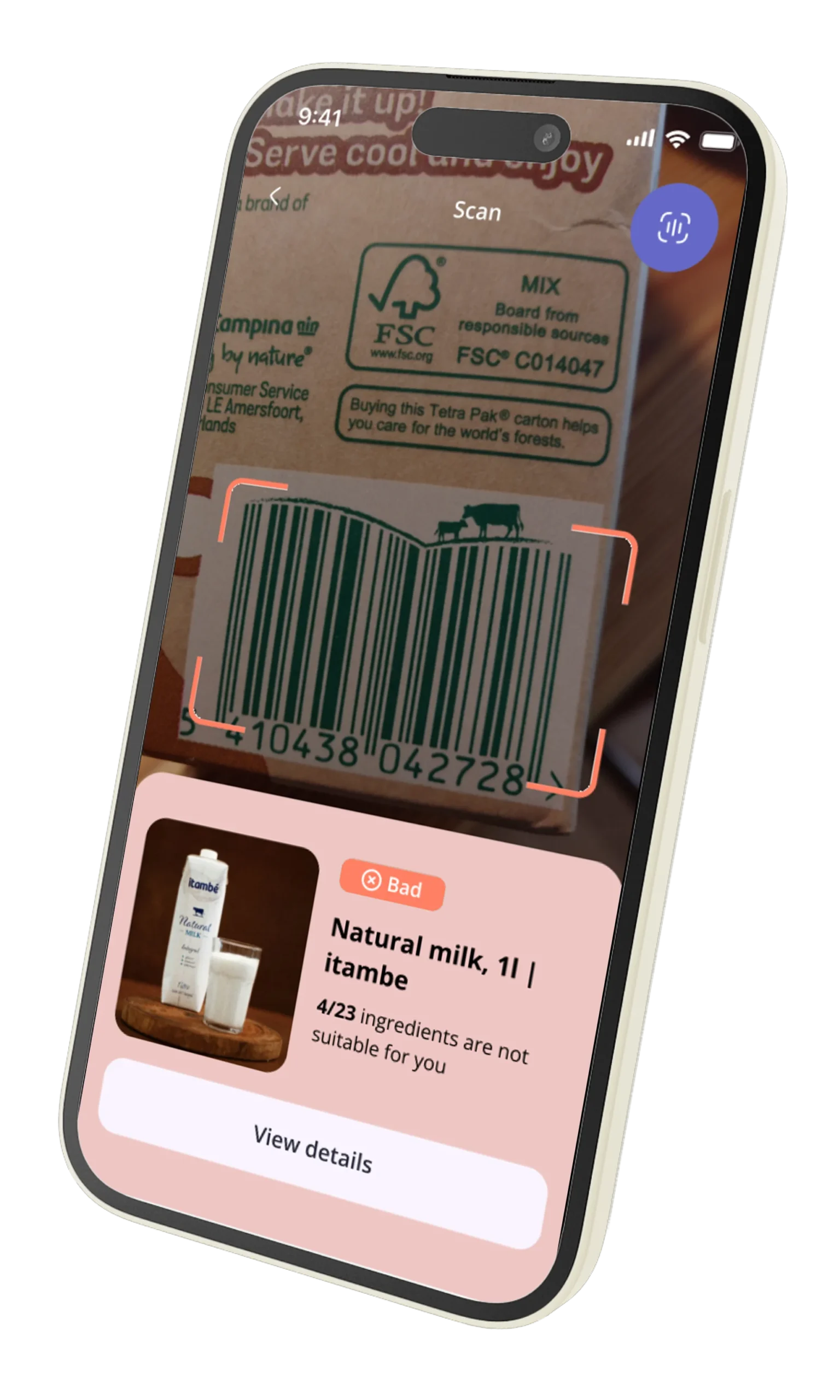
That’s precisely the problem we built Food Scan Genius to solve. The complexity you face is not a personal failure; it’s a data problem. Our app is designed to be your pocket nutritionist, your instant data analyst. Managing diets is incredibly complex, which is why our mobile app analyzes over 39 distinct dietary labels simultaneously, including complex overlapping combinations like ‘low-sodium,’ ‘low-carb,’ and ‘gluten-free.’ You don’t have to hold all that information in your head. You just need to scan.
Your Pocket Genius for Nutritional Certainty
You deserve to eat with confidence, not with anxiety. You deserve clarity, not confusion. Food Scan Genius puts the power of a massive nutritional database right in your hands. Scan any barcode, search any restaurant menu item, and get an instant, detailed breakdown that goes far beyond a simple calorie count.
Stop guessing. Stop spending hours poring over confusing labels. Stop feeling uncertain about what you’re putting in your body. Take control of your health journey with a tool that is as serious about nutrition as you are. Make your next food decision the most informed one you’ve ever made.
For Android: Download on Google Play
For iOS: Download on the App Store
Frequently Asked Questions
How many calories are in a McDonald’s cheeseburger without the bun?
A McDonald’s cheeseburger without the bun contains approximately 150 calories. By removing the bun, you are eliminating the primary source of carbohydrates (around 30g) and about 150 calories. This leaves you with the beef patty, cheese slice, ketchup, mustard, pickle, and onions. This modification turns the cheeseburger into a high-protein, low-carbohydrate food item, making it a popular choice for those following ketogenic or low-carb diets.
What is the sodium content of a McDonald’s cheeseburger and why is it a concern?
A standard McDonald’s cheeseburger contains 750mg of sodium, which is approximately 31% of the recommended daily intake for an adult (based on a 2,000-calorie diet). This is a significant concern because consistently high sodium intake is strongly linked to hypertension (high blood pressure), which increases the risk of heart attack, stroke, and kidney disease. The sodium comes from multiple components: the processed cheese, the beef patty, the pickle, and even the bun. For anyone monitoring their blood pressure or heart health, this single item consumes a large portion of their daily sodium budget.
Can a McDonald’s cheeseburger fit into a weight loss diet plan?
Yes, a 300-calorie McDonald’s cheeseburger can theoretically fit into a calorie-controlled weight loss plan. The key is context and moderation. As a standalone item, 300 calories is a reasonable amount for a small meal or snack. It also provides 15g of protein, which aids in satiety. However, the danger lies in making it a meal with fries and a sugary drink, which can quickly exceed 800-1000 calories. If you incorporate a plain cheeseburger into a well-planned day of nutrient-dense foods and stay within your total daily calorie target, it does not have to derail your progress. The best approach is to pair it with healthier choices, like a side salad or apple slices, and water.
How does the calorie count of a US McDonald’s cheeseburger compare to international versions?
The calorie count can vary significantly by country due to differences in ingredients, formulation, and portion sizes. For example, a cheeseburger in the UK typically has around 301 kcal, very similar to the US version. However, a cheeseburger in Japan might have a slightly different calorie count due to variations in the bun’s sugar content or the beef’s fat composition. These differences highlight the importance of not relying on generalized data. Nutritional information is specific to the region’s food supply and regulations, which is why a location-aware tool like Food Scan Genius is critical for accurate tracking when traveling.