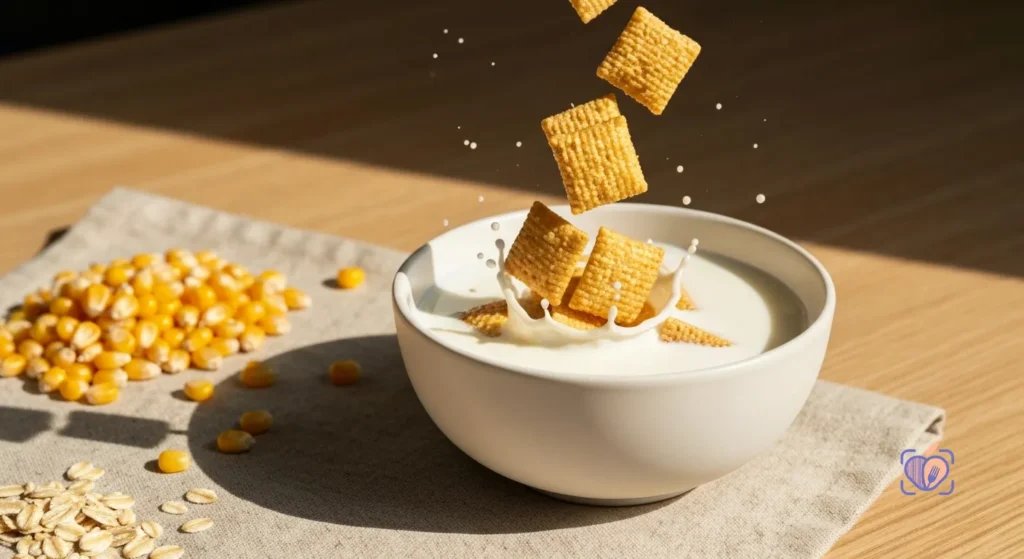
No, Cap’n Crunch is not gluten free.
There. That’s the simple answer you came for. The kind of clarity you wish you had in a world of confusing labels and half-truths. But you and I both know the simple answer is never the whole story.
Remember the feeling? Saturday morning. The world was quiet except for the television and the scrape of your spoon against the bowl. The sweet, crunchy treasure at the bottom of the box. Cap’n Crunch isn’t just a cereal; it’s a memory. A feeling. But feelings can be deceiving, especially when your health is on the line.
In today’s world, the simple act of choosing breakfast has become a high-stakes negotiation with your own well-being. You deserve to know what’s in the box. Let’s pull back the curtain.
Deconstructing the Crunch: The Ingredient Culprit
The front of the box sells you a story of corn and oat goodness. While corn is a friendly face in the gluten-free world, oats are a more complicated character. The main issue isn’t the oat itself, but the company it keeps.
Cap’n Crunch contains oat flour. Oats are naturally gluten-free, but they are almost always grown, harvested, and processed alongside wheat, barley, and rye. This leads to significant cross-contamination, making the final product unsafe for anyone with celiac disease or a serious gluten sensitivity. For a product to be certified gluten-free, it must be processed in a way that avoids this contact, a standard this breakfast classic does not meet. The risk is not a footnote; it’s a fundamental part of the modern food system, a reality that the Celiac Disease Foundation works tirelessly to navigate.
The Label Doesn’t Tell the Whole Story
Food marketing is an art form built on telling you what you want to hear. But what about what they don’t say? The silence is often more important. You won’t find a “gluten-free” badge on a box of Cap’n Crunch, but you also won’t find a clear warning for those who need it most.
This cereal, like many others, falls into the category of ultra-processed foods, where the original ingredients are transformed into something entirely new. The complexity of this process creates countless opportunities for hidden ingredients and undeclared allergens to find their way into your bowl. Consumers are tired of the guesswork, which is why there’s a growing demand to urge food companies to stop hiding ingredients and provide the transparency people with dietary needs deserve.
Your Secret Weapon for Grocery Store Clarity
This is where we come in. You can’t hire a private detective to investigate every item on your grocery list. But you can have the next best thing in your pocket.
Food Scan Genius was built for this reality. We look beyond the marketing. Our powerful scanner doesn’t just read the main label; it cross-references the full ingredient list and manufacturing data, parsing over 200 specific edge-case hidden labels for gluten—like dextrin, maltodextrin, and natural flavors that aren’t so natural. We provide the one thing brands can’t: an unbiased, definitive answer. Instantly.
Stop guessing. Start knowing. Get the clarity you deserve and take back control of your cart.
Download Food Scan Genius for free and never be fooled by a label again:
- For Android: Download on Google Play
- For iOS: Download on the App Store
Frequently Asked Questions
Why isn’t Cap’n Crunch gluten-free?
The primary reason is its use of oat flour, which is subject to cross-contamination with wheat during the farming and manufacturing process. This makes it unsafe for individuals with celiac disease or gluten intolerance.
Are there any gluten-free versions or flavors of Cap’n Crunch?
As of 2026, no. The Quaker Oats Company has not released a certified gluten-free version of any Cap’n Crunch cereal. The risk of cross-contamination applies to all varieties, including Crunch Berries and Peanut Butter Crunch.
What popular breakfast cereals are actually gluten-free?
Several mainstream brands offer certified gluten-free options. Cereals like Chex (Rice, Corn, Chocolate, etc.), Fruity and Cocoa Pebbles, and some Cheerios varieties (in the yellow box) are explicitly labeled gluten-free. However, formulas can change.
How can I be 100% certain a food is safe?
The only way to be completely sure is to trust a certified gluten-free label or to use a tool that goes deeper than the surface. Food Scan Genius was designed to eliminate this uncertainty, giving you immediate, reliable answers by scanning a product’s barcode.