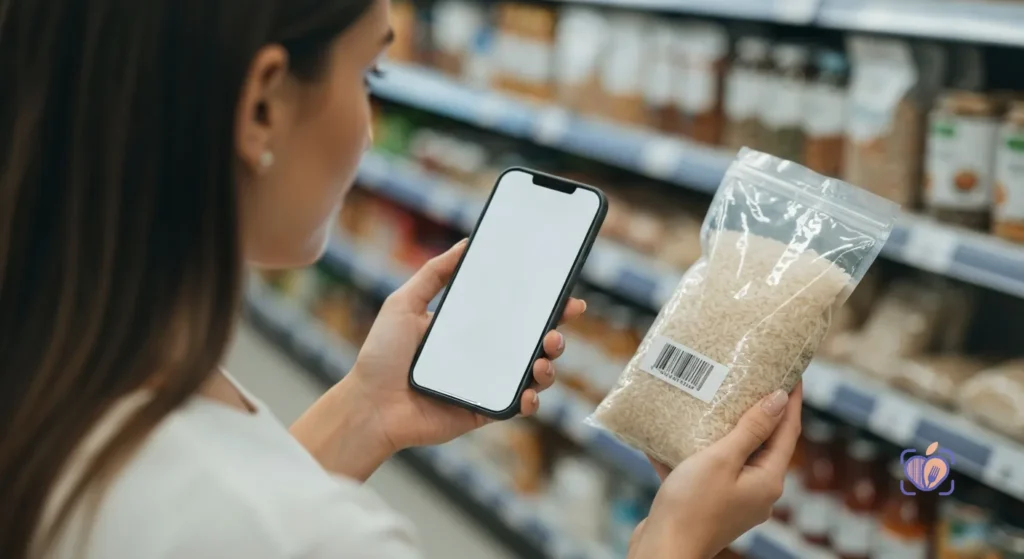
Does rice have gluten? No. All natural forms of rice—including white, brown, basmati, jasmine, wild, and even the heavily misunderstood “glutinous” rice—are naturally 100% gluten-free. In its pure, unprocessed botanical state, rice is entirely safe for anyone avoiding gluten.
But that is where the simplicity ends, and your real problem begins.
I’m Don Draper, CMO of Food Scan Genius. I’ve spent my life studying how the modern consumer navigates the overwhelming noise of the marketplace. You aren’t just walking into a grocery store to buy rice; you are buying peace of mind for yourself and your family. Let’s cut right through the packaging jargon and talk about what the food industry isn’t telling you.
The Short Answer: Why Pure Rice is a Safe Haven
When you build a product, you start with the foundation. For millions navigating who a gluten-free diet is really for and how grains affect your gut, pure rice is the golden standard.
Whether you are preparing a rich Arborio risotto or steaming a simple bowl of Jasmine, the raw grain itself is fundamentally devoid of the gluten protein found in wheat, barley, and rye.
What About “Glutinous” Rice?
Let’s address the elephant in the room immediately. The term “glutinous rice” sounds like a dietary death sentence for a celiac. It is a marketing and linguistic failure.
“Glutinous” simply means sticky. It describes the sweet, glue-like texture the starch takes on when steamed. It has absolutely zero relationship to the gluten protein you are actively trying to avoid. It is a perfectly safe grain buried under a terrible name.
The Hidden Trap: When Does Rice Become a Risk?
If pure rice is so safe, why do people still get sick? Because we don’t buy our food in a vacuum. The second a manufacturer drops a pristine grain of rice into a brightly colored, flavor-blasted cardboard box, the rules change entirely.
Beware of these hidden pitfalls in aisle four:
- Pre-Packaged Flavored Rice: That “herb and butter” or “teriyaki” rice pouch is a landmine. They are routinely loaded with soy sauce powder (which contains wheat) or cheap, wheat-based thickening agents.
- Manufacturing Cross-Contact: Bulk bins and shared agricultural equipment are silent threats. For those managing severe dietary limitations alongside guidance from groups like Food Allergy Research & Education, cross-contact is the primary reason seemingly “safe” grains become hazardous.
- Restaurant Roulette: Rice cooked in a communal kitchen may be boiled in bouillon containing trace wheat, or fried in the same wok as a soy-sauce-laden stir fry.
Stop Guessing. Start Scanning.
You shouldn’t need an advanced degree in chemical engineering to feed your family safely. You shouldn’t have to stand under the fluorescent lights of a supermarket, squinting at a label, wondering if “natural flavors” is just industry code for wheat.
At Food Scan Genius, we recognize that the current food labeling system is broken by design. That’s why we built an elegant, ruthless tool that does the heavy lifting for you.
Food Scan Genius parses 200+ specific edge-case hidden labels that brands use to camouflage gluten in plain sight. We spot the maltodextrin, the modified food starches, and the obscure yeast extracts before they ever hit your cart.
You don’t have the time to gamble with your health. Take absolute control of your grocery run today.
The Gold Standard: Look for the Certification
For individuals actively diagnosed with celiac disease, the stakes are relentlessly high. When looking for absolute, uncompromising certainty in packaged goods, seek out third-party verifications. The Celiac Disease Foundation notes that certified gluten-free labels guarantee the product has been rigorously tested to fall under the 20 parts per million (ppm) threshold.
When that coveted label is missing, our scanner steps in to fill the void. Technology exists to protect you—use it.
FAQ: Navigating Celiac and Rice
Does brown rice have gluten?
Absolutely not. Brown rice is an unrefined whole grain that safely retains its bran and germ. It gives you a denser nutritional profile than white rice without a trace of gluten.
Is sticky rice safe for a strict gluten-free diet?
Yes. Sticky rice (glutinous rice) is entirely safe. The word “glutinous” solely refers to the glue-like consistency of the grain when cooked, not the wheat-born gluten protein that triggers an autoimmune response.
Can I buy rice from the grocery store bulk bins?
If you have celiac disease or non-celiac gluten sensitivity, you must avoid bulk bins. The unmonitored sharing of scoops between bins containing wheat flour, oats, and rice makes the risk of severe cross-contamination unacceptably high.
Are commercial rice cakes gluten-free?
While the core ingredient is safe, the finished product often isn’t. Many commercial rice cakes and crackers are coated with flavor dustings containing wheat, or malt sourced from barley. Never assume—always scan.
Every scan is answered by NutriGraphAPI, our own catalogue of over 5 million barcode-indexed packaged products with allergen, additive and dietary data. Building a food or grocery app yourself? The same data is available as an API.