Understanding Food Ingredients & Additives: A Complete Guide to Safe Eating
When you walk down the aisles of your local supermarket, you are surrounded by thousands of packaged items. Every single item features a complex grid of nutritional information and a fine-print ingredient list. For most shoppers interested in what they put into their bodies, deciphering these labels feels like trying to read a foreign language. Between chemical preservative names, hidden sugars, and texturized food additives, understanding what you are actually consuming has never been more challenging—or more critical for long-term health.
Across the globe, public interest in food ingredient safety is at an all-time high. Recent news coverage from outlets like the BBC and CNN highlights how mounting scientific data regarding ultra-processed foods and chemical additives is shifting consumer habits. Regulatory bodies are actively overhauling their oversight frameworks; for instance, the European Food Safety Authority (EFSA) updated its comprehensive guidelines for food additive data requirements, while regulatory agencies in the United States face renewed scrutiny over ingredient safety loopholes. This comprehensive guide explores the complexities of food ingredients, examines the science behind safety evaluations, and provides practical tools—such as the Food Scan Genius app—to help you navigate your grocery choices with confidence.
The Modern Food Landscape: Why Ingredients Matter More Than Ever
The modern diet has changed dramatically over the past century. Traditional meals built from whole, single-ingredient components have largely been replaced by convenient, shelf-stable, ready-to-eat products. While these innovations have expanded global food availability, they have also introduced an unprecedented array of industrial substances into our daily meals.
When evaluating what we eat, it helps to categorize foods based on their degree of processing:
- Unprocessed or Minimally Processed Foods: Whole foods such as fresh fruits, vegetables, raw grains, eggs, and plain meats that retain their natural structure.
- Processed Culinary Ingredients: Oils, butter, sugar, and salt extracted from nature or other foods and used to cook whole foods.
- Processed Foods: Simpler products made by adding salt, sugar, or other culinary ingredients to minimally processed foods (e.g., canned vegetables, simple cheeses, freshly baked artisan bread).
- Ultra-Processed Foods (UPFs): Industrial formulations manufactured from substances derived from foods or synthesized in laboratories, typically featuring high levels of additives, emulsifiers, artificial flavors, and colors.
As reported by major news organizations, ultra-processed foods now make up a staggering share of the daily caloric intake in Western nations. This widespread shift has triggered intense scientific investigation into how these formulations and their accompanying chemical additives impact human metabolic health, gut microbiomes, and long-term vitality.
Decoding Food Additives: What Are They and Why Are They Used?
Food additives are substances intentionally added to food products to perform specific technological functions. According to scientific reviews published in toxicology and food safety literature, these substances generally serve several primary purposes:
| Additive Category | Primary Function | Common Examples |
|---|---|---|
| Preservatives | Prevent spoilage caused by micro-organisms, bacteria, and mold. | Sodium benzoate, sorbic acid, sulfites |
| Emulsifiers | Help mix ingredients that normally separate, such as oil and water. | Lecithin, mono- and diglycerides, polysorbates |
| Antioxidants | Prevent oxidation and rancidity in fats and oils. | Ascorbic acid (Vitamin C), tocopherols |
| Coloring Agents | Enhance or restore natural appearance lost during processing. | Carotenoids, anthocyanins, mineral-derived pigments |
While many additives occur naturally—such as citric acid or certain plant-derived gums—others are synthetically produced. Understanding the distinction between natural and synthetic is important, but toxicologists emphasize that safety depends primarily on biological exposure thresholds, chemical structure, and individual physiological responses rather than origin alone.
The Regulatory Safeguards: How Authorities Assess Food Safety
Before any food additive can legally appear on a grocery store shelf in regulated markets, it must undergo extensive evaluation by scientific safety authorities. Two of the most prominent oversight bodies are the U.S. Food and Drug Administration (FDA) and the European Food Safety Authority (EFSA).
These agencies utilize rigorous scientific frameworks to establish safety parameters:
- Toxicological Testing: Multi-tiered testing protocols evaluate potential genotoxicity, reproductive toxicity, and long-term chronic health endpoints.
- Acceptable Daily Intake (ADI): Scientists calculate the amount of a substance that can be consumed daily over a lifetime without appreciable health risk.
- Continuous Re-Evaluation: Regulatory standards are dynamic. For instance, EFSA rolled out updated guidance outlining stricter scientific data requirements for food additive authorizations, integrating modern testing methodologies and environmental safety parameters. Similarly, public health discussions in the United States continue to target transparency updates in ingredient safety classifications.
Despite these stringent regulatory guardrails, public concern persists. Regulatory standards establish population-level safety baselines, but they do not always account for individual sensitivities, specific food intolerances, or cumulative exposure resulting from a diet heavily reliant on packaged goods.
Common Challenges Faced by Consumers
Navigating ingredient labels is a formidable task for everyday shoppers. Several persistent hurdles complicate the process of making informed dietary choices:
- Complex Terminology: Food manufacturers often use obscure scientific names or numerical codes (such as E-numbers in Europe) that obscure the true nature of an ingredient.
- Hidden Allergens and Sensitivities: Ingredients derived from common allergens can be disguised under umbrella terms like “natural flavors” or “modified food starches.”
- Information Overload: Sifting through dense nutritional panels while shopping with family or under time constraints makes deep label analysis impractical for most people.
These challenges extend far beyond individual dietary preferences. They represent a broader public health issue: the difficulty of maintaining nutritional literacy in an automated, highly processed commercial food environment.
Frequently Asked Questions
What are ultra-processed foods, and why are they a concern?
Ultra-processed foods are industrial formulations made mostly or entirely from substances derived from foods and additives. Recent reviews link them to various adverse health outcomes, prompting increased global regulatory scrutiny.
How do regulatory bodies like the FDA and EFSA evaluate food additives?
Agencies like the U.S. Food and Drug Administration (FDA) and the European Food Safety Authority (EFSA) conduct systematic risk assessments, toxicological reviews, and exposure monitoring to establish safe usage limits for food additives.
How can I easily check food labels for harmful additives or allergens?
Using dedicated mobile applications like Food Scan Genius allows consumers to scan barcodes instantly, decode complex ingredient lists, and identify hidden additives or allergens tailored to their dietary needs.
How Food Scan Genius Solves the Modern Ingredient Challenge
Knowing what to avoid is only half the battle; the other half is having the right tools to identify ingredients quickly and accurately while shopping. This is where modern mobile technology bridges the gap between complex nutritional science and everyday consumer habits.
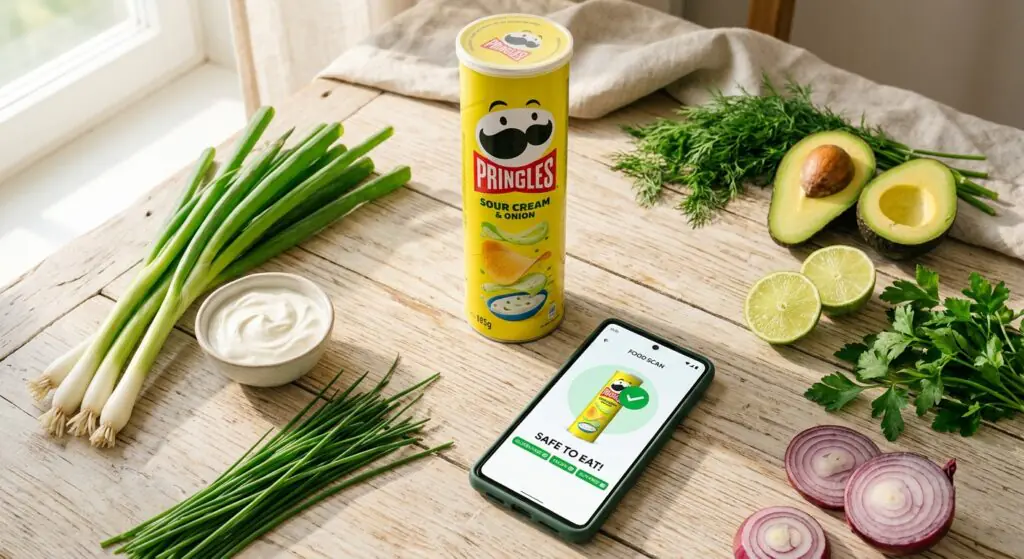
The Food Scan Genius app is designed to empower shoppers by instantly analyzing food product barcodes. Instead of spending precious minutes trying to decode fine-print chemical names or cross-referencing additive databases, users can simply scan an item using their smartphone camera. The app parses the ingredient list, highlights potential allergens or artificial additives, and provides clear, easy-to-understand insights tailored to individual health goals and dietary restrictions.
Real User Experiences
People who struggle with food sensitivities often find immediate relief when they incorporate intelligent scanning tools into their routine. As Sarah M., a long-time user, shares:
“Living with multiple food sensitivities used to make grocery shopping an absolute stressful chore. I spent half my time squinting at ingredient labels trying to spot hidden additives and allergens. Since I started using Food Scan Genius, my entire shopping routine has transformed. I just scan the barcode, and the app instantly tells me what’s inside in plain language. It gives me and my family total peace of mind. I highly recommend everyone download the app and take control of their food choices!”
Ready to take the guesswork out of grocery shopping? Transform how you read labels and protect your health by visiting scangeni.us to download Food Scan Genius today.
Conclusion
Navigating the modern food supply requires a blend of awareness, regulatory knowledge, and practical tools. While scientific bodies like the FDA and EFSA continuously update safety frameworks to monitor food additives, individual vigilance remains essential for optimal wellness. By understanding how foods are processed, learning to interpret ingredient labels, and leveraging smart digital tools like Food Scan Genius, you can cut through the marketing noise and make confident, healthy choices for yourself and your family.
Scan any product in two seconds
Check allergens, additives and 39 diets before you buy. Free on both stores.


Every scan is answered by NutriGraphAPI, our own catalogue of over 5 million barcode-indexed packaged products with allergen, additive and dietary data. Building a food or grocery app yourself? The same data is available as an API.