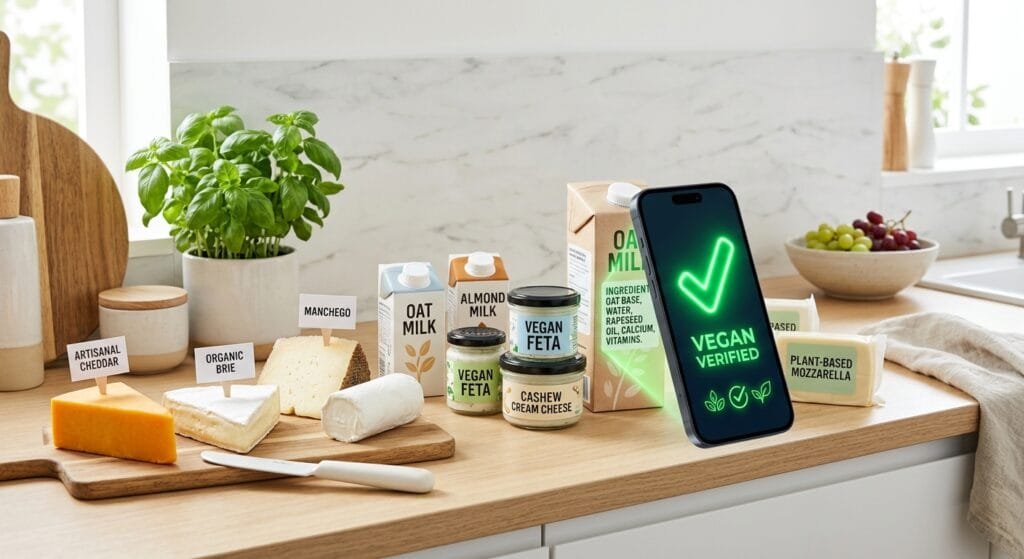
Is Amul Cheese Vegan? Unpacking Ingredients, Dairy Facts, and Hidden Components
Navigating grocery store aisles can feel like walking through a minefield, especially when you are trying to adhere to a strict plant-based lifestyle. For anyone transitioning to a cruelty-free diet, a fundamental question often arises when picking up popular dairy brands: Is Amul cheese vegan? Whether you are standing in front of a supermarket refrigerator or checking items at home, understanding food manufacturing terms is essential to ensuring your meals align with your ethical and dietary choices.
In this comprehensive guide, we will break down Amul cheese ingredients, explore the crucial distinction between vegetarian and vegan products, look at regulatory standards from health authorities like the FDA and EFSA, and show you how modern tools like Food Scan Genius can take the guesswork out of your daily grocery shopping.
Understanding the Basics: What is Amul Cheese Made Of?
To answer whether Amul cheese is vegan, we must first look at what goes into manufacturing it. Amul, one of India’s largest and most iconic dairy cooperatives, produces a vast array of processed cheese blocks, slices, cubes, and spreads. According to product labels and regulatory disclosures:
- Base Ingredient: Graded cow and/or buffalo milk
- Coagulating Agents: Microbial rennet (or microbial-derived enzymes)
- Additives: Sodium citrate, common salt, citric acid, and permitted natural colors like annatto
- Emulsifiers and Preservatives: Class II preservatives to maintain shelf life
Because the primary raw material is animal-derived milk, Amul cheese is strictly NOT vegan. While it is widely marketed and labeled as vegetarian because it utilizes microbial rennet rather than traditional animal-derived rennet sourced from slaughtered calves, it still contains dairy proteins and lactose.
Vegan vs. Vegetarian: Clarifying the Confusion
A common point of confusion for consumers—particularly those purchasing imported foods or exploring international brands—is the difference between vegetarian and vegan certifications.
| Dietary Category | Animal Flesh Permitted? | Dairy / Eggs Permitted? | Amul Cheese Status |
|---|---|---|---|
| Non-Vegetarian | Yes | Yes | No |
| Vegetarian (Lacto-Ovo) | No | Yes | Yes (Suitable for vegetarians) |
| Vegan | No | No | No (Contains milk solids) |
In many regions, such as India, packaging features a green dot to signify a vegetarian product. This green dot indicates that the product does not contain meat, fish, or traditional animal slaughter byproducts like animal rennet. However, it does not mean the item is free from milk, butter, cream, or cheese solids. For vegans, avoiding all forms of dairy is mandatory because milk production involves commercial livestock farming.
Global Regulatory Perspectives on Cheese and Dairy Substitutes
Food standards agencies across the globe maintain strict definitions regarding what can and cannot be labeled as “cheese” or “dairy.” According to guidelines from the U.S. Food and Drug Administration (FDA) and the European Food Safety Authority (EFSA), standard cheese must be derived from the lacteal secretion of milking animals.
Recent nutritional and toxicological reviews published via platforms like PubMed emphasize that consumer literacy regarding food labels remains low. Processed cheese products often hide dairy derivatives, whey protein concentrates, and caseins under broad umbrella terms. When individuals look for plant-based alternatives, they must scan ingredient decks carefully for hidden allergens or animal-derived texturizers.
Recent industry reporting from outlets like Reuters and BBC News highlights a massive global surge in plant-based dairy alternatives. Food conglomerates are racing to reformulate products, yet traditional legacy brands like Amul remain firmly rooted in dairy, even as they innovate with microbial enzymes.
Frequently Asked Questions (FAQ)
1. Is Amul cheese suitable for lactose intolerances?
No. Because Amul cheese is made from real cow and buffalo milk, it contains lactose and milk solids, making it unsuitable for individuals with severe lactose intolerance or dairy allergies.
2. Why is Amul cheese labeled vegetarian if it’s not vegan?
In many global markets, “vegetarian” denotes the absence of meat and animal-slaughter byproducts (such as calf rennet). Amul uses 100% microbial rennet, satisfying vegetarian criteria, but it still utilizes animal milk as its base.
3. Does Amul offer any vegan cheese options?
Historically, Amul’s core product line focuses on traditional dairy. While they have experimented with plant-based dairy alternatives in response to market shifts, their classic cheese blocks, slices, and spreads are entirely dairy-based.
The Broader Issue: Decoding Ingredient Labels in Modern Consumerism
The confusion surrounding Amul cheese points to a much larger issue in the modern food ecosystem: opaque food labeling and complex terminology. Consumers trying to manage dietary restrictions—whether for ethical reasons (veganism), medical necessity (celiac disease, lactose intolerance), or personal health goals—frequently encounter misleading packaging, fine print, and unfamiliar chemical additives.
Manufacturers often use terms like “microbial cultures,” “caseinates,” or “whey derivatives” that sound technical or benign to the untrained eye, but can trigger severe allergic reactions or violate strict dietary rules. Navigating this landscape requires constant vigilance, reading micro-text on the back of packages, and cross-referencing company sourcing methods.
How Food Scan Genius Solves the Ingredient Maze
Checking every single line of text on a grocery package can be exhausting. This is where advanced food-scanning technology transforms your shopping experience. **Food Scan Genius** is an innovative mobile application designed to instantly analyze product barcodes and ingredient lists, instantly flagging allergens, hidden animal products, and unwanted additives.
By leveraging cutting-edge image recognition and extensive food databases, Food Scan Genius empowers you to make split-second, informed decisions right in the grocery aisle. Instead of wondering whether a product contains hidden dairy or non-vegan enzymes, you simply scan the item and let the app do the heavy lifting.
What Real Users Are Saying
“As someone managing both a strict vegan lifestyle and severe dairy sensitivities, grocery shopping used to give me major anxiety. I constantly worried about missing hidden animal ingredients on imported or processed foods. Since I started using **Food Scan Genius**, I can scan any item in seconds and instantly know if it fits my diet. It has completely changed how I shop! Highly recommend downloading it if you want to save time and eat with confidence.”
— Priya S., Verified App User
Ready to take control of your diet and eliminate label-reading stress? Download Food Scan Genius today and make every trip to the supermarket clear, simple, and transparent.
Scan any product in two seconds
Check allergens, additives and 39 diets before you buy. Free on both stores.


Every scan is answered by NutriGraphAPI, our own catalogue of over 5 million barcode-indexed packaged products with allergen, additive and dietary data. Building a food or grocery app yourself? The same data is available as an API.