Scan Your Food for Allergens – Here’s How
Navigating the grocery store aisles used to be a straightforward task of checking prices and picking up familiar brands. Today, however, shopping for food feels more like decoding a complex legal document. With millions of individuals worldwide experiencing adverse immune responses or sensitivities to what they eat, understanding how to thoroughly scan your food for allergens is no longer just a helpful skill—it is an essential part of modern daily life. Whether you are managing a newly diagnosed medical condition, shopping for a child with a severe peanut allergy, or trying to eliminate inflammatory triggers from your diet, knowing what goes into your body is vital for long-term health and peace of mind.
The global rise in food sensitivities has transformed how public health organizations and everyday consumers approach food safety. According to data compiled by organizations like Food Allergy Research & Education (FARE), food allergies affect tens of millions of individuals, turning routine meals into high-stakes decisions. From hidden dairy derivatives in dark chocolate to unexpected traces of soy in processed meats, allergens frequently hide behind obscure chemical names and complicated industrial terminology. This comprehensive guide will walk you through the practical steps of scanning your food for allergens, deciphering complex labels, and leveraging cutting-edge technology to protect your health.
Understanding the Scale of the Food Allergy Challenge
To understand why scanning your food has become so critical, it helps to look at the broader public health picture. Food allergies are a serious medical condition characterized by an abnormal immune response to specific food proteins. When a sensitive person consumes even trace amounts of an offending protein, their immune system treats it as a dangerous invader, triggering a cascade of symptoms ranging from mild hives to life-threatening anaphylaxis.
Recent statistics highlight just how widespread this issue has become:
- Roughly 33 million individuals in the United States alone live with at least one food allergy, impacting approximately 1 in 13 children and 1 in 10 adults.
- Research indicates that nearly half of all adults with food allergies developed at least one of their sensitivities during adulthood, proving that food safety is a lifelong concern regardless of age.
- Globally, public health authorities note that food hypersensitivities—encompassing both true IgE-mediated allergies and non-allergic food intolerances—affect upwards of 10% of populations across various developed regions.
This reality means that food choices are rarely made in isolation. Families, caregivers, school administrators, and restaurant operators must all coordinate to maintain safe environments. Yet, despite tightening regulations, accidental exposures still happen due to confusing packaging, changing manufacturing lines, and overlooked ingredient lists.
The Regulatory Landscape: What the Law Requires
Fortunately, food manufacturers do not operate in a completely unregulated wild west. Governments around the world enforce strict labeling laws designed to protect consumers. In the United States, the Food and Drug Administration (FDA) enforces laws requiring clear identification of the major food allergens. Initially rooted in the Food Allergen Labeling and Consumer Protection Act (FALCPA) which covered eight major categories, legislation has since evolved.
The implementation of the Food Allergy Safety, Treatment, Education, and Research (FASTER) Act officially added sesame as the ninth major food allergen, requiring explicit labeling on all packaged goods. Meanwhile, in the European Union and regions like Ireland, regulations such as EU Regulation 1169/2011 mandate the declaration of 14 distinct allergens, including celery, mustard, lupin, and various sulphites.
The Major Allergen Breakdown
| Region / Framework | Primary Regulated Allergens | Key Compliance Rules |
|---|---|---|
| United States (FDA / FASTER Act) | Milk, Eggs, Fish, Crustacean Shellfish, Tree Nuts, Peanuts, Wheat, Soybeans, Sesame | Must be explicitly named in plain English either within the ingredient list or via a separate “Contains” statement. |
| European Union / UK (EU Regulation 1169/2011) | 14 Allergens: Cereals containing gluten, Crustaceans, Eggs, Fish, Peanuts, Soybeans, Milk, Nuts, Celery, Mustard, Sesame seeds, Sulphur dioxide/sulphites, Lupin, Molluscs. | Must be emphasized visually in the ingredients list (using bold, contrasting colors, or capital letters). |
While these laws have vastly improved food safety transparency, they primarily apply to intentional ingredients. Unintentional presence—often resulting from shared processing facilities—remains a major hurdle for sensitive consumers.
Step-by-Step: How to Scan Your Food for Allergens Like a Pro
When you are standing in the supermarket aisle, scanning physical packages requires a methodical approach. You cannot rely solely on the front-of-package marketing claims like “dairy-free,” “healthy,” or “natural,” as these terms are rarely standardized for strict allergen safety. Instead, use this step-by-step strategy to inspect your food:
1. Read the Entire Ingredient List First
Never skip straight to the bottom summary. Scan every single word in the ingredient text block. Manufacturers frequently introduce derivative proteins under alternative chemical names. For example, milk proteins may appear as casein, whey, lactalbumin, or ghee, while wheat can hide behind terms like hydrolyzed plant protein, malt, or seitan.
2. Look for Dedicated “Contains” Statements
Modern packaging usually features a bolded “Contains:” statement immediately following or underneath the ingredient list. This is designed to give you a rapid summary of major allergens. However, remember that “Contains” statements are generally reserved for major formulated ingredients and may not comprehensively account for every minor component or strict personal sensitivity.
3. Evaluate Precautionary Allergen Labeling (PAL)
Phrases like “May contain traces of nuts” or “Processed in a facility that also handles wheat” are forms of Precautionary Allergen Labeling (PAL). These warnings are voluntary for manufacturers in many jurisdictions and indicate a risk of cross-contact during production. If you have severe, life-threatening anaphylactic reactions, these warnings should be treated with extreme caution.
4. Double-Check Reformulated Products
Food corporations frequently change their suppliers, recipes, or manufacturing plants without altering the exterior packaging design. A product that was safe for you to eat six months ago might now include an unexpected allergen. Make it a habit to scan ingredient labels on every single shopping trip.
Beyond the Label: The Hidden Dangers of Cross-Contact
One of the most insidious challenges in food safety is cross-contact. Unlike cross-contamination—which typically refers to bacterial pathogens transferred via poor hygiene—cross-contact occurs when an actual allergenic protein is inadvertently transferred from one food or surface to another.
Cross-contact can happen at multiple points in the food supply chain:
- Agricultural Harvesting: Grains like wheat and soybeans are frequently grown in rotation or harvested using shared machinery, leading to accidental intermingling.
- Industrial Processing: Food factories that produce multiple product lines on shared equipment may fail to completely sanitize lines between runs.
- Food Service and Retail: Deli counters, bakeries, and restaurant kitchens routinely use shared knives, cutting boards, frying oils, and steam wands, putting sensitive diners at high risk.
Understanding this larger issue reveals why manual label reading alone sometimes falls short. Even when an ingredient list looks immaculate on paper, invisible micro-traces from a shared manufacturing line can trigger severe clinical reactions.
How Digital Tools and Food Scan Genius Transform Safety
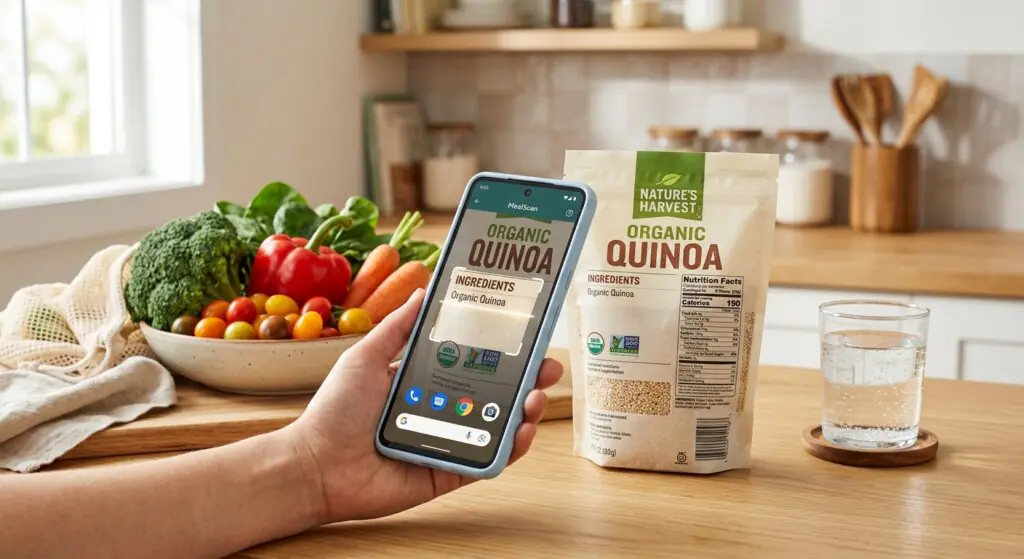
Because reading micro-print on hundreds of grocery items is exhausting and prone to human error, technology has stepped in to bridge the gap. Modern smartphone applications allow consumers to perform instant digital audits of grocery items right in the aisle.
This is where solutions like **Food Scan Genius** change the game. Designed for individuals with food sensitivities, allergies, and specific dietary preferences, the app streamlines the entire label-checking process. By simply using your phone’s camera to scan a product barcode, **Food Scan Genius** instantly analyzes the item’s ingredient database against your custom dietary profile. It flags hidden allergens, alerts you to potential cross-contact risks, and suggests safer alternatives in seconds.
Real User Experience
“Living with multiple food sensitivities meant spending twenty minutes inspecting every single box at the supermarket—and I still made mistakes that left me feeling sick. Since I downloaded Food Scan Genius, my grocery trips are completely stress-free. I just scan the barcode, and the app instantly tells me whether it’s safe for my specific profile. It has given me back my confidence and saved me hours of time. If you struggle with food ingredients, you need to download Food Scan Genius today!” — Sarah M., verified user.
Frequently Asked Questions About Scanning Food for Allergens
How can I easily scan my food for allergens while grocery shopping?
You can scan your food by thoroughly checking ingredient labels for major allergens, looking for explicit “Contains” statements, or utilizing advanced digital companion tools like Food Scan Genius to instantly scan barcodes against your personal health profile.
What are the major food allergens that must be listed on packaging?
In the United States, the FDA regulates the “Big Nine” allergens: milk, eggs, fish, crustacean shellfish, tree nuts, peanuts, wheat, soybeans, and sesame. In the European Union, regulations require the transparent declaration of 14 key allergens, including celery, mustard, lupin, and sulphites.
What is cross-contact and why is it dangerous?
Cross-contact occurs when an allergen is accidentally transferred to a food product that shouldn’t contain it, usually via shared manufacturing lines, utensils, or handling equipment. It is dangerous because it can cause unexpected, severe allergic reactions even when the primary ingredient list appears completely safe.
How does Food Scan Genius help me manage my dietary restrictions?
Food Scan Genius simplifies ingredient tracking by cross-referencing scanned product barcodes with your specific allergy and dietary settings, alerting you to hidden risks and saving you from tedious manual label reading.
Conclusion: Take Control of Your Plate Today
Mastering how to scan your food for allergens is an empowering step toward safeguarding your health and well-being. While food manufacturing complexities, evolving regulatory frameworks, and the constant threat of cross-contact present genuine challenges, you do not have to navigate them alone. By combining vigilant label-reading habits with powerful modern technology, you can eliminate guesswork from your diet.
Ready to make grocery shopping safe, fast, and effortless? Take control of your nutrition today, eliminate the anxiety of hidden ingredients, and download Food Scan Genius to experience a smarter way to eat and shop.