1. The Reality of Finding the Best Gluten Free Bread for Taste, Texture, and Health
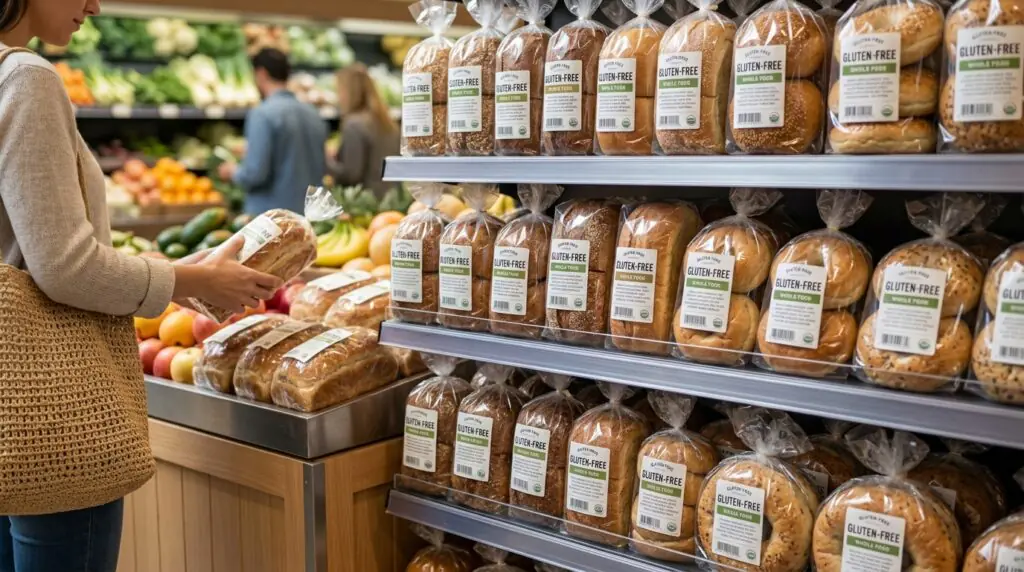
Anyone managing celiac disease, non-celiac gluten sensitivity, or autoimmune gut inflammation knows the deep culinary heartbreak of commercial gluten free bread. For decades, the experience has been defined by dense, crumbly bricks that turn to powdery dust in your hands or gelatinous, sponge-like slices that taste more like chemical stabilizers than traditional artisan sourdough. The emotional toll is real: standing in the bakery aisle, squinting at complex ingredient labels, paying three times the price of traditional wheat loaves, and still ending up with sandwiches that fall apart before lunchtime. You simply want to enjoy toast with breakfast or pack lunch for your family without risking intestinal inflammation or gastrointestinal distress.
Biochemically, replicating the gluten matrix without wheat, barley, or rye is one of the most complex challenges in industrial food science. Gluten provides elasticity, gas retention, and structural tensile strength. To mimic this without wheat, commercial food processors rely heavily on a slurry of hyper-refined starches—such as modified tapioca starch, potato starch, and corn flour—paired with hydrocolloids and synthetic binding gums. While these reformulations may hit the legal gluten threshold of under 20 parts per million outlined by the Celiac Disease Foundation Threshold Requirements, they often introduce an unintended metabolic penalty.
By stripping away natural whole grains in pursuit of a soft crumb, many commercial bakeries create products that fall squarely into NOVA 4 ultra-processed classifications. Instead of delivering nourishing dietary fiber and micronutrients, these loaves can trigger rapid blood glucose spikes and introduce high loads of emulsifiers that disrupt the delicate mucosal barrier of the colon. Groundbreaking scientific literature, including PubMed Research on Ultra-Processed Foods & Gut Microbiome Disruption, highlights how high-frequency consumption of industrial additives can exacerbate dysbiosis in vulnerable gut systems. The modern challenge is no longer merely finding a bread that lacks gluten; it is finding a loaf that honors your metabolic vitality and digestive microbiome while delivering authentic, toastable satisfaction.
Scan Any Label for Hidden Additives and Allergens — Free
Never second-guess confusing grocery labels again. Download Food Scan Genius to uncover hidden additives, toxic dyes, and allergens for the whole household before you buy.


2. Behind the Ingredient List: Hidden Additives, Fillers, and Manufacturing Pitfalls
When browsing the grocery aisle, standard marketing banners like ‘Gluten-Free,’ ‘All Natural,’ and ‘Plant-Based’ disguise significant structural trade-offs. What industrial manufacturers remove in wheat protein, they routinely replace with chemical texturizers, hydrogenated lipids, and isolated sugars to maintain structural shelf life. Navigating the commercial bread aisle requires looking past front-of-package claims and auditing the recursive ingredient list for hidden triggers:
- Hydrocolloids and Industrial Gums (Xanthan, Guar, CMC): While essential to trap fermentation bubbles in yeast dough, excessive concentrations of carboxymethylcellulose (CMC) and xanthan gum can ferment aggressively in the lower digestive tract, causing painful bloating, osmotic diarrhea, or cramping in individuals with irritable bowel syndrome (IBS). Regulatory perspectives like the European Food Safety Authority (EFSA) Additive Safety Regulations monitor chemical purity, but clinical tolerance varies significantly across sensitive consumers.
- Enzymatically Degraded Wheat Starch (Codex Wheat Starch): Some European-style gluten-free breads incorporate washed wheat starch processed to less than 20 ppm of gluten. While compliant for some celiac diets, it remains unsafe for individuals with IgE-mediated wheat allergies and can trigger micro-reactions in highly reactive gut profiles.
- Sneaky Barley Enzymes and Malt Extracts: Industrial flavoring agents or enzyme active blends can hide under vague terms like ‘natural flavors’ or ‘caramel color,’ occasionally derived from unlisted barley malt that escapes casual label skimming.
- Surplus Palm Oil and Hydrogenated Seed Oils: To soften gluten-free dough, producers often inject high levels of palm olein or chemically refined seed oils, directly conflicting with established World Health Organization Guidelines on Healthy Diets & Saturated Fats regarding cardiovascular balance and metabolic health.
- Enzyme Enhancers (Microbial Transglutaminase): Known as ‘meat glue,’ this industrial processing aid is frequently used to cross-link plant proteins to emulate gluten elasticity. It often bypasses front-facing ingredient declarations entirely under processing aid exemptions, yet it can trigger antibody reactions in celiac patients.
- Refined Starch Overload: Loaves dominated by refined tapioca and cornstarch feature an ultra-high glycemic index, offering little to no naturally occurring B vitamins, iron, or intact prebiotic fibers compared to ancient grain alternatives like teff, sorghum, or millet.
3. Precision Ingredient Verification: Food Scan Genius vs. Conventional Label Checking
| Capability / Feature | Food Scan Genius | Manual Label Reading | Spoonful | Fig |
|---|---|---|---|---|
| Cost Structure | 100% Free Core Engine (Zero Paywalls) | Free (High Effort) | Freemium (Scan Limits) | Expensive ($59/yr Paywall) |
| Database & AST Parsing | 5M+ UPCs (NutriGraph Deep Recursive Parsing) | None (Human Error Prone) | Moderate (~800k UPCs) | Proprietary (~1M UPCs) |
| Multi-Household Screening | 1 Scan Checks Whole Family with Name Attribution | Impossible in Real-Time | Single User Only | Single Profile Focused |
| Comprehensive Scoring | ScanGenius AI + NOVA 1-4 + Nutri-Score | Subjective Guesswork | FODMAP Color System | Binary Green/Yellow/Red |
| Custom Sensitivities | 39 Profiles + Custom Additives/Oils/Dyes | Requires Constant Memorization | Fixed Diet Presets | Fixed Diet Filters |
| Global Translation | 11 Languages Real-Time Scanning | Dictionary Lookups | English Dominant | English Dominant |
Finding the ideal gluten free bread is about discovering delicious loaves made from whole, honest grains without having to guess what is hidden behind vague marketing terms. Food Scan Genius transforms your mobile device into a clinical food scanner. Powered by our proprietary enterprise NutriGraph Database—spanning over 5,000,000 verified UPC/EAN barcodes across North America, Europe, and Latin America—the app utilizes recursive Abstract Syntax Tree (AST) parsing to evaluate parenthetical sub-ingredients that traditional scanners ignore. When an industrial loaf contains ‘enrichment blend (thiamine mononitrate, riboflavin, microbial carriers)’, our system analyzes down through every sub-tier component.
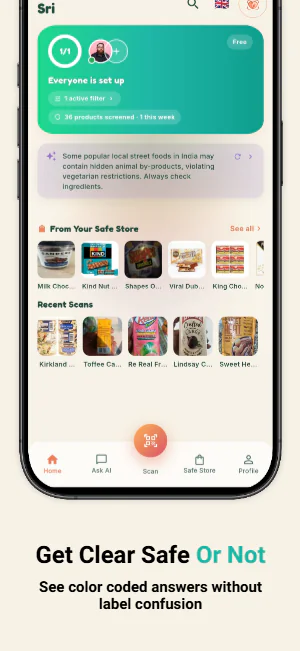
Unlike simple apps that assign generic letter grades or force users behind rigid paywalls, Food Scan Genius provides our ScanGenius AI Insight. This delivers transparent clinical context, NOVA 1-4 processing classifications, and European Nutri-Score metrics without finger-wagging or moralizing. If you are grocery shopping for a mixed household where a parent has celiac disease and a child is sensitive to specific food dyes or gums, our Multi-Household Family Profiles verify everyone’s safety in a single scan. If an ingredient causes a conflict, the screen explicitly flags: ‘Safe for Jordan, Fails for Sri (Gluten).’ Available with complete functionality across 11 global languages, Food Scan Genius puts professional-grade ingredient intelligence directly into your hands.
4. Related Food Safety & Dietary Guides
- Best Food Allergy Scanner App – Scan Food Labels Instantly — Food Allergy & Sensitivity Scanner Hub
- The 7 Best Free Food Scanner Apps of 2026 — best free food scanner apps
- Choosing the Best Barcode Scan App for Your Health — guide to choosing a barcode scanner app
- Food Scan Genius: World’s #1 Food Ingredient Scanner App — Food Scan Genius scanner app
5. Scientific & Health Authority References
- Celiac Disease Foundation Threshold Requirements
- European Food Safety Authority (EFSA) Additive Safety Regulations
- PubMed Research on Ultra-Processed Foods & Gut Microbiome Disruption
- World Health Organization Guidelines on Healthy Diets & Saturated Fats
6. How to Scan in 3 Simple Steps
- Download the Food Scan Genius app for free on iOS or Android with zero subscriptions or scan limits.
- Configure your personal health profile by selecting Gluten-Free from our 39 supported diets, create custom sensitivities for industrial gums or seed oils, and add your family members.
- Scan any bread barcode in 2 seconds to view instant sub-ingredient analysis, clear cross-contamination warnings, and NOVA processing insights.
Instant Gluten-Free Audit Trail
7. Frequently Asked Questions (FAQ)
What makes gluten free bread texture so difficult to replicate compared to wheat bread?
Wheat flour naturally develops glutenin and gliadin networks when hydrated and kneaded, forming an elastic mesh that captures carbon dioxide from yeast. To approximate this structure, gluten free bread manufacturers combine alternative flours like rice, sorghum, and millet with modified starches and hydrocolloids (like xanthan gum or psyllium husk). Food Scan Genius audits these complex binding agents instantly, allowing you to choose loaves that use natural prebiotic fibers rather than synthetic gums.
Is gluten free bread inherently healthier than traditional whole wheat bread?
Not necessarily. Many commercial gluten free breads are classified as NOVA 4 ultra-processed foods because they substitute fiber-rich wheat with refined starches and added sugars to improve palatability. Scanning products with Food Scan Genius reveals their exact Nutri-Score and NOVA ranking, helping you find nutrient-dense loaves made from whole ancient grains rather than empty starches.
Can Food Scan Genius detect barley malt or hidden cross-contact risks?
Yes. Our enterprise NutriGraph Database uses deep recursive AST parsing to examine both listed ingredients and parenthetical sub-compounds. It cross-references manufacturer facility declarations to alert you to potential barley malt, rye derivatives, and shared-equipment manufacturing risks for comprehensive family safety.
How does Food Scan Genius handle multiple family dietary restrictions simultaneously?
Food Scan Genius features Multi-Household Family Profiles. You can assign individual dietary boundaries—such as Celiac for yourself, Tree Nut Allergy for your partner, and Artificial Dye Sensitivity for your child—and screen them with a single barcode scan. The interface clearly breaks down individual safety: for example, ‘Fails for Sri (Gluten).’
Know What’s In Your Food Before You Buy — Scan Free Today
Never second-guess confusing grocery labels again. Download Food Scan Genius to uncover hidden additives, toxic dyes, and allergens for the whole household before you buy.