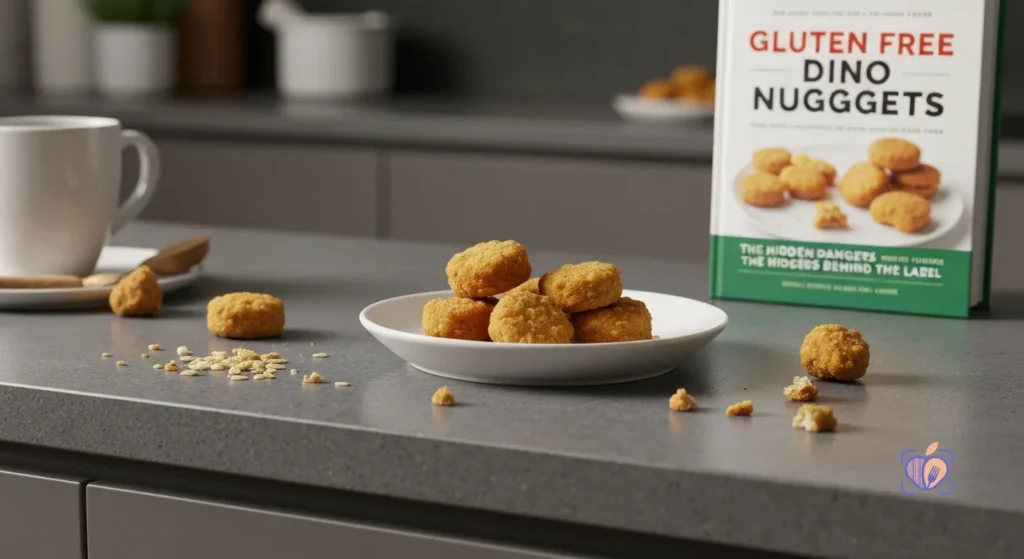
Gluten Free Dino Nuggets: The Hidden Dangers Behind the Label
Table of Contents Toggle You Searched for “Gluten Free Dino Nuggets.” Here’s the Real Question You Should Be Asking. The Threat in the Freezer: A Real-World Example Ingredient Analysis: Beyond the Label The Mock Scan: Our Verdict on These Nuggets The Yuka Score is Useless Here. Here’s Why. The Unseen Anxiety of the Celiac Shopper The Manufacturing Gauntlet: Where Cross-Contamination Happens Deconstructing the Language of Deception Food Scan Genius: The Great Equalizer Stop Guessing. Start Scanning. You Searched for “Gluten Free Dino Nuggets.” Here’s the Real Question You Should Be Asking. You’re standing in the frozen food aisle. The kids are hungry, or maybe you are. You see the bag: golden, crispy, dinosaur-shaped nuggets with a big, reassuring “Gluten Free” banner printed right on the front. It seems simple. It seems safe. This is the easy meal you were looking for. But it’s not that simple. That label is a promise, but it’s one made by a marketing department, not a guarantee for your specific body. The real story isn’t on the front of the bag; it’s hidden in the microscopic world of food processing, in the ambiguity of the ingredient list, and in the very real risk of cross-contamination that most consumers never consider. Your search wasn’t just for a product; it was for peace of mind. And that’s something a label alone can never provide. The moment you pick up that bag, a different, more critical question should flash in your mind: “Can I actually eat this?” The Threat in the Freezer: A Real-World Example Let’s move from theory to reality. Consider a popular brand of gluten-free chicken nuggets. We won’t name them, but the ingredient list is typical of what you’ll find across the industry. It’s designed to look clean, but for someone with Celiac disease or severe gluten sensitivity, it’s a minefield of potential issues. Simulated Ingredient List (Based on leading brands): Chicken Breast Meat, Water, Rice Starch, Salt. Battered and Breaded with: Yellow Corn Flour, Water, Corn Starch, Salt, Raisin Juice Concentrate, Honey, Dextrose, Garlic Powder, Onion Powder, Spices, Natural Flavors, Yeast Extract. Breading set in Vegetable Oil. On the surface, nothing screams “gluten.” But the danger isn’t in the obvious. It’s in the nuance. It’s in the ingredients that could be derived from gluten-containing sources or processed on shared equipment. Let’s break it down. Ingredient Analysis: Beyond the Label This is where the real detective work begins. A simple glance isn’t enough. You have to understand what each ingredient means, where it comes from, and how it was handled. This is the exact process Food Scan Genius automates for you in seconds. Ingredient Potential Risk for Celiac/Gluten Sensitivity Corn Starch While naturally gluten-free, corn starch is often processed in facilities that also process wheat flour. The risk of cross-contamination from shared machinery or even airborne flour is a significant concern for highly sensitive individuals. Natural Flavors This is the ultimate black box of ingredients. Under FDA regulations, “natural flavors” can contain derivatives of wheat or barley as carriers or incidental additives, as long as the final product tests below 20 parts per million (ppm) of gluten. For many, 20 ppm is not a safe threshold. Yeast Extract Often gluten-free, but it can be grown on a barley-based medium. If the final product isn’t certified gluten-free, this ingredient is a major red flag. Even with certification, the source matters. It introduces an element of doubt that requires verification. Spices Individual spices are safe. However, “spices” or “spice blends” can sometimes use wheat flour or wheat starch as an anti-caking agent. The manufacturer is not required to disclose this unless the blend contains a major allergen. Vegetable Oil The oil itself is gluten-free. The critical question is: was this oil also used to fry wheat-breaded products? Shared fryers are a massive source of cross-contamination in both industrial and restaurant settings. The label won’t tell you this. The Mock Scan: Our Verdict on These Nuggets Based on the potential for cross-contamination and the ambiguity of ingredients like “Natural Flavors,” here is the Food Scan Genius verdict for a person with Celiac disease: ⚠️ Caution Why “Caution” and not “Avoid”? Because the product might be perfectly safe. It might be produced on a dedicated line in a facility with stringent allergen controls. The “Natural Flavors” might be completely free of any gluten derivatives. But the label doesn’t give you that certainty. “Caution” means you need more information than the packaging provides. It means you need a tool that has that information—a tool that has already done the research on the brand’s manufacturing processes and ingredient sourcing. It means you need to scan. The Yuka Score is Useless Here. Here’s Why. Generic apps like Yuka might give these nuggets a “Good” score based on low sugar and fat. But that score is irrelevant to your reality. Yuka gives you a generic score. Food Scan Genius gives you a personalized yes/no decision based on your Celiac disease, your specific allergies, and real-time manufacturing data. The Unseen Anxiety of the Celiac Shopper If you have Celiac disease or a severe gluten sensitivity, the analysis above is second nature. It’s a constant, draining mental process that you apply to every single packaged food item you consider buying. This isn’t just about reading a label; it’s about living with a persistent, low-grade anxiety that turns a simple trip to the grocery store into a high-stakes investigation. The search for “gluten free dino nuggets” is just one battle in a much larger war against an invisible enemy. The psychological toll is immense. You’re forced to become a food scientist, a supply chain analyst, and a risk manager every time you shop. You’re not just looking for what’s in the food, but also what might have come into contact with it. The Manufacturing Gauntlet: Where Cross-Contamination Happens Imagine the factory floor. It’s a complex web of conveyor belts, mixing vats, cutting machines, and deep fryers. On Monday, Line A is running standard, wheat-breaded chicken
Gluten Free Dino Nuggets: The Hidden Dangers Behind the Label Read Post »