It happens in a flash. A moment of weakness in the grocery aisle. You’re tired, the kids are restless, and that brightly colored box of treats seems to call your name. It promises a moment of peace, a simple pleasure. You glance at the back, at the ingredients, and you see it: a wall of text, a list of chemicals and codes you don’t recognize.
What is E129? What does E621 do? You feel a pang of uncertainty. It’s a feeling we’ve been conditioned to ignore. The food industry counts on it. They’ve created a language designed not to inform, but to obscure. A secret code printed in plain sight.
They want you to think it’s too complicated. They want you to give up and put the box in your cart. They’re selling you a product, but what they’re really selling is convenience over clarity. And you’re buying it.
But what if you could break the code? What if you could, in a single second, understand exactly what you’re about to feed your family? This isn’t about memorizing a chemical dictionary. It’s about having the right tool. It’s about taking back control.
This guide is that tool. We’re going to pull back the curtain on the food industry’s best-kept secret and show you how to read between the lines, instantly.
What Are E-Numbers and Why Are They Hidden on Labels?
Let’s start with a simple truth: nothing is a coincidence. The term ‘E-Number’ itself feels sterile, scientific, and intimidating. That’s by design. The ‘E’ stands for ‘Europe,’ signifying that the European Food Safety Authority (EFSA) has approved the additive for use. On the surface, it’s a system of classification. In practice, it’s a masterpiece of obfuscation.
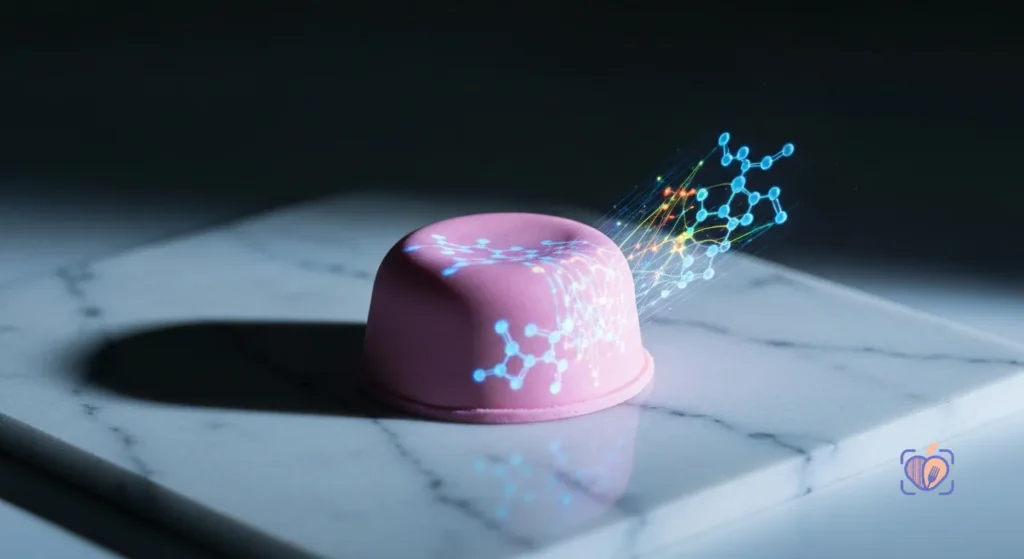
Imagine you’re buying a box of those little cakes, those perfectly pink fondant fancies. You look at the ingredients and see “Allura Red AC.” That might give you pause. It sounds artificial. But what if it just says “E129”? It looks like a serial number. It’s impersonal. It’s meaningless to the average person, and that’s the point.
Food manufacturers will tell you this system standardizes labeling across different languages. A noble goal, perhaps. But the unintended—or, more cynically, the intended—consequence is that it disconnects you from the reality of what you’re eating. It replaces a name you might question with a code you can’t.
Hiding in Plain Sight
This isn’t about illegal activity; it’s about psychological maneuvering. By using codes, manufacturers fulfill their legal obligation to list ingredients without triggering your natural instinct to question them. It’s the finest of fine print.
- It creates a knowledge gap: You can’t be expected to know what all 1,500+ E-numbers are. The sheer volume is a defense mechanism. Who has time to research E211 while their ice cream is melting?
- It normalizes the artificial: When you see E-numbers on everything from bread to yogurt to those fondant fancies, they become background noise. You become desensitized to their presence, assuming that if they’re everywhere, they must be fine.
- It bypasses emotional reaction: The name “Aspartame” carries baggage. It’s been the subject of debate for decades. The code “E951” carries nothing. It’s a blank slate, free of the controversy that might cause you to choose a different product.
They aren’t breaking the law. They’re just using it against you. They’ve created a system where they can be technically transparent while remaining practically opaque. They’ve hidden the truth right on the front of the box, disguised as a pretty color, and buried the evidence on the back, disguised as a code.
The Top 5 Most Dangerous E-Numbers to Avoid
Not all E-numbers are villains. E300 is simply Vitamin C. E101 is Vitamin B2. But nestled among these benign codes are compounds with unsettling track records. These are the five you need to know, the ones that appear with alarming frequency in everyday foods, from processed meats to your children’s favorite sweets.
1. E129 (Allura Red AC / Red 40)
This is the siren of the food coloring world. It creates a vibrant, seductive red that makes processed foods, drinks, and candies look irresistible. It’s the chemical blush on the cheek of a maraschino cherry and the lurid pink of a fondant fancy. But its beauty is deceptive.
- The Danger: E129 is a petroleum-derived azo dye. Its most documented risk is its link to hyperactivity in children. The landmark 2007 Southampton study, funded by the UK’s Food Standards Agency, found a significant connection between a cocktail of artificial colorings (including E129) and increased hyperactivity. This is why in the EU, products containing E129 must carry the warning: “May have an adverse effect on activity and attention in children.” In the United States, where it’s known as Red 40, no such warning is required.
- Where It’s Hiding: Soft drinks, candy, gelatin desserts, pastries, and children’s medicines.
2. E171 (Titanium Dioxide)
If E129 is the seductress, E171 is the whitewash. This additive is a whitening agent, used to make foods look cleaner, brighter, and more appealing. It’s the reason the white stripes in your candy are so pristine and the dressing on your salad is so opaque.
- The Danger: In 2021, the European Food Safety Authority declared E171 no longer safe for consumption. The reason? Genotoxicity. After reviewing the evidence, they could not rule out the possibility that nanoparticles of titanium dioxide could accumulate in the body and cause DNA damage. The EU officially banned it as a food additive in 2022. Yet, it remains legal in the UK and the US, leaving consumers to fend for themselves.
- Where It’s Hiding: Chewing gum, coffee creamer, cake icing, white sauces, and supplements.
3. E621 (Monosodium Glutamate / MSG)
Ah, MSG. The most famous of the flavor enhancers. E621 is a form of glutamic acid, an amino acid that triggers the “umami” or savory taste receptors on your tongue. It doesn’t add its own flavor; it amplifies the flavors already present, tricking your brain into thinking what you’re eating is far more delicious and satisfying than it actually is.
- The Danger: While the intense controversy of the 90s has subsided, a significant portion of the population reports sensitivity to MSG. Symptoms include headaches, migraines, flushing, sweating, and heart palpitations. It acts as an excitotoxin, meaning it can overstimulate neuron receptors to the point of damage. It’s a chemical shortcut to flavor that can come at a neurological cost for many.
- Where It’s Hiding: Canned soups, processed meats, chips, frozen dinners, and fast food.
4. E211 (Sodium Benzoate)
This is one of the most common preservatives on the planet. It’s incredibly effective at preventing the growth of mold, yeast, and bacteria in acidic foods, dramatically extending their shelf life.
- The Danger: The problem with E211 isn’t just the compound itself, but how it reacts with other ingredients. When combined with ascorbic acid (Vitamin C, or E300), another common additive, it can form small amounts of benzene. Benzene is a well-established carcinogen, linked to leukemia and other blood cancers. While the levels in any single product are typically low, the concern is cumulative exposure from a diet rich in processed foods and drinks.
- Where It’s Hiding: Carbonated drinks, fruit juices, salad dressings, jams, and pickles.
5. E250 (Sodium Nitrite)
If you enjoy bacon, ham, or hot dogs, you’re familiar with the work of E250. This preservative is responsible for the characteristic pinkish-red color of cured meats and, more importantly, it inhibits the growth of Clostridium botulinum, the bacteria that causes botulism.
- The Danger: While it serves a vital safety function, sodium nitrite has a dark side. When heated to high temperatures in the presence of amino acids (which is exactly what happens when you fry bacon), it can form nitrosamines. The World Health Organization has classified nitrosamines as probable human carcinogens, and processed meat itself is classified as a Group 1 carcinogen—the same category as tobacco and asbestos—largely due to the presence of nitrites.
- Where It’s Hiding: Bacon, ham, salami, hot dogs, and other processed and cured meats.
How E-Numbers Trigger Hyperactivity, Migraines, and Allergies
We’ve looked at the culprits. Now let’s look at the crime. The impact of these additives isn’t just a vague, abstract risk. For millions of people, it’s a daily reality. It’s the unexplained headache, the sudden skin rash, the child who can’t seem to focus. The connection between what’s on the label and what’s happening in your body is far more direct than you’ve been led to believe.
The Hyperactivity Connection: The Southampton Six
The link between artificial food colorings and behavioral issues in children is not a myth concocted by paranoid parents. It’s a scientifically observed phenomenon. The aforementioned Southampton study was a watershed moment. It gave parents concrete evidence for what they had long suspected: the food their children were eating was directly affecting their behavior.
The study focused on a group of six colorings—the “Southampton Six”—which includes Allura Red (E129) and Quinoline Yellow (E104). The conclusion was so compelling that it forced the European Parliament to mandate warning labels. Think about that. The evidence is strong enough to warrant a government warning, yet these ingredients are still poured into the products most aggressively marketed to children. The vibrant colors of a fondant fancy or a fruit-flavored slushie are not just colors; they are neurologically active chemicals that can cross the blood-brain barrier and influence neurotransmitter function.
The Migraine Trigger: An Attack on Your Neurons
For migraine sufferers, food is a minefield. While common triggers like caffeine and alcohol are well-known, many don’t realize that food additives are often the hidden culprits. MSG (E621) is the most notorious. As an excitotoxin, it can over-excite nerve cells, leading to a cascade of inflammation and pain that manifests as a debilitating migraine. But it’s not alone. Artificial sweeteners like Aspartame (E951) and preservatives like nitrites (E250) are also frequently cited as triggers by neurologists and their patients. These aren’t allergies; they are chemical sensitivities. Your body is reacting to a synthetic compound it was never designed to process.
The Allergic Reaction: When Your Body Fights Back
True food allergies are an immune system response to a protein. Additive reactions are different, but they can look and feel terrifyingly similar. Sulfites (E220-E228), used to prevent browning in wine, dried fruit, and some processed potatoes, are infamous for triggering asthma attacks in sensitive individuals. Certain colorings, like Tartrazine (E102), have been linked to hives and skin rashes. Your body recognizes these synthetic compounds as foreign invaders and launches an inflammatory defense. The result is a physical manifestation of a chemical intrusion—your body is sending a clear signal that something is wrong.
The “Natural Flavor” Loophole in E-Number Regulation
You’ve started reading labels. You’re avoiding the E-numbers you know are trouble. You feel empowered. So you pick up a product that proudly proclaims “No Artificial Colors or Flavors” on the front. You check the back and see the reassuring words: “Natural Flavor.”
This is the industry’s checkmate. It’s their most clever, most pervasive, and most misleading trick.
The term “Natural Flavor” sounds wonderful. It evokes images of fruits, spices, and herbs. The reality is anything but. According to the FDA’s Code of Federal Regulations, a “natural flavor” is a substance derived from a natural source, like a plant or animal. But that’s where the natural part ends.
What the definition doesn’t tell you is that a single “natural flavor” can be a proprietary chemical cocktail containing up to 100 different substances. These can include solvents, emulsifiers, and preservatives—the very things you’re trying to avoid. The final product is a highly processed, lab-created compound designed to perfectly mimic a flavor, often more intensely than the real thing.
Why is this allowed? Because the formula for a “natural flavor” is considered a trade secret. Companies don’t have to disclose the dozens of incidental additives that make up that flavor. It’s a black box on the ingredients list.
So when you see “Natural Strawberry Flavor,” it doesn’t mean they crushed strawberries into the product. It means they hired a flavor chemist to analyze the molecular structure of a strawberry and recreate it in a lab, using a complex mixture of chemicals that legally originated from a natural source. It’s a loophole big enough to drive a truck through, and it allows companies to present a clean-looking label while still relying on the same chemical engineering that defines the rest of the processed food world.
The Solution: Scanning for E-Numbers and Toxic Additives Instantly
You’re standing in the aisle again. But this time is different. You understand the codes. You know the loopholes. You see the matrix. And you realize the task is impossible.
You can’t memorize every E-number. You can’t know which ones form carcinogens when mixed. You can’t see inside the black box of “Natural Flavor.” The game is rigged. Trying to win by memorization is what they want you to do. They want you to get frustrated. They want you to give up.
But you don’t have to play their game.
There’s a simpler way. A better way. You have a supercomputer in your pocket. It’s time to use it for more than just scrolling. It’s time to use it as a lens—a lens that sees through the marketing, deciphers the codes, and reveals the simple truth.
Stop Googling. Start Scanning.
Imagine this: You pick up that box of fondant fancies. Instead of squinting at the ingredients, you open an app. You point your phone’s camera at the barcode. In less than a second, the screen flashes. It’s not a list of codes. It’s an answer.
RED.
And right below it, the reason: Contains E129, linked to hyperactivity in children. Contains E171, banned in the EU over DNA damage concerns.
That’s it. No ambiguity. No frantic searching. Just a clear, simple, definitive answer. You put the box back on the shelf and choose something else. You’ve made a better decision, not because you’re a chemist, but because you have a translator.
This is the power of Food Scan Genius. We’ve built the encyclopedia so you don’t have to memorize it. We’ve done the research so you can get the verdict. Our platform cross-references every ingredient against thousands of clinical studies, government warnings, and scientific papers to give you an instant, easy-to-understand safety score.
It’s a traffic light for your food. Green is go. Yellow is caution. Red is stop.
This is how you take back control. You stop playing the guessing game and start making decisions with confidence. You turn their secret code into your simple answer.
Don’t let them hide behind the fine print any longer. The truth is in the barcode. All you have to do is scan it.
Download Food Scan Genius today and turn confusion into clarity.
- For Android: Download on Google Play
- For iOS: Download on the App Store
Frequently Asked Questions
Is Food Scan Genius free to use?
Yes. The core feature—scanning a product’s barcode to see its safety score and a breakdown of its ingredients—is completely free. We believe everyone has the right to know what’s in their food. We offer a premium version with advanced features like dietary preference filters and personalized reports, but the fundamental power to scan and know will always be free.
How is Food Scan Genius different from an app like Yuka?
While other apps provide a general score, we are laser-focused on demystifying the most confusing part of the label: the chemical additives, E-numbers, and hidden ingredients. Yuka gives you a number; we give you an explanation. Our goal isn’t just to tell you if something is good or bad, but to empower you with the specific why, translating complex chemical names into plain English and their documented health impacts. We are less of a judge and more of a translator.
Does the app work in my country?
Our database is one of the largest in the world, with millions of products from the United States, United Kingdom, Canada, Australia, and across the European Union. The E-number system is European, but the additives themselves are used globally under different names (like Red 40 for E129). Our app recognizes these ingredients regardless of what they’re called or where you are, translating them into a single, universal safety rating.
What if a product I scan isn’t in your database?
Our database is constantly growing, thanks to our community. If you scan a product that we don’t recognize, the app will prompt you to become a contributor. You can take a few quick photos of the product, its nutrition panel, and its ingredients list. Your submission goes to our team of nutritionists and data analysts who will verify the information and add it to our public database, helping everyone make more informed choices.
Are all E-numbers bad for you?
Absolutely not, and this is a crucial distinction. Many E-numbers are perfectly harmless, and some are even beneficial. For example, E300 is Vitamin C, E160d is Lycopene (the antioxidant found in tomatoes), and E101 is Vitamin B2. The danger of the E-number system is that it groups the good, the bad, and the ugly under the same confusing naming convention. Food Scan Genius does the work of telling them apart for you, so you can avoid the dangerous additives without fearing the benign ones.
Every scan is answered by NutriGraphAPI, our own catalogue of over 5 million barcode-indexed packaged products with allergen, additive and dietary data. Building a food or grocery app yourself? The same data is available as an API.