Best Food Scanner Apps for Vegans in 2025: Decode Hidden Ingredients Instantly
Walking down the grocery store aisles should feel straightforward, but for anyone trying to eat consciously, reading product labels often feels like deciphering a secret code. Whether you are avoiding animal products for ethical and environmental reasons, managing food sensitivities, or simply trying to cut back on ultra-processed items, understanding what goes into your shopping basket is a modern daily challenge. Modern food labels are packed with complex scientific names, generic terms like “natural flavors,” and technical E-numbers that conceal what is actually inside the package.
This challenge extends far beyond strict dietary groups. Shoppers everywhere face mounting confusion regarding product transparency. Recent research published in peer-reviewed scientific journals highlights that plant-based and packaged alternatives frequently contain twice as many food additives and synthetic components as their traditional counterparts, while independent studies uncover unexpected contaminants in everyday goods. Navigating this complex landscape requires more than a quick glance at the front of a box. To take control of what you consume, utilizing smart technology has become essential.
The Growing Complexity of Modern Food Labels
Shopping for food today is vastly different than it was a generation ago. Consumers are met with thousands of choices, heavily processed formulations, and intricate global supply chains. For individuals following a plant-based diet, the obstacle is twofold: spotting obvious animal components like milk, eggs, or honey is simple, but tracking down microscopic processing aids or derivative ingredients is notoriously difficult.
According to label analysis insights compiled by food safety experts, animal-derived agents frequently slip past even veteran shoppers under obscure technical names. Common hidden culprits include:
- Carmine (E120): A vivid red food and cosmetic dye derived from crushed cochineal insects.
- L-Cysteine (E920): A dough conditioner utilized in commercial breads and pastries, frequently sourced from poultry feathers or human hair.
- Isinglass and Gelatin: Collagen and protein-based agents extracted from fish swim bladders or animal bones, commonly used to clarify beverages or stabilize textures.
- Whey and Casein: Dairy proteins disguised in multi-ingredient snacks, protein bars, and baked goods.
Because manufacturers frequently change formulations, relying solely on memory or manual label scanning leaves room for error. This reality has driven a massive surge in popularity for digital support tools designed to bring clarity back to grocery shopping.
Why You Need a Dedicated Food Scanner App
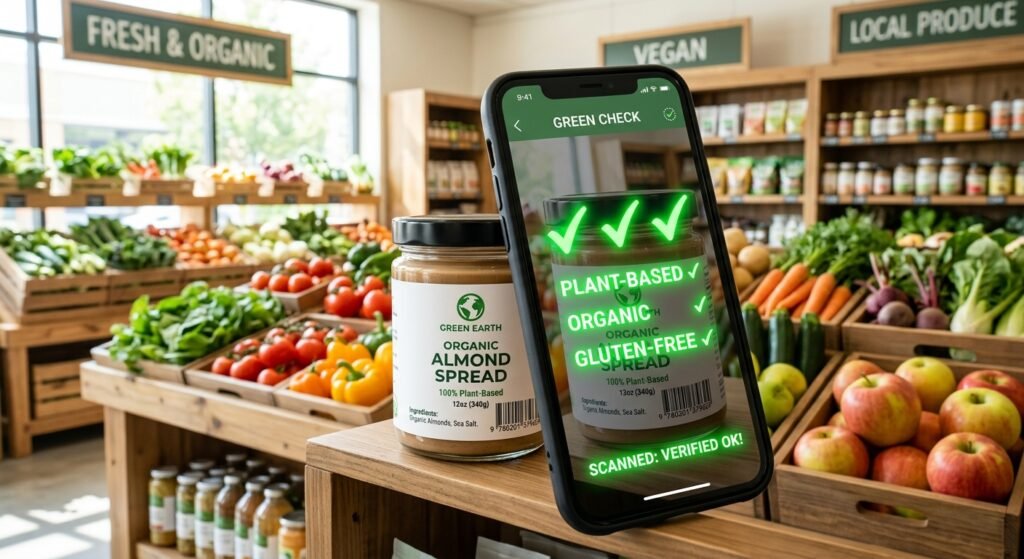
Manual label reading is time-consuming and prone to oversight. When you are standing in a busy supermarket aisle, squinting at micro-text on the back of a wrapper is far from ideal. This is where modern mobile technology steps in. The best food scanner apps use smartphone cameras, optical character recognition (OCR), and advanced artificial intelligence to analyze ingredient lists in seconds.
Rather than relying strictly on static barcode databases—which often fail when products are imported, locally made, or newly reformulated—contemporary AI-driven apps read the text of the ingredient label directly. They cross-reference every term against extensive databases of plant-based rules, allergen alerts, and additive guidelines to give you an immediate, transparent verdict.
Top Food Scanner Apps for Vegans and Conscious Shoppers in 2025
To help you choose the right digital companion for your shopping trips, let’s examine the top-performing food scanner apps available for iPhone and Android users:
| App Name | Primary Strength | Best For |
|---|---|---|
| Food Check AI | Direct text and label scanning with comprehensive E-number and additive breakdown. | Global shoppers seeking deep ingredient safety insights. |
| VegVisor | Instant barcode scanning paired with clear ingredient-by-ingredient vegan status results. | Quick, reliable verdicts right at the grocery shelf. |
| Open Food Facts | Completely free, community-driven database displaying eco-scores and dietary flags. | Open-source transparency and budget-conscious users. |
| The Vegan App (Avi) | Multi-score metrics covering health, environmental impact, and plant-based status. | Holistic wellness and smart kitchen meal planning. |
1. Food Check AI
Food Check AI stands out by prioritizing direct text recognition over rigid barcode libraries. If you encounter an imported item, a local specialty brand, or a product missing from standard databases, you can photograph the ingredient label directly. Its backend engine analyzes additives, E-numbers, and animal derivatives, making it a powerful tool for strict dietary adherence.
2. VegVisor
For shoppers who value speed, VegVisor offers a streamlined experience. Point your phone camera at a product barcode to receive an immediate verdict on its vegan status. The app breaks down individual components so you can see precisely which items are certified plant-based, non-vegan, or flagged for further review.
3. Open Food Facts
Often described as the “Wikipedia of food,” Open Food Facts is a nonprofit, crowd-sourced database. Completely free with no hidden paywalls, it lets users set personal dietary preferences—such as vegan filters—so matching items are highlighted during barcode scans. While its effectiveness depends on community contributions, its commitment to data privacy and open access makes it a fan favorite.
4. The Vegan App (Avi)
Featuring an AI companion named Avi, this application evaluates foods across multiple vectors: a Health Score tracking sodium and sugar, an Environmental Impact Score, and a Vegan Score that roots out ambiguous terms and hidden animal components. It even features a fridge-scan capability that turns your household grocery haul into tailored plant-based recipes.
The Broader Issue: Clean Labels, Ultra-Processed Foods, and Dietary Safety
The demand for digital food scanners highlights a much larger, systemic issue within the modern food industry. Consumers across all dietary spectrums—whether vegan, omnivore, or gluten-free—are dealing with an unprecedented wave of ultra-processed foods.
Recent scientific investigations underscore these worries. A landmark study published in the peer-reviewed journal Food Additives & Contaminants revealed that plant-based supermarket substitutes contained roughly twice the total number of food additives compared to their animal-based equivalents. Furthermore, environmental research published in journals such as Environmental Science and Technology has pointed out that certain processed plant-based alternatives can harbor unexpected chemical plasticizers or trace contaminants originating from packaging and industrial processing lines.
Simultaneously, independent food safety studies frequently find low levels of natural toxins, such as mycotoxins originating from grain and legume crops, present across multi-ingredient plant products. While regulatory bodies monitor these thresholds closely, the cumulative exposure over time remains a growing subject of discussion among nutritionists and public health advocates. Ultimately, relying on surface-level marketing claims like “clean” or “plant-based” is no longer enough. Modern shoppers need active tools that cut through marketing noise to reveal the true composition of what they eat.
How Food Scan Genius Resolves the Ingredient Challenge
When navigating conflicting product claims, complex ingredient lists, and hidden additives, having an intelligent assistant makes all the difference. This is where tools like **Food Scan Genius** transform the everyday shopping experience.
Designed to bridge the gap between complex food science and daily consumer choices, Food Scan Genius empowers individuals managing food sensitivities, dietary preferences, or strict plant-based lifestyles. By scanning product labels instantly, the app cuts through confusing nomenclature, translating technical terms and flagging ingredients that require a second look. It brings clarity, confidence, and peace of mind directly to your fingertips.
“As someone managing multiple food sensitivities while trying to stick to a clean, plant-based routine, grocery shopping used to trigger total label fatigue. I spent half my time in aisles googling weird chemical names. Since I started using **Food Scan Genius**, I just snap a photo of the back of the package and get immediate clarity. It has completely removed the guesswork from my routine. If you want to take control of what you eat without spending hours reading fine print, you need to download Food Scan Genius today!”
— Sarah M., Verified App User
Frequently Asked Questions
What are the best food scanner apps for vegans?
Top vegan food scanner apps feature advanced AI and comprehensive label-reading tools to identify hidden animal-derived ingredients, E-numbers, and processing aids quickly at the grocery store.
How do vegan food scanner apps detect hidden animal ingredients?
Vegan food scanner apps use optical character recognition (OCR) and AI-driven databases to cross-reference ingredient lists with thousands of ambiguous terms, animal-derived additives, and technical names like carmine or L-cysteine.
Can food scanner apps help with general dietary preferences and food sensitivities?
Yes, apps like Food Scan Genius help users navigate complex ingredient labels by instantly identifying allergens, dietary conflicts, and hidden additives, making smart food choices effortless.
Are plant-based foods always free of additives?
Not necessarily. Market research shows that many packaged plant-based alternatives utilize stabilizers, emulsifiers, and functional additives to mimic texture and flavor, making label scanners valuable for identifying ultra-processed components.
Conclusion
Navigating the modern food marketplace requires vigilance, education, and the right digital tools. While food manufacturers continue to introduce complex formulations, multi-ingredient products, and hidden derivatives, consumers are fighting back with advanced mobile technology. By integrating food scanner apps into your weekly shopping routine, you can eliminate guesswork, protect your health, and ensure your dietary choices genuinely align with your values.
Understanding ingredients is no longer just for specialized wellness circles—it is a fundamental skill for modern living. By leveraging smart solutions like Food Scan Genius, you can resolve the daily challenge of label reading, decode hidden additives in seconds, and shop with absolute confidence. Head over to scangeni.us today to download the app and take full control of your plate.