1. Can Dogs Eat Pears? The Short Answer and How to Serve Them
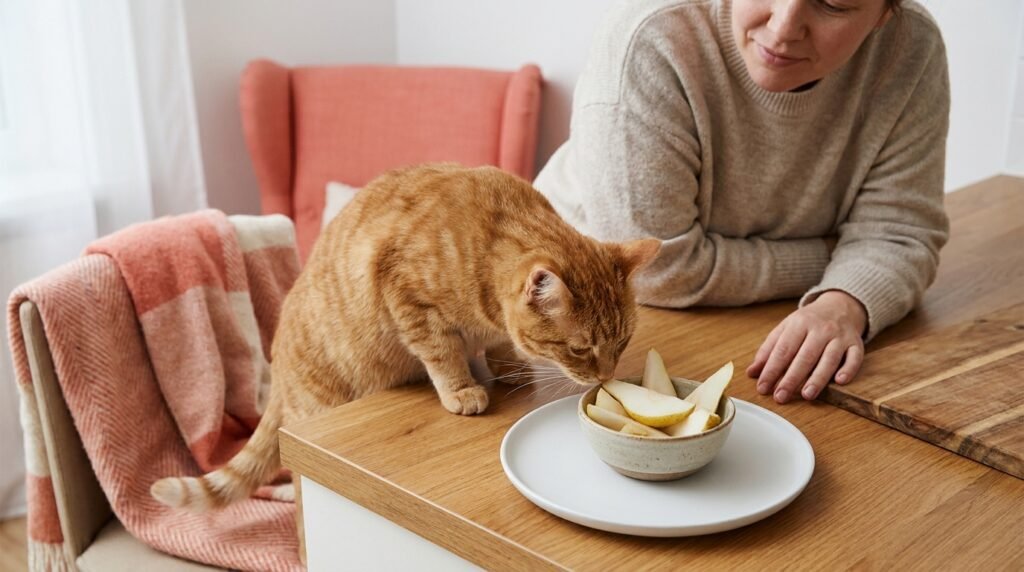
Yes, most dogs can eat pears in small portions. Serve plain, ripe flesh with the core, stem, and seeds removed, and ask your vet first if your dog has diabetes, pancreatitis, or kidney disease.
Ripe pear flesh is mostly water, with some fiber, vitamin C, vitamin K, potassium, and copper. A dog eating a complete and balanced diet does not need any of these from fruit, so think of pear as an occasional treat, not a nutritional fix.
Preparation matters more than the fruit itself. Wash the pear, cut away the core and stem, and slice the flesh into pieces suited to your dog’s size. Pear seeds contain amygdalin, a compound that can release cyanide when seeds are chewed or crushed. A stray seed is unlikely to cause trouble, but there is no reason to take the chance. The core is also a choking and blockage hazard, especially for small dogs. If your dog has eaten a lot of seeds or a whole core, or is gagging, vomiting, or lethargic, contact your veterinarian or a pet poison line right away.
Keep portions modest. A common guideline is that treats should stay under about 10 percent of daily calories, and your vet can tell you what that means for your dog. Pears contain natural sugar and sorbitol, which can loosen stools in some dogs, so start with a small piece. Skip pears canned in syrup, sweetened dried pears, pear juice, and baked goods made with pears. Those add concentrated sugar, and some sweetened products contain xylitol, which is toxic to dogs. If your dog eats anything with xylitol, contact a vet or a pet poison hotline immediately.
2. When to Check With Your Vet Before Offering Pear
Pear is a low-risk treat for many dogs, but some situations call for a professional opinion before it goes in the bowl. This is not a list of diagnoses. It is a list of reasons to ask.
- Diabetes or weight management: Fruit sugar and treat calories count. Your vet can say whether any fruit fits the plan.
- Pancreatitis or a sensitive stomach: Dogs with a history of digestive trouble can react to new foods. Ask what is appropriate.
- Kidney disease: Dogs on therapeutic or restricted diets often have limits on certain minerals, including potassium. Do not add foods without veterinary guidance.
- Food allergies or elimination diets: Any new ingredient can muddy an elimination trial. Check first.
- Puppies and senior dogs: Digestive tolerance and calorie needs differ by life stage.
Compare pear with foods that are actually dangerous. Grapes and raisins, xylitol, and certain other human foods can be toxic to dogs. If you suspect your dog ate any of them, do not wait for symptoms. Contact your veterinarian, an emergency clinic, or a poison control service such as the ASPCA Animal Poison Control Center or Pet Poison Helpline.
Pear is not in that category, but the same habit applies: when your dog has a medical condition, the vet decides what is on the menu.
3. Pears on a Dog Food Label: Where They Sit and What Order Implies
Pears show up in some dog foods as “pears,” “dried pears,” or “pear pomace” (the pressed pulp left after juicing). Finding one on the label does not tell you much until you know how to read the panel.
The ingredient list is ordered by weight, heaviest first, measured before cooking. That has a catch. Fresh ingredients such as whole chicken or fresh pear are 70 to 85 percent water, so they weigh a lot on the scale but contribute much less once the food is cooked into kibble. A dried ingredient, such as chicken meal, weighs less going in but delivers more protein per pound. So a fresh meat in position one does not automatically mean more meat than a meal in position two.
Pear usually sits in the back half of the list, often after the main proteins and carbohydrate sources. At that position it is a minor ingredient, and its nutritional contribution is small. Pear is not wrong to see there, but it is mostly a marketing feature rather than a meaningful part of the diet. Also watch for ingredient splitting, where one source such as peas appears as “peas,” “pea protein,” and “pea fiber” in separate spots. Each piece ranks lower on the list than the combined pea content would.
The guaranteed analysis is a separate panel. It lists minimum crude protein, minimum crude fat, maximum crude fiber, and maximum moisture, measured as fed. Pear will never appear there by name. If it contributes anything, it adds to crude fiber and moisture. To compare a dry food with a canned one, convert to dry matter: divide the protein percentage by (100 minus the moisture percentage), then multiply by 100. A canned food at 8 percent protein and 78 percent moisture is about 36 percent protein on a dry matter basis.
This is a spot where scanning helps. With Pet Scan Genius, you can scan the barcode on the bag and see the ingredient list interpreted against your dog’s breed, age, weight, and health needs, so a minor ingredient like pear is weighed against what matters for your dog. The result informs your choice. It does not make it for you.
4. Label Failure Modes: Fillers, Vague Meat Terms, By-Products, and AAFCO Wording
Whether a food contains pear or not, the same label problems show up in the aisle. Here is how to spot them.
Fillers. “Filler” is not a regulated term, so judge each ingredient by its job. Beet pulp and pear pomace are fiber sources that support stool quality. Corn gluten meal and pea protein are protein concentrates that can inflate the protein number on the panel without being meat. Cellulose and peanut hulls add bulk with little nutrition. The question is not whether an ingredient sounds cheap, but what it contributes and how high it ranks.
Ambiguous meat terms. “Chicken meal” names a species. “Meat meal,” “meat and bone meal,” “animal fat,” and “animal digest” do not. Under AAFCO definitions, generic “meat” refers to mammals, but the specific species can change from batch to batch. A named meal is a legitimate, concentrated protein source, since meal is rendered with the moisture removed. The vague versions are a transparency problem, and they matter most if your dog has a suspected protein allergy. In that case, talk to your veterinarian.
By-product naming. By-products are parts other than muscle meat, such as organs, and they are not automatically bad. What matters is specificity. “Chicken by-product meal” tells you the species. “Poultry by-product meal” or “meat by-products” does not.
The AAFCO statement. AAFCO publishes nutrient profiles, and it does not approve or certify individual foods. Read the exact wording:
- “Formulated to meet the nutritional levels established by the AAFCO Dog Food Nutrient Profiles” means the recipe meets the standard on paper.
- “Animal feeding tests using AAFCO procedures substantiate…” means the food was fed to dogs in a trial.
- “For intermittent or supplemental feeding only” means it is not complete and balanced, and should not be the main diet.
Check the life stage too: growth, adult maintenance, or all life stages. A food labeled for maintenance is not designed for a growing puppy. Also note the naming rules. A food called “with pears” only needs 3 percent pear, while “pear flavor” may use almost none.
When you are weighing several bags, Pet Scan Genius can flag vague ingredient terms and show how each formula lines up with your dog’s profile. Your vet remains the right voice for any medical question.
Check the bag before you buy it. Pet Scan Genius reads a pet food label and explains what the ingredients mean for your animal by breed, age, weight and health conditions.
Frequently asked questions
Can dogs eat pear skin?
Generally yes, as long as the pear is washed well. The skin contains fiber, but it can be harder to digest for some dogs. Start with a small amount and stop if your dog has loose stools or vomiting.
What should I do if my dog ate pear seeds or a pear core?
A few seeds are unlikely to be a problem for most dogs, but a core can cause choking or a blockage. If your dog ate many seeds or a whole core, or shows gagging, vomiting, or lethargy, contact your veterinarian or a pet poison line promptly.
Can puppies eat pears?
Some puppies tolerate small pieces of plain pear, but their digestion is sensitive and they need a complete puppy diet. Ask your veterinarian before adding treats, and keep the portion very small.
Are canned or dried pears okay for dogs?
Avoid pears canned in syrup and sweetened dried pears, because both add concentrated sugar. Some sweetened products may also contain xylitol, which is toxic to dogs. If your dog eats xylitol, contact a vet or poison line immediately.
This article is general information, not veterinary advice. Talk to your vet about your own animal.