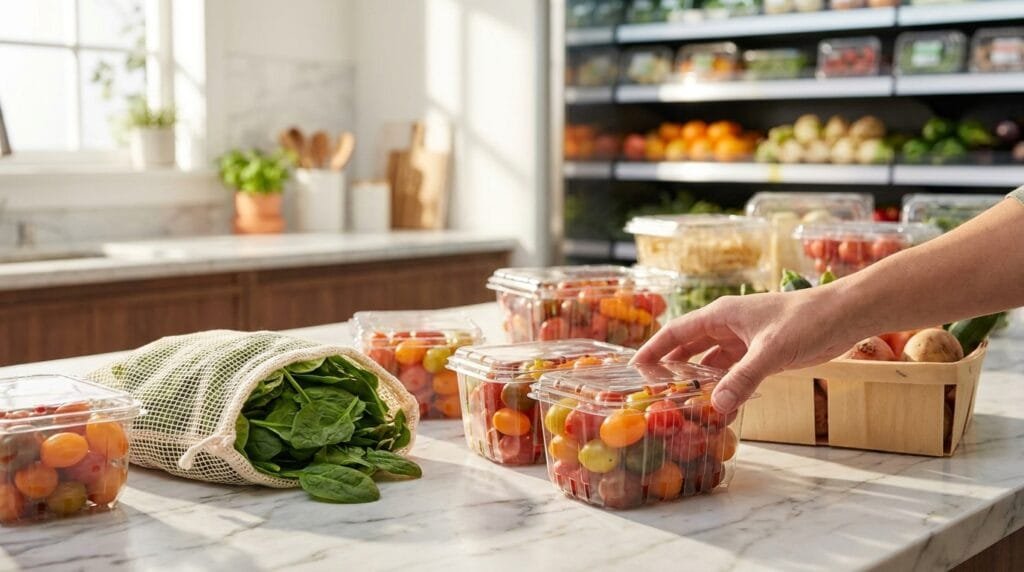
A single cherry tomato has roughly 3 to 4 calories. One standard cup of whole cherry tomatoes (about 149 grams) contains 27 calories, while a 100-gram serving has just 18 calories. An entire 10-ounce snacking pint has approximately 51 calories.
Breaking Down Cherry Tomato Calories: Per Piece, Cup, and Gram
When you pop a sweet, ripe cherry tomato into your mouth, you get a burst of bright flavor with almost no caloric cost. According to standard food composition data from the United States Department of Agriculture (USDA), an average cherry tomato weighing about 17 grams contains just 3 calories. Even larger cherry tomatoes rarely exceed 4 or 5 calories apiece. If you sit down with an entire measuring cup of whole raw cherry tomatoes—which weighs around 149 grams, or roughly 9 to 12 individual tomatoes depending on their size—you take in only about 27 calories. This makes them one of the most volume-dense, nutrient-rich snacks in the entire produce section.
The secret behind their low calorie count is their moisture. Fresh cherry tomatoes are roughly 94 percent water. The remaining solid matter consists primarily of simple, naturally occurring carbohydrates (about 3.9 grams per 100 grams of fruit), gentle dietary fiber (around 1.2 grams), and tiny amounts of plant protein (nearly 0.9 grams) and fat (less than 0.2 grams). Because water carries zero calories, you can eat a physically satisfying portion of cherry tomatoes without putting a dent in your daily energy budget. This high fluid and fiber balance aligns closely with the World Health Organization Guidelines on Healthy Diets & Saturated Fats, which recommend filling your plate with fresh fruits and vegetables to naturally crowd out heavy fats and refined sugars.
However, natural variations do exist across different varieties and growing methods. A deep red cherry tomato grown under peak summer sun will develop slightly higher natural fructose and glucose levels than an out-of-season, greenhouse-grown variety picked early. While this might adjust the calorie count by a fraction of a single calorie per piece, it makes no practical difference for everyday meal planning. What does make a major difference is how water loss changes the equation. If you cook cherry tomatoes slowly until they burst and reduce, or if you purchase dehydrated or sun-dried cherry tomatoes, the calorie count per cup skyrockets. Removing the water concentrates the natural sugars, turning a 27-calorie cup of fresh tomatoes into a dense food containing over 140 calories for the same volume.
Choosing fresh, whole foods like raw cherry tomatoes also supports healthy digestion in ways that processed snacks cannot match. Highly processed convenience foods often swap natural water and plant fiber for shelf-stable emulsifiers and refined ingredients. As shown in PubMed Research on Ultra-Processed Foods & Gut Microbiome Disruption, diets dominated by industrial packaged snacks can harm helpful gut microbes and alter how our bodies process everyday energy. Swapping ultra-processed snack chips for crisp, whole cherry tomatoes gives your body clean hydration, potassium, vitamin C, and lycopene—a powerful antioxidant that becomes even more available when paired with healthy dietary fats.
Reading Real Labels: Clamshells, Serving Sizes, and Grocery Aisle Realities
We have all been there: you are pushing a wobbly grocery cart down Aisle 4, glancing at your phone, checking your list, and trying to get home in time to make dinner for your family. Healthy eating sounds easy on paper, but supermarket packaging can make simple choices feel overwhelming. Clear plastic clamshells in the produce department often show conflicting serving sizes, and the moment cherry tomatoes leave the fresh aisle and enter prepared kits, the math gets messy. Shopping for healthy, wholesome food should not require a calculator or a biology degree. That is why having a simple, frictionless tool like the Food Scan Genius app changes the experience. Instead of squinting at tiny labels or guessing whether a packaged snack fits your family’s needs, a quick two-second barcode scan while standing in the produce aisle gives you instant clarity so you can keep moving.
Let us look at what real labels actually say on the shelf. Consider popular brands like NatureSweet Cherubs, SUNSET Wild Wonders, or Mucci Farms Sweet Elegance. On a standard American 10-ounce (283-gram) clamshell of NatureSweet Cherubs, the Nutrition Facts panel defines a single serving as “5 Cherubs (85g)” and lists the calorie count as 15 calories. The container indicates that it holds about 3.5 servings, bringing the entire plastic tub to roughly 50 to 55 calories. If you pick up a pint container from a regional brand, the serving size might instead be stated as “1 cup (149g)” with 25 or 30 calories. Under United States Food and Drug Administration (FDA) rules, brands are allowed to round calorie figures down to 25 or 30 to make the math simple for consumers, which is why two brands of identical weight can show slightly different numbers on the box.
If you purchase cherry tomatoes in the United Kingdom or the European Union, the label looks quite different. European labeling regulations require food makers to print nutritional values per 100 grams on every pack, regardless of what the brand considers an arbitrary portion. On a UK supermarket punnet of piccolo or cherry tomatoes, you will clearly see “Energy: 18 kcal per 100g.” This standardized metric makes it remarkably simple to compare products. When European food producers add flavorings, anti-mold washes, or preservatives to pre-washed salad mixes containing cherry tomatoes, they must follow strict oversight governed by European Food Safety Authority (EFSA) Additive Safety Regulations, ensuring that any added ingredients are documented clearly alongside basic nutritional stats.
The biggest label trap occurs when cherry tomatoes are packaged inside ready-to-eat salad bowls, snacking snack packs, or grab-and-go lunch kits. A container might prominently show pictures of fresh cherry tomatoes and declare “Only 30 Calories per Serving” in large font on the front lid. However, looking closely at the fine print on the back reveals that the entire plastic kit contains three servings, and the tiny included pouch of ranch dressing or oil vinaigrette adds 160 calories per pouch. Furthermore, if the kit includes packaged cheeses, croutons, or cured meats alongside the tomatoes, shoppers managing food allergies must carefully verify compliance with the FDA Food Allergen Labeling & Consumer Protection Act (FALCPA) to spot hidden dairy, wheat, or soy. Taking a second to scan the barcode cuts through the marketing noise and shows you the honest breakdown of the whole container in plain English.
| Serving Portion | Weight (Grams / Ounces) | Calories (kcal) | Carbohydrates | Dietary Fiber | Natural Sugar |
|---|---|---|---|---|---|
| 1 small cherry tomato | 10 g (0.35 oz) | 2 kcal | 0.4 g | 0.1 g | 0.3 g |
| 1 medium cherry tomato | 17 g (0.60 oz) | 3 kcal | 0.7 g | 0.2 g | 0.4 g |
| 1 large cherry tomato | 25 g (0.88 oz) | 5 kcal | 1.0 g | 0.3 g | 0.7 g |
| Standard Metric Serving | 100 g (3.53 oz) | 18 kcal | 3.9 g | 1.2 g | 2.6 g |
| 1 US Measuring Cup (whole) | 149 g (5.25 oz) | 27 kcal | 5.8 g | 1.8 g | 3.9 g |
| 1 US Measuring Cup (halved) | 180 g (6.35 oz) | 32 kcal | 7.0 g | 2.2 g | 4.7 g |
| Standard Snacking Clamshell | 283 g (10.0 oz) | 51 kcal | 11.0 g | 3.4 g | 7.4 g |
| Standard Grocery Pint Basket | 340 g (12.0 oz) | 61 kcal | 13.3 g | 4.1 g | 8.8 g |
Common Traps: Where Cherry Tomato Calories Sneak Up
The biggest trap people fall into with cherry tomatoes does not come from the fruit itself, but from the pan. Cherry tomatoes are famous for blistering beautifully in a hot skillet or roasting until sweet in the oven. But while raw tomatoes have almost no fat, oil is pure fat at about 120 calories per single tablespoon. Tossing a pint of cherry tomatoes with two generous glugs of olive oil before roasting can easily transform a light 50-calorie snack into a 300-calorie dish. If you are watching your energy intake, use an oil mister to lightly coat the skins, or roast them dry on parchment paper so the natural juices caramelize without extra fat.
Another common mistake happens when people confuse fresh cherry tomatoes with sun-dried or oil-packed cherry tomatoes. Because sun-drying removes water, the sugar and calories concentrate heavily. A quarter-cup of plain sun-dried cherry tomatoes contains about 35 calories, but a quarter-cup of sun-dried tomatoes packed in seasoned olive oil packs nearly 170 calories. The tomatoes soak up the oil, making it hard to separate the fruit from the fat. If you enjoy oil-packed varieties in pastas or salads, measure them carefully by the tablespoon rather than pouring them straight from the jar.
Finally, watch out for the dip pairing. Cherry tomatoes are naturally bite-sized and juicy, which makes them a popular staple on party platters and children’s snack plates. However, dunking ten cherry tomatoes into three tablespoons of creamy ranch, blue cheese, or commercial onion dip adds between 150 and 220 calories of rich dressing to roughly 30 calories of produce. Pairing your tomatoes with fresh lemon juice, balsamic vinegar, flaky sea salt, or a dollop of protein-rich Greek yogurt dip gives you the same creamy satisfaction without burying the naturally refreshing flavor of the tomato.
Frequently asked questions
Are grape tomatoes higher in calories than cherry tomatoes?
Grape tomatoes and cherry tomatoes have almost identical calorie counts. Both provide roughly 18 calories per 100 grams, or about 3 calories per average piece. Grape tomatoes have thicker skins and slightly meatier flesh, but the overall nutritional profile is practically the same.
Can you eat too many cherry tomatoes on a low-carb or keto diet?
Cherry tomatoes are very low in carbohydrates, with less than 4 grams of net carbs per cup. While it is difficult to exceed your carbohydrate limit eating normal amounts, eating several entire pints in one day could add up to 20 or 30 grams of carbs. For moderate portions, they fit easily into low-carb meal plans.
Does cooking cherry tomatoes increase their calories?
Cooking raw cherry tomatoes does not add any calories on its own. However, heating causes the water inside the tomatoes to evaporate, which reduces their overall volume and weight. A cup of cooked tomatoes will contain more fruit pieces and therefore slightly more calories than a cup of whole, raw tomatoes.
How many cherry tomatoes should I eat for a single fruit or vegetable serving?
According to dietary guidelines, one standard serving of vegetables is roughly one-half cup of cooked vegetables or one full cup of raw vegetables. For cherry tomatoes, that equals about 8 to 10 medium-sized whole tomatoes, which provides around 25 to 30 calories.
Why do yellow or orange cherry tomatoes taste sweeter than red ones?
Yellow and orange cherry tomatoes often taste sweeter because they have slightly lower natural acidity than red varieties, not because they have significantly more sugar or calories. Their milder acid balance allows the natural fruit sweetness to stand out on your tongue while keeping the calorie count right around 3 calories per piece.
References
- FDA Food Allergen Labeling & Consumer Protection Act (FALCPA)
- European Food Safety Authority (EFSA) Additive Safety Regulations
- PubMed Research on Ultra-Processed Foods & Gut Microbiome Disruption
- World Health Organization Guidelines on Healthy Diets & Saturated Fats
Related guides
- Best Food Allergy Scanner App – Scan Food Labels Instantly — Food Allergy & Sensitivity Scanner Hub
- The 7 Best Free Food Scanner Apps of 2026 — best free food scanner apps
- Choosing the Best Barcode Scan App for Your Health — guide to choosing a barcode scanner app
- Food Scan Genius: World’s #1 Food Ingredient Scanner App — Food Scan Genius scanner app
Check Any Label Against 5 Million Products — Free
Never second-guess confusing grocery labels again. Download Food Scan Genius to uncover hidden additives, toxic dyes, and allergens for the whole household before you buy.