1. The Reality of Hunting for Cookies That Are Gluten Free: Beyond Front-of-Package Claims
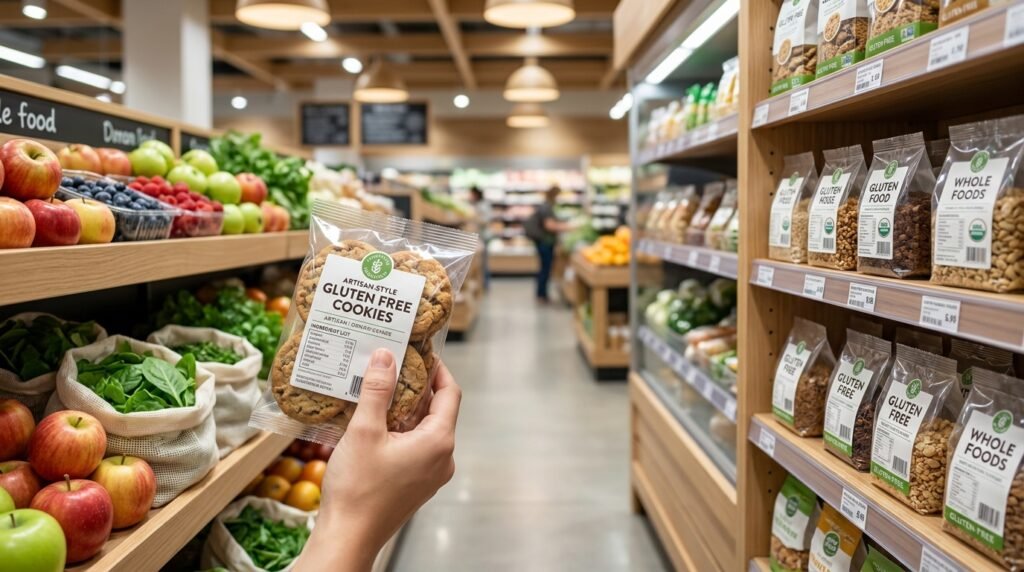
Standing in the grocery snack aisle when you or a family member live with celiac disease or severe non-celiac gluten sensitivity (NCGS) is an exhausting exercise in vigilance. You want a simple treat—a familiar, comforting bite of chocolate chip, shortbread, or sandwich cookie. Instead, you are confronted with a wall of glossy packaging boasting bold claims like “Wheat-Free,” “Gluten-Friendly,” and “Certified Gluten-Free.” For the millions navigating dietary restrictions, the simple act of choosing cookies that are gluten free evokes chronic label anxiety rather than sweet indulgence.
This anxiety is medically justified. Under current regulatory frameworks, a front-of-package “gluten-free” claim does not necessarily mean zero parts per million (ppm) of gluten. According to the Celiac Disease Foundation Threshold Requirements, the FDA allows products containing under 20 ppm of gluten to bear the standard “gluten-free” label. While this threshold is scientifically considered safe for the majority of celiac patients, highly sensitive individuals can experience intestinal villous atrophy, severe dermatitis herpetiformis flare-ups, or systemic inflammation from cumulative daily exposures hovering just under that legal limit. When commercial bakeries manufacture both conventional and gluten-free lines in shared facilities, the risk of micro-particulate airborne cross-contact elevates exponentially.
Compounding this clinical dilemma is the nutritional tradeoff found in commercial replacements. In the quest to mimic the structural elasticity and crumb texture traditionally provided by wheat gluten, industrial manufacturers frequently overcompensate by engineering ultra-processed matrices of refined tapioca starch, modified corn starches, seed oils, and high concentrations of crystalline sugars. As outlined in the World Health Organization Guidelines on Healthy Diets & Saturated Fats, heavy reliance on ultra-processed bakery staples dense in saturated lipids and free sugars presents long-term cardiometabolic hazards. Shoppers are often forced to choose between the acute gastrointestinal distress triggered by hidden gluten and the chronic physiological toll of nutritionally depleted, hyper-refined formulations.
Navigating this landscape requires moving past emotional marketing and establishing clinical-grade literacy in food labeling. To find cookies that are truly safe, shoppers must possess the ability to deconstruct complex multi-tiered ingredient statements, recognize subtle barley-derived flavorings, evaluate processing facility statements, and balance allergen safety against broader dietary and metabolic health goals.
Scan Any Label for Hidden Additives and Allergens — Free
Never second-guess confusing grocery labels again. Download Food Scan Genius to uncover hidden additives, toxic dyes, and allergens for the whole household before you buy.


2. Deceptive Ingredients and Regulatory Loopholes in Commercial Gluten-Free Cookies
Commercial bakery labels are engineered to sell, not to serve as transparent medical declarations. When scanning ingredient panels for cookies that are gluten free, consumers must navigate ambiguous legal definitions, complex supply-chain derivatives, and processing aids that evade major food allergen labeling laws. Below are the most frequent deceptive ingredients and regulatory blind spots that turn seemingly safe sweet snacks into biological hazards:
- Barley Malt Extract and “Natural Flavoring”: Under the Food Allergen Labeling and Consumer Protection Act (FALCPA) and the FASTER Act, manufacturers are legally mandated to declare wheat, but barley and rye are exempt from top-allergen declaration rules. Consequently, barley malt extract, malt flavoring, and malt syrup frequently hide under the vague umbrella term “Natural Flavors.” Unless a cookie is independently certified gluten-free, any generic “natural flavor” in a dark chocolate or spiced cookie may contain barley-derived peptides sufficient to trigger autoimmune destruction.
- Gluten-Removed Wheat Starch (Codex Wheat Starch): Some commercial bakers use hydrolyzed or enzymatically washed wheat starch to replicate traditional pastry textures. While legally permissible below 20 ppm in regions compliant with European Food Safety Authority (EFSA) Additive Safety Regulations, this ingredient remains high-risk for individuals with true wheat allergies (IgE-mediated) and those with ultra-sensitive celiac phenotypes who react to trace fragments below standard immunoassay detection limits.
- Uncertified Commodity Oats and Oat Flour: Oats are naturally free of gluten, but they are notoriously cross-contaminated at the agricultural level via crop rotation, combine harvesters, and shared milling equipment. Unless the ingredient panel explicitly specifies purity protocol certified gluten-free oats, commodity oats in cookies routinely exceed toxic thresholds. Furthermore, a subset of celiac patients experiences autoimmune cross-reactivity to avenin, the storage protein found in oats.
- Synthetic Emulsifiers and Hydrocolloid Surrogates: To compensate for missing gluten lattices, industrial bakeries flood dough with xanthan gum, guar gum, carboxymethylcellulose (CMC), and polysorbate-60. Emerging studies, including PubMed Research on Ultra-Processed Foods & Gut Microbiome Disruption, demonstrate that high concentrations of synthetic emulsifiers can degrade the protective intestinal mucosal layer, exacerbate “leaky gut,” and induce low-grade systemic inflammation—a precarious scenario for individuals already healing from celiac-induced enteropathy.
- Voluntary Cross-Contact Disclaimers (“May Contain”): Precautionary Allergen Labeling (PAL) phrases—such as “manufactured in a facility that also processes wheat” or “may contain traces of gluten”—are completely voluntary under FDA regulations. A package without this statement is not legally guaranteed to be free of cross-contamination; it simply means the manufacturer chose not to print the advisory.
- Caramel Color and Dextrin Sourcing: While caramel color in North America is predominantly sourced from corn, imported specialty cookies frequently use wheat-derived starch hydrolysates to produce coloring and bulking dextrins without transparent botanical disclosure.
3. Decoding the Cookie Aisle: Why Manual Label Reading and Legacy Apps Fall Short
| Feature / Capability | Food Scan Genius | Fig App | Spoonful | Manual Label Inspection |
|---|---|---|---|---|
| Core Access & Pricing | 100% Free Core Engine (Zero Paywalls) | $59/year Subscription Wall | Limited Free Scans / Monthly Cap | Free (High Cognitive Fatigue) |
| Sub-Ingredient Parsing | Recursive AST Deep Extraction (NutriGraph) | Basic Keyword Matching | Standard Ingredient Tagging | Human Error Prone (Squinting at Fine Print) |
| Multi-Person Family Audits | Instant Multi-Profile Screen (Named Attribution) | Single Active Profile Only | Single Active Profile Only | Manual Cross-Checking for Each Member |
| Nutritional & Processing Context | ScanGenius AI + NOVA 1-4 + Nutri-Score | Binary Match Flags Only | Basic FODMAP/Allergen Green-Yellow-Red | No Processing Context |
| Global Translation Engine | Real-Time In-App (11 Languages) | English Centric | English Centric | Requires External Translation Apps |
When standing in the snack aisle, squinting at complex ingredient brackets containing recursive sub-compounds—such as “enriched chocolate chips [sugar, chocolate liquor, cocoa butter, soy lecithin, natural flavors (barley derivatives)]”—manual label checking collapses under cognitive strain. Traditional consumer scanning apps fall similarly flat. Legacy tools frequently lock essential screening features behind steep subscription models like Fig’s $59/year paywall or restrict usage via Spoonful’s harsh scan limits. Worse, many rely on surface-level keyword scrapers that miss nested allergen derivatives, falsely declaring contaminated cookies safe or flagging benign foods based on superficial buzzwords.
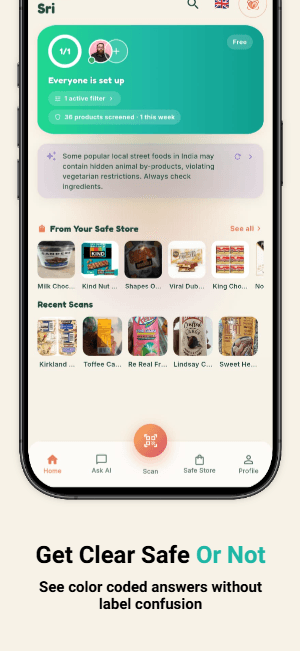
Food Scan Genius fundamentally changes consumer safety through its enterprise-grade NutriGraph Database, mapping over 5,000,000 verified UPC/EAN barcodes via deep recursive Abstract Syntax Tree (AST) parsing. Instead of basic text matching, the algorithm decomposes intricate multi-tier ingredient networks down to their base chemical and agricultural sources. Through 39 supported clinical dietary profiles and full custom sensitivity mapping (including specific seed oils, industrial gums, and artificial colorants), families can scan a box of cookies once and immediately see unified, named safety attributions—such as “Fails for Sri (Gluten)” while clearing the snack for dairy or nut intolerances. Augmented by ScanGenius AI Insight, shoppers receive objective, non-judgmental evaluations integrating NOVA 1-4 ultra-processing classifications and global Nutri-Scores across 11 synchronized languages, all completely free without paywalls.
4. Related Food Safety & Dietary Guides
- Best Food Allergy Scanner App – Scan Food Labels Instantly — Food Allergy & Sensitivity Scanner Hub
- The 7 Best Free Food Scanner Apps of 2026 — best free food scanner apps
- Choosing the Best Barcode Scan App for Your Health — guide to choosing a barcode scanner app
- Food Scan Genius: World’s #1 Food Ingredient Scanner App — Food Scan Genius scanner app
5. Scientific & Health Authority References
- Celiac Disease Foundation Threshold Requirements
- European Food Safety Authority (EFSA) Additive Safety Regulations
- PubMed Research on Ultra-Processed Foods & Gut Microbiome Disruption
- World Health Organization Guidelines on Healthy Diets & Saturated Fats
6. How to Scan in 3 Simple Steps
- Download Food Scan Genius for free on iOS or Android—unlocking enterprise-grade barcode intelligence with zero subscription paywalls or scan quotas.
- Configure your personalized dietary blueprint by selecting Celiac/Gluten-Free across all household members, and add custom sensitivities for specific thickeners, sweeteners, or seed oils.
- Scan any cookie barcode in under two seconds to reveal an instant recursive ingredient breakdown, named family safety alerts, and complete NOVA processing transparency.
Instant Gluten-Free Audit Trail
7. Frequently Asked Questions (FAQ)
Can cookies labeled ‘gluten-free’ still make someone with celiac disease sick?
Yes. The FDA threshold allows products with up to 20 parts per million (ppm) of gluten to be labeled ‘gluten-free.’ For hyper-sensitive individuals with celiac disease, cumulative exposure to foods hovering near this threshold can trigger autoimmune inflammation. Additionally, cross-contact during manufacturing or the inclusion of uncertified oats containing trace wheat can trigger reactions. Food Scan Genius analyzes complex sub-ingredients to help identify non-certified grains and hidden sources of gluten.
Are gluten-free cookies always a healthier nutritional choice?
Not necessarily. Industrial bakers often replace wheat flour with refined starches (tapioca, potato, corn) and add extra sugar, saturated fats, and synthetic emulsifiers to replicate conventional texture. Food Scan Genius pairs its gluten audit with NOVA ultra-processing classifications and Nutri-Scores via ScanGenius AI Insight, giving you full visibility into whether a product is a nutrient-dense whole food or an ultra-processed confection.
How does Food Scan Genius catch hidden gluten that other apps miss?
Unlike legacy apps that rely on simple text keyword matching, Food Scan Genius runs on the NutriGraph Database, which analyzes over 5 million barcodes using recursive Abstract Syntax Tree (AST) parsing. This technology deconstructs nested brackets in ingredient panels—such as ‘natural flavorings’ or compound confectionery coatings—to isolate hidden barley, rye, or cross-contaminated malt derivatives without charging a paywall fee.
How do Multi-Household Family Profiles work when shopping for cookies that are gluten free?
Food Scan Genius allows you to configure individual dietary profiles for everyone in your household simultaneously. When you scan a product barcode, the engine cross-references the item against every family profile in a single pass. If a package of cookies contains gluten but is dairy-free, the screen clearly displays a named fail attribution, such as ‘Fails for Sri (Gluten),’ ensuring no one’s medical restrictions are overlooked.
Know What’s In Your Food Before You Buy — Scan Free Today
Never second-guess confusing grocery labels again. Download Food Scan Genius to uncover hidden additives, toxic dyes, and allergens for the whole household before you buy.