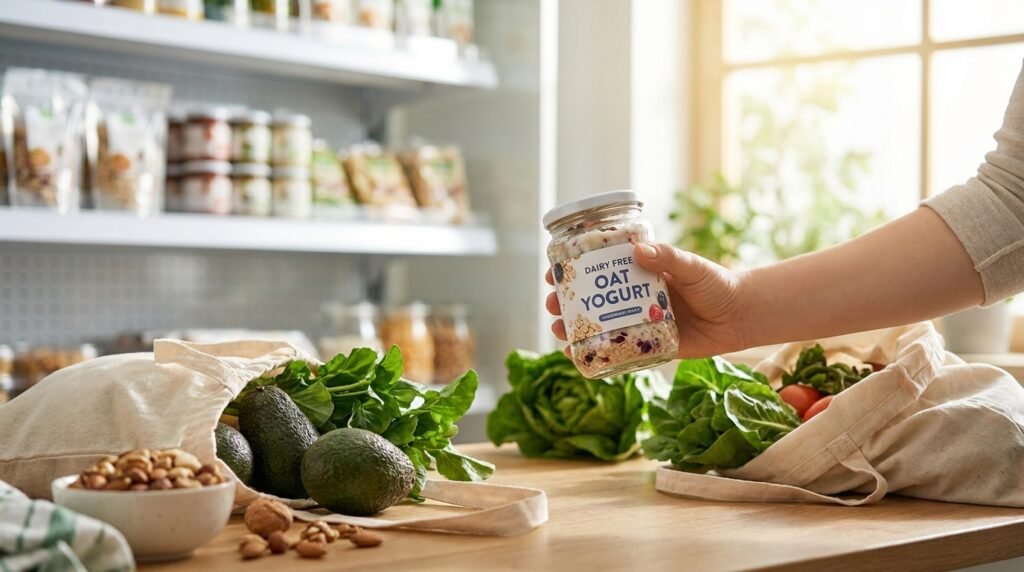
1. The Allergy Minefield in the Modern Plant-Based Yogurt Aisle
Standing in the refrigerated dairy aisle should not feel like navigating a high-stakes clinical hazard. For millions of individuals managing Immunoglobulin E (IgE)-mediated milk protein allergies, severe lactose intolerance, eosinophilic esophagitis (EoE), or pediatric alpha-gal syndrome, selecting a safe FDA Food Allergen Labeling & Consumer Protection Act (FALCPA)-compliant breakfast staple has become an overwhelming challenge. The astronomical rise of plant-based alternatives has filled shelves with tubs crafted from almond milk, oat slurry, coconut cream, cashew purée, pea protein isolates, and pili nuts. Yet beneath the radiant pastel packaging and claims of digestive wellness lies an intricate matrix of hidden allergens, emulsifying gums, and pervasive cross-contact risks.
For food-allergic consumers and protective parents, grocery shopping is accompanied by persistent hypervigilance. A container labeled ‘plant-powered’ or ‘100% vegan’ does not automatically equate to a safe dairy free yogurt. Clinical food safety specialists repeatedly warn that industrial manufacturing facilities frequently process tree nuts, soy, gluten-containing grains, and bovine dairy on shared high-speed filling lines. Even more perilous is the emotional exhaustion that stems from reading microscopic ingredient declarations under fluorescent store lights while trying to soothe a restless toddler, knowing that an overlooked sub-ingredient could trigger systemic anaphylaxis, respiratory distress, or severe gastrointestinal flare-ups.
Compounding this anxiety is the stark nutritional divergence between traditional cultured milk and modern plant formulations. While dairy alternatives eliminate bovine whey and casein, many brands compensate for the loss of natural dairy structure by saturating their formulas with ultra-refined lipids and industrial stabilizers. According to the World Health Organization Guidelines on Healthy Diets & Saturated Fats, heavily relying on saturated fats—such as the high levels of lauric and myristic acids found in coconut-derived yogurts—can undermine cardiovascular lipid profiles if consumed unchecked under a false ‘health halo.’ When families trade an allergy risk for an ultra-processed food formulation laden with inflammatory thickeners and hidden dairy derivatives, true consumer safety remains elusive.
Scan Any Label for Hidden Additives and Allergens — Free
Never second-guess confusing grocery labels again. Download Food Scan Genius to uncover hidden additives, toxic dyes, and allergens for the whole household before you buy.


2. Deceptive Labeling, Hidden Derivatives, and Sneaky Yogurt Additives
Understanding the difference between regulatory marketing vernacular and molecular food safety is critical when evaluating any dairy free yogurt. Under United States regulatory precedent, the term ‘non-dairy’ is historically ambiguous; federal guidelines legally permit the inclusion of milk-derived proteins—most notoriously sodium caseinate—in items marked ‘non-dairy,’ provided an explanatory parenthetical note is attached. While true ‘dairy-free’ items are theoretically devoid of all mammalian milk fractions, the absence of a mandatory Precautionary Allergen Labeling (PAL) framework leaves consumers guessing about microscopic airborne cross-contamination during culture fermentation.
Furthermore, producing an appealing spoonable texture from watery grain or nut bases demands intense physical and chemical intervention. Manufacturers deploy complex hydrocolloids, synthetic stabilizers, and proprietary flavor modulators that pose distinct physiological hazards. Groundbreaking PubMed Research on Ultra-Processed Foods & Gut Microbiome Disruption demonstrates that chronic ingestion of specific dietary emulsifiers directly erodes the protective colonic mucus layer, predisposing susceptible individuals to mucosal inflammation, bacterial translocation, and heightened allergic sensitization. Simultaneously, European oversight mechanisms via the European Food Safety Authority (EFSA) Additive Safety Regulations continually re-evaluate the cumulative, acceptable daily intake of complex food gums due to widespread consumer reports of severe functional gastrointestinal distress.
When auditing prospective yogurt labels, shoppers must remain intensely vigilant against these five deceptive culprits and manufacturing loopholes:
- Proprietary ‘Natural Flavors’ & Starter Culture Substrates: Many commercial bacterial cultures (such as Lactobacillus bulgaricus and Streptococcus thermophilus) are historically fermented and scaled in a mammalian milk or whey broth base before being washed and introduced into oat or almond milk. Traces of milk protein can survive into the finished product without explicitly appearing in the top-level ingredient panel.
- Caseinates, Lactose Derivatives, and Lactic Acid: While microbial lactic acid is often plant-derived, unverified supply chains may source clarifying agents, processing aids, or culture nutrients from dairy by-products, posing profound risks to individuals with high-affinity IgE antibodies.
- Cross-Reactive Hydrocolloids (Locust Bean & Guar Gum): Extracted from the seeds of the carob tree (Ceratonia siliqua) and the guar plant (Cyamopsis tetragonoloba), these legumes share molecular structural homology with peanuts and soy. Highly allergic individuals frequently experience unexplained immunological or gastrointestinal cross-reactivity after eating gum-thickened plant yogurts.
- Shared Facility and Unenforced Advisory Statements: Advisory declarations such as ‘Produced in a facility that also processes milk, tree nuts, and soy’ are entirely voluntary under current labeling statutes. The absence of a warning statement does not ensure an audited, allergen-segregated cold-fill facility.
- Microbial Gums and Gut-Barrier Disruptors: Additives like xanthan gum, gellan gum, and carrageenan are deployed to mimic the rich, coagulated mouthfeel of bovine milk fat. However, these gums can trigger bloating, intestinal cramping, and microbial dysbiosis, mimicking the exact allergic flare-ups shoppers are trying to evade.
- Synthetic Tricalcium Phosphate and Vitamin Fortification Carriers: Micronutrient pre-mixes added to mimic dairy’s nutritional profile often utilize dairy, corn, or soy-derived starches as spray-drying carrier agents, which fly under the radar of standard regulatory ingredient disclosures.
3. The Food Scan Genius Advantage: Beyond Surface-Level Scanners
| Evaluation Dimension | Food Scan Genius | Fig App | Spoonful | Manual Label Reading |
|---|---|---|---|---|
| Core Pricing Model | 100% Free Core Power (Zero Paywalls) | Aggressive $59/year Paywall | Strict Monthly Scan Limits | Free (High Cognitive Fatigue) |
| Database & Parsing Engine | NutriGraph (5M+ Barcodes, Recursive AST Parsing) | Proprietary (~1M Barcodes, Basic String Match) | Dietitian Curated (~800k Barcodes) | Zero Automation (Human Error Prone) |
| Household Multi-Profile Scanning | Yes (Single scan flags: ‘Fails for Sri (Gluten)’) | No (Requires manual profile toggle) | No (Single-user focus) | Impossible to cross-check mentally in-store |
| Objective Nutritional Framework | NOVA 1-4 + Nutri-Score + ScanGenius AI Insight | Binary Green/Yellow/Red Flags | FODMAP Traffic Light Only | Subjective Marketing Interpretation |
| Global Language Translation | 11 Languages (Real-time in-app translation) | English Only | English Only | Dependent on native packaging language |
While legacy barcode apps lock critical safety features behind restrictive $59/year paywalls or cap users after a handful of grocery aisle lookups, Food Scan Genius democratizes clinical-grade food safety. Built on the enterprise NutriGraph Database encompassing more than 5,000,000 verified global UPC/EAN records, the engine does not merely match surface keywords. Instead, it utilizes deep sub-ingredient recursive Abstract Syntax Tree (AST) parsing. When you scan a tub of dairy free yogurt, the technology deconstructs compound declarations—peeling back umbrella terms like ‘culture blend’ or ‘natural emulsifier complex’ to expose trace hidden dairy carriers, unlisted corn substrates, legume-derived binders, or cross-reactive tree nut traces.
Rather than judging foods with arbitrary, moralizing health scores, the app introduces ScanGenius AI Insight paired with validated international benchmarks: the scientifically anchored NOVA 1-4 processing classification and the clinical Nutri-Score algorithm. This provides users with objective transparency regarding whether their dairy alternative is minimally processed fermented food or a heavily formulated ultra-processed treat. Most critically for busy families, our Multi-Household Family Profiles allow you to screen for up to 39 distinct clinical dietary conditions—plus unlimited bespoke custom sensitivities like industrial seed oils, gums, or artificial colorings—in a single 2-second scan. The screen instantly displays unambiguous, named safety attribution (e.g., ‘Safe for Dad, Fails for Sri: Contains Cashew Derivatives’), while real-time translation across 11 global languages ensures you stay protected whether shopping locally or traveling abroad.
4. Related Food Safety & Dietary Guides
- Best Food Allergy Scanner App – Scan Food Labels Instantly — Food Allergy & Sensitivity Scanner Hub
- The 7 Best Free Food Scanner Apps of 2026 — best free food scanner apps
- Choosing the Best Barcode Scan App for Your Health — guide to choosing a barcode scanner app
- Food Scan Genius: World’s #1 Food Ingredient Scanner App — Food Scan Genius scanner app
5. Scientific & Health Authority References
- FDA Food Allergen Labeling & Consumer Protection Act (FALCPA)
- European Food Safety Authority (EFSA) Additive Safety Regulations
- PubMed Research on Ultra-Processed Foods & Gut Microbiome Disruption
- World Health Organization Guidelines on Healthy Diets & Saturated Fats
6. How to Scan in 3 Simple Steps
- Download Food Scan Genius for free on iOS or Android with zero scan caps, paywalls, or forced premium upgrades.
- Configure your custom Multi-Household Profiles by choosing from 39 clinical dietary frameworks (such as IgE Milk Allergy, Tree Nut Free, or Vegan) or manually adding individual triggers like locust bean gum, pea protein isolate, or specific food dyes.
- Scan any dairy free yogurt barcode in the grocery aisle to receive a sub-second, clinically audited breakdown showing individual family safety attribution, sub-ingredient AST parsing, NOVA classification, and ScanGenius AI Insight.
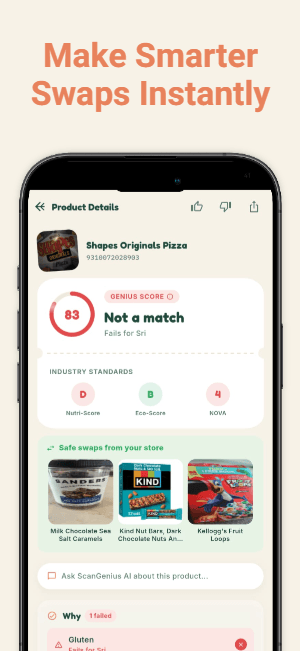
Instant Dairy-Free Audit Trail
7. Frequently Asked Questions (FAQ)
Is ‘non-dairy’ yogurt guaranteed to be safe for someone with a severe milk allergy?
No. Under FDA regulations, products labeled ‘non-dairy’ can legally contain milk derivatives such as sodium caseinate, a potent milk protein. For a severe IgE milk allergy, you must look for certified ‘dairy-free’ items or verify the product down to the sub-ingredient level. Food Scan Genius utilizes recursive AST parsing to automatically detect hidden caseinates and dairy-derived culture media in seconds.
Can eating dairy free yogurt trigger tree nut or legume allergies?
Yes. Many dairy free yogurts use almond milk or cashew purée bases, which are dangerous for those with tree nut allergies. Furthermore, manufacturers often rely on pea protein for protein fortification or carob/guar gums for texture. Because peas and gums are legumes, individuals with severe peanut or soy allergies can experience immunological cross-reactivity. Food Scan Genius screens for these specific botanical crossovers simultaneously.
Why do some dairy free yogurts cause severe digestive upset even if they are 100% plant-based?
Digestive distress is often triggered by industrial thickeners—such as xanthan gum, guar gum, locust bean gum, and carrageenan—or sugar alcohols used to reduce calories. These ultra-processed additives can disrupt gut microbiota and accelerate intestinal transit, causing bloating and cramping. Food Scan Genius flags NOVA 4 ultra-processed emulsifiers and provides clear contextual insights so you can identify clean, gently cultured formulations.
How does Food Scan Genius handle shared-equipment and cross-contamination warnings?
While standard regulatory packaging frequently omits voluntary advisory statements, Food Scan Genius catalogs verified manufacturer disclosures, historical facility cross-contact records, and recursive sub-ingredient pathways within its 5-million-product NutriGraph Database. It flags potential cross-contact risks prominently, allowing you to make safe, informed decisions without second-guessing vague label disclaimers.
Know What’s In Your Food Before You Buy — Scan Free Today
Never second-guess confusing grocery labels again. Download Food Scan Genius to uncover hidden additives, toxic dyes, and allergens for the whole household before you buy.