1. Why Keeping Fast Food Keto Friendly Is So Hard in 2026
You’re on the road, the only option within twenty miles is a drive-thru, and you’ve spent weeks getting into ketosis. If your stomach just dropped, you’re not alone. Ordering keto at a fast food chain means working against a menu built around buns, breading, sweetened sauces, and starchy sides. The frustration is rational, and it isn’t a willpower problem. Most people who track macros have been burned by a ‘grilled chicken salad’ that arrived with a candied topping and a 20-gram-carb dressing.
The clinical context matters here. People follow ketogenic eating for different reasons: weight management, blood sugar control under medical supervision, epilepsy protocols, or personal preference. For many of them, a few hidden grams of sugar can shift a day’s carbohydrate budget, typically 20 to 50 grams of net carbs. If you take glucose-lowering medication, a surprise carb load is more than an inconvenience, so it’s worth discussing your plan with your clinician or a registered dietitian.
There’s also a broader question about food quality. Many fast food items are ultra-processed, and PubMed Research on Ultra-Processed Foods & Gut Microbiome Disruption is one of many studies prompting people to look past the macro count to what the food is made of. A burger patty and a processed ‘protein’ nugget may both look low-carb on paper, yet differ enormously in how they’re made. A fair reading of the evidence calls for curiosity, not panic.
It’s also worth being honest that keto is not a one-size-fits-all approach. Because it tends to be high in fat, it can be high in saturated fat as well, and the World Health Organization Guidelines on Healthy Diets & Saturated Fats recommend limiting saturated fat intake. That’s one more reason to make deliberate choices rather than defaulting to the greasiest option. This guide helps you hit your macros and stay informed about what you’re eating, without guilt or moralizing.
Scan Any Label for Hidden Additives and Allergens — Free
Never second-guess confusing grocery labels again. Download Food Scan Genius to uncover hidden additives, toxic dyes, and allergens for the whole household before you buy.


2. Where Hidden Carbs Hide: Sneaky Ingredients on Fast Food Menus
Most carb surprises at a drive-thru don’t come from the obvious items. They come from the supporting cast: sauces, marinades, coatings, and fillers. Here are the six places we see macros slip most often:
- Sweetened sauces and condiments: Ketchup, BBQ, honey mustard, sweet chili, teriyaki, and many ‘special’ sauces list sugar, corn syrup, or honey near the top of the ingredient list. A single dipping cup can contain 5 to 15 grams of carbs.
- ‘Grilled’ proteins with sugary marinades: Grilled chicken is a keto staple, but some chains use marinades with sugar, dextrose, or starch for browning and moisture. Check the chain’s published ingredient statement, not just the name on the menu.
- Breading and batter: ‘Crispy’ items are coated in wheat flour, starch, or both. Even a scraped-off coating leaves absorbed carbs, and it’s a problem for anyone who is also avoiding gluten.
- Maltodextrin and modified starches: These show up in seasonings, sauces, and some processed meats as thickeners or carriers. Maltodextrin has a high glycemic index despite being technically ‘not sugar,’ and it may not be reflected in rounded-down carb figures.
- Low-fat dressings and ‘light’ options: When fat is removed, sugar and starch often move in. A ‘light’ vinaigrette can carry more carbs than a full-fat ranch or olive oil and vinegar.
- Beverages that look innocent: Sweet tea, flavored lemonades, and ‘fruit’ coolers can eclipse your entire carb allowance. Even unsweetened options may contain flavorings and sweeteners you prefer to avoid.
Regulation helps, but only partly. The FDA Food Allergen Labeling & Consumer Protection Act (FALCPA) requires major allergens to be identified clearly on packaged foods, but it is an allergen law, not a carb-transparency law, and it doesn’t tell you how much hidden starch is in a sauce. Additive rules also differ across regions. The European Food Safety Authority (EFSA) Additive Safety Regulations take a different approach to sweeteners and processing aids than U.S. rules do, so the same product can be formulated differently depending on where you buy it.
One practical limitation: restaurant menu items usually don’t have barcodes, so for those you’ll rely on the chain’s published nutrition and ingredient information. Packaged add-ons such as sauce packets, bottled drinks, snack bars, and the grocery items you keep in the car are where a barcode scan works best.
3. How Food Scan Genius Compares to Manual Methods and Other Apps
| Dimension | Food Scan Genius | Fig | Spoonful | Manual Label / Menu PDF Reading |
|---|---|---|---|---|
| Cost | 100% free core features, zero paywalls | $59/yr | Limited scans | Free, but time-intensive |
| Database | NutriGraph: 5,000,000+ verified UPC/EAN barcodes | Proprietary database | Proprietary database | Whatever the label or PDF states |
| Ingredient depth | Recursive AST parsing of sub-ingredients (e.g., what’s inside ‘natural flavors’ or a sauce base) | Ingredient flagging | Ingredient flagging | Easy to miss nested ingredients |
| Personalization | 39 dietary profiles plus custom sensitivities (seed oils, dyes, additives) | Preset profiles | Preset profiles | Entirely manual |
| Family and language support | Multi-household profiles with named fail attribution; 11 languages with real-time translation | Individual-focused | Individual-focused | None |
The core advantage is depth. Reading a label tells you what the manufacturer lists. NutriGraph goes further by recursively parsing sub-ingredients, so a sauce, seasoning blend, or snack that hides dextrose or modified starch inside a compound ingredient gets surfaced rather than skipped. Pair that with 39 supported dietary profiles and the ‘Add Your Own Custom Sensitivity’ feature, and you can build a keto-oriented profile that also flags seed oils, specific sweeteners, or dyes you’d rather avoid. For households where one person eats keto and another avoids gluten, Multi-Household Family Profiles screen everyone in a single scan and name who it fails for, such as ‘Fails for Sri (Gluten).’
ScanGenius AI Insight adds context instead of a verdict. Rather than reducing a product to a red or green number, it explains why an item might fit or conflict with your profile, and it shows NOVA 1-4 classification and Nutri-Score alongside. A keto shopper might see that a bar fits their carb budget but sits at NOVA 4, then decide for themselves. It’s information, not moralizing. With 11 global languages and real-time in-app translation, it also helps when you’re traveling and reading unfamiliar labels. Note that Food Scan Genius can’t scan a restaurant’s made-to-order burger, since there’s no barcode. It’s strongest for the packaged items around your fast food meal and for pre-planning what you keep on hand.
4. Related Food Safety & Dietary Guides
- Best Food Allergy Scanner App – Scan Food Labels Instantly — Food Allergy & Sensitivity Scanner Hub
- The 7 Best Free Food Scanner Apps of 2026 — best free food scanner apps
- Choosing the Best Barcode Scan App for Your Health — guide to choosing a barcode scanner app
- Food Scan Genius: World’s #1 Food Ingredient Scanner App — Food Scan Genius scanner app
5. Scientific & Health Authority References
- FDA Food Allergen Labeling & Consumer Protection Act (FALCPA)
- European Food Safety Authority (EFSA) Additive Safety Regulations
- PubMed Research on Ultra-Processed Foods & Gut Microbiome Disruption
- World Health Organization Guidelines on Healthy Diets & Saturated Fats
6. How to Scan in 3 Simple Steps
- Download Food Scan Genius free on iOS or Android. There are no paywalls on core features, so you can start auditing products immediately without a subscription.
- Set up your keto profile: choose the closest of the 39 dietary profiles, then use ‘Add Your Own Custom Sensitivity’ to flag things like seed oils, maltodextrin, specific sweeteners, or dyes. Add family members in Multi-Household Profiles if others at the table eat differently.
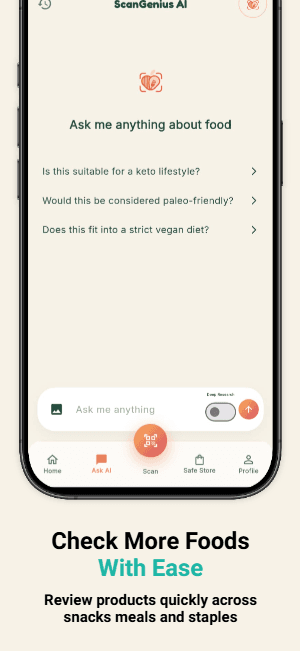
- Scan the barcode on packaged items such as sauce packets, bottled drinks, bars, or snacks in about 2 seconds. Review the instant audit trail and ScanGenius AI Insight, then check the chain’s published nutrition information for made-to-order menu items before you order.
Instant Keto & Sugar Audit Trail
7. Frequently Asked Questions (FAQ)
What are the safest keto orders at most fast food chains?
Generally, the most reliable choices are bunless burgers or sandwiches, plain grilled proteins, egg-based breakfast items without the bread, and side salads with a full-fat dressing. Always verify with the chain’s published nutrition and ingredient information, since marinades, sauces, and seasonings vary. Making fast food keto friendly mostly comes down to controlling the extras: skip sweet sauces, ask for no breading, and choose unsweetened drinks. Food Scan Genius can then audit any packaged add-ons you bring or buy.
Can Food Scan Genius scan a burger or meal at a drive-thru?
No. Made-to-order restaurant items don’t have UPC/EAN barcodes, so a scan isn’t possible. Food Scan Genius shines with packaged products: sauce packets, bottled beverages, bars, snacks, and grocery items you carry for fast food keto friendly backup. For the menu itself, use the chain’s own nutrition calculator and ingredient statements, then use your custom profile to know which ingredients to watch for.
How does Food Scan Genius find hidden sugars and starches in packaged foods?
Its NutriGraph Database covers 5,000,000+ verified barcodes and uses recursive AST parsing to look inside compound ingredients, so items like dextrose, maltodextrin, or modified starch tucked into a sauce or seasoning blend can be flagged against your keto profile. ScanGenius AI Insight then explains the context, alongside NOVA 1-4 classification and Nutri-Score, without a simplistic good-or-bad score.
Is Food Scan Genius really free, and does it work for families with different diets?
Yes. Core features are 100% free with zero paywalls, unlike Fig’s $59/yr plan or Spoonful’s limited scans. Multi-Household Family Profiles let you screen the whole family in one scan, with named attribution such as ‘Fails for Sri (Gluten),’ so a keto eater, a gluten-free eater, and others can shop and snack together. The app supports 39 dietary profiles and 11 languages with real-time translation. Anyone managing a medical condition should still consult a healthcare professional about their diet.
Know What’s In Your Food Before You Buy — Scan Free Today
Never second-guess confusing grocery labels again. Download Food Scan Genius to uncover hidden additives, toxic dyes, and allergens for the whole household before you buy.
Photo by RDNE Stock project on Pexels