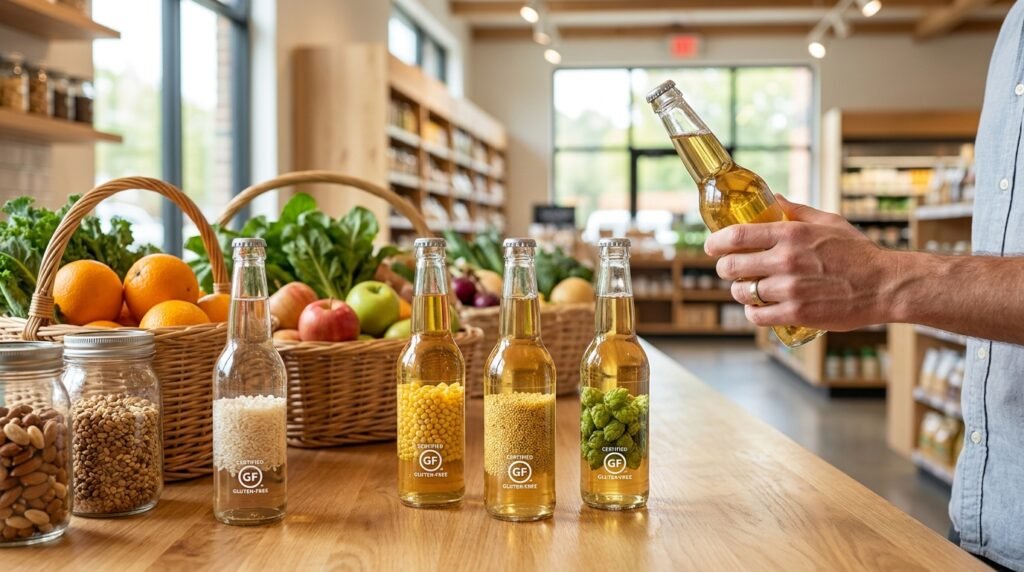
1. The Reality of Choosing Gluten-Free Beer: Navigating Ambiguity, Symptoms, and Label Loopholes
For anyone living with celiac disease, dermatitis herpetiformis, or severe non-celiac gluten sensitivity, the simple joy of sharing a cold craft brew with friends often devolves into an exercise in high-stakes vigilance. Unlike standard packaged groceries, the beverage aisle presents a uniquely treacherous terrain. When shopping for conventional snacks, shoppers rely on standardized ingredient statements. However, finding a genuinely safe gluten free beer requires deciphering fragmented regulatory oversight, misleading marketing euphemisms, and complex biochemical processing claims that can leave your digestive tract vulnerable to severe autoimmune flare-ups.
The central point of confusion stems from the critical medical distinction between beers brewed from naturally gluten-free grains and those marketed as ‘gluten-removed’ or ‘crafted to remove gluten.’ The Celiac Disease Foundation Threshold Requirements emphasize that maintaining an intake below 20 parts per million (ppm) is vital to prevent enterocyte damage and blunted villi. Yet, mass-market brewers frequently lean on deceptive processing claims, utilizing barley malt as a base and deploying enzymatic treatments to cleave gluten proteins into smaller molecular fragments. While these fragments elude certain crude commercial assays, they remain biologically active, capable of binding to HLA-DQ2 or HLA-DQ8 receptors and triggering debilitating inflammatory responses.
Compounding this anxiety is the regulatory chasm governing alcoholic beverages. In many jurisdictions, including the United States, beers brewed with malted barley and hops fall under the purview of alcohol-specific agencies like the Alcohol and Tobacco Tax and Trade Bureau (TTB), rather than the FDA. This historical loophole means that mandatory FALCPA allergen declarations are not enforced uniformly on alcoholic malt beverages. Furthermore, imported specialty brews frequently navigate divergent regulatory frameworks; for instance, the European Food Safety Authority (EFSA) Additive Safety Regulations evaluate processing aids differently than domestic agencies, leaving international consumers exposed to undisclosed cross-contact agents, clarifying compounds, or barley-derived colorants that evade clean labeling.
The emotional burden of this ambiguity is profound. Standing in a crowded supermarket or brewery aisle, squinting at ambiguous micro-print on a wet aluminum can while desperately running search queries on spotty cellular service, creates unnecessary social isolation. Consumers deserve uncompromised transparency: a precise, scientifically backed method to immediately identify whether a beverage is brewed in a dedicated gluten-free facility using 100% ancestral pseudo-grains, or whether it represents an industrial compromise that compromises gastrointestinal integrity.
Scan Any Label for Hidden Additives and Allergens — Free
Never second-guess confusing grocery labels again. Download Food Scan Genius to uncover hidden additives, toxic dyes, and allergens for the whole household before you buy.


2. The Brewing Science: Gluten-Removed Loopholes, Hidden Additives, and Grain Chemistry
To make an informed purchase, consumers must understand the fundamental difference between dedicated gluten-free brewing and enzymatic reduction. Genuine gluten free beer is formulated entirely from grains that inherently lack the prolamins found in wheat (gliadin), barley (hordein), and rye (secalin). Dedicated craft brewers cultivate rich flavor profiles using raw or malted sorghum, buckwheat, millet, brown rice, and quinoa. Because these grains possess no immunogenic proline- and glutamine-rich peptide sequences, they are biologically safe from the start.
In contrast, ‘gluten-removed’ beers begin with traditional barley malt. During fermentation, industrial enzymes—most commonly prolyl endopeptidase (often marketed as Brewer’s Clarex)—are introduced to chop the long-chain hordein proteins into shorter peptide fragments. While standard competitive ELISA tests struggle to detect these truncated fragments, extensive clinical studies demonstrate that these broken peptide chains can still cross the intestinal epithelial barrier, sparking T-cell activation and intestinal permeation. Moreover, individuals managing systemic inflammation must consider that beer production often involves adjuncts, clarification agents, and ultra-processed stabilization aids. Independent PubMed Research on Ultra-Processed Foods & Gut Microbiome Disruption demonstrates how synthetic stabilizing agents and industrial emulsifiers can compromise mucosal immunity, magnifying the toxic effects of trace peptide exposure. When striving for sustained health, aligning with the broader World Health Organization Guidelines on Healthy Diets & Saturated Fats means maintaining scrutiny over processed additives across both solid foods and alcoholic beverages.
- ‘Gluten-Removed’ or ‘Crafted to Remove Gluten’ Labels: These beers are brewed from traditional barley. Enzymatic slicing creates fragmented proteins that trick rudimentary test kits but remain medically unsafe for celiacs.
- Harvested or Repitched Brewer’s Yeast: Many commercial breweries reuse yeast strains harvested from previous batches of barley- or wheat-heavy ales, introducing severe cross-contamination into otherwise innocuous ciders or gluten-free formulations.
- Barley Malt Extract in Hard Seltzers and Flavored Beers: Mass-produced fruit beers and ‘clear’ malt beverages frequently use de-characterized barley malt bases, camouflaged under generic ingredient listings like ‘natural grain alcohol’ or ‘malt base.’
- Shared Fermentation Tanks and Canning Lines: Without rigorous, certified clean-in-place (CIP) protocols, canning lines that alternate between viscous hazy IPAs and experimental gluten-free batches pose acute cross-contact hazards.
- Clarifying and Fining Agents: Isinglass, gelatin, or industrial chemical finings may contain unlisted carriers or be processed alongside cereal proteins, creating hidden points of exposure for hyper-sensitive individuals.
- Imported Beers with Inconsistent PPM Standards: Some international jurisdictions allow products containing up to 100 ppm to carry specific low-gluten designations, far exceeding the strict safety limits required by medically diagnosed celiacs.
3. Technological Superiority: Food Scan Genius vs. Outdated Label Guesswork
| Feature / Capability | Food Scan Genius | Fig App | Spoonful | Manual Label Checking |
|---|---|---|---|---|
| Core Pricing Model | 100% Free Core (Zero Paywalls) | $59/year Subscription Gate | Strict Monthly Scan Limits | Free, but high human error rate |
| Sub-Ingredient Parsing | NutriGraph (Recursive AST Parsing) | Standard Dictionary Matching | Basic Keyword Matching | None (surface label reading only) |
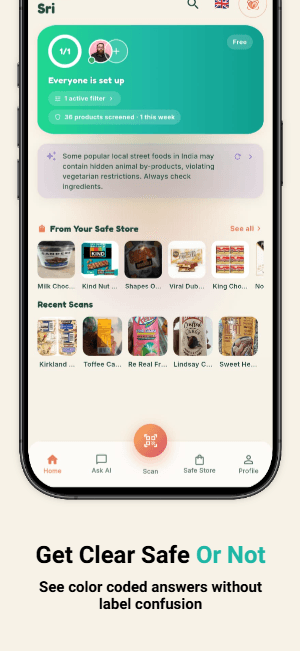
| Multi-Household Screening | Yes (Single scan flags: “Fails for Sri”) | Single User Profile Only | Single User Profile Only | Manual mental tracking per person |
| AI Processing & Health Scores | ScanGenius AI + NOVA 1-4 + Nutri-Score | Red/Yellow/Green Ingredients | Basic Traffic Light System | None |
| Custom Sensitivity Support | 39 Profiles + Add Unlimited Custom Triggers | Predefined allergen lists | Predefined diet options | Entirely dependent on memory |
While legacy scanning apps rely on static, linear ingredient matches that frequently overlook the nuances of brewing chemistry, Food Scan Genius changes the game through its enterprise-grade NutriGraph Database. Indexing over 5,000,000 verified UPC and EAN barcodes worldwide, the NutriGraph engine does not simply match isolated words like ‘hops’ or ‘yeast.’ Instead, it utilizes deep sub-ingredient recursive Abstract Syntax Tree (AST) parsing. This computational architecture decomposes complex manufacturing compounds, cross-referencing obscure clarification finings, enzyme derivatives, and flavor delivery systems against rigorous biomedical databases to distinguish genuine sorghum- or millet-based beers from enzymatically disguised barley beverages.
Rather than locking life-saving health insights behind a $59/year paywall like Fig, or restricting shoppers to a handful of monthly scans like Spoonful, Food Scan Genius offers 100% free core scanning power with zero scan limits. Powered by the proprietary ScanGenius AI Insight, the app contextualizes safety instantly—providing nuanced assessments, NOVA 1-4 food processing classifications, and Nutri-Score breakdowns without reductive moralizing. Crucially for families and social circles navigating multiple complex diets, our Multi-Household Family Profiles allow you to screen for up to 39 diverse dietary profiles simultaneously in a single, 2-second scan. When an obscure craft beer fails, the screen delivers a crystal-clear, transparent verdict—such as ‘Fails for Sri (Barley Cross-Contact)’—allowing you to shop with uncompromising certainty.
4. Related Food Safety & Dietary Guides
- Best Food Allergy Scanner App – Scan Food Labels Instantly — Food Allergy & Sensitivity Scanner Hub
- The 7 Best Free Food Scanner Apps of 2026 — best free food scanner apps
- Choosing the Best Barcode Scan App for Your Health — guide to choosing a barcode scanner app
- Food Scan Genius: World’s #1 Food Ingredient Scanner App — Food Scan Genius scanner app
5. Scientific & Health Authority References
- Celiac Disease Foundation Threshold Requirements
- European Food Safety Authority (EFSA) Additive Safety Regulations
- PubMed Research on Ultra-Processed Foods & Gut Microbiome Disruption
- World Health Organization Guidelines on Healthy Diets & Saturated Fats
6. How to Scan in 3 Simple Steps
- Download the Food Scan Genius app for free on iOS or Android to access full, unlimited barcode scanning with zero paywalls.
- Configure your personalized dietary profile by choosing ‘Celiac / Strict Gluten-Free’ and add custom sensitivities for specific brewing additives, yeast types, or clarifying agents.
- Scan any craft beer, cider, or seltzer barcode in aisle for an instant, sub-second NutriGraph safety analysis and transparent ScanGenius AI verdict.
Instant Gluten-Free Audit Trail
7. Frequently Asked Questions (FAQ)
Can someone with celiac disease safely drink ‘gluten-removed’ or ‘crafted to remove gluten’ beer?
No, medical consensus and celiac gastroenterology guidelines advise against it. ‘Gluten-removed’ beers are brewed from barley and treated with enzymes that break hordein proteins into fragments. While these fragments often pass competitive ELISA tests, they retain toxic peptide sequences that trigger autoimmune reactions and villous atrophy. Food Scan Genius explicitly differentiates between enzymatically treated barley products and 100% naturally gluten-free beers brewed from grains like millet, sorghum, and buckwheat.
Why don’t all alcoholic beers in the United States display standard allergen warnings?
In the United States, beers brewed with malted barley and hops are regulated by the Alcohol and Tobacco Tax and Trade Bureau (TTB), not the FDA. Under TTB regulations, the Food Allergen Labeling and Consumer Protection Act (FALCPA) is not mandatory, meaning breweries are not legally obligated to state that their beverage contains wheat or barley. Food Scan Genius bridges this dangerous regulatory loophole by indexing drinks through our NutriGraph Database to expose hidden cereal grains instantly.
How does Food Scan Genius identify hidden gluten in beer when laboratory tests struggle?
Rather than relying on basic laboratory tests that fail against hydrolyzed proteins, Food Scan Genius utilizes recursive Abstract Syntax Tree (AST) parsing on manufacturer data, recipe filings, and worldwide regulatory disclosures. Our NutriGraph engine traces base grains, repitched brewing yeasts, finings, and processing enzymes, flagging potential barley or wheat exposure before the beverage ever enters your cart.
Are hard ciders and seltzers always naturally gluten-free alternatives to beer?
Not always. While standard hard ciders ferment apple juice and seltzers often ferment cane sugar, industrial mass-producers frequently incorporate ‘flavored malt bases’ derived from barley, or use harvested brewer’s yeast sourced from wheat beer tanks. Furthermore, cross-contact on shared canning lines is common. Scanning the beverage with Food Scan Genius audits the ingredient supply chain in real time, verifying complete freedom from gluten.
Know What’s In Your Food Before You Buy — Scan Free Today
Never second-guess confusing grocery labels again. Download Food Scan Genius to uncover hidden additives, toxic dyes, and allergens for the whole household before you buy.