
1. The Breakfast Aisle Minefield: Finding Truly Safe Gluten Free Cereals in 2026
Standing in the center grocery aisle on a busy weekday morning, trying to locate genuinely safe gluten free cereals that both an energetic toddler and a health-conscious adult will eat without protest, can feel like an exercise in acute frustration. For families managing celiac disease, non-celiac gluten sensitivity (NCGS), or autoimmune gut conditions, breakfast is rarely as simple as grabbing a colorful box off the shelf. What masquerades as wholesome, grain-based nutrition often conceals a complex matrix of industrial manufacturing hazards, deceptive cross-contamination risks, and unlisted processing aids that trigger debilitating physical distress.
The physical and clinical stakes are unforgiving. Under the Celiac Disease Foundation Threshold Requirements, even trace ingestion exceeding 20 parts per million (ppm) of gluten is scientifically established to provoke intestinal villous atrophy, severe immune activation, chronic malabsorption, and long-term systemic inflammation. Yet, conventional consumer food labeling frequently fails vulnerable shoppers. Parents regularly face an agonizing trade-off: choose a certified gluten-free brand stripped of all micronutrients and loaded with refined sugars, or risk a “wheat-free” whole-grain alternative that secretly harbors barley malt syrup, rye derivatives, or non-certified commodity oats handled on contaminated harvest combines.
Compounding this dilemma is the hidden nutritional deficit found within the commercial “free-from” market. To replicate the crunch, palatability, and shelf-life of traditional wheat or barley flakes, legacy manufacturers lean heavily on hyper-refined tapioca starches, isolated corn flours, and inflammatory hydrogenated oils. According to the World Health Organization Guidelines on Healthy Diets & Saturated Fats, an optimal dietary foundation demands dense dietary fiber and restricted free sugars to mitigate early-onset metabolic disease and pediatric gut dysbiosis. Modern grocery shoppers should not have to gamble between immediate intestinal safety and long-term cardiovascular health just to enjoy a bowl of morning cereal.
Scan Any Label for Hidden Additives and Allergens — Free
Never second-guess confusing grocery labels again. Download Food Scan Genius to uncover hidden additives, toxic dyes, and allergens for the whole household before you buy.


2. Deceptive Labeling & Sneaky Ingredients: What’s Lurking in Your Morning Bowl
When hunting for nutrient-dense, gut-safe gluten free cereals, trusting front-of-box claims is a recipe for clinical exposure. Clever food marketers routinely exploit regulatory loopholes to label boxes “natural” or “wheat-free,” while burying gluten-bearing binders or gut-disruptive emulsifiers deep within sub-ingredient declarations. To protect your family, you must learn to parse the microscopic text on the ingredient deck for these six critical hazards:
- Barley Malt Extract and Malt Flavoring: Frequently added to corn flakes and puffed rice cereals to provide a toasted sweetness, barley malt is derived directly from germinated barley grain. While not categorized as wheat under standard allergen bolding rules, it carries high concentrations of the peptide hordein, making it intensely toxic for individuals with celiac disease.
- Non-Purity Protocol Oats: While pure oats are naturally gluten-free, commodity oats are grown alongside wheat, harvested with shared combines, and transported in the same railcars. Unless packaging specifically denotes “Certified Gluten-Free Purity Protocol Oats,” your family faces routine contamination spikes exceeding 100 ppm.
- Ultra-Processed Fiber Mimics (Carboxymethylcellulose & Polysorbates): Used extensively to mimic gluten’s structural binding in extruded cereals, synthetic gums and synthetic emulsifiers raise significant red flags. Compliance with European Food Safety Authority (EFSA) Additive Safety Regulations requires ongoing vigilance, as these compounds are increasingly shown to degrade intestinal mucus barriers.
- Deceptive “Natural Flavors” & Yeast Extracts: Proprietary flavor houses often extract savory or sweet nuance from hydrolyzed barley or rye proteins without explicit declaration. If a box lacks clear allergen transparency, “natural flavoring” represents an unvetted biological risk.
- Hyper-Refined Extrusion Starches: Highly processed white rice flour, de-germed yellow cornmeal, and isolated tapioca starches spike postprandial blood glucose while starving healthy gut flora. Groundbreaking PubMed Research on Ultra-Processed Foods & Gut Microbiome Disruption illustrates that diets rich in these ultra-processed cereal matrices fundamentally compromise microfloral diversity and foster systemic, low-grade metabolic inflammation.
- Caramel Color (Class III & IV): Often synthesized using ammonium compounds or carbohydrate sources derived from malt syrup, industrial caramel color poses lingering chemical by-product concerns (such as 4-methylimidazole) alongside subtle gluten contamination pathways.
3. How Food Scan Genius Outperforms Legacy Scanning Apps and Guesswork
| Feature / Capability | Food Scan Genius | Fig App | Spoonful | Manual Label Reading |
|---|---|---|---|---|
| Core Database & Sub-Ingredient Parsing | NutriGraph (5M+ UPCs, Deep AST Parsing) | Proprietary (~1M UPCs, standard matching) | Curated (~800k UPCs, manual review) | Human Eye (high fatigue & error rate) |
| Pricing Structure | 100% Free Core Power (Zero Paywalls) | $59.99/year subscription paywall | 5 free scans/month, then paid tier | Free (but massive time cost) |
| Multi-Household Screening | Instant Multi-User (“Fails for Sri (Gluten)”) | Single user primary profile | Single diet focus only | Impossible to cross-check 4+ diets simultaneously |
| Nutritional & Food Processing Evaluation | ScanGenius AI + NOVA 1-4 + Nutri-Score | Basic traffic light alerts | Strictly Low-FODMAP/GF rating | No standardized processing matrix |
| Custom Sensitivity Customization | 39 Profiles + Custom Dyes, Seed Oils, Additives | Select curated clinical lists only | Limited additive filtering | Manual memory check |
When selecting safe, tasty, and nutrient-packed gluten free cereals, legacy consumer apps constantly force compromises. Monolithic apps like Fig lock their barcode reader behind a steep $59/year paywall, while Spoonful limits free users to a handful of monthly scans before cutting them off at the register. Even worse, traditional barcode tools merely scan text using simple string-matching queries. They fail when manufacturers hide malt derivatives within compound parenthetical ingredients, such as “Seasoning (Corn Flour, Yeast Extract, Natural Flavor [Derived from Barley Malt])”.
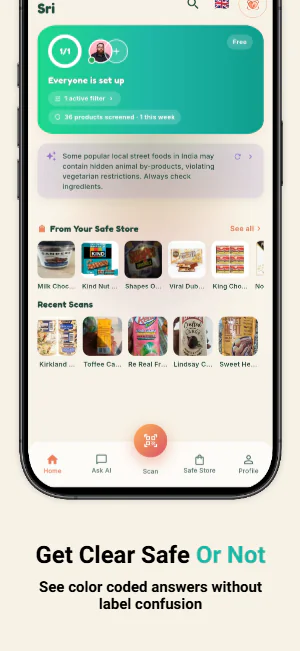
Food Scan Genius revolutionizes dietary safety through the enterprise-grade NutriGraph Database, cataloging over 5,000,000 verified UPC/EAN barcodes. By utilizing recursive Abstract Syntax Tree (AST) parsing, NutriGraph deconstructs every compound sub-ingredient into its molecular origin. Instead of assigning a moralizing, arbitrary 1-to-100 score, the built-in ScanGenius AI Insight presents cold, actionable clinical facts alongside official NOVA 1-4 ultra-processing classifications and international Nutri-Scores. Furthermore, our Multi-Household Family Profiles allow you to evaluate dietary safety across multiple family members with a single scan—immediately warning if a family favorite “Fails for Sri (Gluten)” while clearing it for dairy- or dye-sensitive siblings in 11 global languages.
4. Related Food Safety & Dietary Guides
- Best Food Allergy Scanner App – Scan Food Labels Instantly — Food Allergy & Sensitivity Scanner Hub
- The 7 Best Free Food Scanner Apps of 2026 — best free food scanner apps
- Choosing the Best Barcode Scan App for Your Health — guide to choosing a barcode scanner app
- Food Scan Genius: World’s #1 Food Ingredient Scanner App — Food Scan Genius scanner app
5. Scientific & Health Authority References
- Celiac Disease Foundation Threshold Requirements
- European Food Safety Authority (EFSA) Additive Safety Regulations
- PubMed Research on Ultra-Processed Foods & Gut Microbiome Disruption
- World Health Organization Guidelines on Healthy Diets & Saturated Fats
6. How to Scan in 3 Simple Steps
- Download Food Scan Genius for free on the iOS App Store or Google Play with zero upfront paywalls or trial restrictions.
- Configure your Family Profile by selecting Gluten-Free from our 39 pre-built clinical diets, and toggle custom sensitivities for refined seed oils, synthetic food dyes, or unfermented gums.
- Scan any cereal box barcode in under 2 seconds to view an immediate NutriGraph recursive breakdown, clear family safety alerts, and deep NOVA processing insights.
Instant Gluten-Free Audit Trail
7. Frequently Asked Questions (FAQ)
Are all oat-based cereals safe on a strict gluten-free diet?
No. Oats are inherently gluten-free, but standard agricultural practices create massive cross-contact contamination via shared combines, silos, and milling machinery. For individuals with celiac disease or severe wheat sensitivities, only cereals made with certified ‘Purity Protocol’ oats should be consumed. Food Scan Genius analyzes agricultural ingredient disclosures through our NutriGraph AST parsing to flag non-certified oat origins instantly.
Why does barley malt flavoring disqualify a cereal from being gluten-free?
Barley contains hordein, a direct peptide prolamin belonging to the gluten protein family. Because standard US food allergen regulations only mandate the explicit labeling of wheat, manufacturers often label cereals with barley malt as ‘wheat-free.’ However, barley malt will trigger intestinal damage and an autoimmune response in individuals with celiac disease. Food Scan Genius scans nested parenthetical ingredients to catch hidden barley derivatives immediately.
How can I tell if a gluten-free cereal is ultra-processed and unhealthy for my kids?
Look beyond the gluten-free label at the physical composition of the cereal. Many gluten-free cereals rely on refined corn starch, isolated white rice flour, and added cane sugar, classifying them as NOVA Class 4 Ultra-Processed Foods. Food Scan Genius displays both the official NOVA 1-4 scale and real-time Nutri-Score directly on your scan screen, ensuring you choose options packed with real ancient grains (quinoa, millet, amaranth), high dietary fiber, and zero artificial dyes.
What makes Food Scan Genius completely free compared to apps like Fig or Spoonful?
We believe consumer health, allergy safety, and medical nutrition transparency should never be hidden behind an aggressive subscription paywall. While Fig charges $59/year and Spoonful locks users out after five scans, Food Scan Genius provides 100% free core power with unlimited scans, full access to our 5-million-item NutriGraph database, custom sensitivities, and multi-user family profiles.
Know What’s In Your Food Before You Buy — Scan Free Today
Never second-guess confusing grocery labels again. Download Food Scan Genius to uncover hidden additives, toxic dyes, and allergens for the whole household before you buy.