1. The Baker’s Dilemma: Navigating Gluten Free Flour Without Sacrificing Texture or Safety
Stepping into the world of gluten-free baking often feels less like culinary art and more like an unpredictable chemistry experiment. For home bakers, parents managing pediatric celiac disease, or individuals navigating autoimmune reactions, trading standard wheat flour for a commercial gluten free flour blend frequently leads to disappointment: crumbly breads, gummy cakes, or chalky cookies. Wheat gluten provides an intricate viscoelastic protein matrix that traps expanding gases, retains moisture, and provides structural chew. Recreating that biomechanical architecture without triggering gut inflammation requires a granular understanding of single-origin alternative flours, starches, and binding hydrocolloids.
Beyond structural shortcomings, safety remains an ongoing clinical anxiety. Even products marketed proudly as gluten-free can carry hidden pitfalls. According to the Celiac Disease Foundation Threshold Requirements, foods containing less than 20 parts per million (ppm) of gluten can legally bear gluten-free labeling in many jurisdictions, yet hyper-sensitive individuals can still experience systemic mucosal inflammation or microvilli blunting at micro-trace levels. The emotional toll of preparing a celebration cake or everyday sandwich bread only to suffer an unexpected autoimmune flare-up is an exhausting, pervasive reality for millions of households.
Compounding this challenge is the sudden reliance on industrialized ultra-processed binders. To replicate wheat’s elasticity, mainstream manufacturers often overload commercial multi-purpose blends with modified food starches, synthetic emulsifiers, and bleached starches. Mounting clinical literature, such as PubMed Research on Ultra-Processed Foods & Gut Microbiome Disruption, highlights how industrial thickeners and ultra-processed additives can alter epithelial barrier permeability and provoke dysbiosis. Bakers are left stuck between structural failure on one side and potential digestive distress on the other, underscoring the urgent need for transparent, single-ingredient mastery.
Scan Any Label for Hidden Additives and Allergens — Free
Never second-guess confusing grocery labels again. Download Food Scan Genius to uncover hidden additives, toxic dyes, and allergens for the whole household before you buy.


2. Deceptive Labeling, Hidden Cross-Contact, and the Ultimate Gluten Free Flour Guide
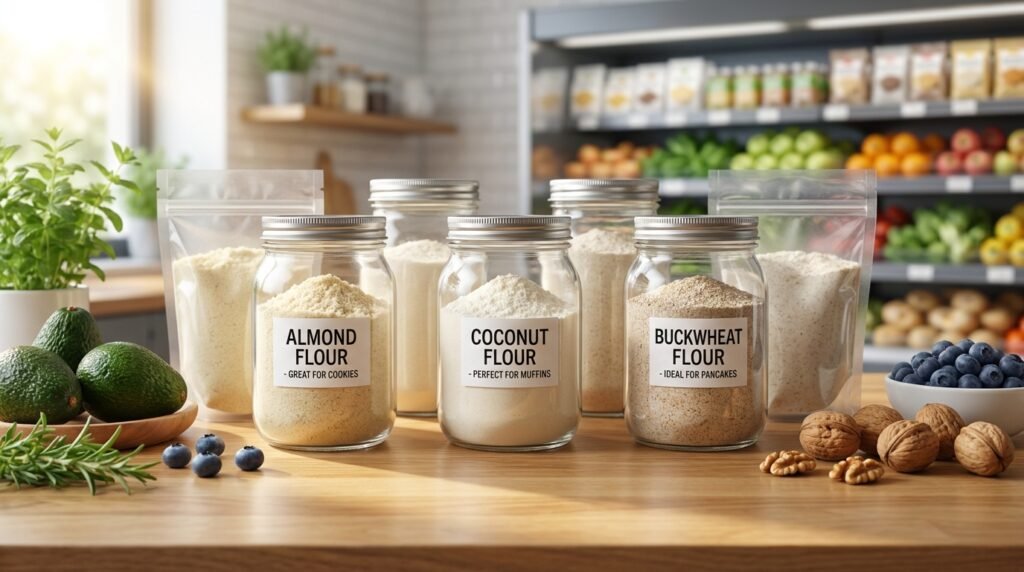
To bake successfully, you must treat your pantry as a targeted laboratory. No single gluten free flour acts as a universal 1:1 substitute for wheat flour. Instead, elite gluten-free baking relies on combining neutral structural bases (such as superfine white or brown rice flour, sorghum flour, or oat flour), protein-rich enhancers (like almond flour or lupin flour), and pure gelatinizing starches (tapioca, arrowroot, or potato starch).
- Almond Flour (Protein & Moisture Anchor): Best used for dense, tender crumb structures such as macarons, quick breads, tortes, and pie crusts. Its high content of monounsaturated fats provides natural richness, though it lacks binding power and must not be used 1:1 for yeast-leavened doughs.
- Sorghum Flour (The Wheat-Flavor Mimic): Excellent for artisan crusty boules, sandwich breads, and cookies. Sorghum delivers a smooth, slightly sweet, wheat-like profile without the gritty mouthfeel common to coarse grain starches, but it requires a starch companion like arrowroot to avoid density issues.
- Superfine White & Brown Rice Flour (The Classic Structural Base): The backbone of general pastry work and all-purpose blends. However, milling quality matters immensely; standard stone-ground rice flour yields a gritty, sandy texture, whereas ultra-fine hydro-milled rice flour hydrates smoothly.
- Tapioca Starch / Flour (The Elasticity Engine): Derived from cassava root, this starch provides vital chew, browning capability, and flexibility. It is essential in chewy cookies, pizza crusts, and laminated pastries, acting as the structural bridge that prevents crumb crumbly breakdown.
- Oat Flour (Tenderizing Whole Grain): Superb for fluffy pancakes, breakfast muffins, and waffles. It imparts whole-grain warmth and soft texture, yet it represents one of the highest cross-contamination risks in commercial agriculture unless strictly verified.
- Malt Extract and Shared Silo Cross-Contamination: While wheat is straightforward to spot, rogue derivatives like barley malt extract or rye flavorings often slip into commercial mixes under ambiguous terms like ‘natural grain flavorings,’ bypassing casual consumer scrutiny.
- Sneaky Industrial Binders and Bleaching Agents: Industrial mixes regularly rely on xanthan gum, carboxymethylcellulose (CMC), or modified corn starches. While safe under the European Food Safety Authority (EFSA) Additive Safety Regulations, excessive emulsifier concentrations can trigger severe gastrointestinal symptoms in patients with irritable bowel syndrome (IBS) or sensitive digestive profiles, compounding their digestive burden alongside elevated dietary lipids highlighted in World Health Organization Guidelines on Healthy Diets & Saturated Fats.
3. Precision Screening: Food Scan Genius vs. Legacy Dietary Apps
| Audit Dimension | Food Scan Genius | Fig | Spoonful | Manual Label Reading |
|---|---|---|---|---|
| Database Depth & Sub-Ingredients | 5M+ UPCs (NutriGraph Recursive AST Parsing) | Proprietary list, limited sub-ingredient parsing | Limited curated grocery inventory | Zero recursive data; human eye error |
| Pricing Model | 100% Free Core Features (Zero Paywalls) | $59.99/year subscription paywall | Freemium cap (5 scans/month before paywall) | Free, but high personal health risk |
| Family Profile Screening | Multi-Household 1-Scan (e.g., ‘Fails for Sri’) | Single active user profile per scan | Single user profile scanning only | Manual cross-referencing per family member |
| Dietary Profiles & Custom Sensitivities | 39 Profiles + Infinite Custom Ingredients | Fixed preset lists with rigid triggers | Predetermined dietary checklists | Self-managed memory checks |
| Nutritional Processing Context | ScanGenius AI + NOVA 1-4 & Nutri-Score | Basic green/yellow/red flags | Pass/Fail metrics only | None |
Evaluating commercial gluten free flour packages requires far more than glancing at front-of-pack claims. Standard consumer tools fall short by treating ingredient lists as static text strings, completely missing recursive nested allergens—such as ‘baking powder’ containing unlisted wheat-derived starch or industrial gums derived from common allergens. Food Scan Genius circumvents this blind spot using its enterprise-grade NutriGraph Database, which monitors over 5,000,000 verified UPC/EAN barcodes worldwide. By utilizing recursive Abstract Syntax Tree (AST) parsing, the engine disassembles multi-layer ingredient lists down to their primary botanical roots.
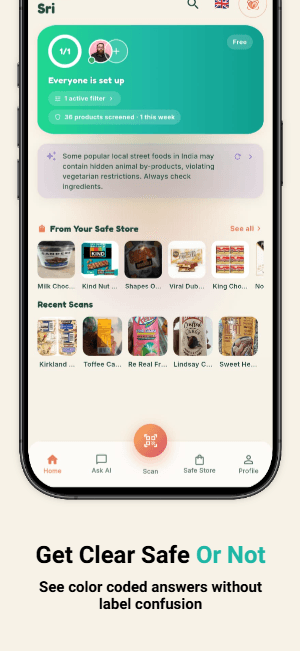
Rather than slapping a simplistic, moralizing ‘good vs. bad’ score on complex foods, the ScanGenius AI Insight platform provides objective, context-driven clarity. It instantly evaluates NOVA 1-4 processing classifications and Nutri-Score indices while cross-referencing 39 dietary frameworks alongside your custom sensitivities (such as sensitivities to industrial emulsifiers, corn starches, or seed oils). If your household balances diverse medical dietary needs—such as celiac disease alongside peanut allergies—Food Scan Genius audits all profiles simultaneously in a single scan, delivering precise named attribution (e.g., ‘Safe for Liam, Fails for Sri: Contains Oat Cross-Contact’) in seconds.
4. Related Food Safety & Dietary Guides
- Best Food Allergy Scanner App – Scan Food Labels Instantly — Food Allergy & Sensitivity Scanner Hub
- The 7 Best Free Food Scanner Apps of 2026 — best free food scanner apps
- Choosing the Best Barcode Scan App for Your Health — guide to choosing a barcode scanner app
- Food Scan Genius: World’s #1 Food Ingredient Scanner App — Food Scan Genius scanner app
5. Scientific & Health Authority References
- Celiac Disease Foundation Threshold Requirements
- European Food Safety Authority (EFSA) Additive Safety Regulations
- PubMed Research on Ultra-Processed Foods & Gut Microbiome Disruption
- World Health Organization Guidelines on Healthy Diets & Saturated Fats
6. How to Scan in 3 Simple Steps
- Download the free Food Scan Genius app from the iOS App Store or Google Play Store (enjoy 100% free core power with zero paywalls).
- Set up your customized household dietary profile: select Gluten-Free, adjust processing preferences, and add custom triggers like xanthan gum, corn starch, or tree nuts.
- Scan any gluten free flour barcode in the baking aisle to receive an instant 2-second recursive audit, complete with NOVA classification and personalized safety alerts.
Instant Gluten-Free Audit Trail
7. Frequently Asked Questions (FAQ)
Can I replace all-purpose wheat flour with a single gluten free flour 1:1?
In most culinary scenarios, no single grain or nut flour can replace wheat flour 1:1. Single-origin flours such as almond, coconut, or rice flour lack the combination of elasticity, moisture retention, and structural strength that wheat gluten naturally provides. Reliable baking typically requires combining a structural base (such as brown rice or sorghum), a starch (such as tapioca or arrowroot), and a binding agent. Using Food Scan Genius, you can screen pre-mixed 1:1 commercial blends instantly to ensure they do not introduce unwanted gums, allergens, or ultra-processed starches into your kitchen.
Why do some certified gluten free flour blends still upset my digestion?
Even when a flour blend complies with standard gluten-free regulatory thresholds (<20 ppm), digestive discomfort can stem from other functional additives. Many mass-market baking blends incorporate heavy concentrations of xanthan gum, guar gum, inulin, or modified starches to artificially mimic wheat gluten. These hydrocolloids can cause gas, bloating, and gastrointestinal irritation in individuals with irritable bowel syndrome (IBS) or sensitive gut microbiomes. Food Scan Genius allows you to set custom sensitivities for specific gums and binders so you can identify whole-food, gut-friendly flour options effortlessly.
How does Food Scan Genius catch hidden gluten that other scanning apps miss?
Many legacy scanning tools rely on simple keyword-matching algorithms that look exclusively for words like ‘wheat,’ ‘barley,’ or ‘rye.’ Food Scan Genius is powered by the enterprise NutriGraph Database with more than 5,000,000 UPC/EAN barcodes, using recursive Abstract Syntax Tree (AST) ingredient parsing. This deep computational analysis unpacks nested sub-ingredients, cross-contact processing warnings, obscure malt flavorings, and carrier starches. The platform also offers real-time translation across 11 global languages, safeguarding your kitchen even when purchasing imported specialty baking goods.
Is almond flour or oat flour better for gluten-free baking?
The ideal choice depends entirely on your recipe’s mechanical requirements. Almond flour provides high moisture, healthy fats, and a delicate crumb, making it exceptional for tortes, pie crusts, and soft cookies; however, it lacks elasticity and cannot be rolled or kneaded. Certified gluten-free oat flour offers superior structure, a neutral wheaty flavor, and soft aeration perfect for pancakes, quick breads, and muffins. Always scan oat flour using Food Scan Genius to confirm strict gluten-free verification, as agricultural oats face significant rotational crop cross-contact risks with wheat and rye.
Know What’s In Your Food Before You Buy — Scan Free Today
Never second-guess confusing grocery labels again. Download Food Scan Genius to uncover hidden additives, toxic dyes, and allergens for the whole household before you buy.