
1. Why Finding Gluten Free Food at Taco Bell Is So Challenging in 2026
If you have celiac disease or non-celiac gluten sensitivity, you know the feeling. You’re on a road trip, the options are limited, and the glowing Taco Bell sign promises corn tortillas, beans, and rice. Surely something there is safe? The honest answer is more complicated than most search results admit. Looking for gluten free food Taco Bell serves is not a simple yes-or-no question. It’s a risk-management exercise, and you deserve clear information rather than wishful thinking.
The first hard truth is that Taco Bell does not operate a gluten-free kitchen and, to our knowledge, does not guarantee that any menu item is gluten-free. Its own allergen guidance warns about shared preparation areas, shared utensils, and ingredient changes. For someone with celiac disease, that matters a great deal. The Celiac Disease Foundation Threshold Requirements reflect the widely recognized standard of fewer than 20 parts per million of gluten for a product to be labeled gluten-free. A food can contain no wheat ingredient and still fall short of that standard if it touches a gluten-containing surface along the way.
The second challenge is how fast fast food changes. Limited-time offers, supplier swaps, and reformulated sauces and seasonings mean a list that was accurate last year may be wrong today. Ingredients like modified food starch, “natural flavors,” and seasoning blends can hide gluten or make its source unclear. Many people with celiac disease also report symptoms from small exposures: fatigue, brain fog, abdominal pain, and sometimes days of recovery. That cost is real, and it’s why we don’t want to hand you a casual “just order the crunchy taco” answer.
This guide ranks Taco Bell choices by both ingredient safety and ease of ordering, so you can decide how much risk you’re willing to accept. It is educational and not medical advice. If you have celiac disease, always confirm the current allergen information with Taco Bell and talk with your physician or dietitian about your own tolerance for cross-contact risk.
Scan Any Label for Hidden Additives and Allergens — Free
Never second-guess confusing grocery labels again. Download Food Scan Genius to uncover hidden additives, toxic dyes, and allergens for the whole household before you buy.


2. Sneaky Gluten Risks Hiding in Taco Bell Orders (and a Safety Ranking)
Gluten at a Mexican-style fast food chain rarely announces itself. Beyond the obvious flour tortillas, these are the loopholes and hidden risks that most often trip people up when ordering gluten free food Taco Bell style:
- Shared fryers and prep surfaces: Items like chips or other fried products may share oil or equipment with gluten-containing foods. Cross-contact can happen even when the base ingredient is corn.
- Seasoned meats and sauces: Seasoning blends, thickeners, and sauces may include wheat-derived starches, flavorings, or fillers. Always check the current ingredient statement rather than assuming.
- Modified food starch and “natural flavors”: Source ingredients are not always specified on the label, which makes these ambiguous for sensitive eaters.
- Shared utensils and assembly lines: Staff may handle flour tortillas, then your bowl, using the same gloves, scoops, or cutting surfaces.
- Menu churn: Limited-time items and recipe updates can change allergen status without much notice.
- “Gluten-friendly” language: Phrases like “no gluten ingredients” describe a formulation, not a safety guarantee. They are not the same as a certified gluten-free claim.
Ultra-processed foods also bring a broader conversation about additives and gut health. If you’re curious, PubMed Research on Ultra-Processed Foods & Gut Microbiome Disruption offers a useful scientific starting point. Regulators such as the EU maintain additive rules too, and the European Food Safety Authority (EFSA) Additive Safety Regulations show how differently additives are evaluated across regions. For overall balance, the World Health Organization Guidelines on Healthy Diets & Saturated Fats remind us that a gluten-free choice isn’t automatically a nutritious one.
Our ranking, from lowest to highest risk (based on ingredients as commonly formulated; verify current details before ordering):
- Tier 1, simplest components (lowest ingredient risk, easy to order): Black beans, cheese, lettuce, tomatoes, sour cream, and guacamole-style toppings, typically requested in a bowl without anything crunchy or wrapped. Cross-contact is the main remaining concern.
- Tier 2, customized bowls (moderate risk, moderate effort): A build-your-own bowl using verified components, with sauces and seasoned items checked first. Ask staff to change gloves and use clean utensils.
- Tier 3, hard-shell items (higher risk, uncertain): Corn-based shells may avoid wheat ingredients, but seasoning, sauces, and shared handling make confirmation essential.
- Tier 4, avoid if you have celiac disease: Flour tortilla items (burritos, quesadillas, Crunchwraps), Mexican Pizzas, and baked or fried desserts such as cinnamon twists, which contain wheat or carry high cross-contact risk.
3. Food Scan Genius vs. Traditional Ways of Checking Gluten Risk
| Dimension | Food Scan Genius | Taco Bell Allergen Guide / Asking Staff | Fig | Spoonful |
|---|---|---|---|---|
| Cost | 100% free core features, zero paywalls | Free | About $59/year for full access | Limited scans |
| Ingredient depth | NutriGraph Database, 5M+ verified UPC/EAN barcodes, recursive sub-ingredient parsing | Ingredient statements and allergen notes; may not trace sub-ingredients | Ingredient-based screening | Ingredient-based screening |
| Dietary profiles | 39 profiles plus custom sensitivities | Standard allergen categories only | Multiple profiles | Fewer profile options |
| Family screening | Multi-household profiles in 1 scan, with named fail attribution | Manual, item by item | Limited | Limited |
| Languages | 11 languages with real-time in-app translation | Varies by region | Limited | Limited |
A fair note on scope: restaurant menu items don’t carry UPC barcodes, so Food Scan Genius cannot certify what happens in a Taco Bell kitchen, and neither can any app. Where it helps is in the packaged world around the brand: grocery-store taco kits, shells, sauces, seasonings, and similar products. For those, the NutriGraph Database parses ingredient lists recursively, down to the sub-ingredients inside seasonings and starches where gluten often hides. You can use the same workflow to compare what you buy at home against what you’ve learned from Taco Bell’s published ingredient information.
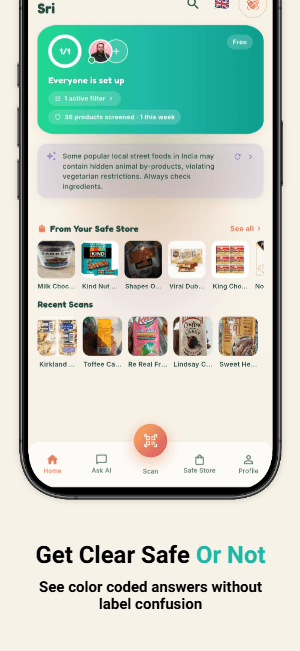
Where the app really changes the experience is nuance. ScanGenius AI Insight explains why an ingredient was flagged rather than just showing a red mark. It adds NOVA 1-4 processing classification and a Nutri-Score, without simplistic moralizing scores that label a food “good” or “bad.” With multi-household profiles, one scan can show “Fails for Sri (Gluten)” while clearing the rest of the family. You can also add a custom sensitivity for seed oils, specific dyes, or other additives, so your gluten-free choices also match the rest of your health priorities.
4. Related Food Safety & Dietary Guides
- Best Food Allergy Scanner App – Scan Food Labels Instantly — Food Allergy & Sensitivity Scanner Hub
- The 7 Best Free Food Scanner Apps of 2026 — best free food scanner apps
- Choosing the Best Barcode Scan App for Your Health — guide to choosing a barcode scanner app
- Food Scan Genius: World’s #1 Food Ingredient Scanner App — Food Scan Genius scanner app
5. Scientific & Health Authority References
- Celiac Disease Foundation Threshold Requirements
- European Food Safety Authority (EFSA) Additive Safety Regulations
- PubMed Research on Ultra-Processed Foods & Gut Microbiome Disruption
- World Health Organization Guidelines on Healthy Diets & Saturated Fats
6. How to Scan in 3 Simple Steps
- Download Food Scan Genius free on iOS or Android. There are no paywalls on core features, and you can choose from 11 languages with real-time in-app translation.
- Set up your profile by selecting the Gluten-Free / Celiac dietary profile from the 39 available. Add any custom sensitivities (such as specific additives or seed oils) and create named family profiles so everyone in your household is screened at once.
- Scan the barcode on any packaged taco kit, shell, sauce, or seasoning in about 2 seconds. Review the instant audit trail, including flagged sub-ingredients, ScanGenius AI Insight, NOVA class, and Nutri-Score, before it reaches your cart.
Instant Gluten-Free Audit Trail
7. Frequently Asked Questions (FAQ)
Does Taco Bell have an official gluten-free menu?
To our knowledge, Taco Bell does not offer a certified gluten-free menu and does not guarantee that any item is free of gluten, because food is prepared in shared kitchens with shared equipment. Some items may be made without gluten-containing ingredients, but that is different from a safety guarantee. Always check Taco Bell’s current allergen information, as recipes change. Food Scan Genius can help you screen packaged products you buy at the grocery store, but it cannot certify a restaurant kitchen.
Is gluten free food at Taco Bell safe for people with celiac disease?
It carries more risk than eating at home or at a dedicated gluten-free facility. The Celiac Disease Foundation and other authorities generally use a threshold of under 20 ppm of gluten for gluten-free labeling, and shared prep surfaces, utensils, and fryers can make that hard to ensure at a restaurant. Some people with celiac disease choose to avoid Taco Bell altogether. Others order simple items with precautions. Talk with your healthcare provider about the right approach for you.
Which Taco Bell items should I avoid if I need to eat gluten free?
Anything built on a flour tortilla or wheat-based shell, including burritos, quesadillas, and Crunchwraps, is a clear avoid. Mexican Pizzas and baked or fried desserts also carry wheat or high cross-contact risk. Items with sauces, seasoned meats, or fried components need extra scrutiny. Ranking by risk, simple bowl components rank safest, hard shells and sauced items fall in the middle, and flour-based items are highest risk.
How can Food Scan Genius help with gluten free food Taco Bell shopping and meal planning?
Taco Bell-branded and similar taco kits, shells, sauces, and seasonings sold in stores have barcodes. Scanning them checks the ingredient list against your gluten-free profile, using the NutriGraph Database’s 5M+ verified barcodes and recursive sub-ingredient parsing. If you shop for a family, multi-household profiles flag who a product fails for, such as “Fails for Sri (Gluten).” The core app is completely free, with no paywalls, and supports 39 dietary profiles plus custom sensitivities.
Know What’s In Your Food Before You Buy — Scan Free Today
Never second-guess confusing grocery labels again. Download Food Scan Genius to uncover hidden additives, toxic dyes, and allergens for the whole household before you buy.