1. Why Gluten Free for Breakfast Is Harder Than It Looks in 2026
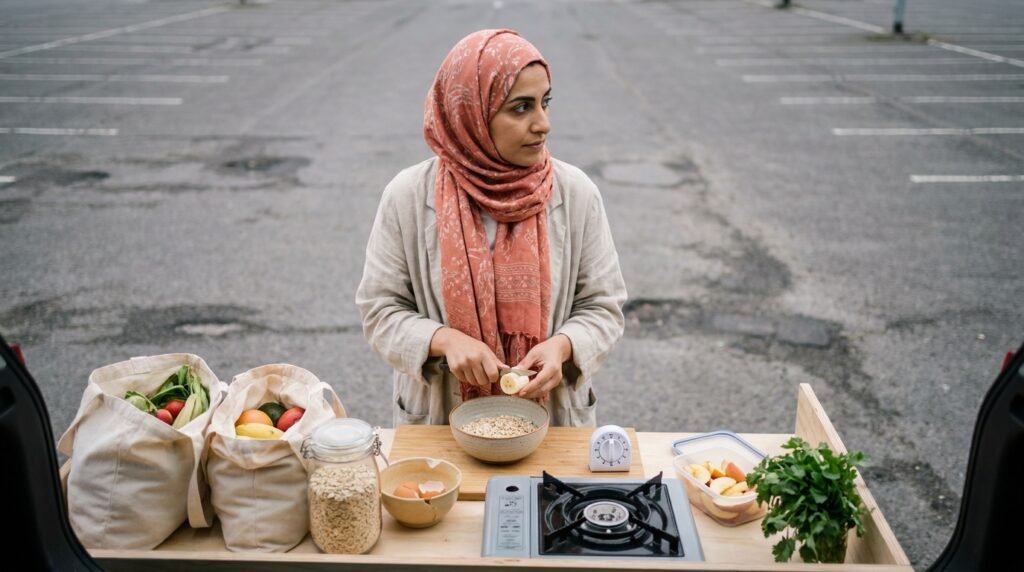
Mornings are when most of us have the least patience for label reading. The alarm is already late, someone needs a lunchbox packed, and the cereal box in your hand says “made with whole grains” in large friendly letters. If you have celiac disease, non-celiac gluten sensitivity, or a wheat allergy, you know this moment well. Breakfast is one of the most gluten-dense meals of the day. Toast, cereal, granola, pancakes, muffins, bagels and even instant oatmeal are built around wheat, barley, rye or cross-contacted oats. Eating gluten free for breakfast can feel like starting every day with a quiz you didn’t study for.
The stakes are not trivial. For people with celiac disease, even small repeated exposures can trigger intestinal damage, whether or not they cause obvious symptoms. In the U.S., the FDA allows a “gluten-free” claim on packaged foods that contain less than 20 parts per million of gluten. The Celiac Disease Foundation Threshold Requirements and related patient resources explain how that benchmark is used in practice and why strict label vigilance matters. If you are newly diagnosed, feeling overwhelmed is a normal response. It does not mean you are being careless.
The frustration is also practical. Gluten-free versions of breakfast staples are often more expensive and more heavily processed than the originals. Many are made from refined starches with added sugar and fat to mimic the texture of wheat. Some people swap one problem for another without realizing it. A gluten-free toaster pastry may be safe for your gut but still sit at the far end of the processing spectrum. Emerging PubMed Research on Ultra-Processed Foods & Gut Microbiome Disruption is a good reminder that “free from” and “good for you” are not the same thing, and that gut health is a bigger picture than one allergen.
The good news is that a safe, satisfying breakfast does not need a long ingredient list or an hour of prep. Naturally gluten-free foods can be assembled in well under 15 minutes. Think scrambled eggs with sautéed spinach, Greek yogurt with berries and certified gluten-free oats, rice cakes with almond butter and banana, a two-ingredient banana pancake, or a savory bowl of leftover rice, a fried egg and avocado. The challenge is rarely the recipe. It is verifying that the packaged items you add to it, such as the yogurt, nut butter, oats, sausage or seasoning, are actually safe for your household.
Scan Any Label for Hidden Additives and Allergens — Free
Never second-guess confusing grocery labels again. Download Food Scan Genius to uncover hidden additives, toxic dyes, and allergens for the whole household before you buy.


2. Sneaky Gluten Sources Hiding in Your Breakfast Aisle
Ingredient lists are legally regulated, but that doesn’t make them easy to interpret at 7 a.m. Allergen rules in the U.S. and EU require wheat to be declared, yet barley, rye and cross-contact risks are not always flagged so clearly. Here are the most common traps we see when people try to eat gluten free for breakfast:
- Oats and oat-based products: Oats are naturally gluten free, but they are frequently grown, harvested or milled alongside wheat and barley. Unless a package is certified or labeled gluten free, regular oatmeal, granola bars and many oat milks can carry cross-contact.
- Barley malt and malt extract: Common in breakfast cereals, including some corn- and rice-based flakes and puffs. It is a barley derivative, and it often sits quietly near the end of the ingredient list as a “flavoring.”
- Flavored instant oatmeal and cereal packets: Even when the base grain is safe, flavor blends, cookie pieces, and coatings can add wheat flour or malt.
- Breakfast sausage, bacon bits and plant-based patties: Fillers, binders, rusk and seasoning blends may include wheat. Plant-based options often use wheat protein (seitan) as their structural base.
- Flavored yogurts and fruit fillings: Modified food starch, granola toppings and cookie inclusions can introduce gluten, and in some regions the starch source is not obvious from the name alone.
- “Gluten-free” processed substitutes high in sugar or saturated fat: Not a gluten risk, but a nutrition blind spot. The World Health Organization Guidelines on Healthy Diets & Saturated Fats encourage limiting free sugars and saturated fat. Many gluten-free pastries, waffles and bars are heavy on both.
Additives deserve attention too. Thickeners, emulsifiers, colors and flavor systems are assessed under frameworks like the European Food Safety Authority (EFSA) Additive Safety Regulations. These rules address safety evaluation, but they don’t tell you whether an ingredient is a problem for your particular body. That personal layer is where most shoppers are left on their own.
A few fast, low-risk breakfast ideas to keep on rotation: a veggie omelet with cheese (about 8 minutes), overnight-style chia pudding made the night before with a splash of milk and fruit, a smoothie with banana, spinach, peanut butter and milk or a dairy-free alternative, cottage cheese with pineapple, or microwave sweet potato topped with yogurt and cinnamon. Keep one certified gluten-free oat option and one gluten-free bread on hand for the days you want something warmer or more familiar. Check the packaging each time, because manufacturers change formulations without notice.
3. How Food Scan Genius Compares for Gluten-Free Breakfast Shopping
| Feature | Food Scan Genius | Fig | Spoonful | Manual Label Reading |
|---|---|---|---|---|
| Cost | 100% free core features, zero paywalls | Premium tier around $59/year | Limited free scans | Free, but costs time |
| Database depth | NutriGraph: 5M+ verified UPC/EAN barcodes with recursive sub-ingredient parsing | Large product database | Varies by product | Only what you can read and recognize |
| Dietary profiles | 39 profiles plus custom sensitivities (seed oils, dyes, additives) | Multiple diet and allergen profiles | Focused profile set | Whatever you remember |
| Family screening | Multi-household profiles; one scan with named results like “Fails for Sri (Gluten)” | Limited multi-person checks | Limited multi-person checks | Manual, one person at a time |
| Languages and context | 11 languages with real-time translation; AI Insight, NOVA 1-4 and Nutri-Score | Primarily allergen and diet flags | Primarily allergen and diet flags | Depends on your reading ability in the label’s language |
Most ingredient problems hide one level down. A product might list “seasoning” or “natural flavor,” and that component has its own ingredients. Food Scan Genius is powered by the NutriGraph Database, which covers more than 5,000,000 verified UPC and EAN barcodes. It uses recursive abstract syntax tree (AST) parsing to break compound ingredients into their sub-ingredients. When you scan a breakfast sausage or a flavored oatmeal cup, you are checking the layers inside the ingredients, not just the first line of the label. Because you can also set custom sensitivities, you can flag extras that matter to you, such as seed oils or specific dyes, alongside gluten.
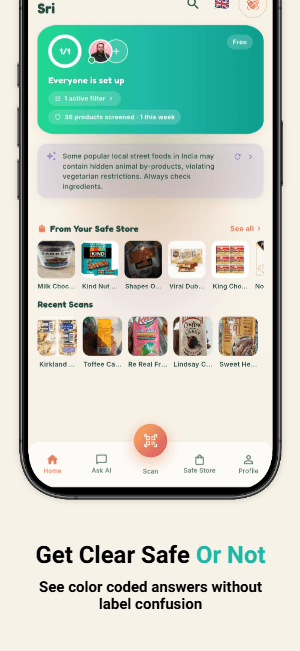
ScanGenius AI Insight then adds context rather than a moralizing score. You get a plain-language explanation of why a product passed or failed, a NOVA 1-4 classification showing how processed it is, and a Nutri-Score for overall nutritional quality. A gluten-free granola can pass your celiac profile and still show as NOVA 4 with a middling Nutri-Score. You decide what matters. In a household where one person avoids gluten and another is watching sugar, multi-household profiles screen everyone at once. The result might read “Fails for Sri (Gluten),” so the person who shops can see exactly who a product works for, in any of 11 supported languages.
4. Related Food Safety & Dietary Guides
- Best Food Allergy Scanner App – Scan Food Labels Instantly — Food Allergy & Sensitivity Scanner Hub
- The 7 Best Free Food Scanner Apps of 2026 — best free food scanner apps
- Choosing the Best Barcode Scan App for Your Health — guide to choosing a barcode scanner app
- Food Scan Genius: World’s #1 Food Ingredient Scanner App — Food Scan Genius scanner app
5. Scientific & Health Authority References
- Celiac Disease Foundation Threshold Requirements
- European Food Safety Authority (EFSA) Additive Safety Regulations
- PubMed Research on Ultra-Processed Foods & Gut Microbiome Disruption
- World Health Organization Guidelines on Healthy Diets & Saturated Fats
6. How to Scan in 3 Simple Steps
- Download Food Scan Genius free on iOS or Android. There are no paywalls on core features, so you can scan every breakfast item in your cart without hitting a limit.
- Set up your profile: choose Gluten-Free or Celiac from the 39 dietary profiles, add family members to your household, and use “Add Your Own Custom Sensitivity” for extras like seed oils, certain dyes or specific additives.
- Scan the barcode of any cereal, oatmeal, yogurt, bread or sausage. In about two seconds you get a pass or fail result per person, sub-ingredient detail, NOVA and Nutri-Score, and an AI Insight explaining the reasoning, all saved as an audit trail.
Instant Gluten-Free Audit Trail
7. Frequently Asked Questions (FAQ)
What are the fastest gluten free for breakfast options I can make in under 15 minutes?
Good options include a veggie omelet, scrambled eggs with avocado, Greek yogurt with berries and certified gluten-free oats, a two-ingredient banana pancake, rice cakes with nut butter, a smoothie, or microwave sweet potato with yogurt. Each takes 5 to 10 minutes. Scan packaged parts of the meal, such as yogurt, nut butter, oats and sausage, with Food Scan Genius to confirm they are safe for your gluten-free profile.
Are oats safe for a gluten-free breakfast?
Oats are naturally gluten free, but regular oats are often cross-contacted with wheat, barley or rye during growing, transport or milling. Most people with celiac disease choose oats labeled or certified gluten free. Some individuals also react to avenin, a protein in oats, so it is worth discussing with your clinician. Food Scan Genius checks the product’s ingredients and flags gluten sources at the barcode level, but always confirm a gluten-free label for oats.
Can Food Scan Genius check my whole family’s breakfast in one scan?
Yes. With multi-household family profiles, you add each person’s dietary needs and scan a product once. The result shows who it works for and who it doesn’t, with named attribution like “Fails for Sri (Gluten).” That helps in households where one person eats gluten free for breakfast and others have different needs, such as a nut allergy or a seed oil sensitivity.
Does a gluten-free label mean a breakfast product is healthy?
No. A gluten-free label tells you about gluten, not overall nutrition. Many gluten-free cereals, waffles and pastries are highly processed and can be high in sugar or saturated fat. Food Scan Genius pairs your gluten check with a NOVA 1-4 processing classification, Nutri-Score and ScanGenius AI Insight so you can see both safety and nutritional context without a single oversimplified score.
Know What’s In Your Food Before You Buy — Scan Free Today
Never second-guess confusing grocery labels again. Download Food Scan Genius to uncover hidden additives, toxic dyes, and allergens for the whole household before you buy.