1. The Exhausting Reality of Navigating the Grocery Aisles with Celiac Disease
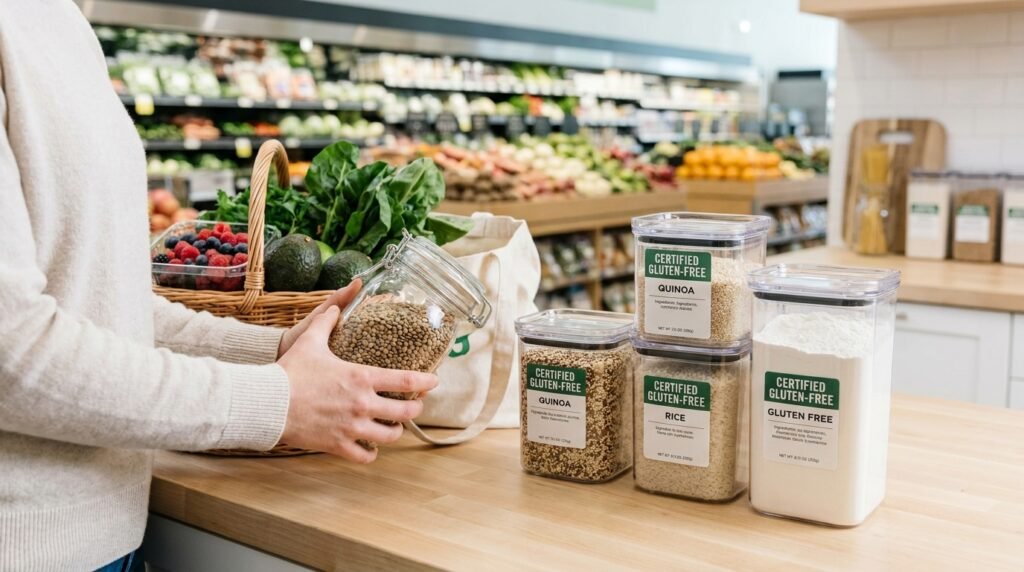
Stepping into a supermarket after receiving a celiac disease diagnosis can induce profound sensory overload. What once was a casual routine suddenly transforms into a clinical minefield. Unlike lifestyle choices or transient diet trends, adhering to a strict regimen of gluten free for celiac patients is a medical necessity. Celiac disease is a serious systemic autoimmune condition where even microscopic ingestion of gluten—the structural storage protein found in wheat, barley, rye, and triticale—triggers a t-cell-mediated immune assault on the small intestine. This immunological attack flattens and destroys the delicate microscopic villi lining the duodenum and jejunum, leading to malabsorption, nutritional deficiencies, systemic chronic inflammation, osteopenia, and elevated risks of secondary autoimmune disorders or enteropathy-associated T-cell lymphoma.
For the grocery shopper, this biological reality translates into severe hyper-vigilance. You cannot simply trust the front of a colorful cardboard box. Phrases like “Wheat-Free,” “Naturally Sourced,” or “Wholesome Grain Blend” are marketing ploys, not medical clearances. Under established Celiac Disease Foundation Threshold Requirements, products bearing an official gluten-free claim must contain strictly less than 20 parts per million (ppm) of gluten. While 20 ppm is the accepted international regulatory benchmark, clinical reality is cumulative: consuming multiple items containing 15–19 ppm throughout a single day can easily push a sensitive individual past the toxic 10-milligram daily threshold that triggers active villous blunting and debilitating systemic symptoms.
The emotional exhaustion of this lifestyle is intensified by the isolation of modern food supply chains. Families are often forced to juggle complex dietary needs simultaneously—a child with a peanut allergy, a partner watching sodium or inflammatory seed oils, and an individual managing biopsy-confirmed celiac disease. Poring over complex, microscopic ingredient panels on dozens of packages leaves shoppers stranded in supermarket aisles for hours. It is an overwhelming cognitive burden characterized by constant second-guessing: Is this modified starch derived from corn or wheat? Does “natural flavor” conceal barley malt? Was this oat flour processed in a facility handling rye?
Worse still, many processed gluten-free substitutes replace gluten’s natural viscoelastic properties by loading products with synthetic stabilizers, emulsifiers, refined starches, and excess sodium. Emerging medical literature, including extensive PubMed Research on Ultra-Processed Foods & Gut Microbiome Disruption, highlights how heavily processed food additives can alter intestinal barrier permeability and trigger low-grade mucosal inflammation. For a celiac patient whose gut epithelium is already recovering from autoimmune trauma, consuming heavily processed replacement products can perpetuate gut dysbiosis, abdominal distress, and brain fog, even if the food is technically under the 20 ppm threshold. Shopping safely requires balancing strict immunological vigilance with total nutritional awareness.
Scan Any Label for Hidden Additives and Allergens — Free
Never second-guess confusing grocery labels again. Download Food Scan Genius to uncover hidden additives, toxic dyes, and allergens for the whole household before you buy.


2. Deceptive Labeling, Hidden Derivatives, and the Science of Micro-Contamination
Manufacturers frequently reformulate consumer packaged goods, which means a product that was completely safe last week might trigger an autoimmune crisis today. To maintain safety when buying gluten free for celiac, shoppers must understand the legal loopholes of food labeling regulations. In the United States, the Food Allergen Labeling and Consumer Protection Act (FALCPA) and the FASTER Act mandate the disclosure of top allergens, including wheat, but they do not mandate the disclosure of barley or rye. Consequently, an ingredient list can legally declare “natural smoke flavoring” or “malt extract” without clearly identifying the presence of hordein (the gluten protein found in barley), leaving celiac shoppers completely unprotected by standard allergen call-out boxes.
Furthermore, international import dynamics complicate grocery shelves. An imported European snack might follow strict European Food Safety Authority (EFSA) Additive Safety Regulations, yet still contain ambiguous starch sources that require deep recursive analysis to verify their plant origin. Similarly, highly processed gluten-free specialty foods frequently compensate for lost texture by inflating saturated fats and refined carbohydrates, flying directly in the face of established World Health Organization Guidelines on Healthy Diets & Saturated Fats.
To safeguard your health, watch out for these deceptive ingredients and packaging loopholes commonly found in retail food products:
- Malt Extract, Malt Flavoring, and Brewer’s Yeast: Derived almost universally from sprouted barley grains. Because barley is not classified as a major allergen requiring explicit disclosure under US law, it routinely hides under vague descriptors like “malt extract” or “flavor enhancers” in cereals, confectionery, and savory snacks. Brewer’s yeast is also frequently a byproduct of beer brewing and contains high levels of intact gluten proteins.
- Modified Food Starch and Dextrin: While domestic US manufacturing typically derives modified food starch from dent corn, waxy maize, or tapioca, imported goods or uncertified items frequently use wheat starch. Unless the package explicitly states the botanical source or carries a certified gluten-free emblem, unverified modified starch poses a persistent risk of cross-contact.
- Uncertified and Mechanically Separated Oats: Oats naturally lack gluten, containing the protein avenin instead. However, agricultural commingling during harvesting, transport, and commercial milling is catastrophic. Standard commercial oats are notoriously contaminated with rogue wheat and barley kernels. Celiac patients must only consume oats certified under purity protocols, verified to under 20 ppm.
- Hydrolyzed Plant Protein (HPP) and Textured Vegetable Protein (TVP): These concentrated savory flavor builders are commonly produced by acid hydrolysis of wheat gluten. Even though the protein strands are chemically fractured, peptide fragments remain immunogenic and capable of binding to HLA-DQ2 or HLA-DQ8 receptors in celiac patients, initiating autoimmune intestinal destruction.
- “May Contain” and Shared Facility Advisory Statements: Precautionary Allergen Labeling (PAL) statements like “Manufactured in a facility that also processes wheat” are entirely voluntary under current FDA regulations. A product without a warning is not necessarily safer than one with a warning; manufacturers use these disclaimers purely to mitigate legal liability rather than communicate actual contamination testing results.
- Enzyme-Treated and “Gluten-Removed” Formulations: Often marketed in craft beers and specialty baked goods, these products treat barley or wheat with prolyl endopeptidases to cleave gluten proteins into smaller fragments. Competitive ELISA testing cannot reliably quantify broken fragments, yet medical consensus confirms these hydrolyzed peptides remain immunogenic to individuals with celiac disease.
3. Decoding Labels Instantly: Why Precision Scanning Beats Guesswork
| Feature / Capability | Food Scan Genius | Fig App | Spoonful | Manual Label Reading |
|---|---|---|---|---|
| Pricing Model | 100% Free Core Power (Zero Paywalls) | $59.99/year Subscription Gate | Severely Capped Free Scans / Paywalled | Free, but high cognitive exhaustion |
| Database Parsing Engine | NutriGraph (5M+ UPC/EAN with AST Parsing) | Proprietary Static Keyword Matching | Static Crowd-sourced / Dietitian DB | Human eyeball review (prone to fatigue) |
| Multi-Household Screening | Multi-Person Profiles with Fail Attribution | Single Active Profile per scan | Single Profile focus | Impossible to track 4+ diets accurately |
| Holistic Health Metrics | ScanGenius AI + NOVA 1-4 + Nutri-Score | Allergen match only (No processing tier) | Stoplight match only | None (Must compute mentally) |
| Global Translation Support | 11 Global Languages (Real-time in-app) | English Primary | English Primary | Requires separate translation app |
Relying on legacy keyword matching leaves celiac shoppers vulnerable. Simple word searches fail to understand sub-ingredient parentheticals, botanical cross-references, and recursive derivative structures. Food Scan Genius solves this problem through the enterprise NutriGraph Database, spanning more than 5,000,000 verified UPC/EAN barcodes. Rather than treating ingredient strings as flat text, the platform’s proprietary Abstract Syntax Tree (AST) parser deconstructs nested sub-ingredient structures into individual chemical and agricultural components. This allows it to flag a hidden barley derivative buried within a tertiary flavoring sub-tree instantly, without producing false alarms on benign terms like buckwheat or glutinous rice (which are botanically gluten-free).
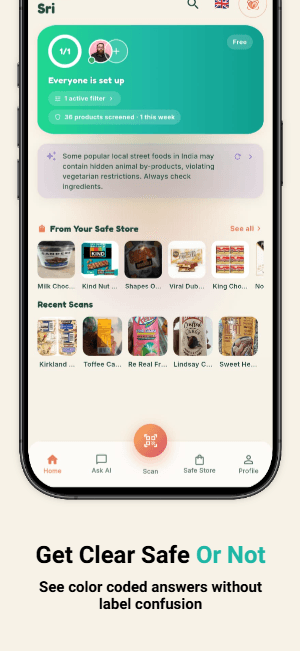
Furthermore, Food Scan Genius eliminates the paternalistic “bad food” scores seen in older wellness trackers. Through ScanGenius AI Insight, you receive objective, nuanced clinical context. The app simultaneously evaluates the item against the internationally recognized NOVA 1-4 food processing classification and Nutri-Score indices, giving you total transparency over emulsifiers, ultra-processed stabilizers, and excess saturated fats that can harm an inflamed digestive tract. When shopping for an entire family, our Multi-Household Profile engine screens everyone’s health parameters in a single two-second barcode scan, delivering named fail attributions such as “Fails for Sri (Gluten)” and “Safe for Maya (Peanuts).” Backed by real-time translation across 11 global languages, Food Scan Genius provides an uncompromising food safety companion completely free of charge, dismantling the predatory paywalls common in consumer allergen apps.
4. Related Food Safety & Dietary Guides
- Best Food Allergy Scanner App – Scan Food Labels Instantly — Food Allergy & Sensitivity Scanner Hub
- The 7 Best Free Food Scanner Apps of 2026 — best free food scanner apps
- Choosing the Best Barcode Scan App for Your Health — guide to choosing a barcode scanner app
- Food Scan Genius: World’s #1 Food Ingredient Scanner App — Food Scan Genius scanner app
5. Scientific & Health Authority References
- Celiac Disease Foundation Threshold Requirements
- European Food Safety Authority (EFSA) Additive Safety Regulations
- PubMed Research on Ultra-Processed Foods & Gut Microbiome Disruption
- World Health Organization Guidelines on Healthy Diets & Saturated Fats
6. How to Scan in 3 Simple Steps
- Step 1: Download the Food Scan Genius app for free on iOS or Android—with zero trial periods, paywalls, or credit card requirements.
- Step 2: Set up your personalized health profile by selecting ‘Celiac Disease / Strict Gluten-Free’, adding custom sensitivity tags (such as specific gums, seed oils, or artificial colors), and creating separate profiles for each family member.
- Step 3: Point your camera at any food product’s barcode for an instant 2-second audit trail powered by NutriGraph AST parsing, accompanied by transparent ScanGenius AI Insights, NOVA processing level, and clear family safety breakdowns.
Instant Gluten-Free Audit Trail
7. Frequently Asked Questions (FAQ)
Why isn’t a ‘wheat-free’ label sufficient when shopping gluten free for celiac?
A ‘wheat-free’ label only guarantees the absence of wheat; it does not protect you from barley, rye, malt, triticale, or cross-contaminated oats. For individuals managing biopsy-confirmed celiac disease, barley and rye proteins (hordein and secalin) trigger identical autoimmune mucosal damage and intestinal blunting as wheat gluten. Always insist on a certified ‘gluten-free’ seal or verify the sub-ingredients using Food Scan Genius to confirm the item contains zero prolamins from any gluten-containing grain.
How does Food Scan Genius catch hidden gluten that other scanning apps miss?
Most scanning apps use flat keyword matching that gets fooled by parenthetical sub-ingredients, obscure chemical designations, or localized derivative terms. Food Scan Genius utilizes the enterprise NutriGraph Database, which contains over 5,000,000 verified barcodes processed via recursive Abstract Syntax Tree (AST) parsing. The engine deconstructs nested multi-tier ingredient lists down to their root agricultural sources, catching hidden barley malt in complex flavorings and imported wheat dextrins while preventing false alarms on safe grains like buckwheat.
Can people with celiac disease safely consume products containing certified gluten-free wheat starch?
Yes, but with strict caveats. Certified gluten-free wheat starch (such as Codex wheat starch) has been specially processed and washed to remove gluten proteins down to well below the international 20 ppm threshold. While clinically safe for most celiac individuals, it is strictly unsafe for those with an IgE-mediated wheat allergy. Food Scan Genius differentiates between these conditions, allowing celiac shoppers to approve certified gluten-free wheat starch while alerting wheat-allergic family members automatically.
How does Food Scan Genius handle multi-person household shopping trips with diverse dietary needs?
Unlike apps that limit you to a single user profile or charge expensive subscriptions for multi-user options, Food Scan Genius offers 100% free multi-household profile screening. You can configure individual dietary profiles for every family member—combining celiac-safe protocols with sensitivities to dairy, seed oils, artificial food dyes, or nut allergies. A single 2-second scan evaluates the product against every profile simultaneously, delivering clear, named fail attribution like ‘Fails for Sri (Gluten)’ alongside comprehensive ScanGenius AI Insights.
Know What’s In Your Food Before You Buy — Scan Free Today
Never second-guess confusing grocery labels again. Download Food Scan Genius to uncover hidden additives, toxic dyes, and allergens for the whole household before you buy.