
1. Navigating Gluten-Free Thickeners: Culinary Chemistry and Clinical Vigilance in 2026
Stepping into gluten-free cooking or baking often feels like mastering an entirely new branch of organic chemistry. For decades, traditional home cooks and commercial culinary developers leaned on a single, forgiving crutch: standard wheat flour. Wheat roux binds pan gravies, softens pie fillings, and stabilizes velvety bisques because gluten forms an elastic protein matrix that traps expanding starch granules during gelatinization. When you eliminate gluten—whether due to celiac disease, non-celiac gluten sensitivity (NCGS), or autoimmune gut protocols—that safety net vanishes instantly. Attempting to replicate that delicate structural mouthfeel with an improper gluten free thickening agent often yields gummy custards, weeping fruit pies, gritty sauces, or broken emulsions.
Beyond the culinary frustration lies a more stressful clinical reality. For consumers managing autoimmune conditions, purchasing pre-packaged thickening powders, gravy mixes, or culinary binders is fraught with micro-contamination risks. The Celiac Disease Foundation Threshold Requirements emphasize that even foods containing more than 20 parts per million (ppm) of gluten can trigger intestinal villous atrophy, systemic inflammation, and prolonged antibody flare-ups. An innocent box of starch ground in a shared processing mill or blended with unlisted anticaking agents can turn a celebratory family dinner into weeks of debilitating gastrointestinal illness and malabsorption.
Moreover, modern processed and specialty functional foods frequently introduce heavily altered hydrocolloids under deceptive umbrella terms. Regulatory bodies like the European Food Safety Authority (EFSA) Additive Safety Regulations continually assess emulsifying gums and novel polysaccharides for manufacturing transparency, allergen labeling, and digestive tolerance. Yet supermarket aisles remain minefields. Discerning shoppers must constantly untangle ambiguous nomenclature—such as ‘modified food starch’, ‘vegetable gum’, or ‘dextrin’—which may or may not trace back to wheat, barley, or rye origins depending on manufacturing batch sourcing and geographic origin.
Culinary freedom should not demand a PhD in biochemistry or hours spent squinting through grocery store reading glasses. To cook with absolute confidence, you must master the fundamental scientific properties of each primary gluten free thickening agent—understanding precisely which hydrocolloid thrives under acidic conditions, which starch breaks down when frozen, and which gum delivers structural elasticity without causing digestive distress. Paired with modern dietary intelligence, this culinary mastery transforms anxious label-scrutinizing into seamless, safe, and delicious kitchen victories.
Scan Any Label for Hidden Additives and Allergens — Free
Never second-guess confusing grocery labels again. Download Food Scan Genius to uncover hidden additives, toxic dyes, and allergens for the whole household before you buy.


2. The Chemistry of Gluten-Free Thickeners: Performance Profiles and Hidden Gluten Traps
Every gluten free thickening agent possesses a unique molecular fingerprint, dictating its gelatinization temperature, freeze-thaw stability, shear resistance, and flavor clarity. Understanding their specific kitchen applications prevents culinary failure, while understanding supply-chain vulnerabilities protects your intestinal health:
- Cornstarch (Zea mays): The traditional workhorse. Best for dairy-based puddings, everyday pan gravies, and stir-fries. Cornstarch requires a boil (roughly 203°F / 95°C) to fully hydrate and clear its cloudy appearance. Culinary Limitation: It weeps water (syneresis) if frozen and thins out rapidly when exposed to high-acid ingredients like lemon juice or tomato paste. Hidden Danger: Standard commercial cornstarch is frequently processed on high-speed equipment shared with wheat starches without dedicated allergen flush protocols.
- Arrowroot Powder (Maranta arundinacea): A root starch prized for crystal-clear gloss, neutral flavor, and low-temperature gelatinization (around 140°F / 60°C). Perfect for glossy fruit pie glazes, acidic berry compotes, and quick pan reductions. Unlike cornstarch, arrowroot withstands acidic environments without breaking down. Culinary Limitation: Arrowroot turns slimy and stringy when whisked into dairy products. Supply Trap: Bulk bin arrowroot is notorious for industrial adulteration with cheaper sweet potato or tapioca starches processed in shared commodity mills.
- Tapioca Starch / Flour (Manihot esculenta): Derived from the cassava root, tapioca provides remarkable elasticity, chewy texture, and high freeze-thaw resilience. It is indispensable for gluten-free pizza doughs, frozen pot pies, and bubbling fruit crisps that need to survive freezing before baking. Culinary Limitation: Over-boiling or aggressive mechanical whisking turns tapioca unpleasantly ropey and adhesive.
- Potato Starch: A heavy, dense tuber starch that produces exceptional crispness in gluten-free fried batters and heavy country soups. It tolerates prolonged simmer times better than arrowroot. Crucial Distinction: Never confuse potato starch (extracted pure starch) with potato flour (ground whole dehydrated potato), which imparts a heavy earthy flavor and muddy texture.
- Xanthan Gum: A polysaccharide secreted by the bacterium Xanthomonas campestris. It does not thicken through starch swelling; rather, it creates a pseudoplastic pseudo-viscous network that suspends gas bubbles and prevents crumb crumble in gluten-free sandwich bread and pastries. Digestive Consideration: As highlighted in PubMed Research on Ultra-Processed Foods & Gut Microbiome Disruption, concentrated industrial hydrocolloids and emulsifiers can disrupt mucous layer integrity and alter microflora in sensitive individuals. Sneaky Allergen Trap: The bacteria are frequently fermented on wheat, corn, or soy nutrient broths, introducing trace antigenic proteins that evade basic label declarations.
- Guar Gum & Psyllium Husk: Guar gum (cold-soluble, extracted from guar beans) excels in cold applications like ice creams, dressings, and cold smoothies where heat cannot be applied. Psyllium husk, rich in soluble mucilage fibers, is the gold standard for rustic gluten-free bread baking, mirroring wheat gluten’s extensibility while complying with broader dietary recommendations like the World Health Organization Guidelines on Healthy Diets & Saturated Fats by promoting whole-food fiber intake.
Beyond individual characteristics, deceptive manufacturing loopholes pose massive hurdles. Watch out for:
- ‘Modified Food Starch’: If a product is manufactured in the United States, FDA regulations require wheat-derived starch to be declared. However, imported specialty condiments or ambiguous institutional bulk ingredients often slip through regulatory gaps.
- Shared Facility Cross-Contact: Pure starches are micro-fine airborne powders. Processing wheat flour and cornstarch in the same warehouse almost inevitably results in cross-contact unless verified by dedicated facility testing.
- Maltodextrin & Dextrins: Frequently added to commercial starch blends as free-flowing dispersants. While highly processed, European imports derived from wheat or barley malt can provoke severe non-celiac systemic symptoms.
- Anti-Caking Silicon Dioxides & Tricalcium Phosphates: Starches in seasoning packets and instant roux mixes often contain anticaking agents that utilize wheat flour carriers to absorb moisture during mechanical packaging.
3. Food Scan Genius vs. Legacy Methods: High-Precision Ingredient Intelligence
| Feature / Technology | Food Scan Genius | Fig App | Spoonful | Manual Label Reading |
|---|---|---|---|---|
| Cost & Accessibility | 100% Free Core Power (Zero Paywalls) | Freemium ($59/yr Paywall for Full Utility) | Strict Scan Caps (Limited free monthly scans) | Free (Requires significant time & knowledge) |
| Ingredient Parsing Engine | Enterprise NutriGraph (5M+ UPCs, Recursive AST) | Rule-based ingredient keyword matching | Crowdsourced & manual dietician database | Human visual review (High error/fatigue rate) |
| Multi-Household Screening | Yes (Single scan with named fail attribution) | Single primary user focus | Limited multi-profile capability | Manual cross-referencing for each family member |
| Custom Sensitivities & Diets | 39 Built-in Profiles + Infinite Custom Additions | Preset diets with limited manual tags | Fixed FODMAP & basic allergen sets | Infinitely customizable but highly fallible |
| Holistic Health Context | ScanGenius AI + NOVA 1-4 + Nutri-Score (Non-moralizing) | Binary Red/Yellow/Green alerts | Dietitian notes without processing scales | None (Requires external manual research) |
When screening complex culinary staples like a commercial gluten free thickening agent, basic keyword matching repeatedly falls short. Primitive scanner apps simply search for the word ‘wheat’ in the raw text string. If a label reads ‘tapioca starch, natural flavor, modified food starch (from maize), xanthan gum’, standard tools might either flag an unconfirmed false alarm or miss a hidden wheat carrier hidden three levels deep in the natural flavoring compound. Food Scan Genius bypasses this fragility with our enterprise NutriGraph Database, mapping over 5,000,000 verified UPC and EAN barcodes globally. Our proprietary recursive Abstract Syntax Tree (AST) engine decomposes every parenthetical nested ingredient clause into its root components, evaluating fermentation substrates, processing aids, and botanical origins with clinical precision.
Equally critical is the practical grocery reality of feeding an entire home. Cooking gluten-free rarely happens in a vacuum; your household might juggle celiac disease alongside peanut allergies, corn sensitivities, or seed-oil intolerances. While rival apps lock essential functionality behind paywalls like Fig’s $59/year subscription or restrict your weekly basket checks with Spoonful’s harsh scan throttles, Food Scan Genius delivers 100% free core power with zero paywalls. With our Multi-Household Family Profiles, a single two-second barcode scan screens every family member simultaneously, instantly generating clear, actionable attribution—such as ‘Fails for Sri (Gluten)’ alongside ‘Safe for Maya (Dairy-Free)’. Combined with real-time translation across 11 global languages and nuanced ScanGenius AI Insights displaying transparent NOVA 1-4 ultra-processing tiers and Nutri-Scores without patronizing moral scores, you hold total control over your kitchen’s health and safety.
4. Related Food Safety & Dietary Guides
- Best Food Allergy Scanner App – Scan Food Labels Instantly — Food Allergy & Sensitivity Scanner Hub
- The 7 Best Free Food Scanner Apps of 2026 — best free food scanner apps
- Choosing the Best Barcode Scan App for Your Health — guide to choosing a barcode scanner app
- Food Scan Genius: World’s #1 Food Ingredient Scanner App — Food Scan Genius scanner app
5. Scientific & Health Authority References
- Celiac Disease Foundation Threshold Requirements
- European Food Safety Authority (EFSA) Additive Safety Regulations
- PubMed Research on Ultra-Processed Foods & Gut Microbiome Disruption
- World Health Organization Guidelines on Healthy Diets & Saturated Fats
6. How to Scan in 3 Simple Steps
- Download the Food Scan Genius app for free on iOS or Android with zero scan caps or hidden paywalls.
- Configure your Multi-Household Family Profile: toggle ‘Gluten-Free’ (Celiac/NCGS thresholds) and enter custom dietary sensitivities (e.g., corn-derived xanthan gum, sulfites, or seed oils).
- Scan any starch, sauce mix, or pre-packaged thickening agent barcode in under 2 seconds to get an instant, recursive AST audit trail with named safety alerts for your entire household.
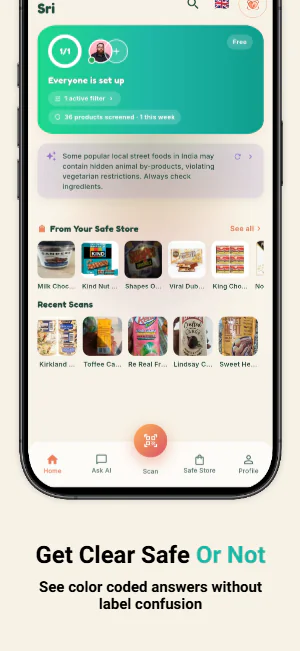
Instant Gluten-Free Audit Trail
7. Frequently Asked Questions (FAQ)
Can I substitute cornstarch for all-purpose wheat flour 1:1 as a gluten free thickening agent?
No. Pure starches like cornstarch have double the thickening power of wheat flour because flour contains proteins (gluten) and fiber that do not swell. As a general rule, use 1 tablespoon of cornstarch (mixed into a cold slurry first) for every 2 tablespoons of wheat flour called for in traditional recipes. Additionally, always scan your cornstarch brand with Food Scan Genius to confirm it is processed in a certified gluten-free facility free of wheat cross-contact.
Why did my fruit pie filling turn completely runny after using arrowroot powder?
Arrowroot powder is exceptional for fruit fillings, but it has two major culinary vulnerabilities: prolonged high heat and freezing. If an arrowroot-thickened pie is baked at excessive temperatures for too long, the swollen starch granules burst and collapse, losing their gelatinous structure and turning watery. For extended high-heat baking, tapioca starch is a more stable gluten free thickening agent.
Is xanthan gum safe for people with celiac disease?
Pure xanthan gum is gluten-free by definition, but its growth substrate matters. The bacterium Xanthomonas campestris is fermented using carbohydrates such as corn, soy, or occasionally wheat starch hydrolysates. While the end product is extensively purified, highly sensitive individuals can experience adverse reactions. Food Scan Genius utilizes recursive AST parsing across 5M+ barcodes to isolate manufacturer production notes, alerting you to potential fermentation substrate risks.
How does Food Scan Genius catch hidden gluten in commercial thickeners when other apps miss it?
Most consumer apps rely on flat string-matching algorithms that scan ingredient lists for simple keywords like ‘wheat’ or ‘barley’. Food Scan Genius is powered by the enterprise NutriGraph Database, which applies recursive Abstract Syntax Tree (AST) parsing to deconstruct complex, nested sub-ingredients (such as ‘seasoning [starch, autolyzed yeast extract, natural flavor]’). This enables the app to trace parenthetical additives back to their botanical source and catch undeclared gluten vectors instantly.
Know What’s In Your Food Before You Buy — Scan Free Today
Never second-guess confusing grocery labels again. Download Food Scan Genius to uncover hidden additives, toxic dyes, and allergens for the whole household before you buy.