1. Why Choosing Gluten-Free Grains Is Harder Than It Looks in 2026
If you have celiac disease, non-celiac gluten sensitivity, or a wheat allergy in the family, you know the feeling. You stand in the grain aisle holding a bag of rice pilaf or a box of oats, and you wonder whether it is safe. Grains are the foundation of most pantries, so one wrong guess has big consequences. Many people have lost a week to symptoms after trusting a front-of-pack claim. If that has happened to you, the frustration is justified, and you did nothing wrong.
The difficulty is that gluten is a protein found in wheat, barley, and rye, and these grains are hidden in much of the food supply. A grain that is naturally gluten free, such as millet, can still be contaminated with gluten between the field and your kitchen. It may share harvesting equipment with wheat, be milled on shared lines, or be packed in a facility that also handles barley. The Celiac Disease Foundation Threshold Requirements and related guidance explain why this matters. For people with celiac disease, even small repeated exposures can trigger an immune response and intestinal damage, whether or not obvious symptoms appear.
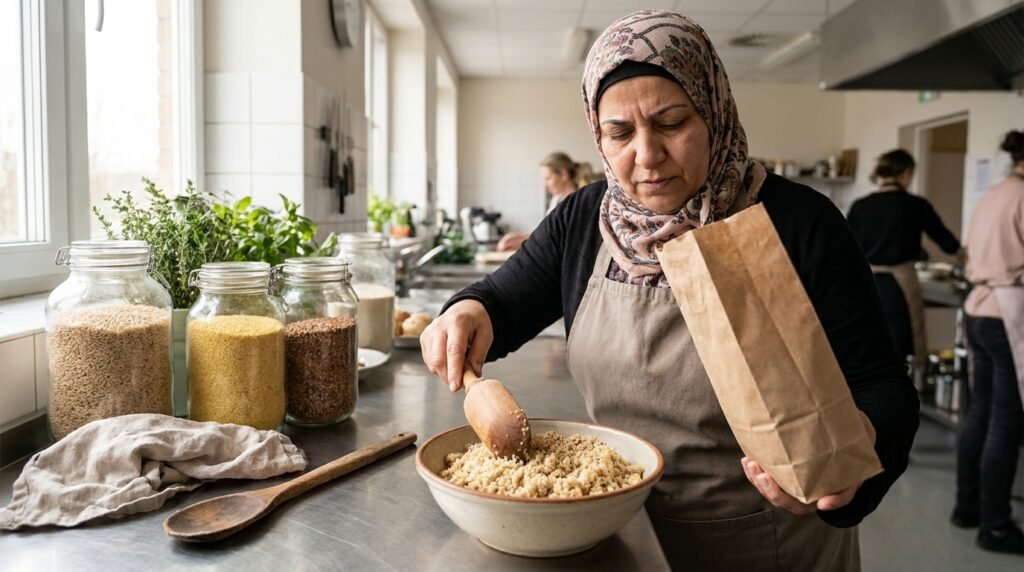
Plenty of grains are safe, and a varied gluten-free pantry can be nutritious and satisfying. Quinoa, brown and white rice, millet, sorghum, buckwheat, amaranth, teff, wild rice, corn, and certified gluten-free oats all work. The challenge is knowing which products on the shelf deliver on that promise. A balanced approach also helps. The World Health Organization Guidelines on Healthy Diets & Saturated Fats encourage whole grains as part of a healthy eating pattern. That includes people who avoid gluten, who can get fiber, B vitamins, and minerals from naturally gluten-free whole grains instead of relying on refined gluten-free breads and snacks.
This guide walks through the best grains that are gluten free, how to cook them, and where the traps are. It also shows how a barcode scan can replace the anxiety of reading tiny print in a crowded aisle.
Scan Any Label for Hidden Additives and Allergens — Free
Never second-guess confusing grocery labels again. Download Food Scan Genius to uncover hidden additives, toxic dyes, and allergens for the whole household before you buy.


2. Sneaky Ingredients and Labeling Loopholes in the Gluten-Free Grain Aisle
Knowing the safe grains is only half the job. The other half is recognizing how a naturally safe grain becomes unsafe, or how a risky product looks safe. These are the most common traps we see:
- Oats without certification. Oats do not contain gluten, but conventional oats are often contaminated with wheat, barley, or rye during growing, transport, and milling. Choose oats labeled certified gluten free, and note that a small number of people with celiac disease also react to avenin, a protein in oats. Introduce them with your care team’s guidance.
- ‘Wheat-free’ is not ‘gluten-free.’ A product can leave out wheat and still contain barley malt, rye, or ingredients derived from them. Spelt, kamut, farro, freekeh, bulgur, semolina, and triticale are all wheat relatives that contain gluten, even though some sound like ancient or alternative grains.
- Hidden barley malt. Malt extract, malt syrup, and malt flavoring appear in some rice crisps, breakfast cereals, and granola. They are easy to miss because they often sit deep in the ingredient list.
- Bulk bins and shared milling. Scoops move between bins, and grains settle into each other. Even naturally gluten-free millet, buckwheat, or sorghum from a bulk bin carries real cross-contact risk compared with a sealed, tested package.
- Seasoned grain mixes and pilafs. Rice and quinoa blends often include orzo, flavor packets, soy sauce powder, or hydrolyzed wheat protein. The grain is safe, but the seasoning may not be.
- Binders, starches, and additives in processed products. Gluten-free crackers, cereals, and cooked-grain pouches often rely on modified starches, gums, and flavorings. The European Food Safety Authority (EFSA) Additive Safety Regulations show how heavily these ingredients are evaluated. Additives are not inherently a gluten risk, but the source of a starch or flavoring is not always obvious on a label.
Gluten-free does not automatically mean nutritious, either. Many packaged gluten-free products are ultra-processed, built from refined starches with added fats, sugars, and emulsifiers. Emerging science, including PubMed Research on Ultra-Processed Foods & Gut Microbiome Disruption, suggests that heavily processed eating patterns may affect gut health. That is a reason to favor intact whole grains over processed substitutes where you can, though it is not a reason for guilt about occasional convenience foods.
3. Head-to-Head: Scanning With Food Scan Genius vs. Other Ways to Check Grains
| Dimension | Food Scan Genius | Fig | Spoonful | Manual Label Reading |
|---|---|---|---|---|
| Cost | 100% free core features, zero paywalls | $59/year | Limited scans | Free, but time-consuming |
| Ingredient Depth | NutriGraph Database: 5,000,000+ verified UPC/EAN barcodes with recursive sub-ingredient parsing | Label-based ingredient matching | Label-based ingredient matching | Depends on your own knowledge of hidden terms |
| Dietary Profiles | 39 profiles plus custom sensitivities | Preset profiles | Preset profiles | One person at a time, from memory |
| Family Screening | Multi-household profiles; one scan screens everyone, with named results like ‘Fails for Sri (Gluten)’ | Primarily individual | Primarily individual | Repeat the process for each person |
| Languages | 11 global languages with real-time in-app translation | Varies | Varies | Requires you to translate it yourself |
Most grain shopping errors come from ingredient lists, not from the grain itself. A bag of quinoa has one ingredient, but a quinoa-and-rice blend may have a dozen, and some of those have sub-ingredients of their own. Food Scan Genius is powered by the NutriGraph Database, which uses recursive parsing to unpack compound ingredients layer by layer. A seasoning blend containing a flavoring containing a wheat-derived component is flagged, even when the wheat is never named on the front of the package. A scan also gives you an audit trail you can review later, which helps when you are trying to work out what caused a reaction.
The ScanGenius AI Insight adds context instead of a single judgment. It shows each product’s NOVA 1-4 classification and Nutri-Score so you can see whether a gluten-free grain product is minimally processed or heavily formulated. It does not reduce your food to a good-or-bad number. If a cooked-rice pouch is safe for your gluten profile but contains additives you have chosen to avoid, you will see both facts. You can build a custom sensitivity for seed oils, specific dyes, or any additive you want to watch. For households with mixed needs, family profiles let one scan show who the product works for and who it does not. Always follow your physician’s or dietitian’s advice, since an app supports your decisions and does not replace medical care.
4. Related Food Safety & Dietary Guides
- Best Food Allergy Scanner App – Scan Food Labels Instantly — Food Allergy & Sensitivity Scanner Hub
- The 7 Best Free Food Scanner Apps of 2026 — best free food scanner apps
- Choosing the Best Barcode Scan App for Your Health — guide to choosing a barcode scanner app
- Food Scan Genius: World’s #1 Food Ingredient Scanner App — Food Scan Genius scanner app
5. Scientific & Health Authority References
- Celiac Disease Foundation Threshold Requirements
- European Food Safety Authority (EFSA) Additive Safety Regulations
- PubMed Research on Ultra-Processed Foods & Gut Microbiome Disruption
- World Health Organization Guidelines on Healthy Diets & Saturated Fats
6. How to Scan in 3 Simple Steps
- Download Food Scan Genius free on iOS or Android. There is no paywall on core scanning, so you can check every grain, flour, and cereal in your pantry at no cost.
- Set up your profile. Choose the Gluten-Free or Celiac profile from the 39 supported dietary profiles, add family members under multi-household profiles, and add custom sensitivities such as seed oils or specific additives. Pick your preferred language from the 11 available.
- Scan the barcode of any grain product. In about two seconds you will see a pass or fail for each person, such as ‘Fails for Sri (Gluten)’, with the exact ingredient flagged, the NOVA 1-4 class, the Nutri-Score, and an audit trail you can revisit.
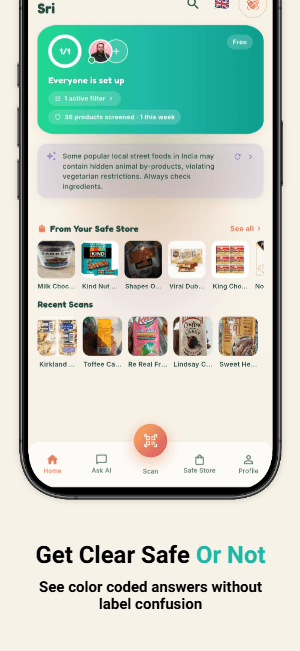
Instant Gluten-Free Audit Trail
7. Frequently Asked Questions (FAQ)
Which grains are naturally gluten free?
Naturally gluten-free grains and pseudocereals include rice (white, brown, black, and wild), corn, millet, sorghum, quinoa, amaranth, buckwheat, teff, and fonio. Oats are naturally gluten free but are frequently cross-contaminated, so choose certified gluten-free oats. Wheat, barley, rye, spelt, kamut, farro, freekeh, bulgur, semolina, and triticale all contain gluten. Even naturally safe grains can pick up gluten during processing, so scanning the specific package with Food Scan Genius is the most reliable way to confirm that a given product fits your profile.
Is buckwheat safe for people with celiac disease, since it has ‘wheat’ in its name?
Yes. Despite the name, buckwheat is not related to wheat. It is the seed of a plant in the same family as rhubarb, and it is naturally gluten free. The caution is the same as for other grains: buckwheat flour and groats may be processed in facilities that also handle wheat, and some buckwheat noodles (soba) are blended with wheat flour. Scan the barcode in Food Scan Genius to have every ingredient and sub-ingredient checked against your gluten profile.
How do I cook gluten-free grains so they turn out well?
Rinse quinoa to remove its bitter coating, then simmer 1 part quinoa to 2 parts water for about 15 minutes. Cook brown rice at roughly 1:2 for 40 to 45 minutes. Toast millet briefly, then simmer at about 1:2.5 for 20 minutes. Buckwheat groats need about 1:2 for 10 to 15 minutes. Teff cooks at about 1:3 in 15 to 20 minutes, and sorghum at about 1:3 for 50 to 60 minutes. Amaranth takes roughly 20 minutes at 1:2.5 and turns porridge-like. Times vary by brand, so check the package, and scan it first to confirm it is gluten safe.
Does a ‘gluten-free’ label guarantee a grain product is safe, and how does Food Scan Genius help?
A gluten-free label is a strong starting point. In the United States, labeled products must contain less than 20 parts per million of gluten, which is the level generally accepted as safe for most people with celiac disease. But labeling rules vary by country, and some people are more sensitive than the threshold assumes. Food Scan Genius checks the full ingredient list of each scanned product, including sub-ingredients, against your profile, and its free family profiles show which household members a product fails for. It supports your decision but does not replace guidance from your doctor or dietitian.
Know What’s In Your Food Before You Buy — Scan Free Today
Never second-guess confusing grocery labels again. Download Food Scan Genius to uncover hidden additives, toxic dyes, and allergens for the whole household before you buy.