1. Navigating Great Lakes Cheese in 2026: Balancing Convenience, Dairy Sensitivities, and Hidden Allergens
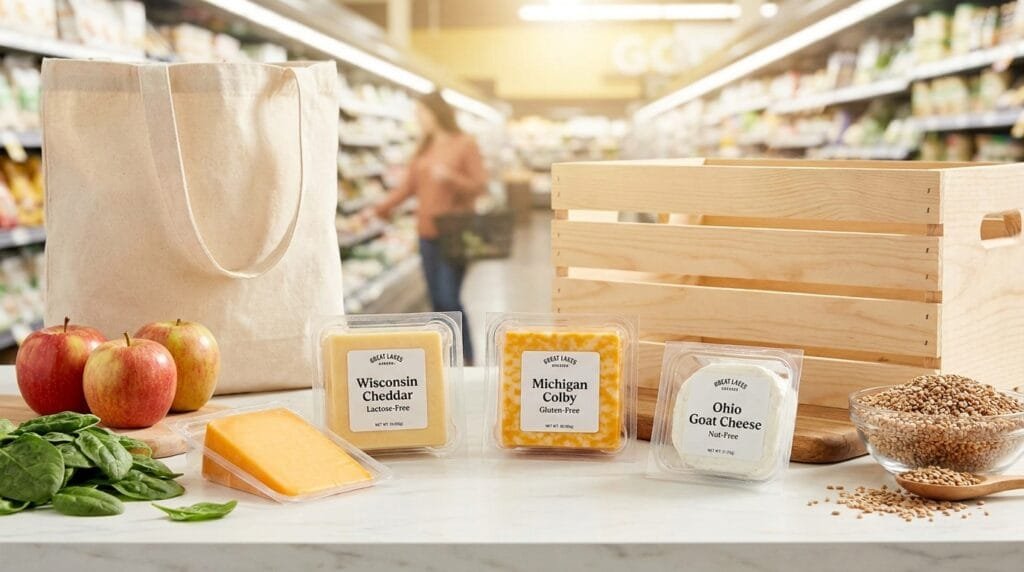
Standing in the refrigerated dairy aisle of your local supermarket, you are almost certainly looking at dairy manufactured, processed, or packaged by Great Lakes Cheese—even if their brand name is not front and center. As one of North America’s largest private-label and branded dairy packagers, Great Lakes Cheese produces shredded blends, snacking blocks, artisanal cheddars, and sliced deli selections found in millions of household carts every week. For shoppers navigating severe immune-mediated reactions, celiac disease, or complex gastrointestinal sensitivities, this omnipresence brings a dual sense of convenience and clinical anxiety. Dairy products are frequently viewed as simple, single-ingredient staples, yet commercial scale transforms cheese manufacturing into a sophisticated discipline where sub-ingredients, processing aids, and cross-contact vectors constantly shift.
The baseline legal protections established under the FDA Food Allergen Labeling & Consumer Protection Act (FALCPA) mandate the clear identification of major allergens like cow’s milk on all packaged goods. While FALCPA simplifies identifying the core dairy substrate for those with life-threatening IgE-mediated milk allergies, it offers zero nuance for the spectrum of shoppers dealing with lactose malabsorption, casein intolerances, or secondary allergic triggers. A parent trying to feed a toddler with a non-IgE dairy enteropathy, a runner managing systemic inflammation, or an individual juggling celiac disease and histamine intolerance cannot rely on standard mandatory bold-print warnings alone.
Furthermore, contemporary dietary management goes far beyond the singular focus on dairy proteins. Consumers today balance therapeutic regimens requiring tight oversight of lipid intake and systemic vascular markers, aligning their meal planning with the World Health Organization Guidelines on Healthy Diets & Saturated Fats. When selecting natural versus processed formats of great lakes cheese, consumers must weigh saturated fatty acid density, sodium levels, and moisture-to-protein ratios. Doing this manually while squinting at distorted thermal-printed ingredient panels in the middle of a crowded grocery aisle is exhausting, time-consuming, and fraught with medical risk.
The emotional burden of food safety falls heaviest when you are provisioning for an entire household with divergent biological needs. One family member may require strictly gluten-free shreds with certified non-grain anti-caking starches, another needs aged, virtually zero-lactose Swiss for gut comfort, while a third reacts violently to synthetic preservatives or annatto food colorings. To safeguard your dinner table without descending into hours of manual research, you need immediate, deep-tier nutritional intelligence that deciphers every layer of commercial cheese production in seconds.
Scan Any Label for Hidden Additives and Allergens — Free
Never second-guess confusing grocery labels again. Download Food Scan Genius to uncover hidden additives, toxic dyes, and allergens for the whole household before you buy.


2. The Science of Cheese Sourcing: Deceptive Additives, Anti-Caking Loopholes, and Dairy Processing
To safely navigate the expansive product catalog of great lakes cheese, consumers must understand the fundamental biochemical difference between natural raw curd cheeses and industrialized, multi-component cheese blends. Cheese manufacturing is not merely coagulating milk; it involves chemical preservation, acidification methods, textural stabilization, and surface mold inhibition. In mass-market formulations, these additives can introduce invisible triggers for sensitized consumers.
- Anti-Caking Agents & Hidden Starch Blends: Pre-shredded varieties of great lakes cheese rely on powdered anti-caking agents to prevent moisture from causing clumps. While wood-derived microcrystalline cellulose is common, manufacturers frequently blend it with potato starch, cornstarch, or unspecified food starches. For consumers managing severe wheat allergies or non-celiac gluten sensitivity, unverified starches processed on shared grain mill lines present real cross-contamination threats.
- Natamycin (Mold Inhibitors): Often declared near the bottom of shredded and sliced packages, natamycin is an antimycotic polyene compound utilized to suppress post-packaging surface mold. Regulatory frameworks like the European Food Safety Authority (EFSA) Additive Safety Regulations continually assess safe intake thresholds for such preservation agents, yet individuals with heightened gut sensitivities or mast cell activation disorders frequently report adverse gastrointestinal reactions to residual surface fungicides.
- Animal Rennet vs. Microbial Coagulants: The enzymatic engine of curd formation traditionally relies on animal-derived rennet (chymosin sourced from calf stomach linings), but modern cost structures favor fermentation-produced microbial enzymes. While safe for many, individuals adhering to strict vegetarian, Kosher, or Halal regimens require definitive verification of enzymatic origin, which is rarely clarified on vague “enzymes” label declarations.
- The Lactose Aging Curve: Lactose malabsorption affects up to 68% of the global population. Great Lakes Cheese varieties such as naturally aged Extra Sharp Cheddar, Swiss, and Parmesan undergo prolonged bacterial fermentation where lactic acid bacteria consume nearly all lactose, rendering them naturally low-lactose or lactose-free (<0.1g per serving). Conversely, younger, higher-moisture cheeses—like Colby, Monterey Jack, or processed snack sticks—retain significant whey and residual lactose, precipitating immediate gastrointestinal distress.
- Annatto, Beta-Carotene, and Coloring Sensitivities: To achieve signature vibrant yellow hues in American and Cheddar varieties, processors utilize annatto extract (Bixa orellana). Though botanically derived, annatto is a known trigger for pseudo-allergic cutaneous reactions, urticaria, and gastrointestinal inflammation in sensitive subsets of the population who mistake their flares for lactose intolerance.
- Ultra-Processed Emulsifiers in Melting Cheeses: Certain great lakes cheese blends engineered for high meltability and shelf stability incorporate sodium phosphates, potassium tartrates, and modified dairy solids. Peer-reviewed literature, including PubMed Research on Ultra-Processed Foods & Gut Microbiome Disruption, reveals that these inorganic emulsifiers can alter mucosal barrier integrity and disturb delicate colonic microbiota balance over time.
3. Smarter Dairy Auditing: Food Scan Genius vs. Legacy Scanning Apps & Manual Label Reading
| Feature / Capability | Food Scan Genius | Fig (Subscription App) | Spoonful | Manual Label Reading |
|---|---|---|---|---|
| Core Access & Pricing | 100% Free Core Power (No Paywalls) | Requires $59/year Paywall | Free Tier Capped with Low Scan Limits | Free, but High Error Rate |
| Database Scale & Parsing | 5M+ UPCs via Enterprise NutriGraph AST | Proprietary list, limited sub-ingredients | Moderate database, static rules | Zero parsing of hidden compounds |
| Dietary Profile Customization | 39 Presets + Custom Sensitivities (Natamycin, Dyes) | Fixed dietary templates | Focus primarily on Low-FODMAP | Impossible for complex overlap |
| Multi-Person Family Scanning | Multi-Household Profiles (Named Fail Attribution) | Single user focus per scan | Single profile only | Mental calculation fatigue |
| Nutritional Health Context | ScanGenius AI (NOVA 1-4 & Nutri-Score) | Binary Yes/No flags | Stoplight system (Red/Yellow/Green) | Requires nutrition science background |
| Global Language Translation | 11 Global Languages (Real-time in-app) | English only | English only | Manual dictionary lookups |
When selecting dairy products, traditional ingredient reading fails because commercial cheese production relies heavily on nested parenthetical structures—such as “pasteurized milk, cheese cultures, salt, enzymes, anti-caking agent (potato starch, powdered cellulose, natamycin).” Legacy consumer scanning tools frequently rely on basic keyword matching that misses nested derivatives or issues blanket warnings that unnecessarily restrict your diet. Food Scan Genius solves this problem at an architectural level by deploying the enterprise NutriGraph Database. Covering more than 5,000,000 verified UPC and EAN barcodes, NutriGraph employs recursive Abstract Syntax Tree (AST) parsing to dissect every sub-ingredient, stabilizer, and processing enzyme, providing an audit trail you can trust unconditionally.
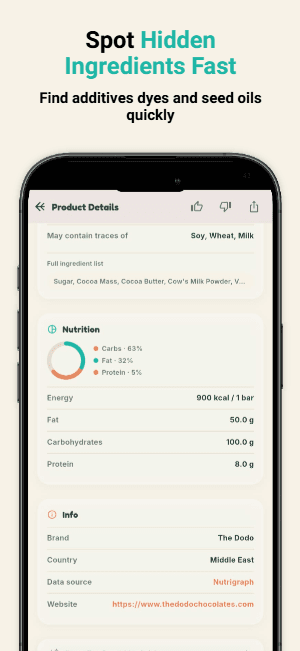
Rather than relying on arbitrary, moralizing food scores that label dairy as inherently “good” or “bad,” the platform delivers ScanGenius AI Insight. This provides nuanced clinical context, categorizing products using the internationally recognized NOVA 1-4 food processing classification and official Nutri-Score data. Whether you are managing celiac disease, strict vegan requirements, or a rare sensitivity to annatto or natamycin, you can customize across 39 distinct dietary profiles or build bespoke sensitivity rules. Best of all, Food Scan Genius’s Multi-Household Family Profiles allow you to screen for your entire family in a single scan, instantly showing clear, personalized alerts like “Fails for Sri (Gluten)” or “Safe for Maya (Lactose-Free),” fully translated in real time across 11 global languages with zero paywalls.
4. Related Food Safety & Dietary Guides
- Best Food Allergy Scanner App – Scan Food Labels Instantly — Food Allergy & Sensitivity Scanner Hub
- The 7 Best Free Food Scanner Apps of 2026 — best free food scanner apps
- Choosing the Best Barcode Scan App for Your Health — guide to choosing a barcode scanner app
- Food Scan Genius: World’s #1 Food Ingredient Scanner App — Food Scan Genius scanner app
5. Scientific & Health Authority References
- FDA Food Allergen Labeling & Consumer Protection Act (FALCPA)
- European Food Safety Authority (EFSA) Additive Safety Regulations
- PubMed Research on Ultra-Processed Foods & Gut Microbiome Disruption
- World Health Organization Guidelines on Healthy Diets & Saturated Fats
6. How to Scan in 3 Simple Steps
- Download the free Food Scan Genius app for iOS or Android with zero subscriptions, paywalls, or scan limits.
- Configure your Multi-Household Family Profiles by selecting from 39 clinical dietary frameworks or setting custom sensitivities for natamycin, annatto, or seed oils.
- Point your camera at any Great Lakes Cheese barcode in the supermarket aisle to receive an instant, sub-second AST-verified ingredient safety analysis.
Personalized Match & AI Insight
7. Frequently Asked Questions (FAQ)
Are shredded great lakes cheese products safe for individuals with severe celiac disease?
Natural block cheeses from Great Lakes Cheese are naturally gluten-free; however, shredded varieties utilize anti-caking agents such as potato starch, cornstarch, or powdered cellulose to prevent clumping. While typically gluten-free, these blends can carry cross-contamination risks depending on the milling facilities used. Food Scan Genius uses recursive AST parsing via its NutriGraph database to identify ambiguous starches and flag potential grain cross-contact vectors instantly.
Can people with lactose intolerance safely consume Great Lakes Cheese cheddars?
Yes, many aged varieties of great lakes cheese, including their sharp and extra-sharp cheddars, Swiss, and provolone, undergo extensive natural bacterial aging that consumes nearly all lactose sugar, reducing levels to below 0.1 grams per serving. ScanGenius AI Insights analyzes the specific curing profile of each cheese product so you can distinguish aged, virtually lactose-free varieties from high-lactose fresh cheeses like Monterey Jack or processed cheese snacks.
How does Food Scan Genius identify if Great Lakes Cheese varieties use vegetarian-safe enzymes?
Many dairy labels simply state ‘enzymes’ without clarifying whether they stem from animal rennet (derived from calf stomach lining) or microbial/plant fermentation. Food Scan Genius matches the exact UPC against its 5,000,000+ item NutriGraph Database, decoding manufacturer-specific supplier filings to clarify whether the coagulating agent is microbial, vegetarian, Kosher-certified, or traditional animal rennet.
Why does Food Scan Genius flag certain Great Lakes Cheese products under the NOVA classification?
Natural chunk cheeses are categorized as NOVA 3 (processed culinary foods) because they consist simply of milk, salt, and fermentation cultures. However, pasteurized processed cheese food slices or flavored cheese spreads often contain added emulsifying salts (like sodium phosphates), coloring agents, and whey concentrates, shifting them to NOVA 4 (ultra-processed foods). ScanGenius AI Insight highlights these classifications objectively so consumers can make informed decisions without simplistic, moralizing food judgment.
Know What’s In Your Food Before You Buy — Scan Free Today
Never second-guess confusing grocery labels again. Download Food Scan Genius to uncover hidden additives, toxic dyes, and allergens for the whole household before you buy.