
1. Why Finding Keto Friendly Bagels Is So Frustrating in 2026
If you have ever stood in a grocery aisle holding a bag that says ‘Keto’ in bold letters, flipped it over, and felt your stomach sink at the label, you are not alone. Bagels are one of the hardest foods to give up on a low-carb diet. A traditional bagel can carry 50 to 60 grams of carbohydrate, which is often more than a whole day’s allowance for someone aiming for 20 to 30 grams of net carbs. Craving one does not mean you lack willpower. It means a comforting, ritual food has been taken off your menu, and the replacements often taste like cardboard or cause digestive trouble.
The shopping problem is getting harder, not easier. ‘Keto’ is a marketing term, not a regulated nutrition claim, so a product can use it with very little oversight. One brand may calculate net carbs by subtracting every gram of fiber, sugar alcohol and novel sweetener. Another may use a tiny serving size, such as a thin half-bagel, to make the numbers look better. Shoppers managing type 2 diabetes, prediabetes, PCOS, epilepsy-related ketogenic therapy or weight loss are left doing arithmetic in the aisle, often while managing allergies or sensitivities at the same time.
There is also a quality question. Many low-carb breads and bagels reach their macros through heavy processing: isolated fibers, wheat protein concentrates, gums and refined oils. A growing body of work, including PubMed Research on Ultra-Processed Foods & Gut Microbiome Disruption, is examining how highly processed formulations may affect gut health. That does not make every keto bagel ‘bad.’ It does mean the carb count alone is an incomplete picture, and you deserve the whole story.
Allergen safety adds another layer. Many keto bagels replace wheat flour with almond flour, coconut flour, lupin, eggs or dairy, while others lean on vital wheat gluten. Under the FDA Food Allergen Labeling & Consumer Protection Act (FALCPA), major allergens such as wheat, tree nuts, milk, egg and soy must be clearly declared. But ‘low-carb’ and ‘gluten-free’ are not the same thing, and many shoppers learn that the hard way.
Scan Any Label for Hidden Additives and Allergens — Free
Never second-guess confusing grocery labels again. Download Food Scan Genius to uncover hidden additives, toxic dyes, and allergens for the whole household before you buy.


2. Sneaky Ingredients and Label Loopholes in Keto Friendly Bagels
Because we cannot vouch for every formula (recipes change, and regional versions differ), we do not crown a single ‘best’ bagel here. Instead, we teach you what separates a genuinely low-carb option from a clever package. When you compare keto friendly bagels, watch for these common traps:
- Unregulated ‘keto’ and ‘net carb’ claims: There is no legal definition of net carbs on a US label. Always start with Total Carbohydrate, then check how fiber and sugar alcohols were subtracted. Different brands subtract very differently.
- Shrunken serving sizes: A ‘bagel thin’ or half-bagel serving can make 4 grams of net carbs look impressive, but if you eat the whole bagel, your count doubles. Check servings per package.
- Vital wheat gluten and wheat protein isolates: These keep carbs low and texture chewy, but they are concentrated wheat. They are not safe for celiac disease or wheat allergy, even though the bagel is ‘low-carb.’ Wheat must be declared, but the front of the package may not make this obvious.
- Isolated fibers (inulin, chicory root, resistant starch, oat fiber): These lower the net carb math, but some people experience bloating, gas or cramping, and the carb-lowering effect can vary from person to person. Look for them in the ingredient list.
- Sugar alcohols and novel sweeteners: Maltitol can still raise blood glucose for some people, while others like erythritol or allulose behave differently. Individual responses vary, so monitor how you feel and, if relevant, your glucose readings.
- Refined seed oils and emulsifiers: Soybean, canola or sunflower oils, along with gums, mono- and diglycerides or cellulose, often appear in shelf-stable low-carb bakery. Regulators evaluate additives individually, as described in the European Food Safety Authority (EFSA) Additive Safety Regulations, but your personal preferences or sensitivities may be stricter than the legal minimum.
Keto-style eating also overlaps with broader nutrition advice. The World Health Organization Guidelines on Healthy Diets & Saturated Fats encourage attention to fat quality, so a bagel loaded with cream-cheese-style fillings or processed oils deserves a second look, even when the carb count is low. A thoughtful choice weighs carbs, fiber, protein, fat sources, allergens and processing together, ideally with guidance from your clinician or dietitian.
3. Food Scan Genius vs. Other Ways to Vet Keto Bagels
| Dimension | Food Scan Genius | Fig | Spoonful | Manual Label Reading |
|---|---|---|---|---|
| Cost | 100% free core features, zero paywalls | $59/year | Limited scans | Free, but time-consuming |
| Database depth | NutriGraph: 5,000,000+ verified UPC/EAN barcodes | Varies by product | Varies by product | Only what the package shows |
| Sub-ingredient analysis | Recursive AST parsing of nested ingredients | Not a core differentiator | Not a core differentiator | Depends on your expertise |
| Personalization | 39 dietary profiles plus custom sensitivities (seed oils, dyes, additives) | Preset profiles | Preset profiles | Manual memory and notes |
| Family and language support | Multi-household profiles with named fail attribution; 11 languages with real-time translation | Individual focus | Individual focus | Not applicable |
Vetting keto friendly bagels takes more than a quick glance at the nutrition panel, because the risks hide inside nested ingredients. A ‘seasoning blend’ or ‘bagel flavor’ may contain components that never appear on the front of the pack. Food Scan Genius is powered by the NutriGraph Database and uses recursive AST parsing to break compound ingredients into their sub-ingredients. That lets the app catch wheat gluten, a particular seed oil or a specific additive that a skim-read would miss. You can choose from 39 supported dietary profiles, including low-carb and gluten-related options, and add your own custom sensitivity for things like canola oil, certain dyes or an emulsifier you avoid.
Just as important is how the results are delivered. ScanGenius AI Insight offers nuanced context rather than a single moralizing score. It shows NOVA 1-4 classification and Nutri-Score alongside plain-language explanations, so you can see why a bagel with 5 grams of net carbs might still be ultra-processed, or why a higher-fiber option may suit you better. With Multi-Household Family Profiles, one scan screens everyone at your table and names who is affected, such as ‘Fails for Sri (Gluten),’ so the low-carb eater, the celiac child and the nut-allergic guest can all be considered at once. Real-time translation across 11 languages helps when you shop for imported products or share the household’s shopping duties.
4. Related Food Safety & Dietary Guides
- Best Food Allergy Scanner App – Scan Food Labels Instantly — Food Allergy & Sensitivity Scanner Hub
- The 7 Best Free Food Scanner Apps of 2026 — best free food scanner apps
- Choosing the Best Barcode Scan App for Your Health — guide to choosing a barcode scanner app
- Food Scan Genius: World’s #1 Food Ingredient Scanner App — Food Scan Genius scanner app
5. Scientific & Health Authority References
- FDA Food Allergen Labeling & Consumer Protection Act (FALCPA)
- European Food Safety Authority (EFSA) Additive Safety Regulations
- PubMed Research on Ultra-Processed Foods & Gut Microbiome Disruption
- World Health Organization Guidelines on Healthy Diets & Saturated Fats
6. How to Scan in 3 Simple Steps
- Download Food Scan Genius free on iOS or Android. There are no paywalls on core features and no scan caps to worry about while you compare bagels.
- Set up your profile for low-carb eating by choosing from 39 dietary profiles, then add custom sensitivities such as seed oils, gluten, specific sweeteners or additives. If you shop for others, add Multi-Household Family Profiles and pick your language from 11 options.
- Scan the bagel’s barcode in about 2 seconds. Review the instant audit trail showing flagged ingredients, NOVA 1-4 class, Nutri-Score and the ScanGenius AI Insight, then decide whether it belongs in your cart.
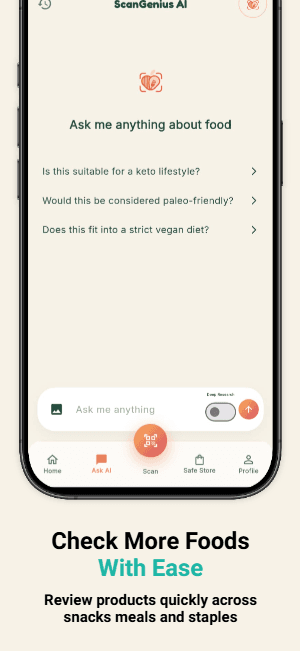
Instant Keto & Sugar Audit Trail
7. Frequently Asked Questions (FAQ)
How many net carbs should keto friendly bagels have?
There is no official standard, since ‘keto’ is not a regulated claim. Many people following a strict ketogenic diet target roughly 20 to 50 grams of total net carbs per day, so a bagel with under about 5 to 8 grams of net carbs per serving is often considered workable. Always verify the serving size and how the brand calculated net carbs. Food Scan Genius helps by surfacing the full ingredient breakdown and nutrition data when you scan, so you can do the math with confidence. Your clinician or dietitian can give targets suited to your health needs.
Are keto friendly bagels gluten-free?
Not necessarily. Many low-carb bagels use vital wheat gluten or wheat protein to achieve a chewy texture, which makes them unsuitable for celiac disease or wheat allergy. Others use almond, coconut or lupin flours and may be gluten-free, but you must confirm this on the label. Food Scan Genius lets you activate a gluten-related dietary profile, and with family profiles it can show a named result such as ‘Fails for Sri (Gluten)’ in a single scan.
Can a keto bagel still be ultra-processed?
Yes. Low carb counts are often achieved with isolated fibers, protein concentrates, gums, emulsifiers and refined oils, which can push a product into NOVA group 4. That is not a moral judgment, but it is useful context, especially given ongoing research on ultra-processed foods and gut health. ScanGenius AI Insight shows the NOVA 1-4 classification and Nutri-Score alongside plain-language explanations so you can weigh carbs against processing.
Does Food Scan Genius cost anything to check keto friendly bagels?
No. Core features are 100% free with zero paywalls, unlike Fig’s $59 per year subscription or Spoonful’s limited scans. You can scan as many bagels as you like, use 39 dietary profiles, add custom sensitivities such as seed oils or specific additives, screen your whole household in one scan, and use the app in 11 languages with real-time translation.
Know What’s In Your Food Before You Buy — Scan Free Today
Never second-guess confusing grocery labels again. Download Food Scan Genius to uncover hidden additives, toxic dyes, and allergens for the whole household before you buy.